
Method for classifying breast tissue density
a breast tissue density and density technology, applied in mammography, image analysis, image enhancement, etc., can solve the problems of increased difficulty in detection of cancer sites of denser breasts, less success of mammography imaging techniques with denser breast tissue than with predominantly fat tissue, etc., to achieve the effect of assisting mammogram image rendering and diagnosis
- Summary
- Abstract
- Description
- Claims
- Application Information
AI Technical Summary
Benefits of technology
Problems solved by technology
Method used
Image

Examples
Embodiment Construction
[0023]The following is a detailed description of the preferred embodiments of the invention, reference being made to the drawings in which the same reference numerals identify the same elements of structure in each of the several figures.
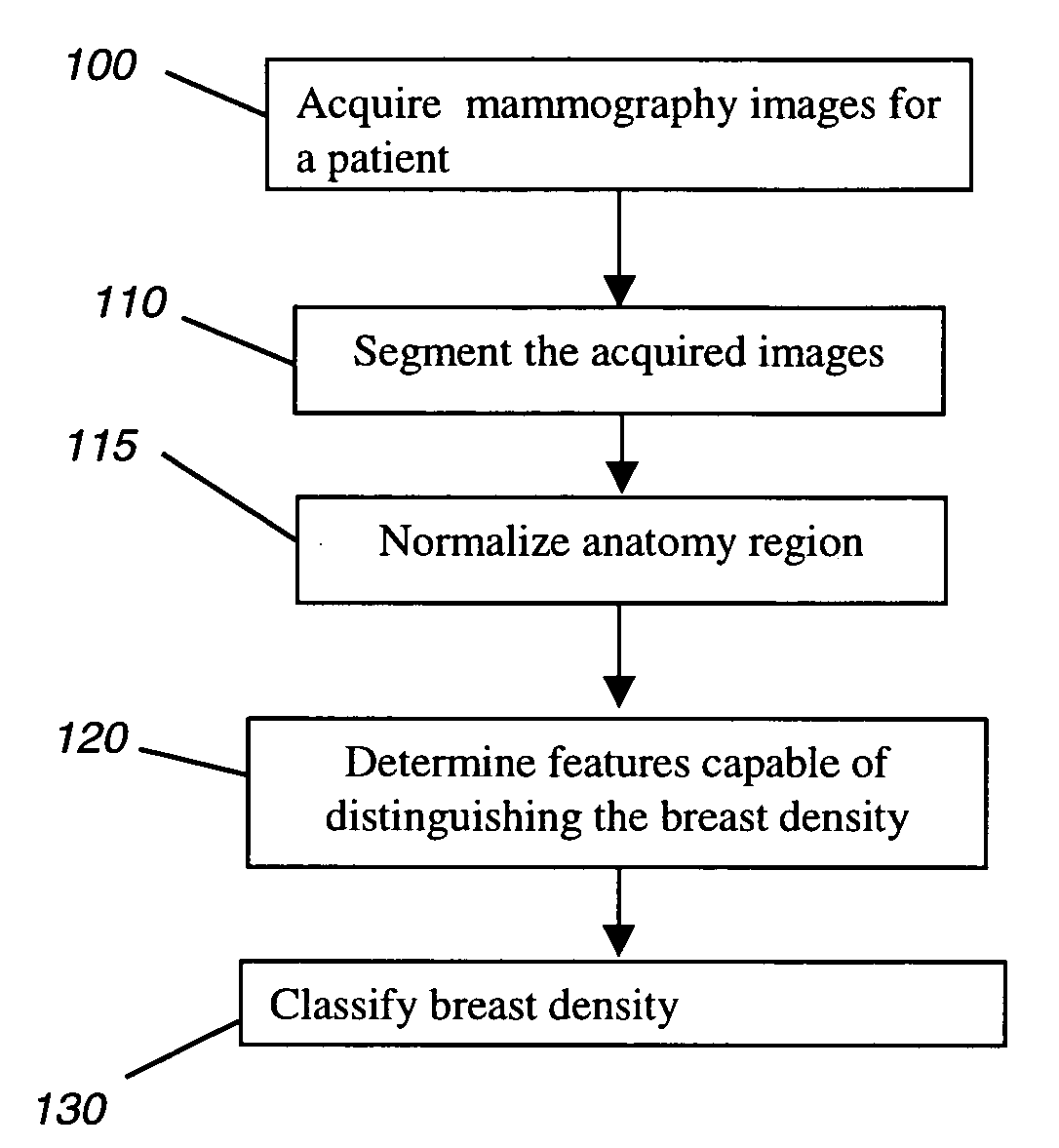
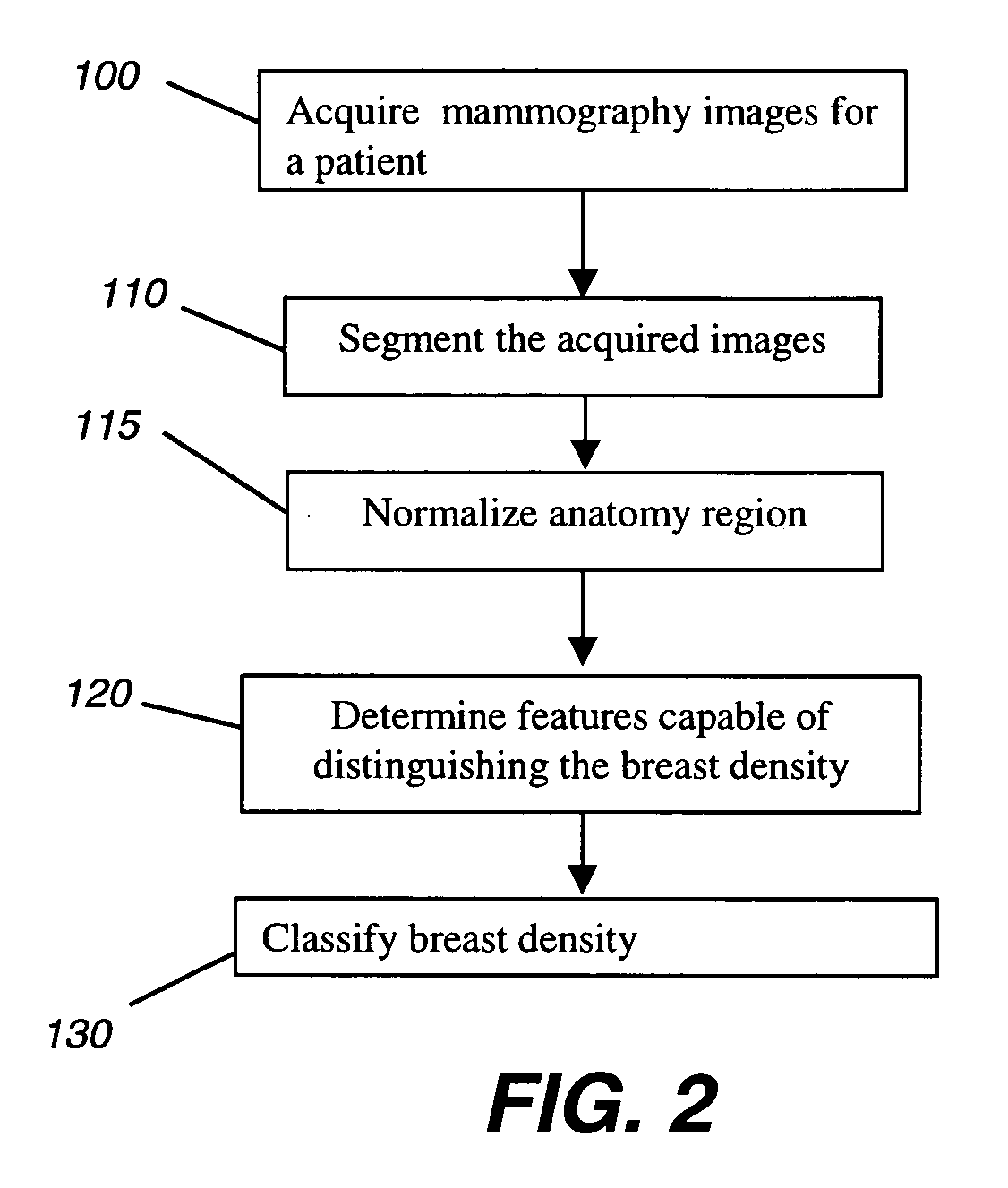
[0024]The present invention is directed to a method for automatically classifying the breast density of mammograms for image rendering and diagnosis. FIG. 2 shows a logic flow generally illustrating an automated method according to the present invention. As shown in FIG. 2, the method includes acquiring / accessing mammogram images of a patient in digital form (step 100); segmenting the breast region from the input mammogram images (step 110); normalizing the anatomy region (step 115); determining features capable of distinguishing the breast density from the segmented breast region (step 120), and classifying the breast density (step 130). These steps will be more particularly describe below.
[0025]In image acquisition step 100, mammography images of ...
PUM
 Login to View More
 Abstract
Description
Claims
Application Information
 Login to View More