
Amyloid binding assays
a technology of assays and myloids, applied in the field of assays, can solve the problems of formidable challenges in the inability to diagnose ad in a living patient, and achieve the effect of reducing the number of false positives
- Summary
- Abstract
- Description
- Claims
- Application Information
AI Technical Summary
Benefits of technology
Problems solved by technology
Method used
Image

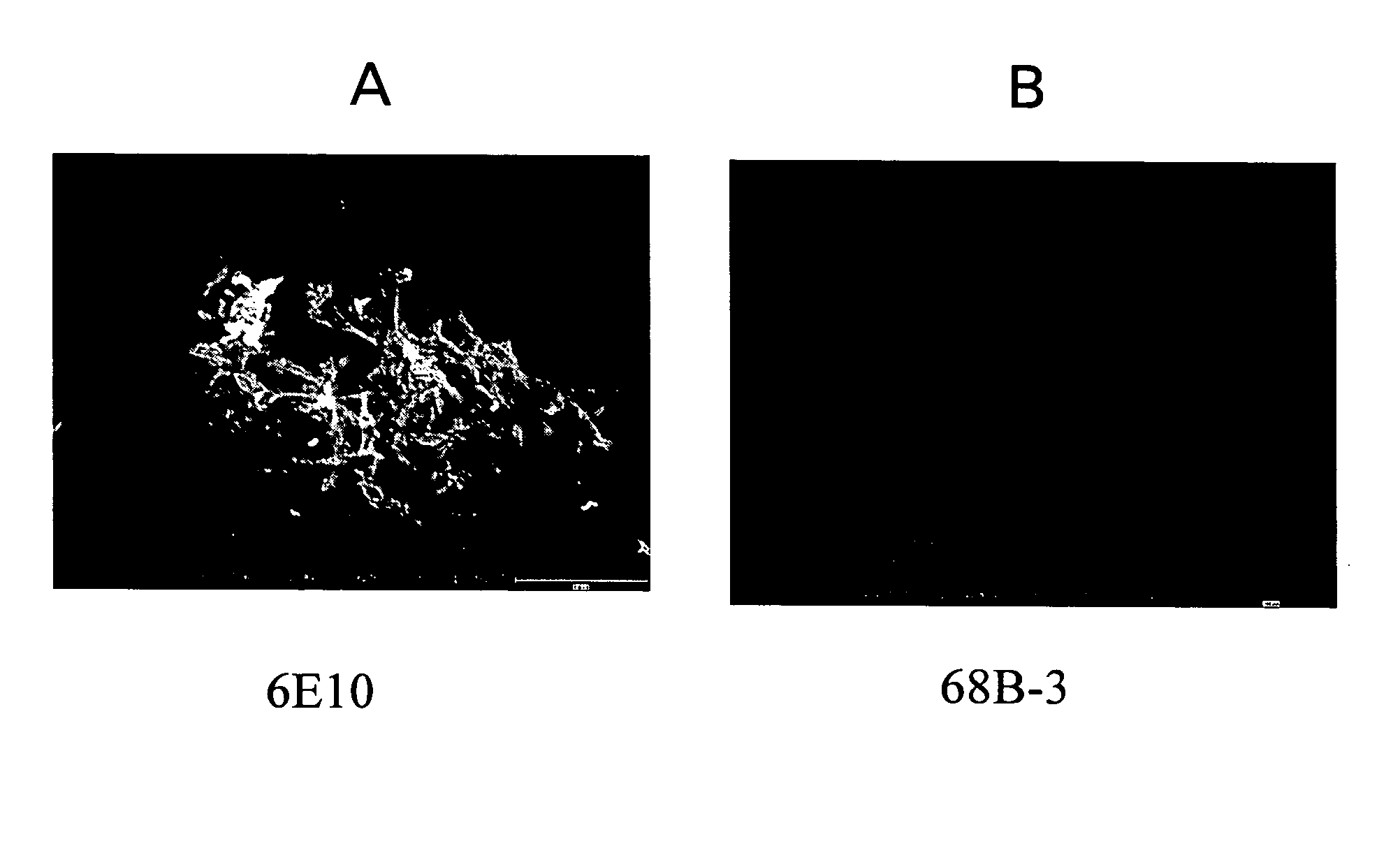
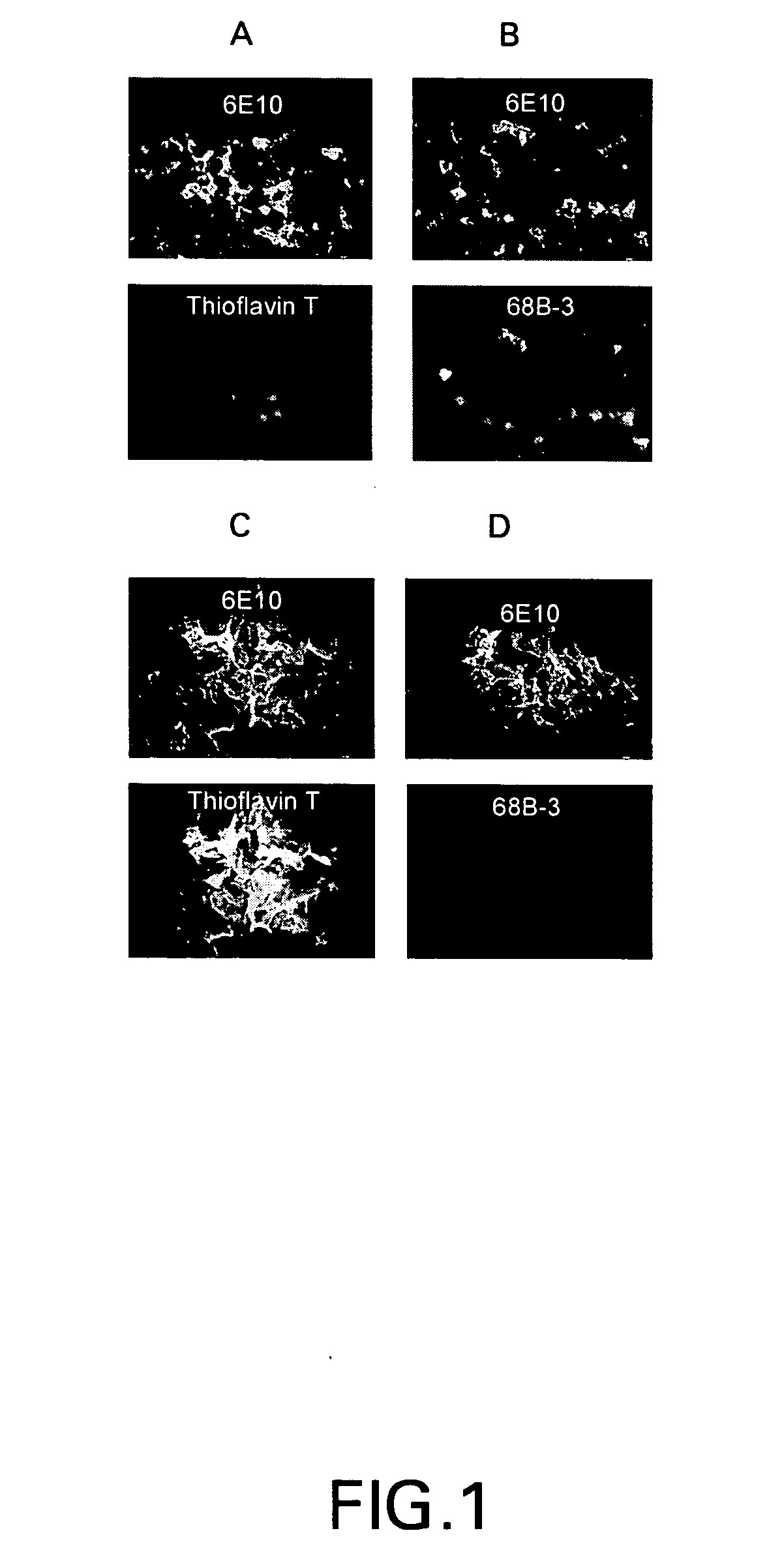
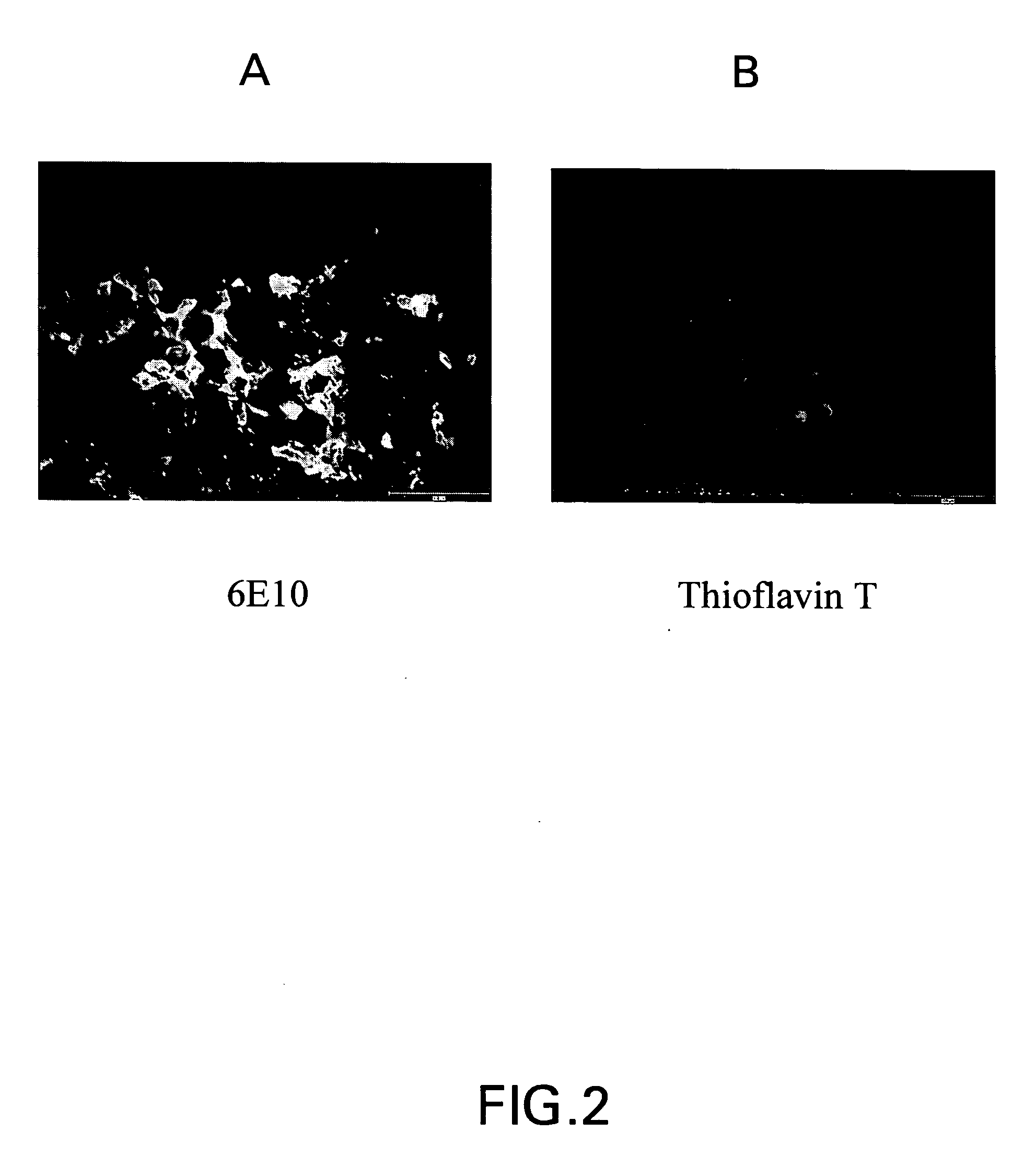
Examples
example 1
Preparation of Brain Tissue
[0055]In one embodiment, sections of Sprauge-Dawley naïve rat brain (Taconic) 10 microns in thickness were fixed with 10% formalin in phosphate buffered saline (PBS). Each section of the rat brain was then embedded in paraffin, an optional step that increases the shelf life of the sample.
example 2
Preparation and Application of A-Beta Species
[0056]Soluble A-beta oligomer formation. 1 mg of human beta-amyloid 1-42 (H-5642, Bachem) and 500 uL of 1,1,1,3,3,3 hexafluoro-2-propanol (HFIP) (Aldrich) were chilled in separate bottles on ice for 30 minutes. Cold beta-amyloid 1-42 was solubilized with cold HFIP. The mixture was incubated for 1 hr at room temperature until it turned clear. The resulting solution was then dried to a film under vacuum. The film was dissolved again in cold HFIP and incubated another 1 hr at room temperature. The resulting solution was separated into aliquots in several microcentrifuge tubes. HFIP was removed under vacuum, and the films were stored at −20° C. until use. To prepare soluble oligomer, the film was dissolved in appropriate amount of dry DMSO (Sigma), and Ham's F12 media (Biosource) or PBS (Sigma, D8537) was added and incubated at 4° C. for 24 hours (final concentration of 200 uM or 0.9 mg / mL beta-amyloid in 2% DMSO).
[0057]A-beta fibril preparat...
example 3
Binder and Signal Generator Preparation
[0060]Some of the examples that follow the binding function and signal generation function are served by a single entity, in other examples the binding function and the signal generating function are performed by two (or more) distinct entities. The presence of A-beta species was verified using a sandwich assay with anti-A-beta primary antibody and a secondary fluorescence antibody. In an alternate approach, the presence of A-beta was verified using small molecules that auto-fluoresce upon binding with A-beta.
[0061]For the sandwich assay approach 100 μL of 1 / 250th dilution of anti-A-beta antibody, (Signet) was applied to the tissue. The tissue was then incubated for 1.5 hours at room temperature, or in an alternative approach, for 45 minutes at 37° C. Next, a 1 / 100th dilution of the secondary antibody Alexa Flour 594-goat antimouse IgG (Molecular Probes) was prepared in PBS and 100 μl was applied to the slides, which were then incubated at room...
PUM
 Login to View More
 Abstract
Description
Claims
Application Information
 Login to View More