
Method of high dynamic range compression with detail preservation and noise constraints
a high dynamic range and detail preservation technology, applied in the field of image processing, can solve the problems that the conventional algorithms based on global compression tone-mapping functions cannot achieve, and achieve the effects of preserving global contrast perception, high dynamic range compression, and minimizing noise amplification
- Summary
- Abstract
- Description
- Claims
- Application Information
AI Technical Summary
Benefits of technology
Problems solved by technology
Method used
Image

Examples
Embodiment Construction
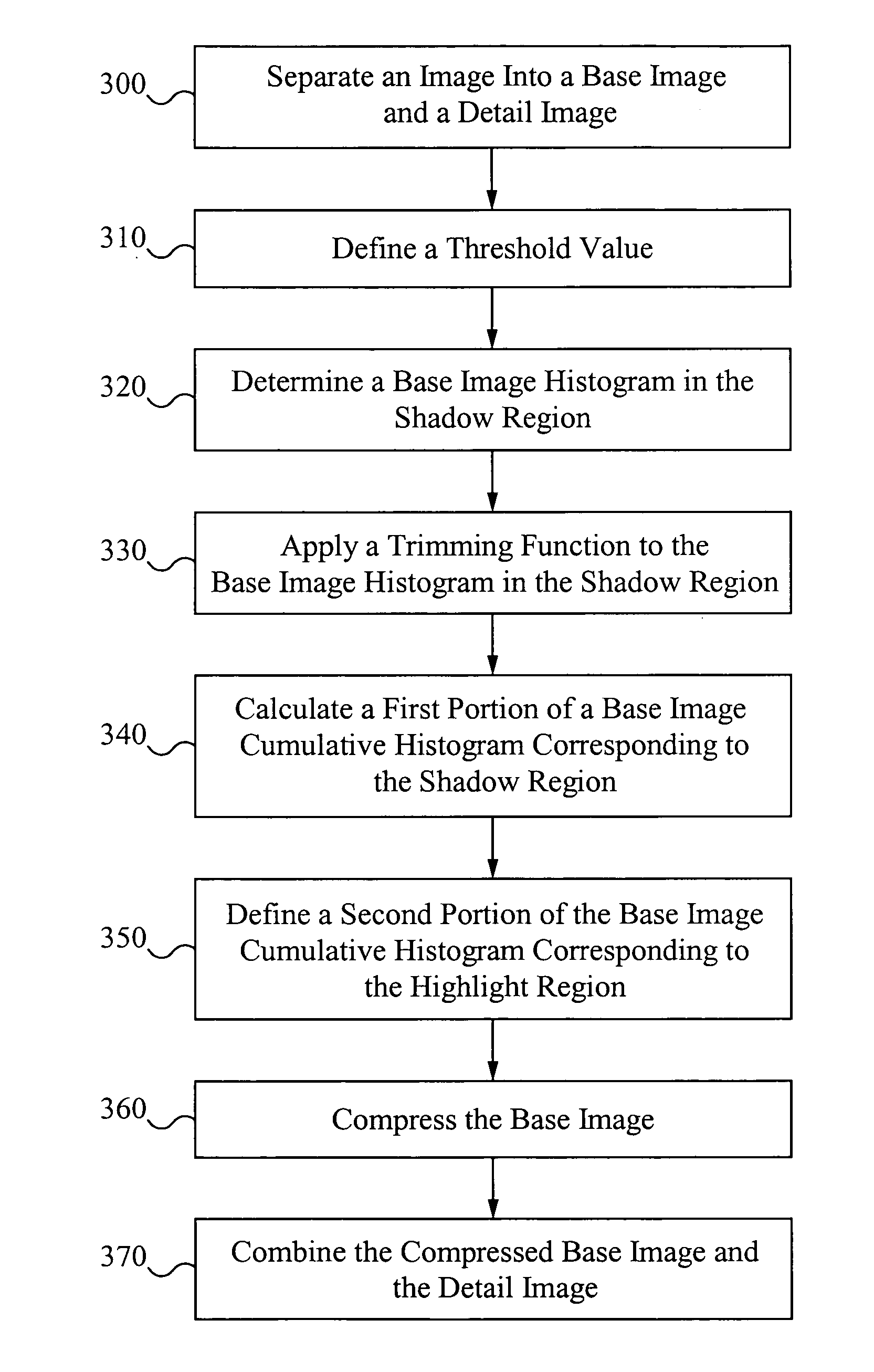
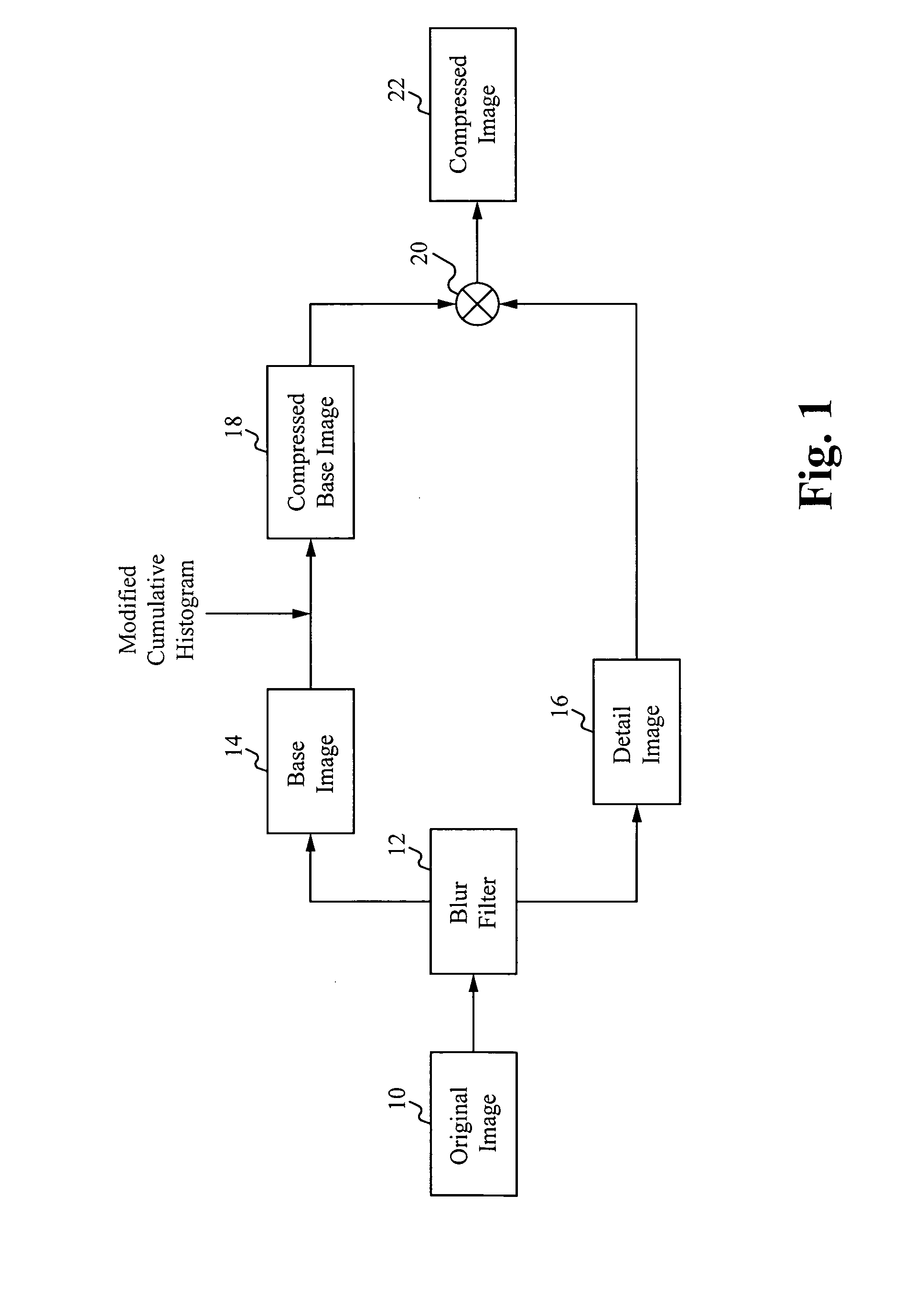
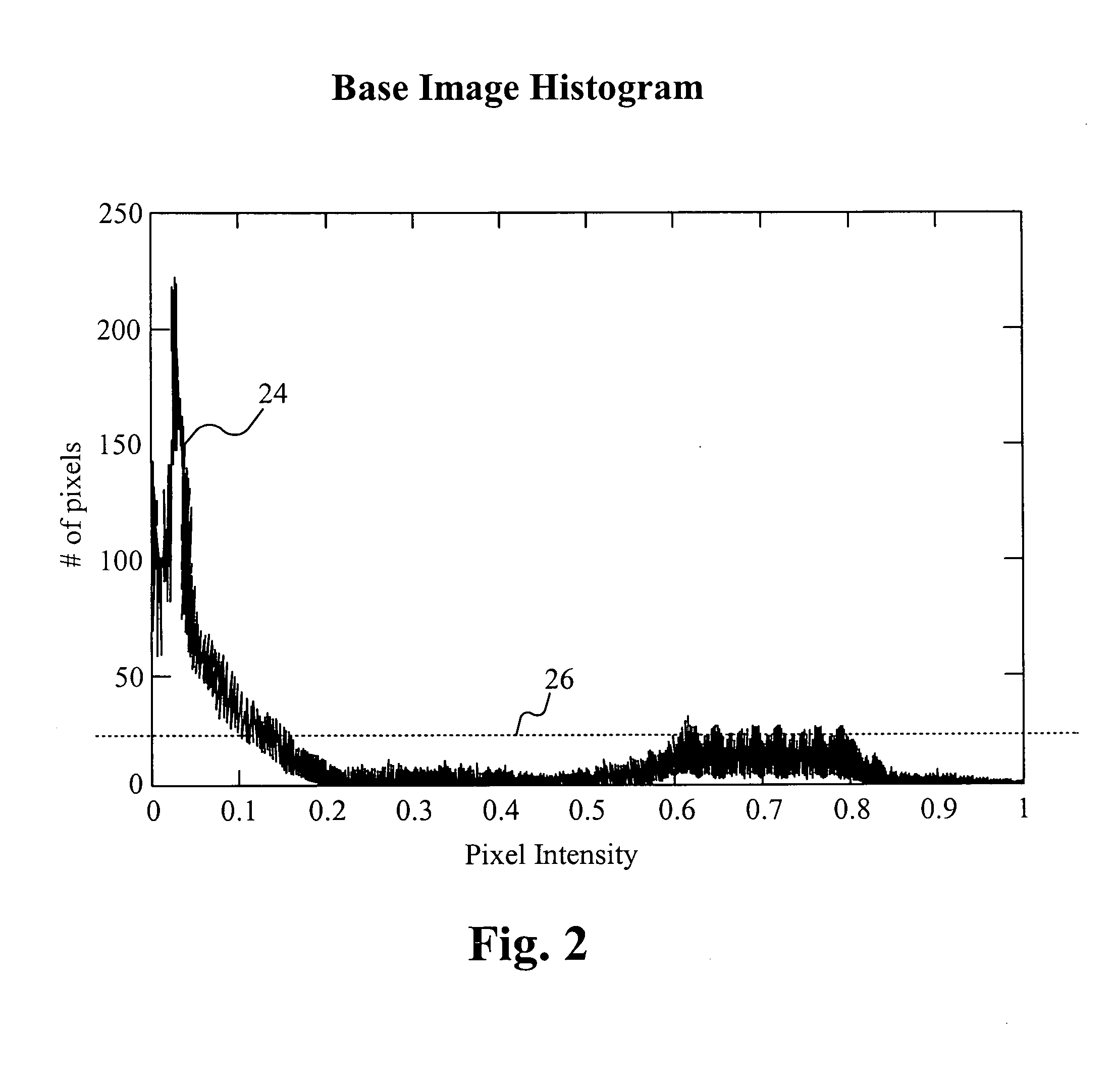
[0027]Embodiments of the high dynamic range compression methods are directed toward reducing, or compressing, the dynamic range of an image to make it more appropriate for a specific output device, and toward limiting the amount of noise during the dynamic range compression phase. In some embodiments, the compression methods are applied as a local method in which different transformations are applied to pixels in different positions within the image. The compression methods include separating the original image into a base image and a detail image. The base image approximates the illumination in the original image. The detail image maintains the fine details from the original image. In general, the detail image includes all remaining image information of the original image after the base image information is removed. The illumination information includes in the base image defines the contrast of the original image. As such, the detail image appears flat because the depth, or contras...
PUM
 Login to View More
 Abstract
Description
Claims
Application Information
 Login to View More