
Hetero-assembled hydrogels
a hydrogel and hydrogel technology, applied in the field of hydrogels, can solve the problems of poor cell survival after transplantation, difficult reproducibility control in clinical settings, and substantial loss of transplanted viable cells
- Summary
- Abstract
- Description
- Claims
- Application Information
AI Technical Summary
Problems solved by technology
Method used
Image

Examples
examples
[0054]Now having described the embodiments of the invention, in general, the following example describes some additional embodiments. While embodiments of the invention are described in connection with the example and the corresponding text and figures, there is no intent to limit embodiments of the invention to these descriptions. On the contrary, the intent is to cover all alternatives, modifications, and equivalents included within the spirit and scope of embodiments of the present disclosure.
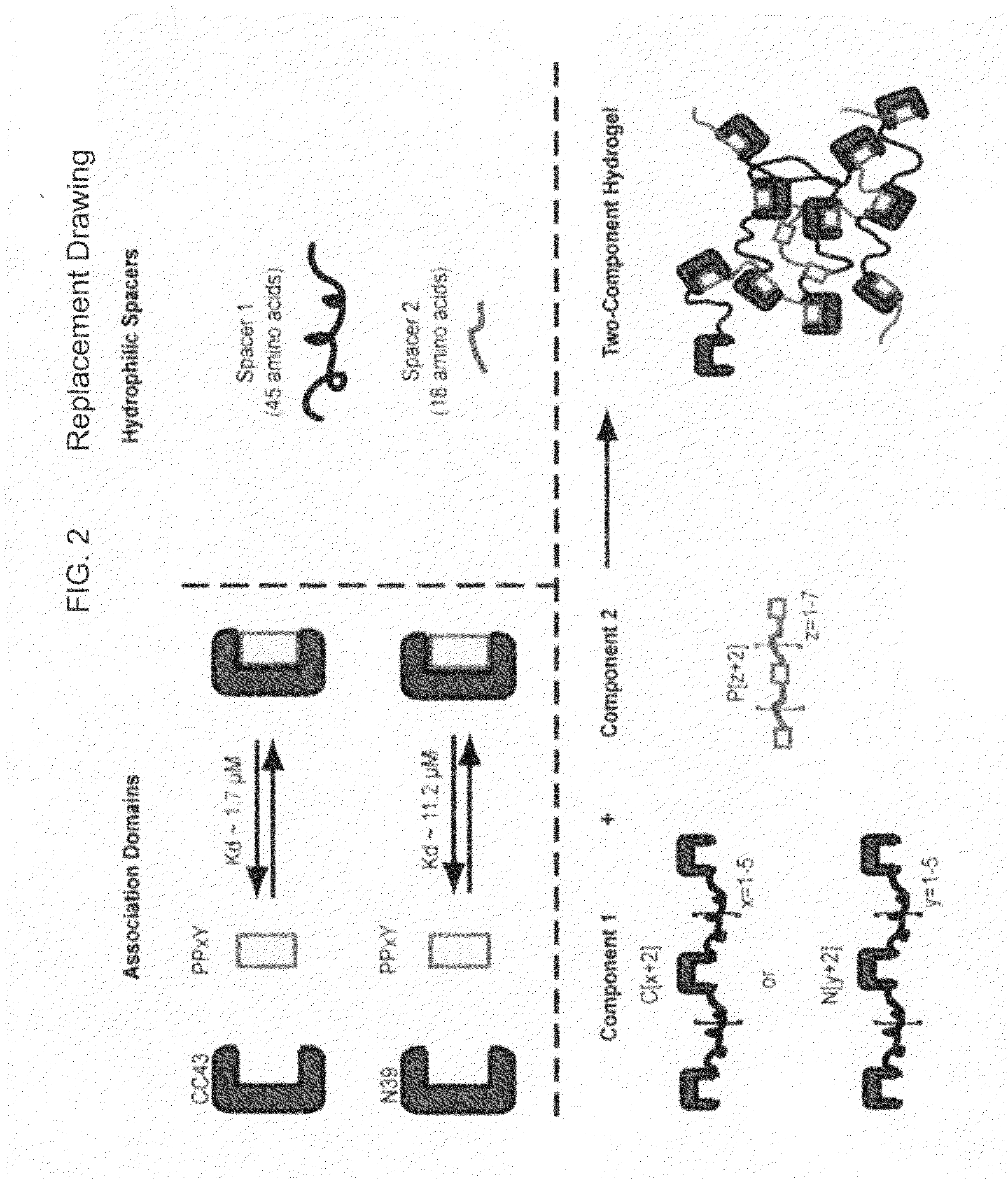
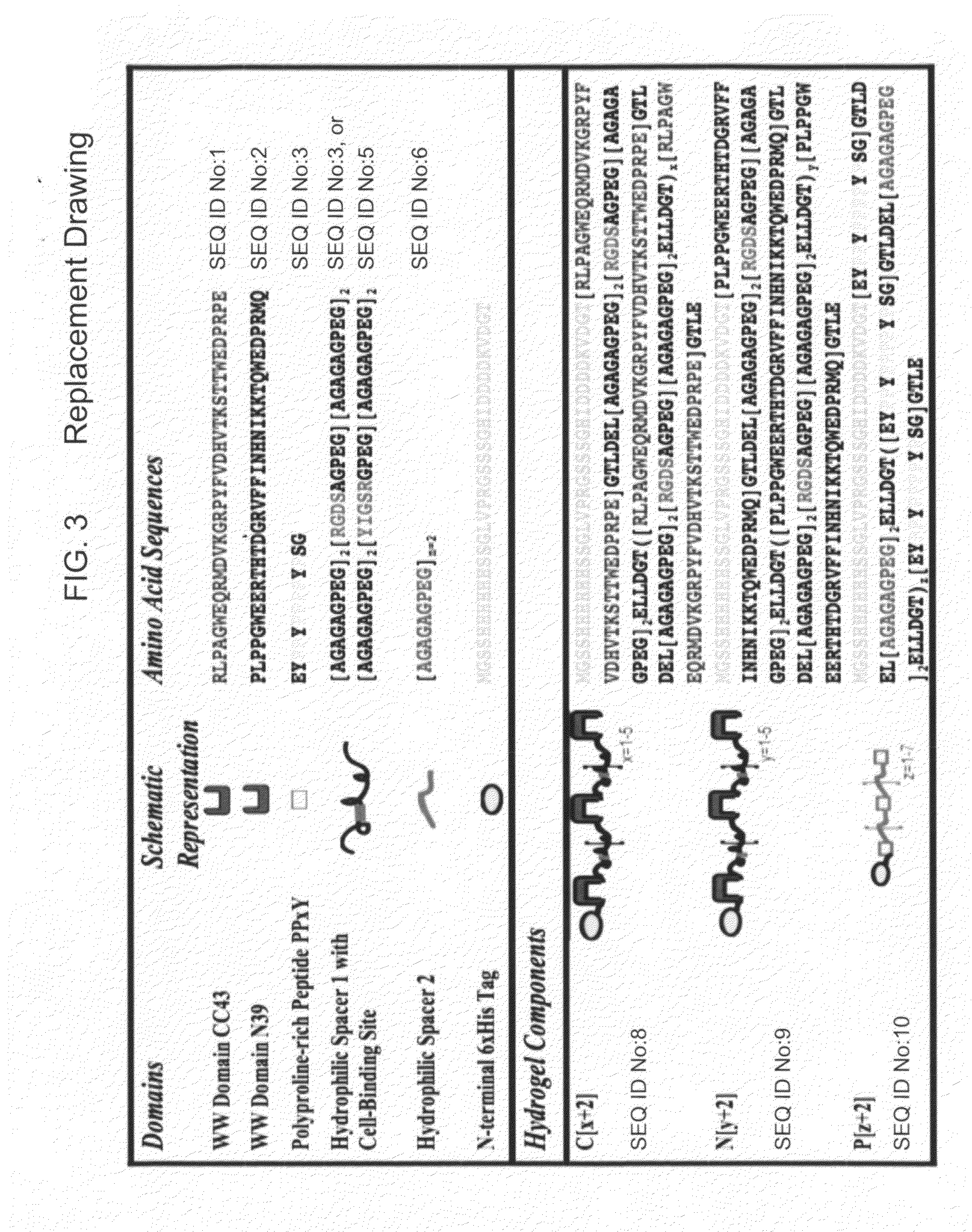
[0055]In this example, we utilized the concept of protein-protein interactions between specific peptide domains to design a two-component, molecular-recognition physical hydrogel system. The two components each contain separate peptide domains that associate together upon mixing under constant physiological conditions (FIG. 2). Therefore, this two-component hetero-assembly strategy is tailor-made to encapsulate cells and proteins without subjecting them to variations in pH, temperature, or i...
PUM
 Login to View More
 Abstract
Description
Claims
Application Information
 Login to View More