
Method of using heparin binding motif for treating asthma
a technology of heparin and binding motif, which is applied in the field of heparin binding motif, can solve the problems of not knowing much about the three-dimensional structure of hs, and the heparin binding site in ecp has not been identified, so as to improve the ic50 value, less cytotoxic, and the effect of less interaction
- Summary
- Abstract
- Description
- Claims
- Application Information
AI Technical Summary
Benefits of technology
Problems solved by technology
Method used
Image

Examples
example
Example 1
Materials
[0040]Mouse anti-MBP (maltose binding protein) was obtained from Santa Cruz Biotechnology (Santa Cruz, Calif.). RNase A was purchased from Promega (Madison, Wis.). Chemicals were purchased from Sigma-Aldrich (St. Louis, Mo.) unless otherwise specified. Human ECP peptide NYRWRCKNQNK-biotin (C1, SEQ ID NO: 3), EDN peptide NYQRRCKNQNK-biotin (D1, SEQ ID NO: 4), RNase 1 peptide MTQGRCKPVNK-biotin (R1, SEQ ID NO: 5), and HIV-TAT peptide YGRKKRRQRRRK-biotin (TAT, SEQ ID NO: 6) were purchased from Genemed Synthesis (South San Francisco, Calif.).
[0041]Statistical analysis Data were expressed as mean±standard deviation (SD). Analysis was performed with Mann-Whitney U test for comparison of two groups. Differences with a probability value <0.05 were considered significant. Analysis were performed using Statistical Package for the Social Sciences (version 10.1; SPSS, Chicago, Ill., USA).
example 2
Oligosaccharide Length-Dependence of ECP-Heparin Interaction
[0042]Recombinant hECP containing a C-terminal His6 tag was expressed in E. coli BL21-CodonPlus (DE3) (Novagen, Madison, Wis.), purified by chromatography, and refolded as previously described (Boix, E., et al. (1999) Journal of Biological Chemistry 274, 15605-15614). MBP-ECP was purified using amylase affinity chromatography.
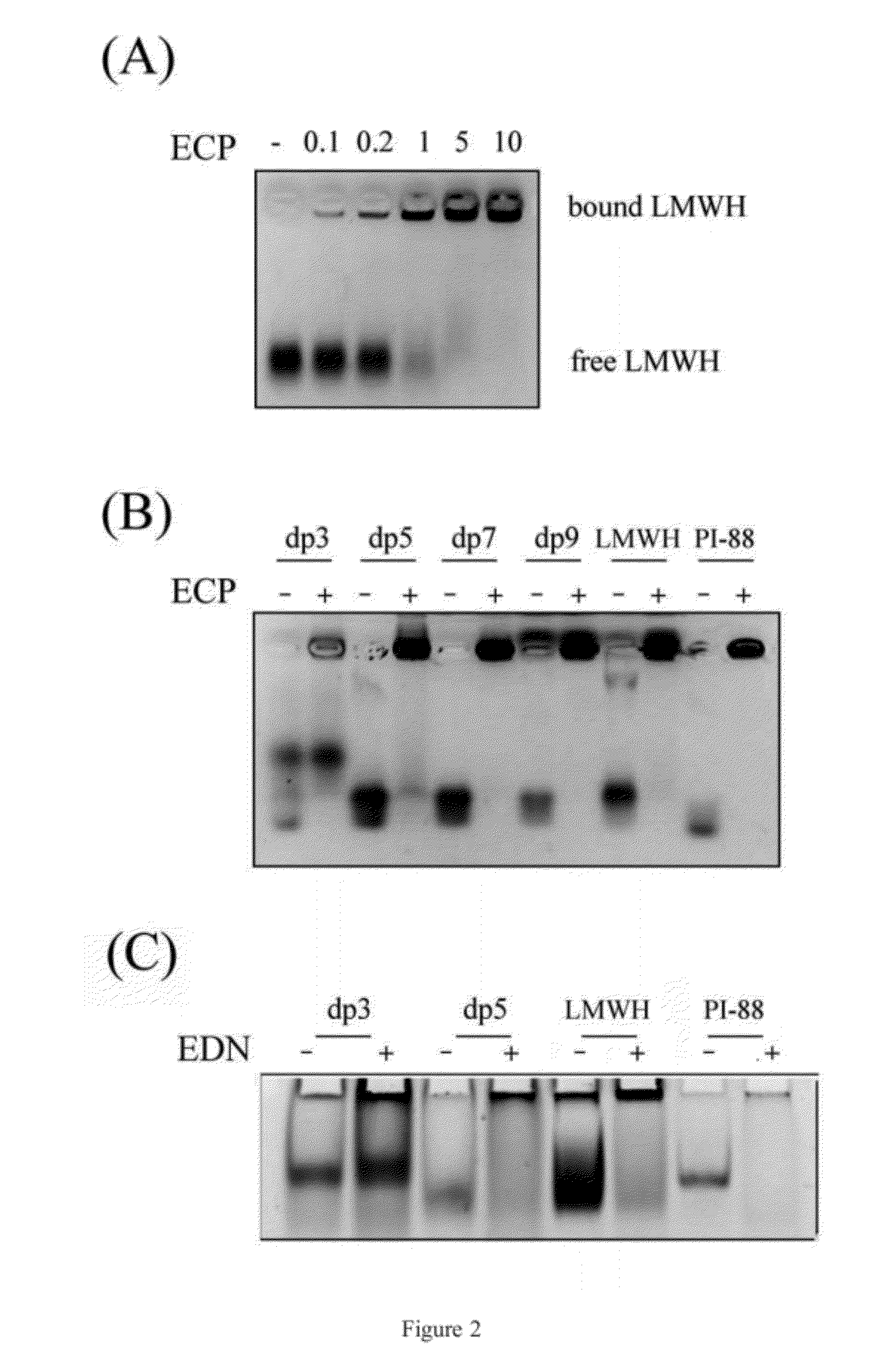
[0043]The prior art demonstrated that binding and endocytosis of ECP are HSPG dependent (Fan, T. C., et al. (2007) Traffic 8, 1778-1795). An early study demonstrated ECP purification using heparin-Sepharose chromatography (Gleich, G. J., et al. (1986) Proc Natl Acad Sci USA 83, 3146-3150). Thus, the minimal heparin length (or disaccharide unit) required to interact with ECP was investigated by FACE (Fluorescence-assisted carbohydrate electrophoresis).
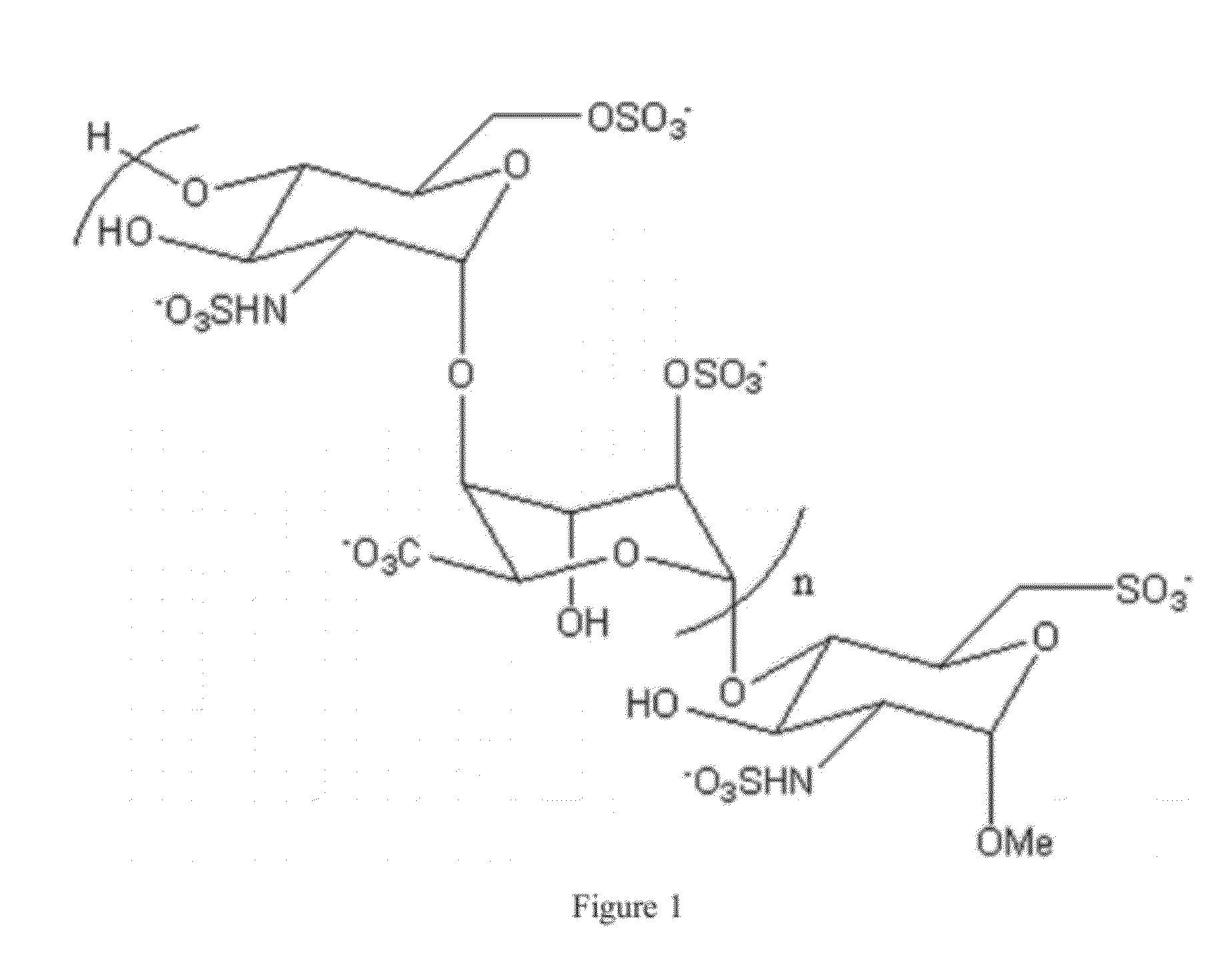
[0044]Synthetic heparin oligosaccharide (FIG. 1) (Lee, C. J., et al. (2004) J Am Chem Soc 126, 476-477), low molecular weight heparin (LMWH) and PI-88 (ki...
example 3
Competitive Inhibition of ECP Binding to Cells by Synthetic Oligosaccharides
[0046]Beas-2B, a human bronchial epithelial cell line, was cultured in RPMI 1640 medium (Sigma-Aldrich) supplemented with heat-inactivated 10% fetal bovine serum (Gibco / Invitrogen, Carlsbad, Calif.).
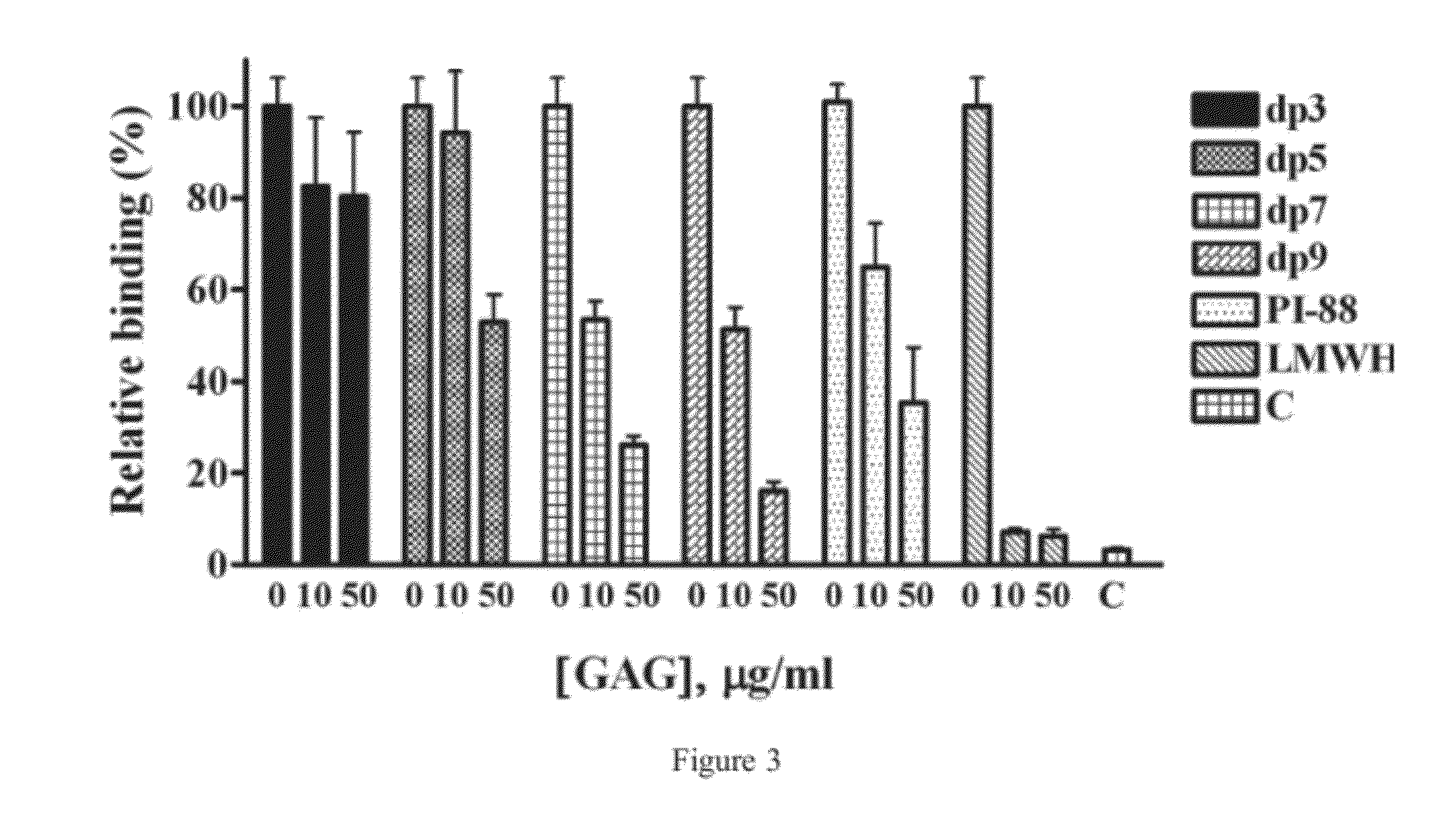
[0047]The ability of MBP-ECP to bind cells in the presence of serial dilutions of oligosaccharides or peptides was determined as described (Fan, T. C., et al. (2007) Traffic 8, 1778-1795). At the present invention, synthetic heparins (dp3-9) were tested for their ability to interfere with ECP binding to Beas-2B cells. Briefly, confluent monolayers of Beas-2B cells in 96-well plates were pretreated with various concentrations of oligosaccharides or peptides in serum-free RPMI 1640 medium at 4° C. for 30 min before incubation with 5 μg / ml MBP-ECP at 4° C. for 1 h. The cells were then washed with ice-cold PBS and fixed with 2% PFA at room temperature for 15 min prior to blocking with 2% BSA / PBS at room temperature f...
PUM
| Property | Measurement | Unit |
|---|---|---|
| Pharmaceutically acceptable | aaaaa | aaaaa |
| Cytotoxicity | aaaaa | aaaaa |
Abstract
Description
Claims
Application Information
 Login to View More