Rate stabilization through plasticity in spiking neuron network

a neural network and neural network technology, applied in the field of artificial neural networks, can solve the problems of excessive use of network communication, computational and/or power resources, and achieve the effect of stabilizing the firing rate of neurons

US20140156574A1Active Publication Date: 2014-06-05BRAIN CORP
2 Cites 96 Cited by

Patent Information

Authority / Receiving Office
US · United States
Patent Type
Applications(United States)
Current Assignee / Owner
Publication Date
2014-06-05

Smart Images

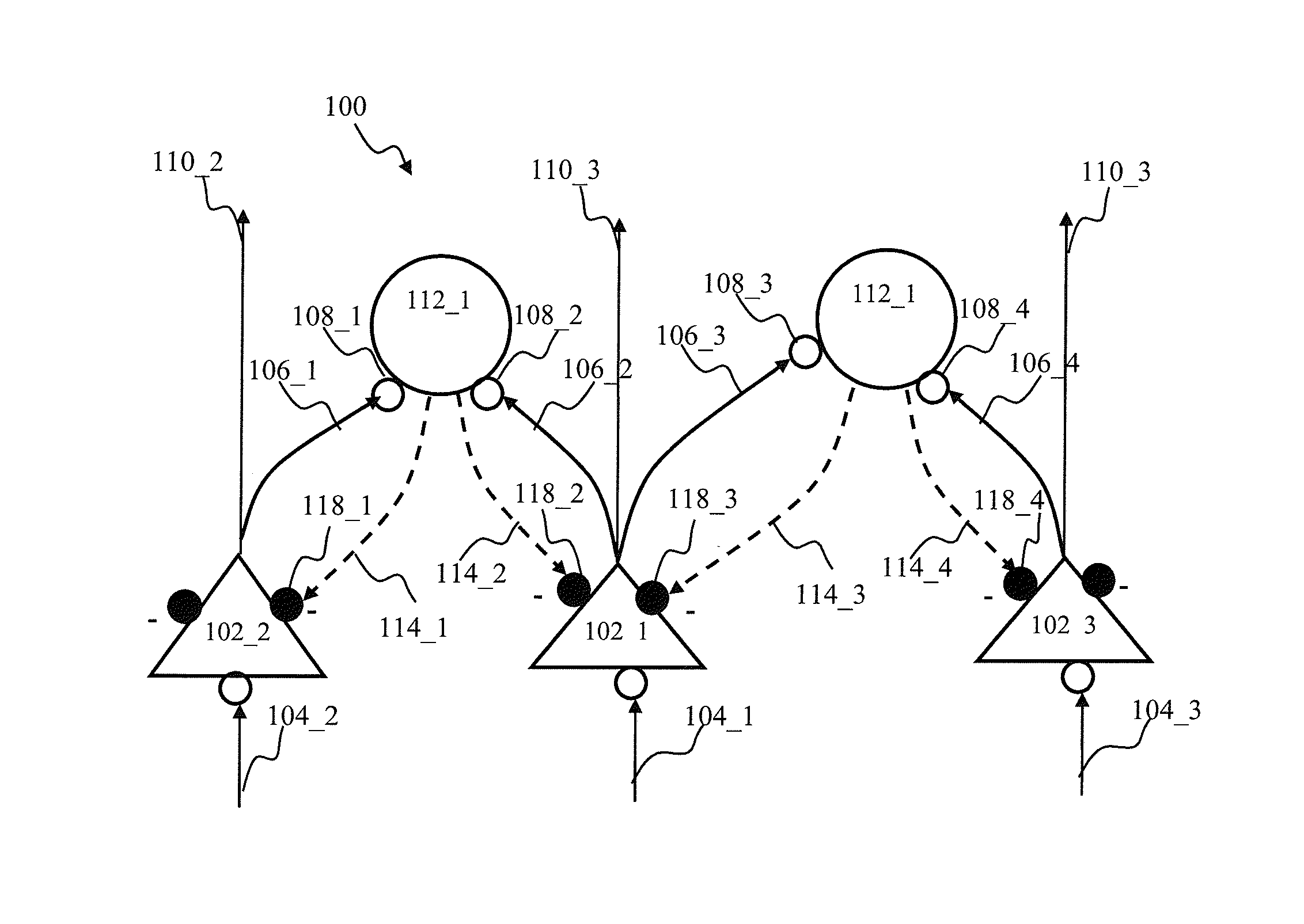
  • Figure 1
    Figure 1
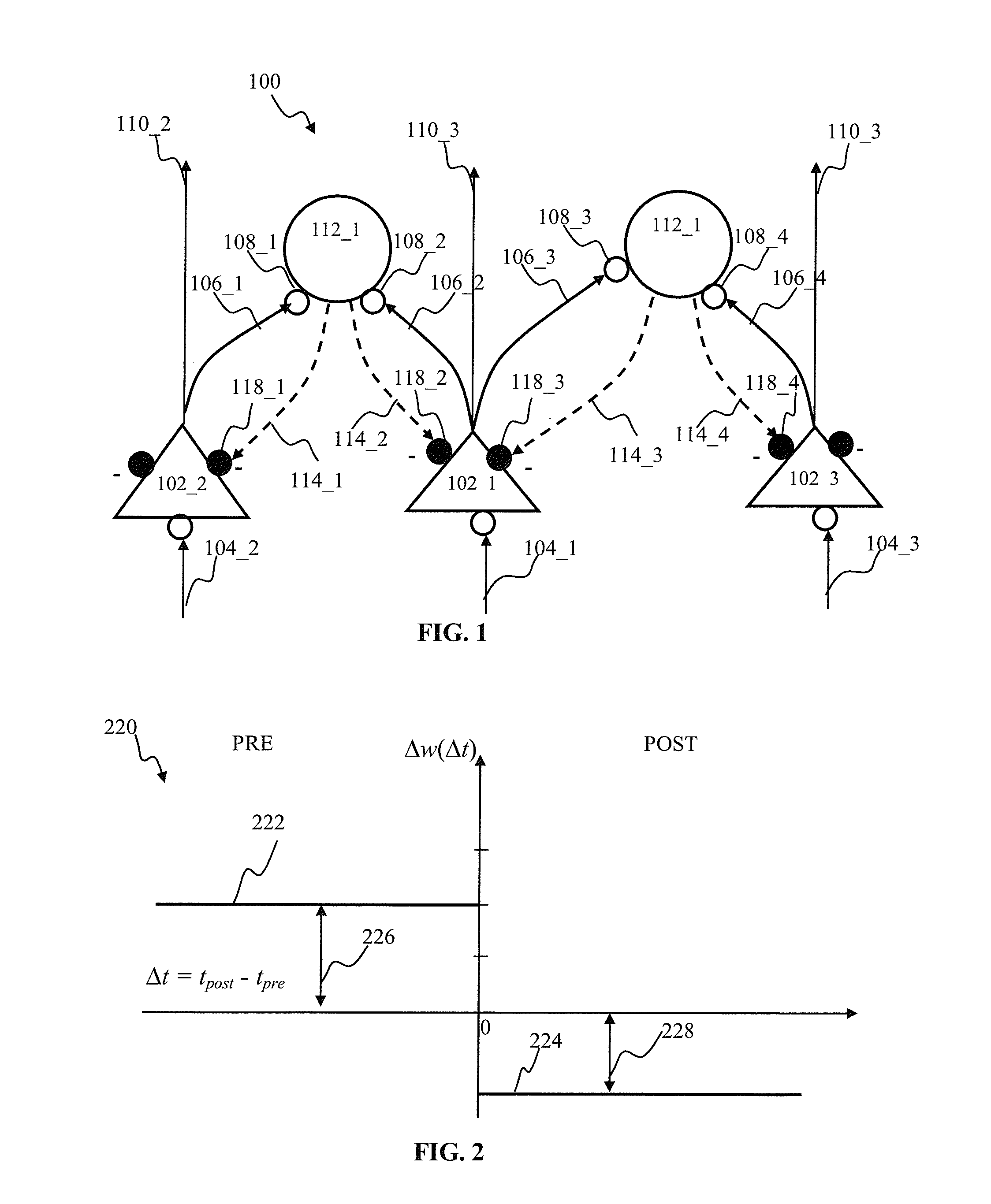
  • Figure 2
    Figure 2
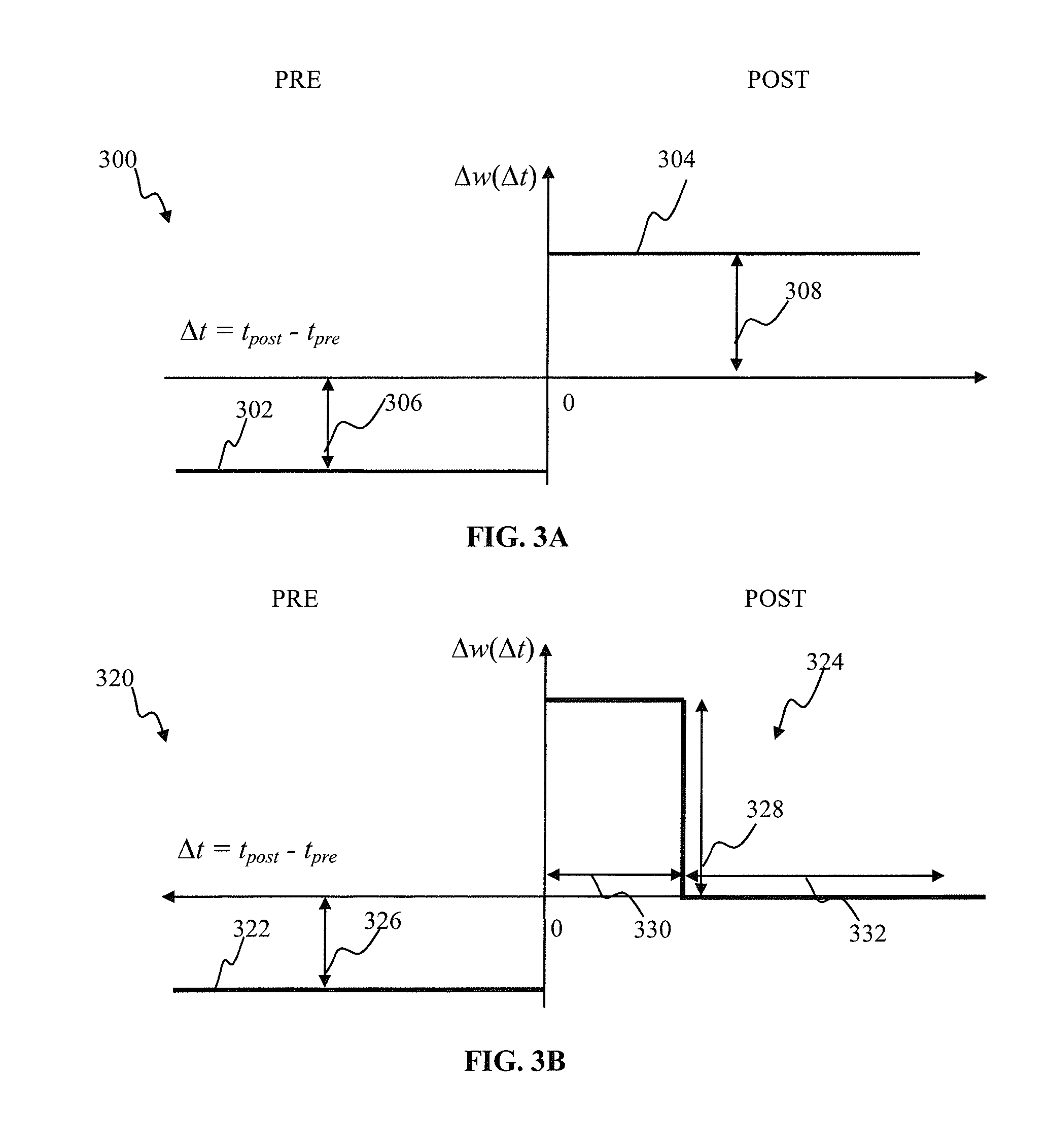
  • Figure 3
    Figure 3
Patent Text Reader

Abstract

Apparatus and methods for activity based plasticity in a spiking neuron network adapted to process sensory input. In one embodiment, the plasticity mechanism may be configured for example based on activity of one or more neurons providing feed-forward stimulus and activity of one or more neurons providing inhibitory feedback. When an inhibitory neuron generates an output, inhibitory connections may be potentiated. When an inhibitory neuron receives inhibitory input, the inhibitory connection may be depressed. When the inhibitory input arrives subsequent to the neuron response, the inhibitory connection may be depressed. When input features are unevenly distributed in occurrence, the plasticity mechanism is capable of reducing response rate of neurons that develop receptive fields to more prevalent features. Such functionality may provide network output such that rarely occurring features are not drowned out by more widespread stimulus.
Need to check novelty before this filing date? Find Prior Art

Description

CROSS-REFERENCE TO RELATED APPLICATIONS

[0001] This application is related to co-owned U.S. patent application Ser. No. 13 / 152,119, entitled “SENSORY INPUT PROCESSING APPARATUS AND METHODS”, filed on Jun. 2, 2011, co-owned and co-pending U.S. patent application Ser. No. 13 / 465,924, entitled “SPIKING NEURAL NETWORK FEEDBACK APPARATUS AND METHODS”, filed May 7, 2012, co-owned and co-pending U.S. patent application Ser. No. 13 / 465,903 entitled “SENSORY INPUT PROCESSING APPARATUS IN A SPIKING NEURAL NETWORK”, filed May 7, 2012, a co-owned U.S. patent application Ser. No. 13 / 465,918, entitled “SPIKING NEURAL NETWORK OBJECT RECOGNITION APPARATUS AND METHODS”, filed May 7, 2012, a co-owned U.S. patent application Ser. No. 13 / 488,106, entitled “SPIKING NEURON NETWORK APPARATUS AND METHODS”, filed Jun. 4, 2012, a co-owned U.S. patent application Ser. No. 13 / 488,144, entitled “SPIKING NEURON NETWORK APPARATUS AND METHODS”, filed Jun. 4, 2012, a co-owned U.S. patent application Ser. No. 13 / 541,5...

Examples

Embodiment Construction

[0040]Exemplary embodiments and implementations of the various aspects of the present innovation will now be described in detail with reference to the drawings, which are provided as illustrative examples so as to enable those skilled in the art to practice the disclosure. Notably, the figures and examples below are not meant to limit the scope of the present disclosure to a single embodiment or implementation, but other embodiments and implementations are possible by way of interchange of or combination with some or all of the described or illustrated elements. Wherever convenient, the same reference numbers will be used throughout the drawings to refer to same or like parts.

[0041]Where certain elements of these embodiments or implementations can be partially or fully implemented using known components, only those portions of such known components that are necessary for an understanding of the present disclosure will be described, and detailed descriptions of other portions of such...