Detection of Potential Abusive Trading Behavior in Electronic Markets
What is AI technical title?
AI technical title is built by Patsnap AI team. It summarizes the technical point description of the patent document.
a technology of electronic markets and trading behavior, applied in the field of detection of potential abusive trading behavior in electronic markets, can solve the problems of labor-intensive manual examination techniques, easy abuse of hft, and high detection cos
Inactive Publication Date: 2015-03-19
CHICAGO MERCANTILE EXCHANGE
View PDF2 Cites 12 Cited by
Summary
Abstract
Description
Claims
Application Information
AI Technical Summary
This helps you quickly interpret patents by identifying the three key elements:
Problems solved by technology
Method used
Benefits of technology
Benefits of technology
The patent describes a system and method for detecting abusive trading behavior in electronic markets, such as cash instruments and derivatives. The system uses advanced computer algorithms to quickly analyze and identify potential abusive trading techniques, such as spoofing, flickering, flipping, layering, and others. The system can also detect abusive behavior through trial-and-error manual examination of stored messages and metadata fields. The technical effect of the patent is to provide a more efficient and automated way to detect abusive trading behavior, which can help prevent financial loss and improve market integrity.
Problems solved by technology
As a result of its algorithmic nature, the practice of HFT is susceptible to abuse.
Heretofore, detection of abusive trading behavior has been extremely time-consuming and involved labor-intensive manual examination techniques (e.g., trial-and-error manual searching through millions of stored messages, manual cross-referencing of public market data against private order entry messaging, manual calculation of order book levels and other metadata fields per message, etc.).
By way of example, regulators have alleged that high-frequency traders may engage in “abusive” trading patterns that are not necessarily inspired by dynamic fundamental and / or technical trading conditions.
Heretofore, detection of abusive behavior in HFT has been difficult and resource-intensive, and typically involves laborious manual investigative procedures.
However, such an approach would involve a substantial computational burden.
Thus, it would be exceedingly difficult, if not impossible, for an Exchange or regulatory body to become aware of each and every such event.
However, by referencing social media traffic in accordance with the present teachings, such events may be linked with market activity on an automated and quantitative basis without the necessity of monitoring fundamental and technical events on a qualitative basis, which would be economically unfeasible.
Additionally, the illustrations are merely representational and may not be drawn to scale.
Method used
the structure of the environmentally friendly knitted fabric provided by the present invention; figure 2 Flow chart of the yarn wrapping machine for environmentally friendly knitted fabrics and storage devices; image 3 Is the parameter map of the yarn covering machine
View more
Image
Smart Image Click on the blue labels to locate them in the text.
Viewing Examples
Smart Image
Click on the blue label to locate the original text in one second.
Reading with bidirectional positioning of images and text.
Smart Image
Examples
Experimental program
Comparison scheme
Effect test
Embodiment Construction
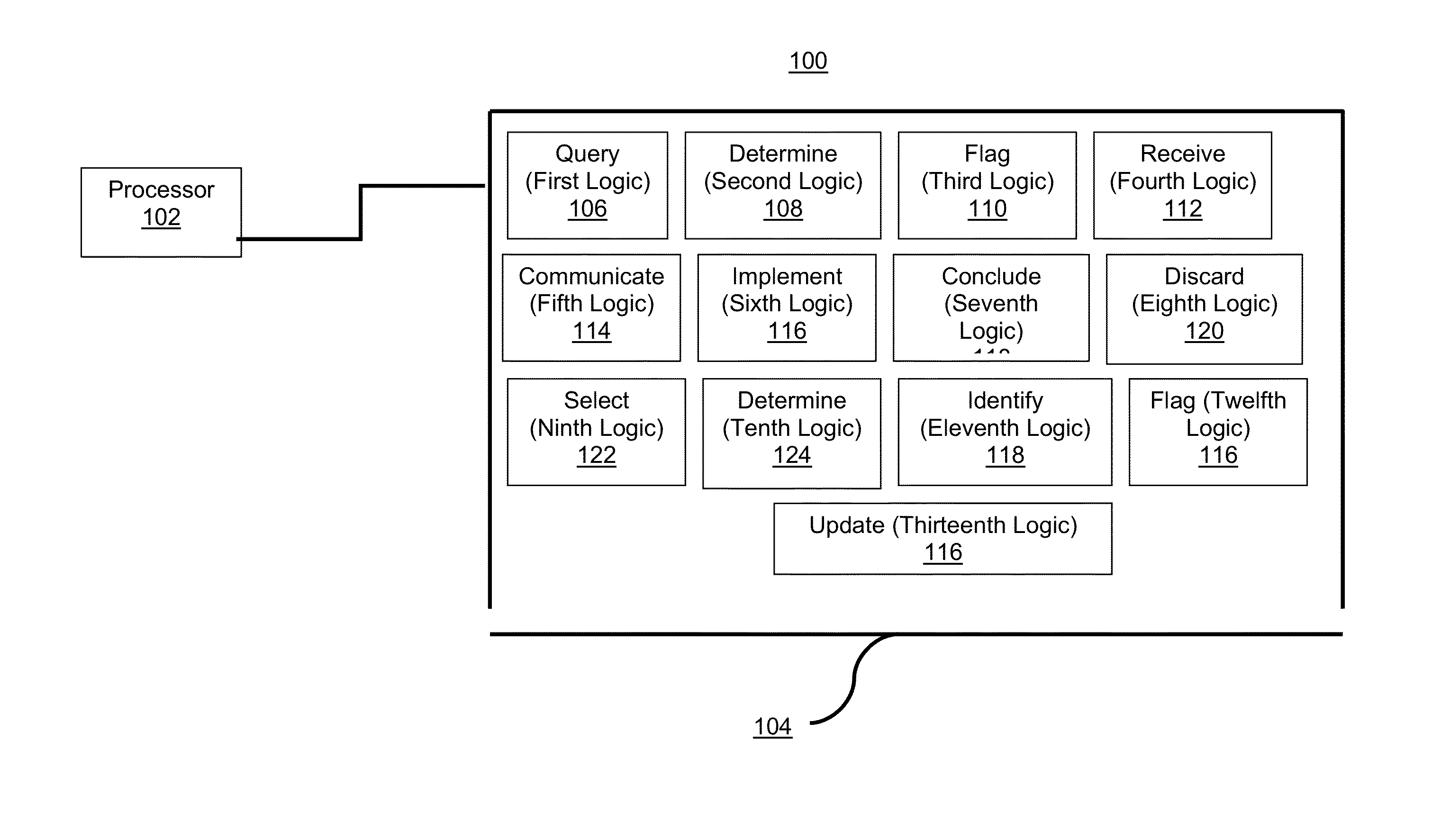
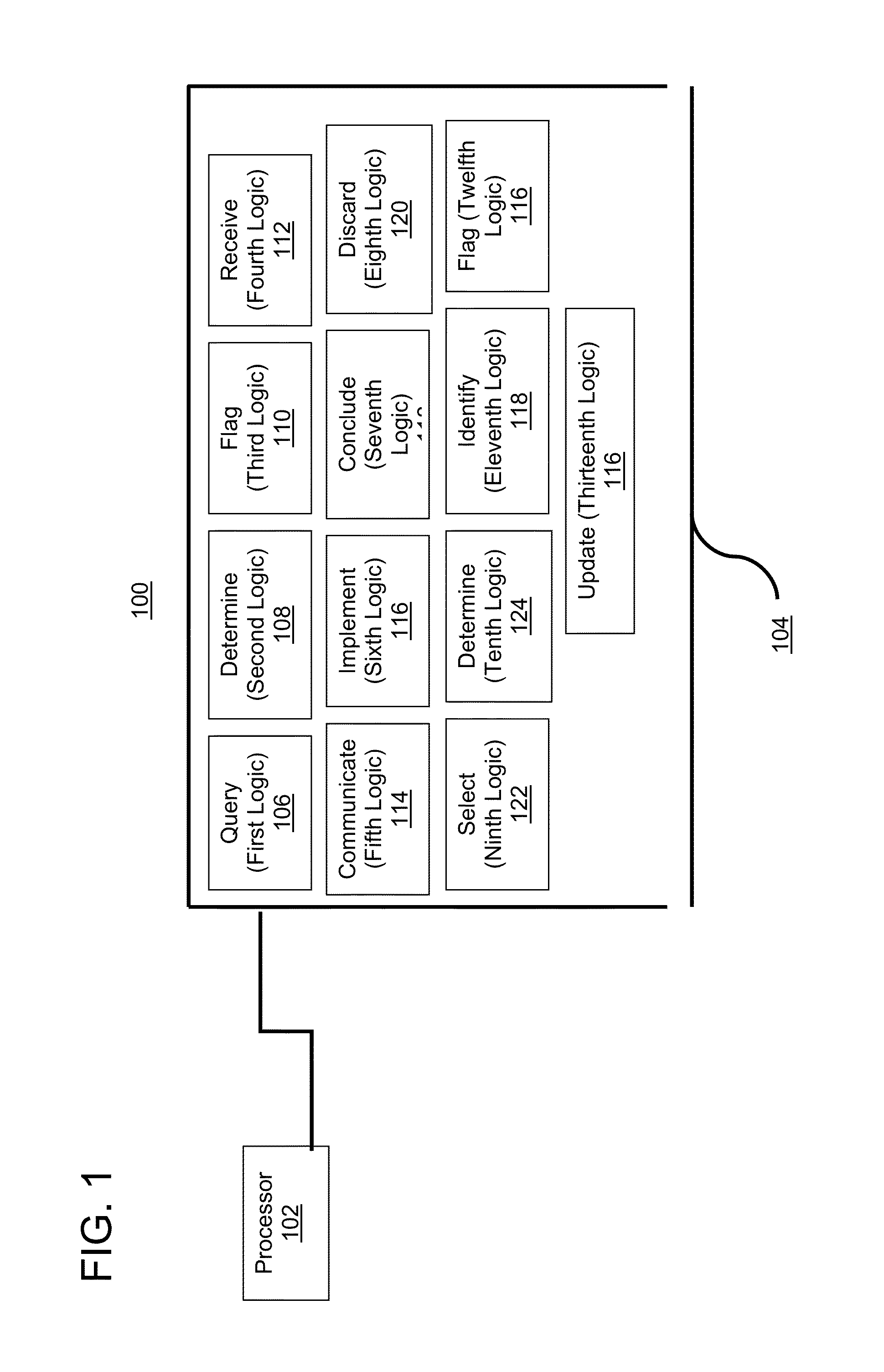
[0012]High-frequency trading (HFT) is typically characterized by rapid entry and cancellation of orders via an automated trading system (ATS) in response to dynamic market conditions. Exchanges and regulators tend to regard HFT—and algorithmic trading (AT) in general—as potential sources of concern in light of the relative novelty of these practices and the heightened media focus they receive. By way of example, regulators have alleged that high-frequency traders may engage in “abusive” trading patterns that are not necessarily inspired by dynamic fundamental and / or technical trading conditions. Heretofore, detection of abusive behavior in HFT has been difficult and resource-intensive, and typically involves laborious manual investigative procedures.
[0013]Methods and systems for detecting potential abusive trading behavior in electronic markets have been discovered and are described herein. In some embodiments, the present teachings may be used in the context of regulatory surveilla...
the structure of the environmentally friendly knitted fabric provided by the present invention; figure 2 Flow chart of the yarn wrapping machine for environmentally friendly knitted fabrics and storage devices; image 3 Is the parameter map of the yarn covering machine
Login to View More
PUM
Login to View More
Abstract
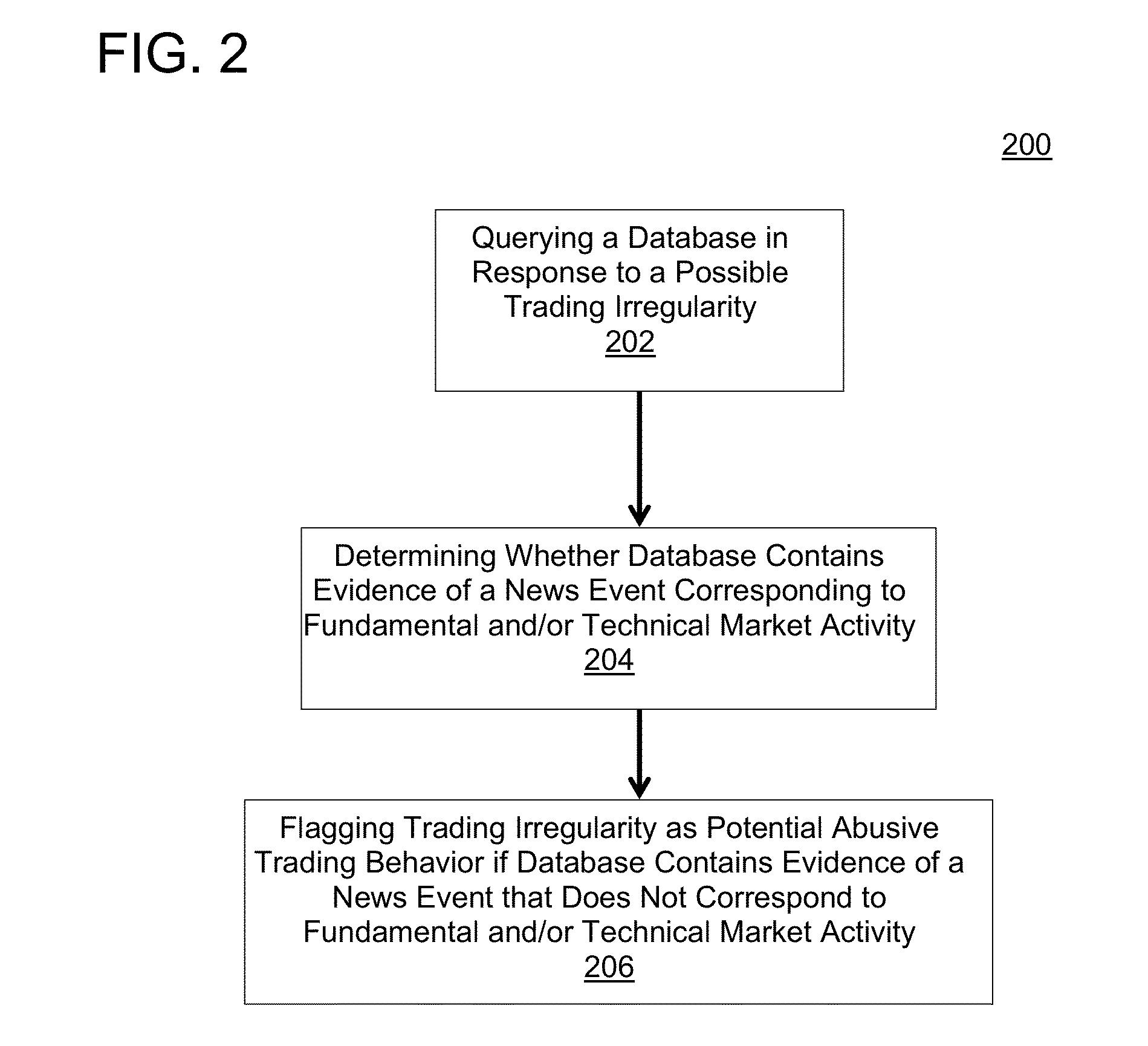
Methods for detecting potential abusive trading behavior in an electronic market include: (a) querying a database in response to an alert signifying a possible trading irregularity, wherein the database is configured to store data mined from one or a plurality of electronic social media platforms; (b) determining whether the database contains evidence of a news event that explains the trading irregularity and, if so, whether the news event corresponds to fundamental and / or technical market activity; and (c) flagging the trading irregularity as potential abusive trading behavior if the database contains evidence of the news event but it is determined that the news event does not correspond to fundamental and / or technical market activity. Systems for detecting potential abusive trading behavior in an electronic market are described.
Description
BACKGROUND[0001]Financial instruments are tradable assets that may be broadly classified into two groups: cash instruments (e.g., securities, loans, deposits, etc.) and derivatives. A derivative is a type of financial instrument that derives its value from the value of an underlying entity, such as a physical commodity (e.g., agricultural products, mined resources, etc.) or another financial instrument (e.g., stocks, bonds, currencies, interest rates, financial indices, etc.). Derivatives may be broadly classified into two groups: (1) exchange-traded derivatives (e.g., futures, options on futures, etc.), which are traded on a futures exchange (Exchange); and (2) over-the-counter (OTC) derivatives (e.g., forwards, swaps, etc.), which are bilateral contracts privately traded between two parties without supervision from an Exchange.[0002]The Chicago Mercantile Exchange Inc. (CME) is one example of an Exchange, which provides a contract market where financial instruments, such as future...
Claims
the structure of the environmentally friendly knitted fabric provided by the present invention; figure 2 Flow chart of the yarn wrapping machine for environmentally friendly knitted fabrics and storage devices; image 3 Is the parameter map of the yarn covering machine
Login to View More
Application Information
Patent Timeline
Application Date:The date an application was filed.
Publication Date:The date a patent or application was officially published.
First Publication Date:The earliest publication date of a patent with the same application number.
Issue Date:Publication date of the patent grant document.
PCT Entry Date:The Entry date of PCT National Phase.
Estimated Expiry Date:The statutory expiry date of a patent right according to the Patent Law, and it is the longest term of protection that the patent right can achieve without the termination of the patent right due to other reasons(Term extension factor has been taken into account ).
Invalid Date:Actual expiry date is based on effective date or publication date of legal transaction data of invalid patent.
Login to View More
IPC IPC(8): G06Q40/04
CPCG06Q40/04
InventorCO, RICHARDBERKOWITZ, JASONPATEL, JABIRLABUSZEWSKI, JOHNNYHOFF, JOHNKERPEL, JOHN


 Login to View More
  Login to View More