

Methods of Establishing Long-Term Donor-specific Transplantation Tolerance
a technology of donor-specific transplantation and tolerance, which is applied in the direction of antibody medical ingredients, peptide/protein ingredients, immunological disorders, etc., can solve the problems of patient at high risk of infection, rejection, and the immune system reacting to foreign organs, and achieve the effect of enhancing down-regulation of donor tissue-activated hla-e+ t cells
- Summary
- Abstract
- Description
- Claims
- Application Information
AI Technical Summary
Benefits of technology
Problems solved by technology
Method used
Image

Examples
example
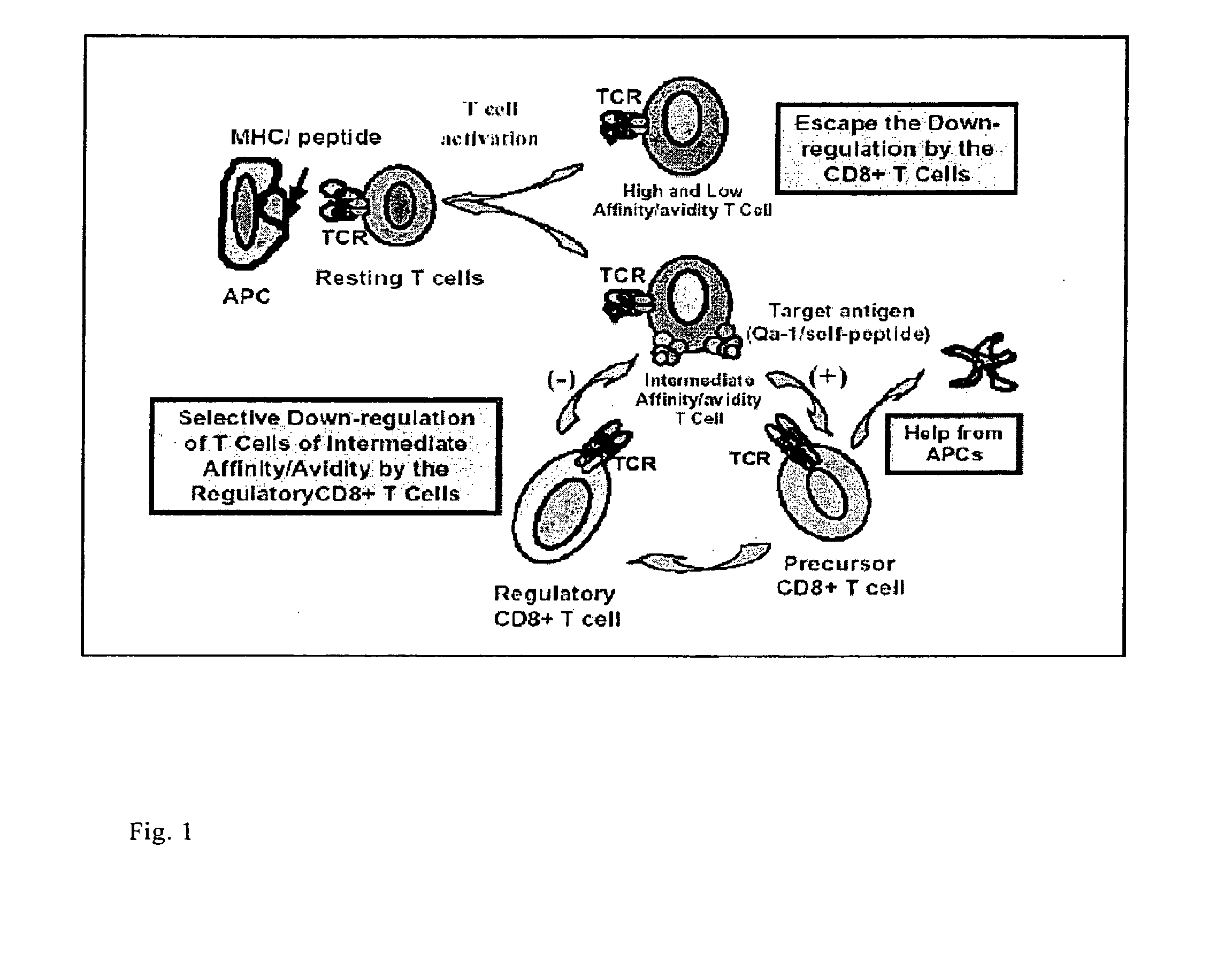
[0089]Before an organ is transplanted into a recipient subject, to the subject is administered (i) a plurality of cells from the donor subject, wherein the donor cells have been irradiated, and (ii) a monoclonal antibody which specifically binds CD40 ligand, so as to inhibit activation of allo-reactive T cells in the recipient subject. The transplant surgery is performed on the subject. After the transplantation an agent that enhances down-regulation of a donor tissue-activated HLA-E+ T cell by an HLA-E-restricted CD8+ T cell is administered to the recipient subject, thereby enhancing down-regulation of the donor tissue-activated HLA-E+ T cell, so as to thereby prevent rejection by the immune system of the recipient subject of the tissue transplanted into the recipient subject. In a further example the recipient subject is further administered an immunosuppressant pharmaceutical.
PUM
 Login to View More
 Abstract
Description
Claims
Application Information
 Login to View More