
Method and Apparatus to Optimize the Efficacy of the Infrared Radiant Emitter Through Transmissive Ceramic Glass
a technology of transmissive ceramic glass and infrared radiant, which is applied in the direction of lighting and heating apparatus, heating types, and domestic stoves or ranges. it can solve the problems of wasting at least 40% of energy output, wasting approximately 40 watts of heating ceramic glass, and achieving the effect of improving the rate and efficiency of heating the thermal target, efficient projection of radiant energy, and improving the efficiency of infrared passband characteristics of ceramic glass
- Summary
- Abstract
- Description
- Claims
- Application Information
AI Technical Summary
Benefits of technology
Problems solved by technology
Method used
Image

Examples
Embodiment Construction
[0057]The following detailed description of a preferred embodiment of the present invention proceeds with reference to the delivery of thermal energy to a cooking utensil sitting on top of a second generation ceramic glass plate as provided by either of the two major manufacturers after the mid-1990s.
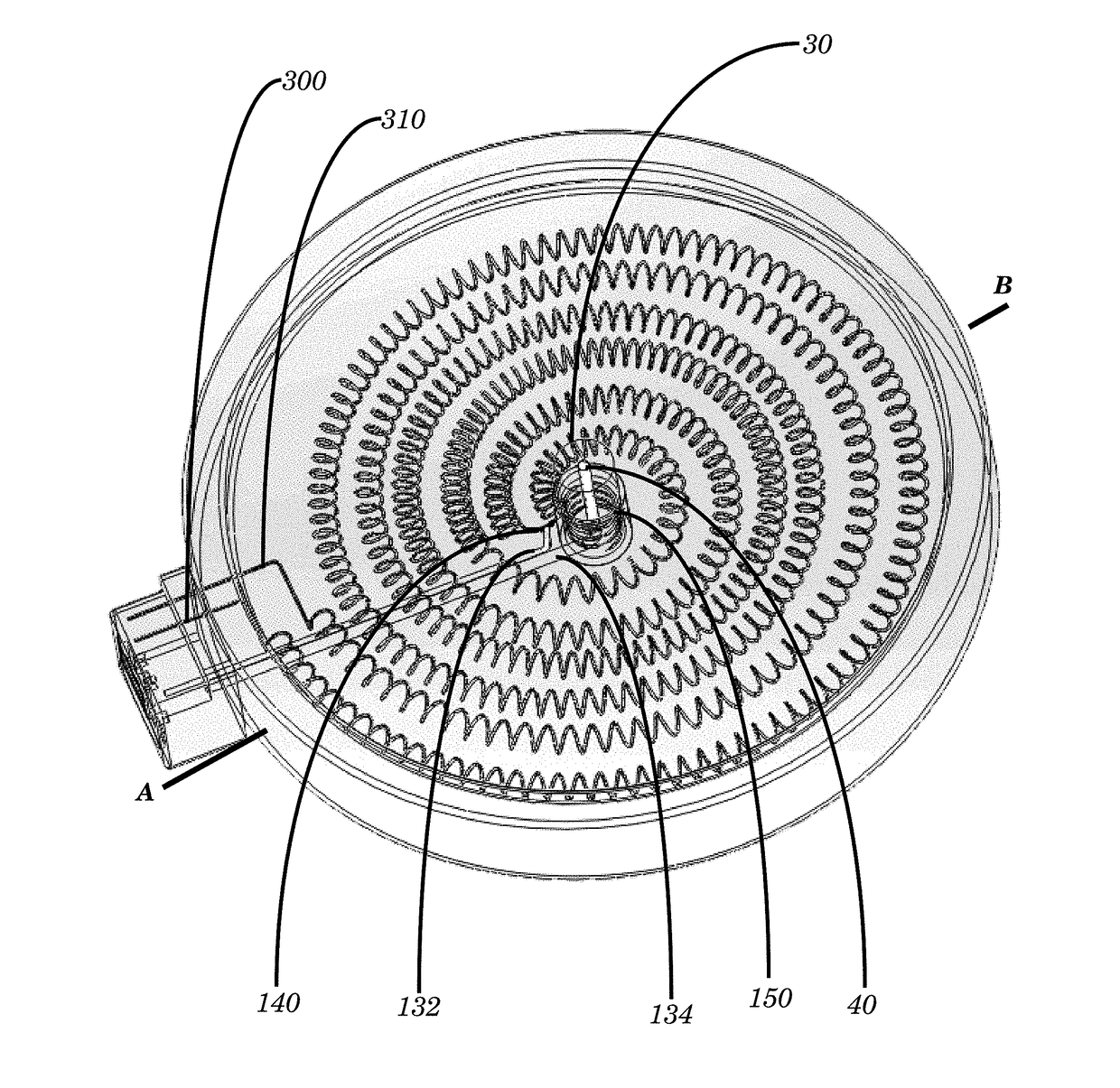
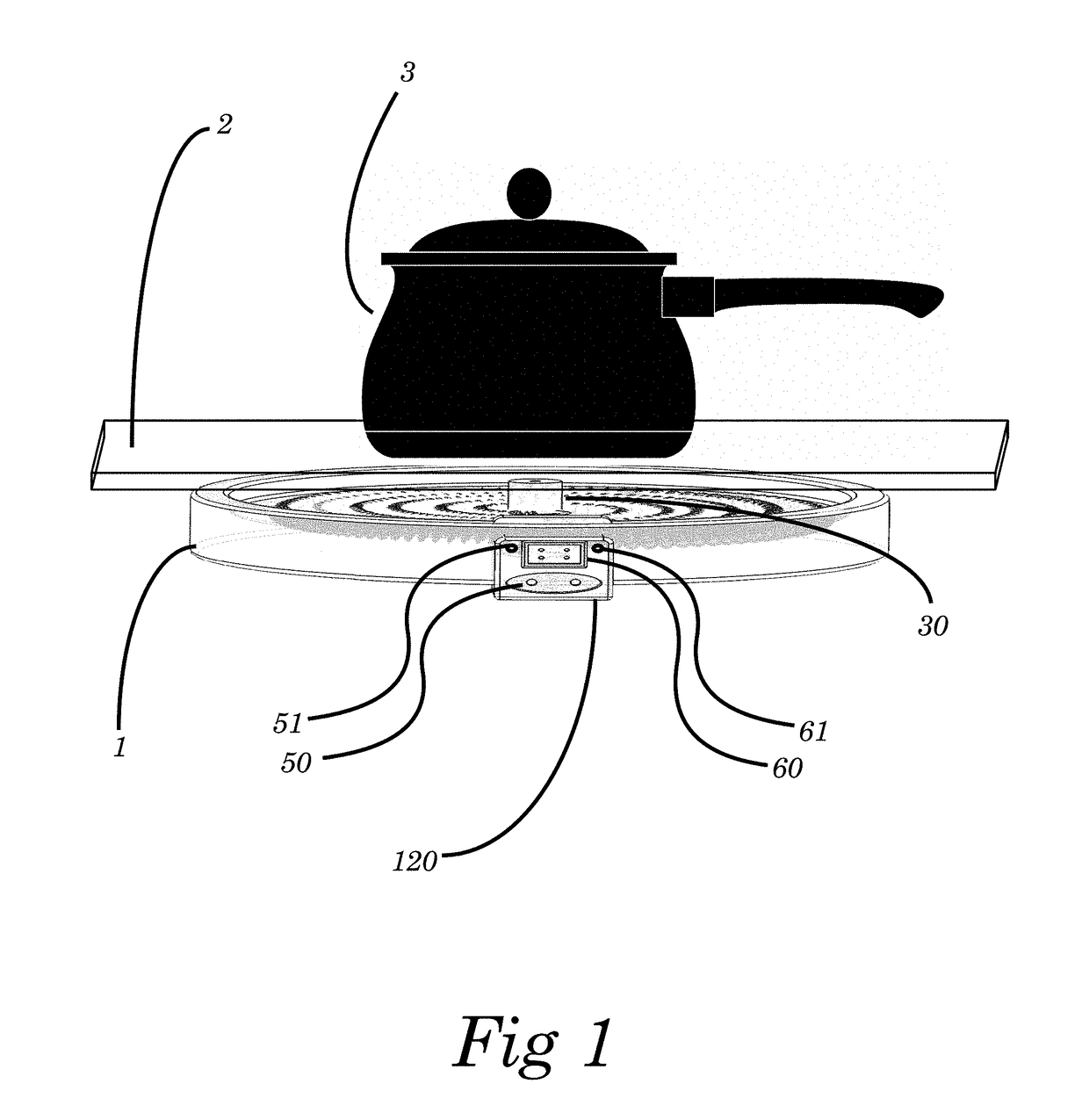
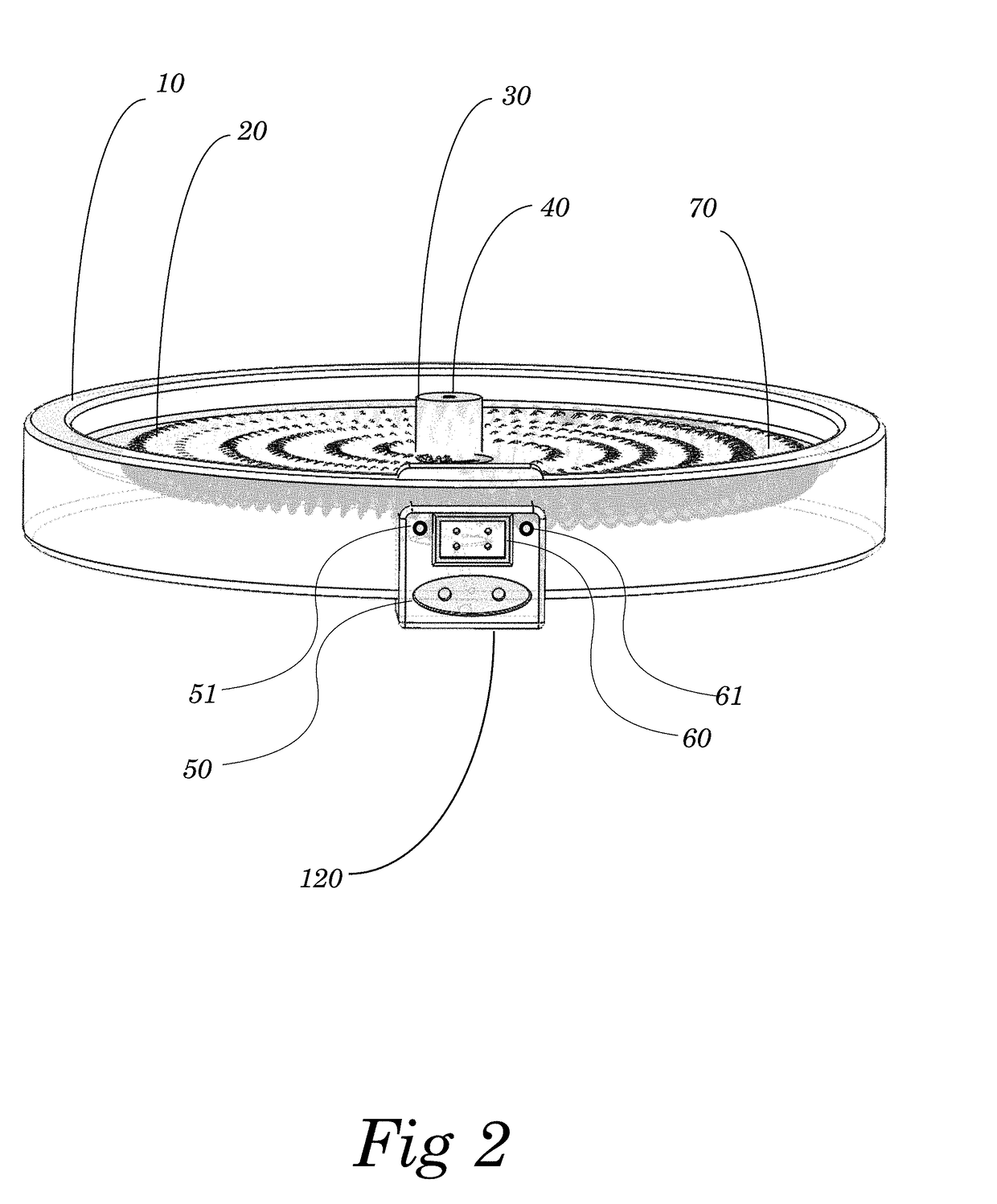
[0058]The following description of the present invention is in the context of a preferred embodiment comprising a radiant emitter heating element 1, smooth top ceramic glass cooktop 2, and utilizing a common cooking utensil 3. The combined system is intended to be heated by a uniquely configured radiant emitter element 1 optimized to deliver radiant energy through the ceramic glass 2 to the cooking utensil 3 sitting on top of the ceramic glass.
[0059]The basic apparatus disclosed herein is not intended to be limited to smooth top cooktop configurations, and in fact could be used to source the precise control of thermal energy from a (resistive) radiant emitter in a different configuratio...
PUM
| Property | Measurement | Unit |
|---|---|---|
| operational temperature | aaaaa | aaaaa |
| temperature | aaaaa | aaaaa |
| wavelengths | aaaaa | aaaaa |
Abstract
Description
Claims
Application Information
 Login to View More