
Cancer-associated fibroblasts in maintaining stemness of cancer stem cells
a cancer stem cell and cancer-associated technology, applied in the direction of tumor/cancer cells, drug compositions, instruments, etc., can solve the problems of drug resistance and relapse of most patients, and achieve the effect of maintaining cancer stemness and stemness, and suppressing cancer stemness and tumor growth
- Summary
- Abstract
- Description
- Claims
- Application Information
AI Technical Summary
Benefits of technology
Problems solved by technology
Method used
Image

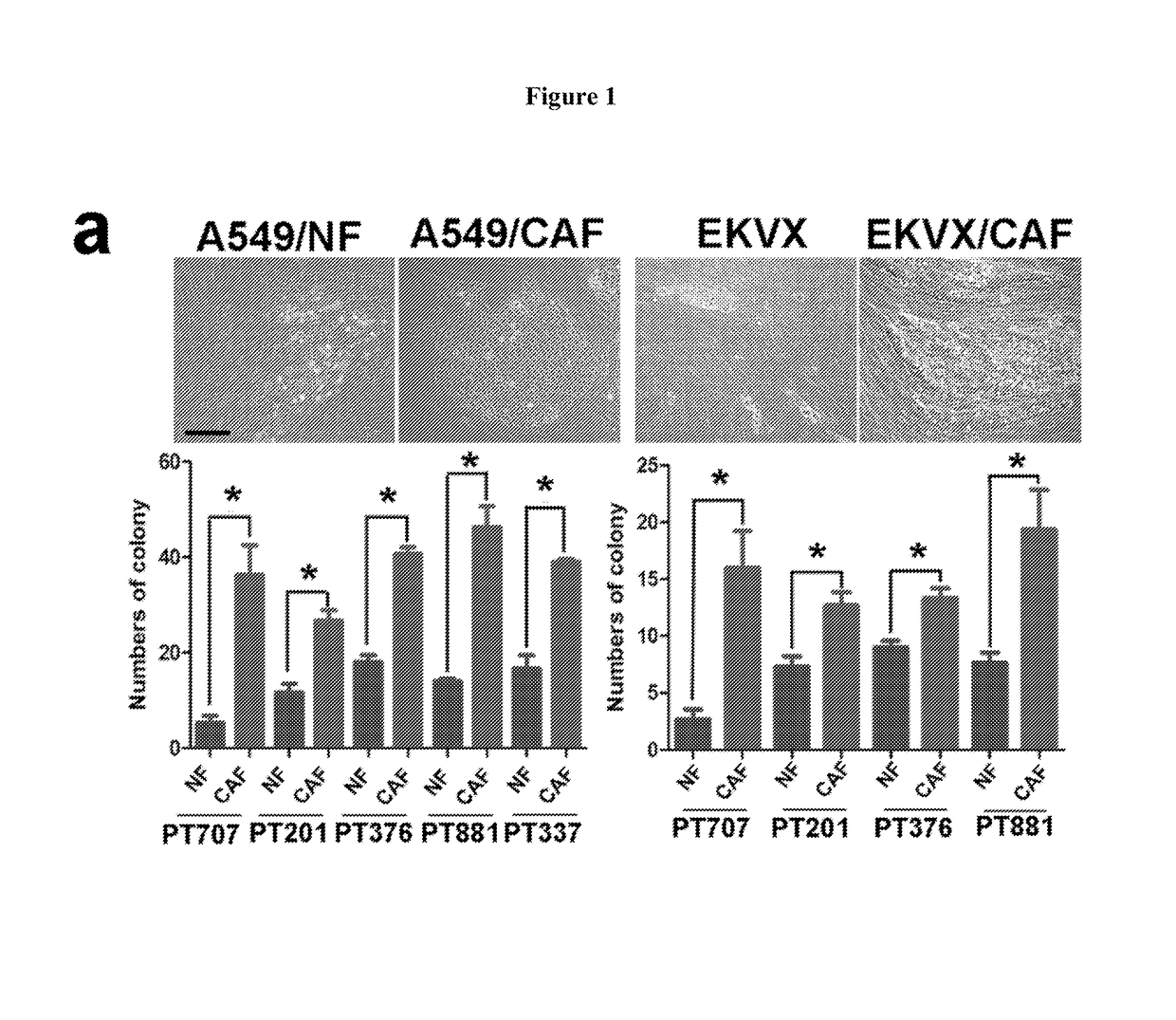
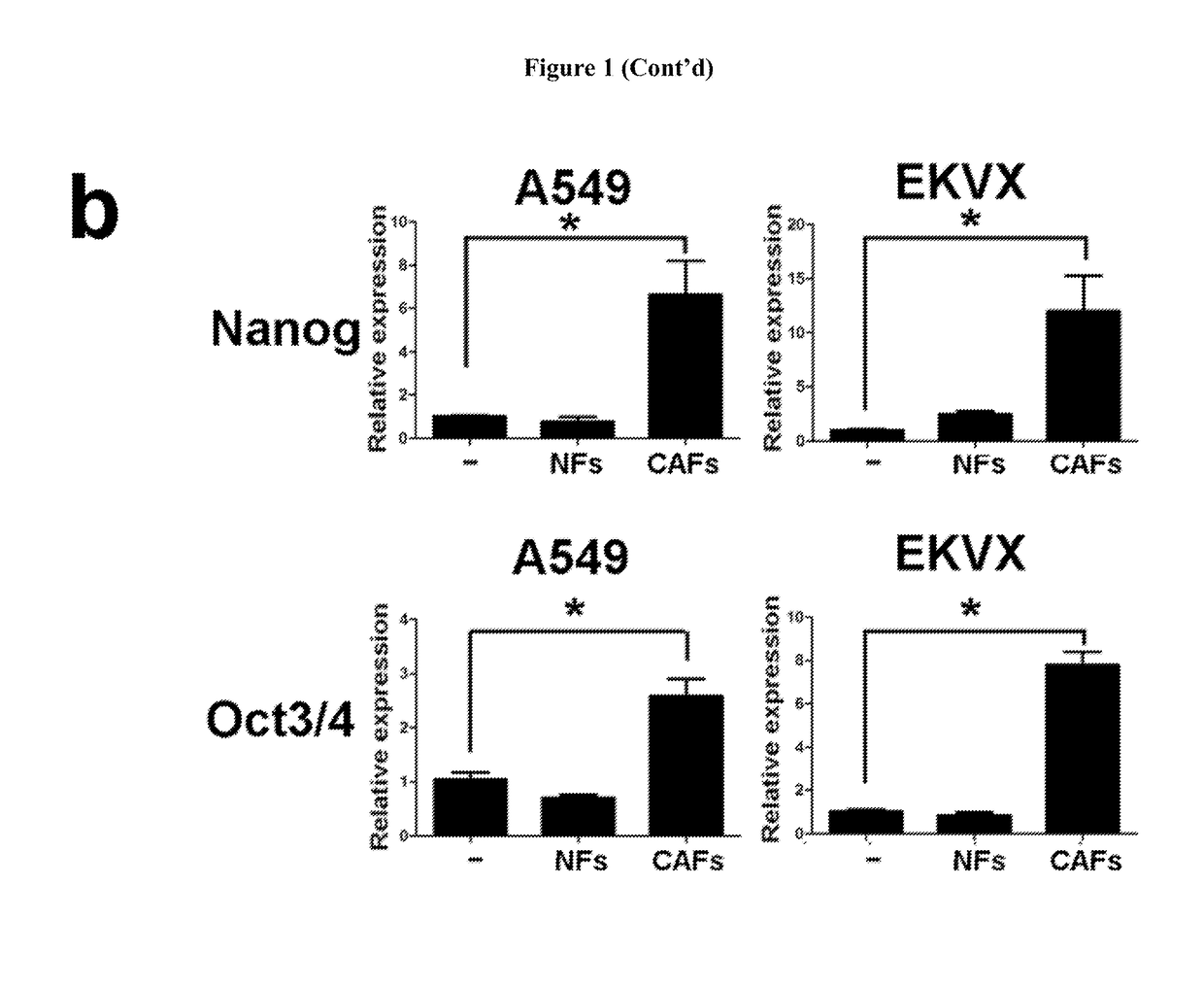
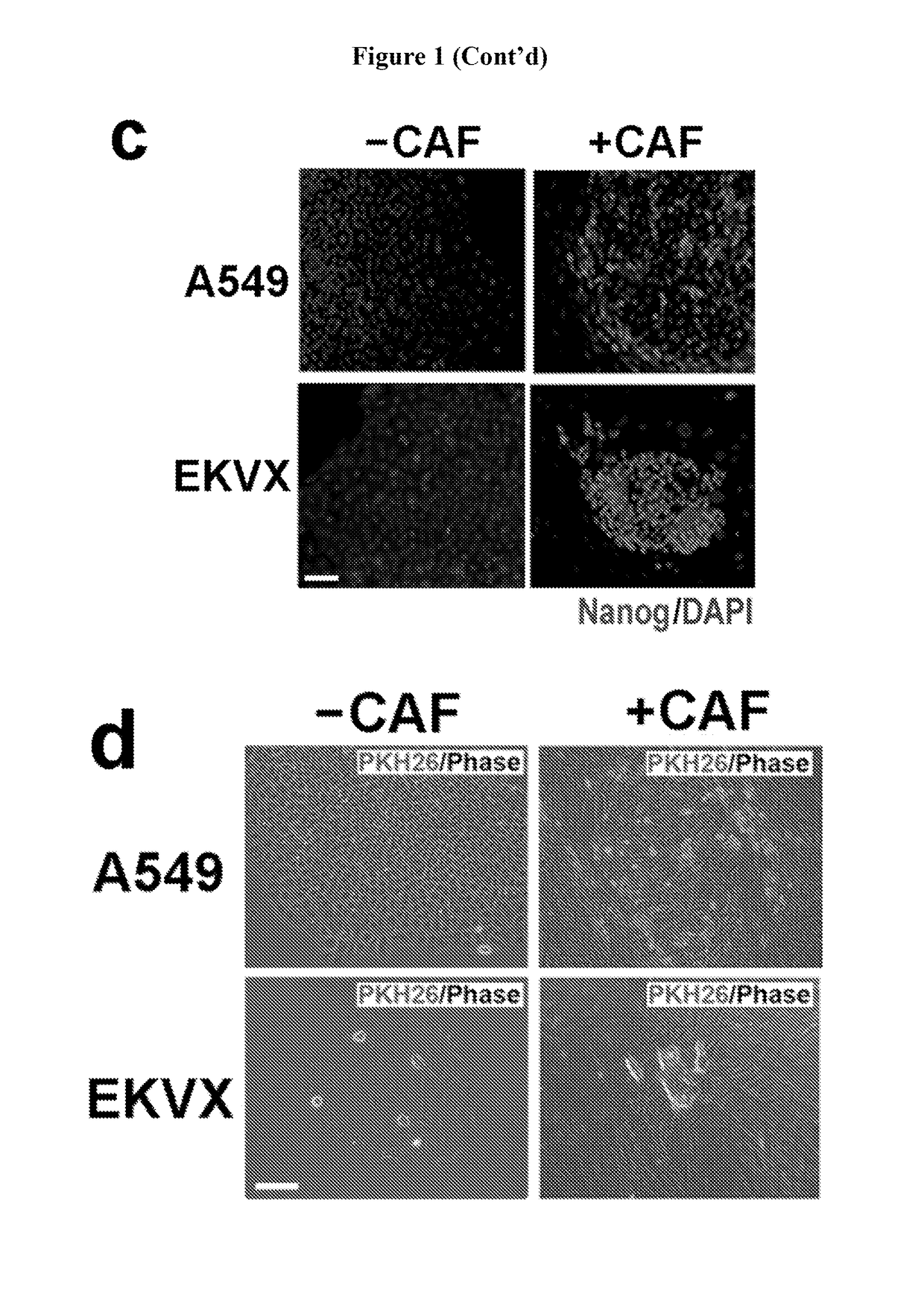
Examples
example 1
sociated Fibroblasts Regulate the Plasticity of Lung Cancer Stemness Via Paracrine Signaling
[0075]The present study relates to a sustainable primary culture of Oct3 / 4(+) / Nanog(+) lung CSCs fed with CD90(+) cancer-associated-fibroblasts (CAFs) to further advance preserving stem cells in the tumor microenvironment. Here, a transcriptomic approach was applied and a paracrine-network was identified as the niche that supports and enriches CSCs through dedifferentiation and reacquisition of stem-cell-like properties. Specifically, it was observed that IGF1R signaling activation in cancer cells in the presence of CAFs expressing IGF-II can induce Nanog expression and promote stemness. Moreover, this paracrine signaling predicts overall and relapse-free survival in stage-I non-small-cell-lung-cancer (NSCLC) patients. Further, IGF-II / IGF1R signaling blockade inhibits Nanog expression and attenuates cancer stem cell features. Data from this study demonstrates that CAFs constitute the supporti...
example 2
ed High-Content Assay
[0132]Lung CSCs or cancer cells (200 cells / well) were added to 96-well plates pre-seeded with CAFs (2000 cells / well) and were allowed to attach to the plates overnight. After different treatments, cells were processed following the immunofluorescence protocol with the Nanog (ReproCELL) (1:300) primary antibody (as the cancer stem-cell marker) and the mouse anti-human CD90 FITC-conjugated (5E10, BD Pharmingen) antibody (as the CAF marker) overnight at 4° C. Next, the primary antibodies were incubated with the TRITC-conjugated secondary antibody [goat anti-rabbit IgG (H+L) Conjugate, Invitrogen] for 2 h at room temperature. The nuclei were counterstained with the Hoechst 33342 dye (Invitrogen). To determine the background fluorescence level of the secondary antibody, each plate included control wells containing only the secondary antibody (stained with the Hoechst 33342 dye). Images of the stained cells were acquired using the automated fluorescence microscopy pla...
PUM
| Property | Measurement | Unit |
|---|---|---|
| concentration | aaaaa | aaaaa |
| concentrations | aaaaa | aaaaa |
| temperature | aaaaa | aaaaa |
Abstract
Description
Claims
Application Information
 Login to View More