
Method of treating selected patient population experiencing dravet syndrome
a patient population and dravet syndrome technology, applied in the field of treating patients with dravet syndrome, can solve the problems of withdrawn from the us market, additional types of seizure, poor development of cognition, language and motor skills, etc., and achieve the effect of reducing convulsive seizure frequency and eliminating seizures
- Summary
- Abstract
- Description
- Claims
- Application Information
AI Technical Summary
Benefits of technology
Problems solved by technology
Method used
Image

Examples
example 1
[0250]Table 1 provides results based on the data presented in Ceulemans et al., Epilepsia (2012) 53(7):1131-1139. Patients were administered an average daily dose of fenfluramine of 0.34 mg / kg / day for between 1 and 22 years.
TABLE 1Seizure Free Patients and Responders (Treatedwith Fenfluramine and Valproate) FenfluramineSeizure-free Patients>50% Reduction in Seizures8 / 12 (66%)9 / 12 (75%)
[0251]As can be seen from the foregoing data, long-term fenfluramine treatment advantageously resulted in a seizure-free condition in 66.6% of test subjects.
[0252]Additionally, long-term fenfluramine treatment advantageously resulted in a reduction in seizures of 75%.
[0253]These results confirm that fenfluramine provides long term elimination / reduction in seizures.
[0254]These results were achieved, in the vast number of cases, using significantly lower doses of fenfluramine than those proposed previously in the treatment of various conditions typified by seizures. Additionally, and surprisingly, fenflu...
example 2
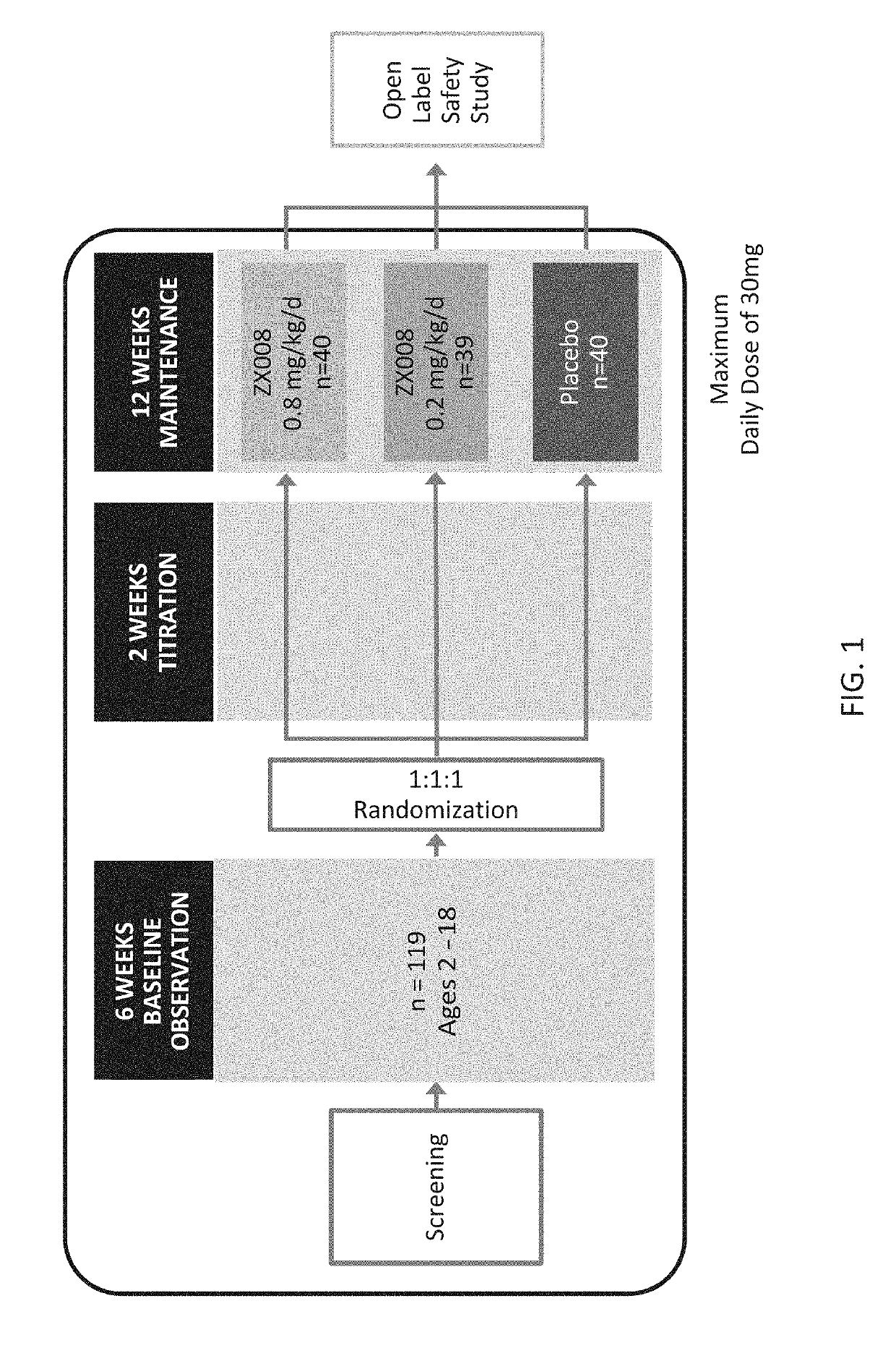
[0258]Two identical Phase 3 studies were carried out with a liquid formulation of fenfluramine. Approximately 120 subjects with Dravet syndrome, a rare form of pediatric epilepsy, were intended to be randomized in each study in three treatment groups: 0.2 mg / kg / day of the liquid fenfluramine formulation, 0.8 mg / kg / day the liquid fenfluramine formulation and placebo (n=40 / group).
[0259]The first 119 subjects to be randomized in both identical studies combined were analyzed and reported as Study 1 (FIG. 1), covered by a Statistical Analysis Plan (SAP).
[0260]Primary and key secondary endpoints in the Study 1 SAP were pre-determined. All patients were treated twice per day over a period of 14 weeks using an oral syringe to administer the formulation. The treatment period included a two-week titration period and a 12-week maintenance period.
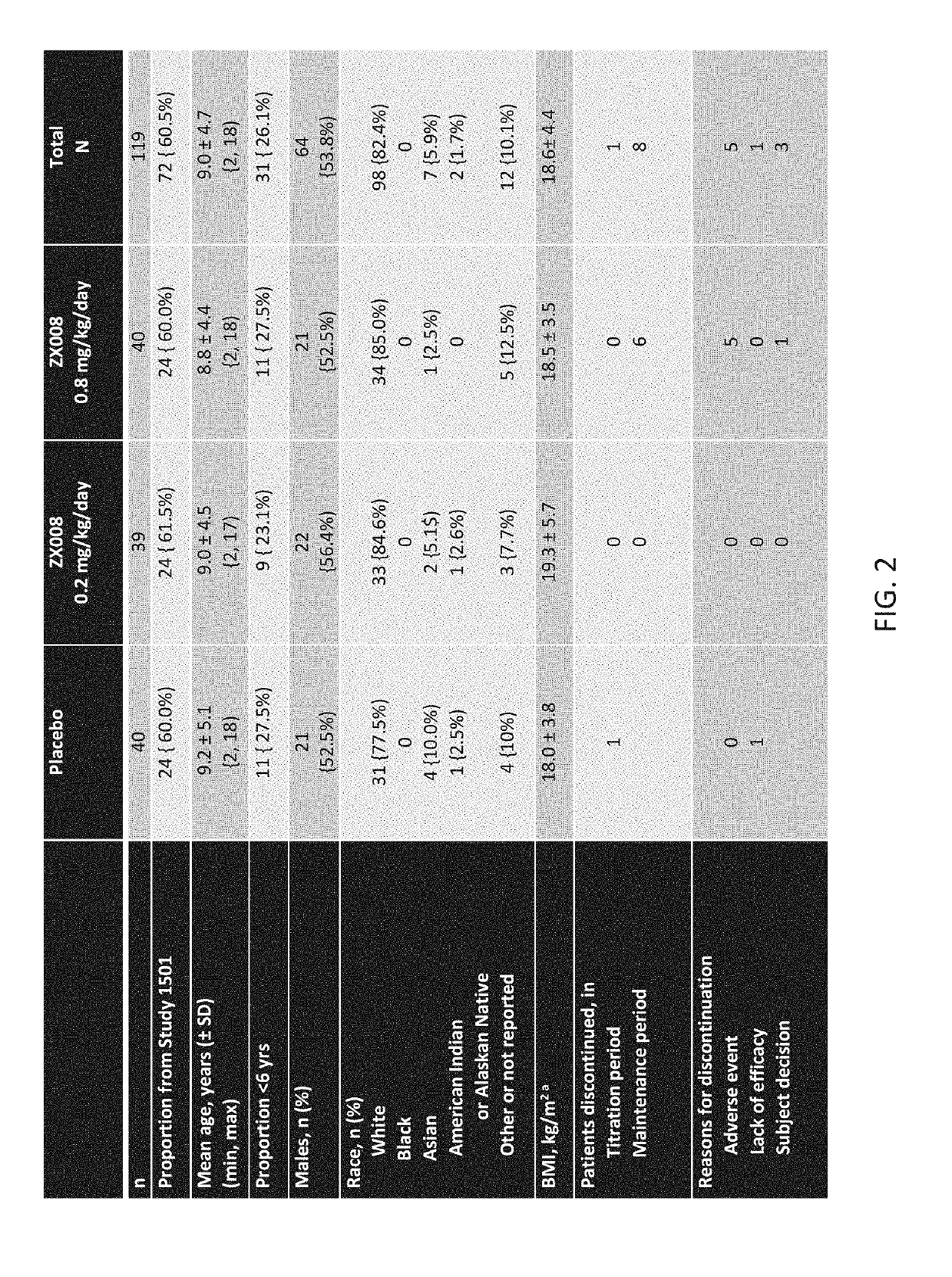
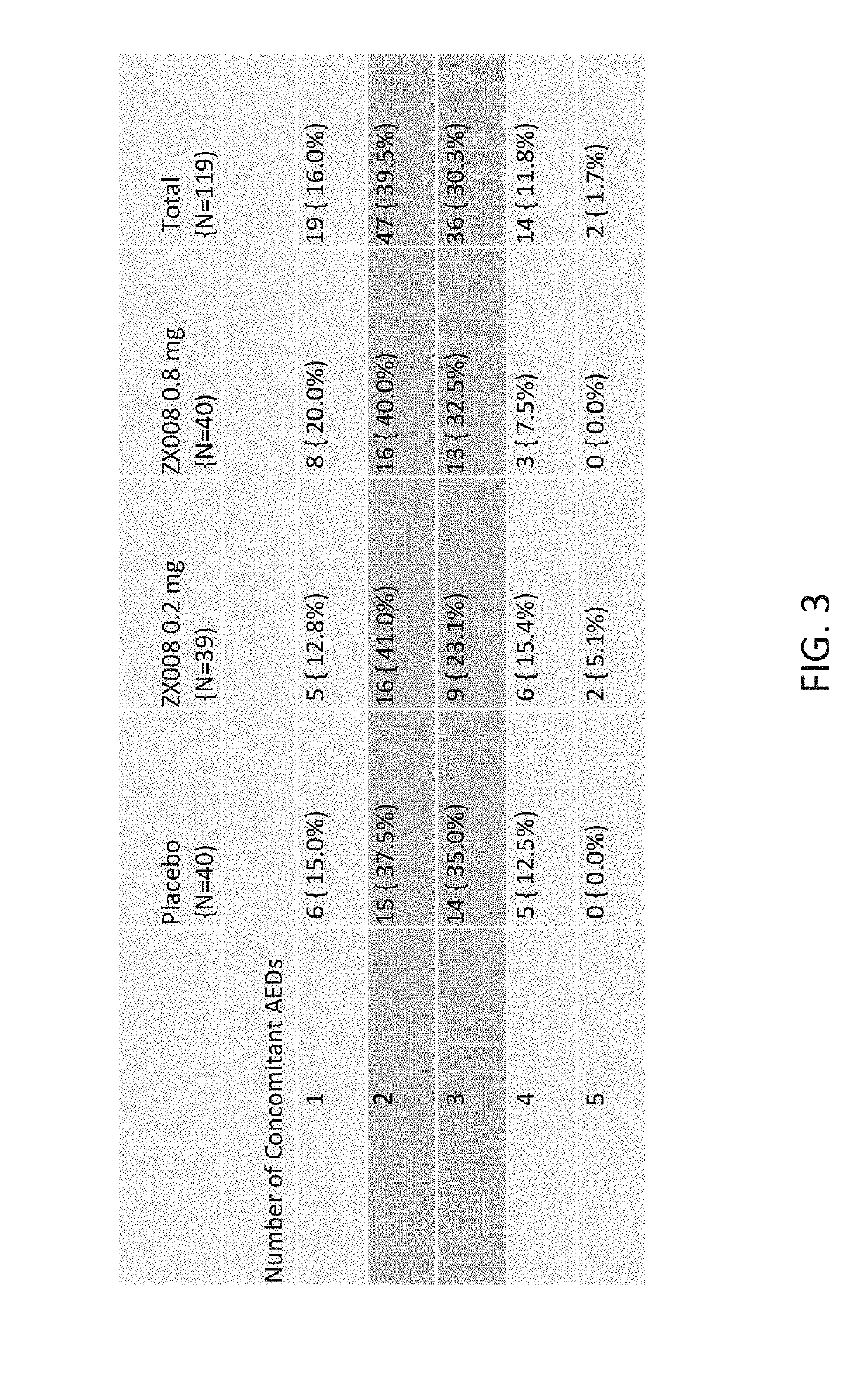
[0261]The initial results of Study 1 are outlined below. The randomized, double blind, placebo controlled, Phase 3 study enrolled 119 patients across ...
example 3
[0273]ZX008 (Fenfluramine HCL Oral Solution) in Dravet Syndrome: Effect on Convulsive Seizure Frequency in Patients Who Failed Treatment with Stiripentol Prior to Study 1
[0274]The effect of ZX008 on frequency of convulsive seizures (CSF) is assessed in a subset of Dravet syndrome (DS) subjects in a Phase 3 clinical trial (Study 1) who had previously been treated with stiripentol (58 subjects met the criteria for this analysis across both treatment arms and the placebo arm). For this analysis subjects who had discontinued stiripentol prior to study entry were defined as failures.
[0275]Stiripentol is approved in Europe, Australia, Canada and Japan and the USA for adjunctive treatment of patients with DS. A subgroup analysis of the effect of ZX008 on CSF in subjects who discontinued stiripentol prior to entry in Study 1 is presented.
[0276]Methods: Following a 6-week baseline period, subjects were randomized 1:1:1 to placebo (n=16), ZX008 0.2 mg / kg / day (n=20), or ZX008 0.8 mg / kg / day, ma...
PUM
| Property | Measurement | Unit |
|---|---|---|
| concentration | aaaaa | aaaaa |
| concentration | aaaaa | aaaaa |
| concentration | aaaaa | aaaaa |
Abstract
Description
Claims
Application Information
 Login to View More