
Architecture for power modules such as power inverters
a technology of power modules and power converters, applied in the direction of electrical apparatus contruction details, semiconductor/solid-state device details, lighting and heating apparatuses, etc., can solve the problems of reducing the ability to transfer heat away from electronics, affecting the cost and/or size of many applications of power converters, and components that fail or even fail, etc., to achieve effective heat transfer, large surface area, and high thermal impedance
- Summary
- Abstract
- Description
- Claims
- Application Information
AI Technical Summary
Benefits of technology
Problems solved by technology
Method used
Image

Examples
Embodiment Construction
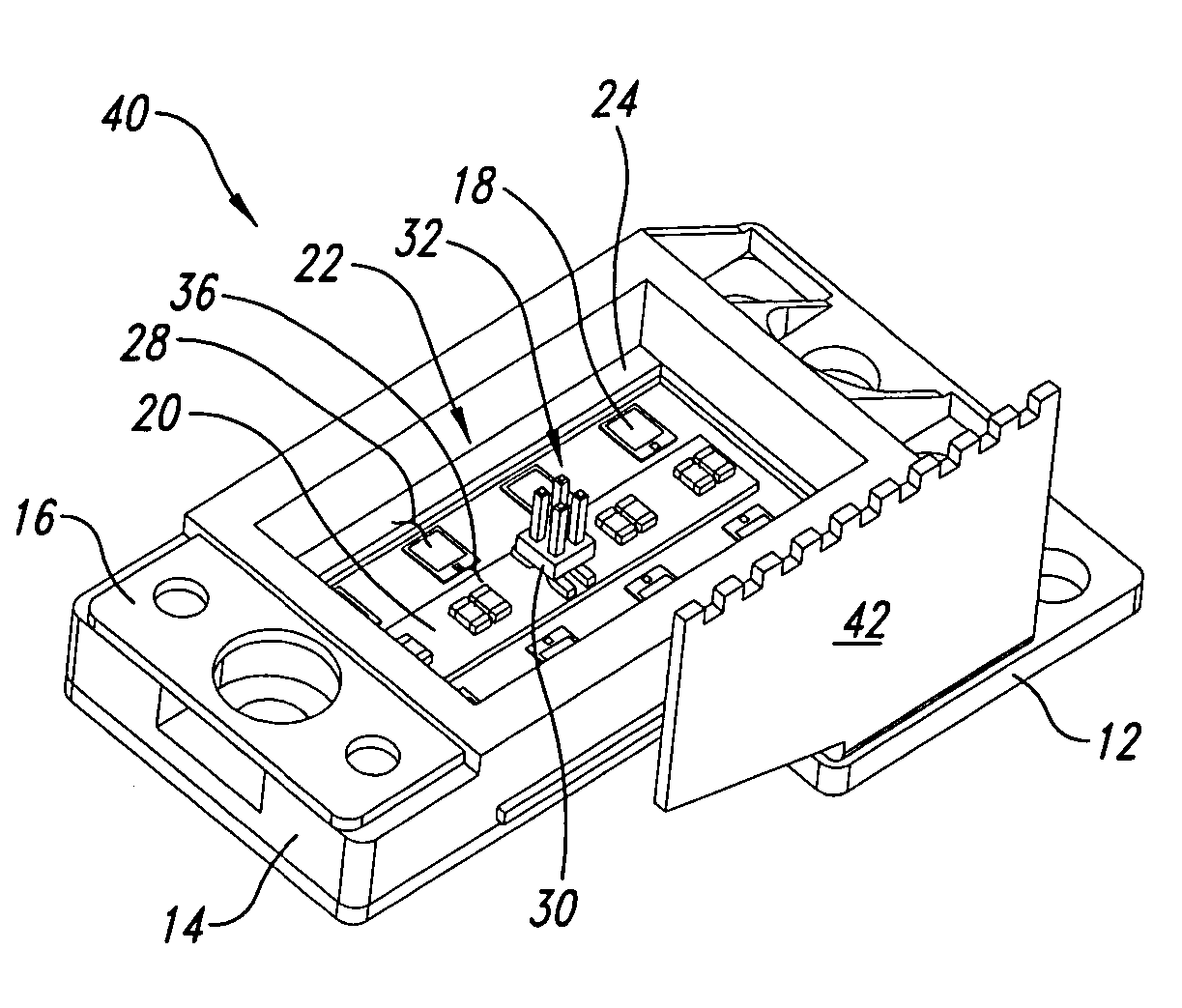
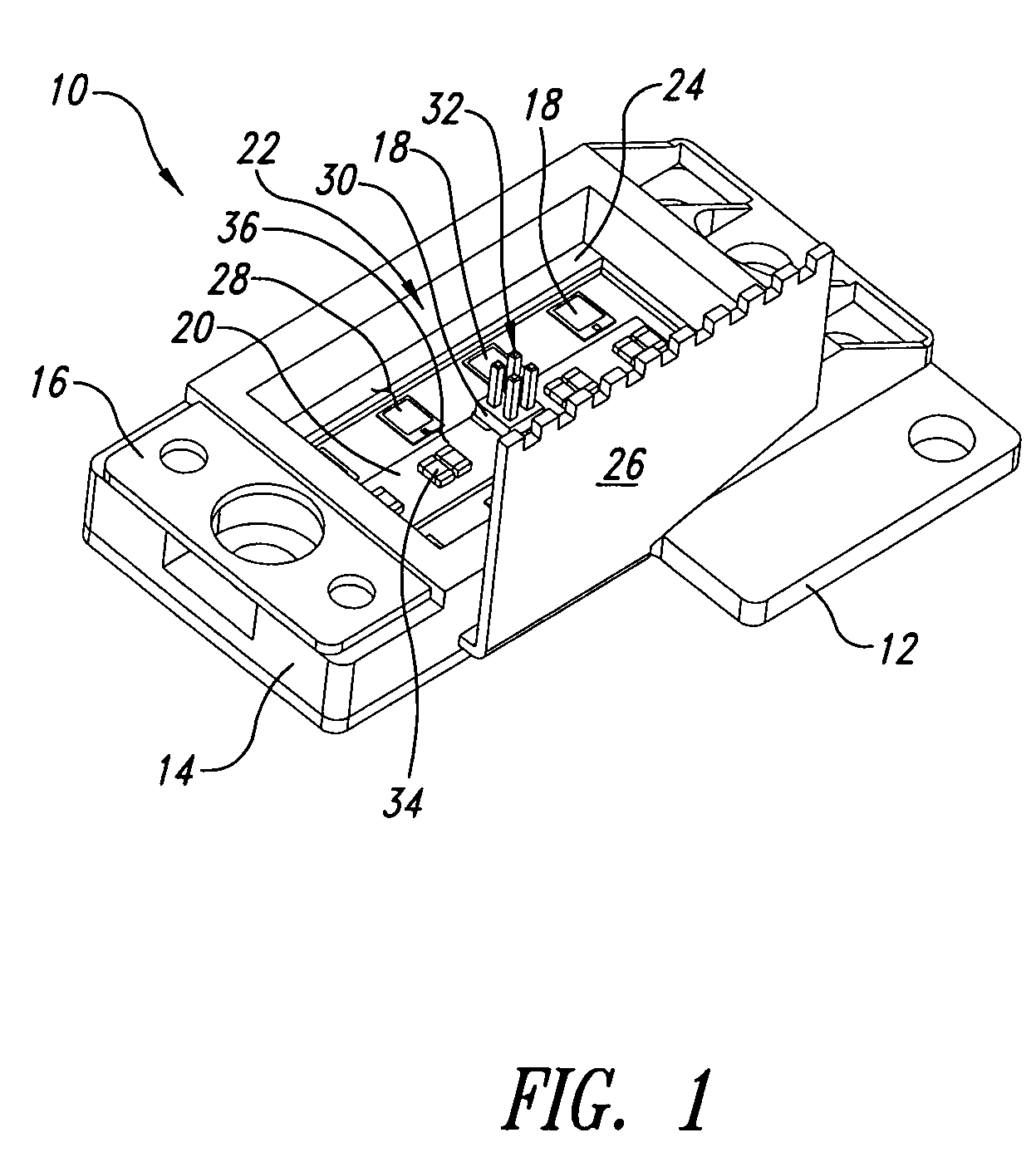
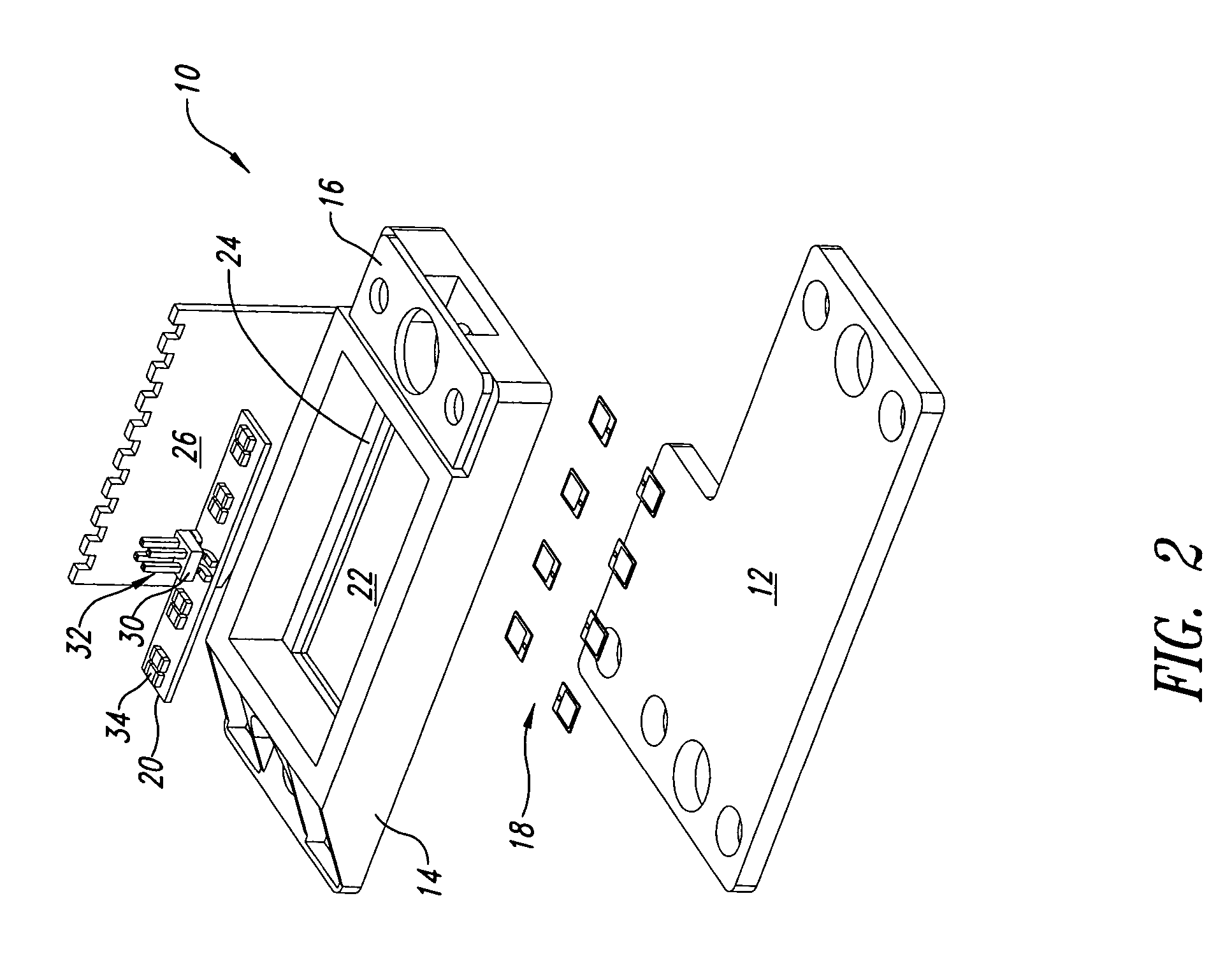
[0033]In the following description, certain specific details are set forth in order to provide a thorough understanding of various embodiments of the invention. However, one skilled in the art will understand that the invention may be practiced without these details. In other instances, well-known structures associated with power converters, such as control systems including microprocessors and drive circuitry have not been shown or described in detail to avoid unnecessarily obscuring descriptions of the embodiments of the invention.
[0034]Unless the context requires otherwise, throughout the specification and claims which follow, the word “comprise” and variations thereof, such as, “comprises” and “comprising” are to be construed in an open, inclusive sense, that is as “including, but not limited to.”
[0035]Reference throughout this specification to “one embodiment” or “an embodiment” means that a particular feature, structure or characteristic described in connection with the embodi...
PUM
 Login to View More
 Abstract
Description
Claims
Application Information
 Login to View More