
Method of determining pole arc ratio of interior permanent magnet rotary motor and interior permanent magnet rotary motor
a technology of permanent magnets and rotary motors, which is applied in the direction of magnetic circuit rotating parts, dynamo-electric machines, and shape/form/construction of magnetic circuits, etc., can solve the problems of motor vibration and speed variation, reduce torque, reduce the productivity of the motor, and reduce the amount of permanent magnets used. , the effect of reducing the torqu
- Summary
- Abstract
- Description
- Claims
- Application Information
AI Technical Summary
Benefits of technology
Problems solved by technology
Method used
Image

Examples
first embodiment
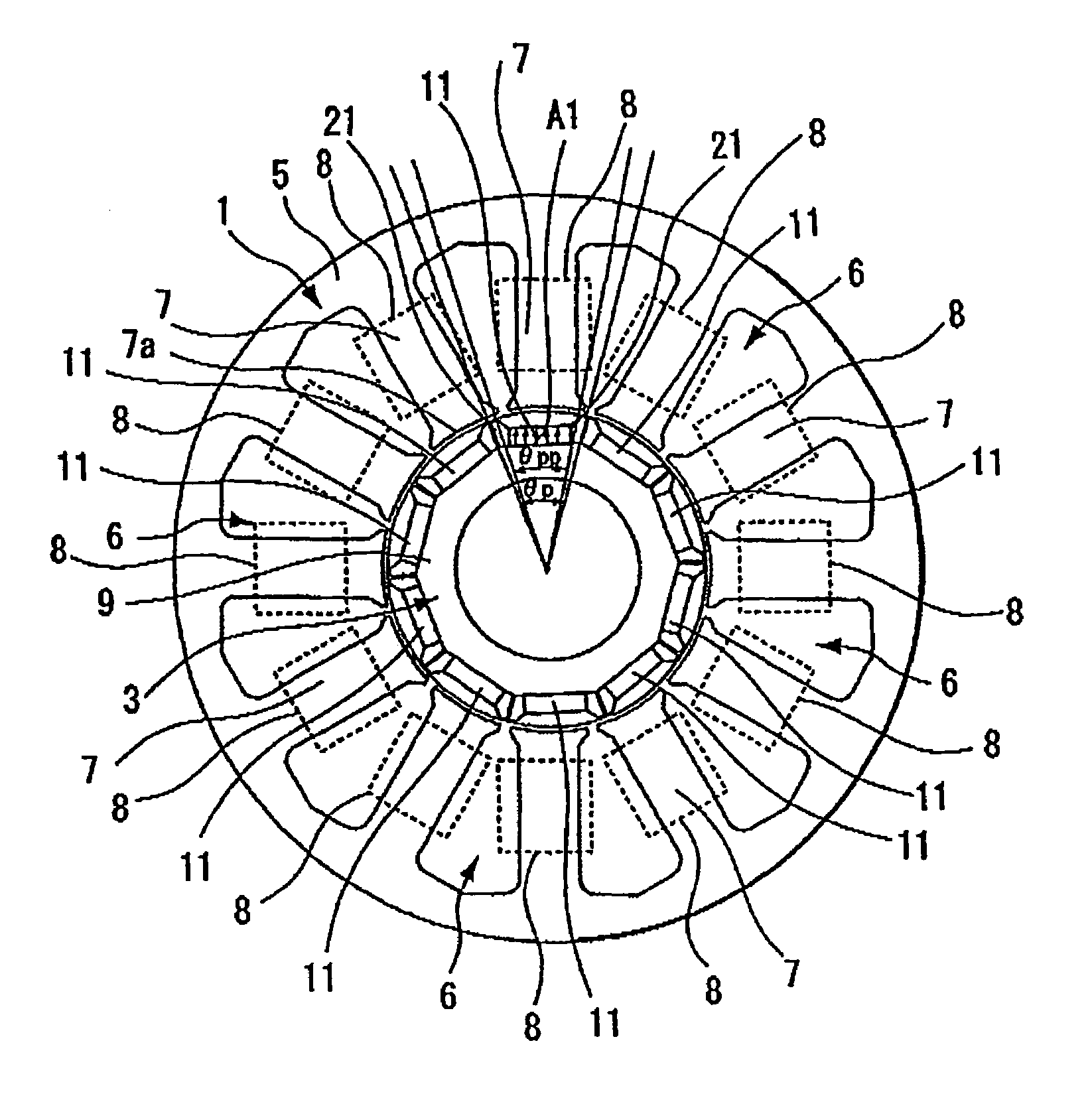
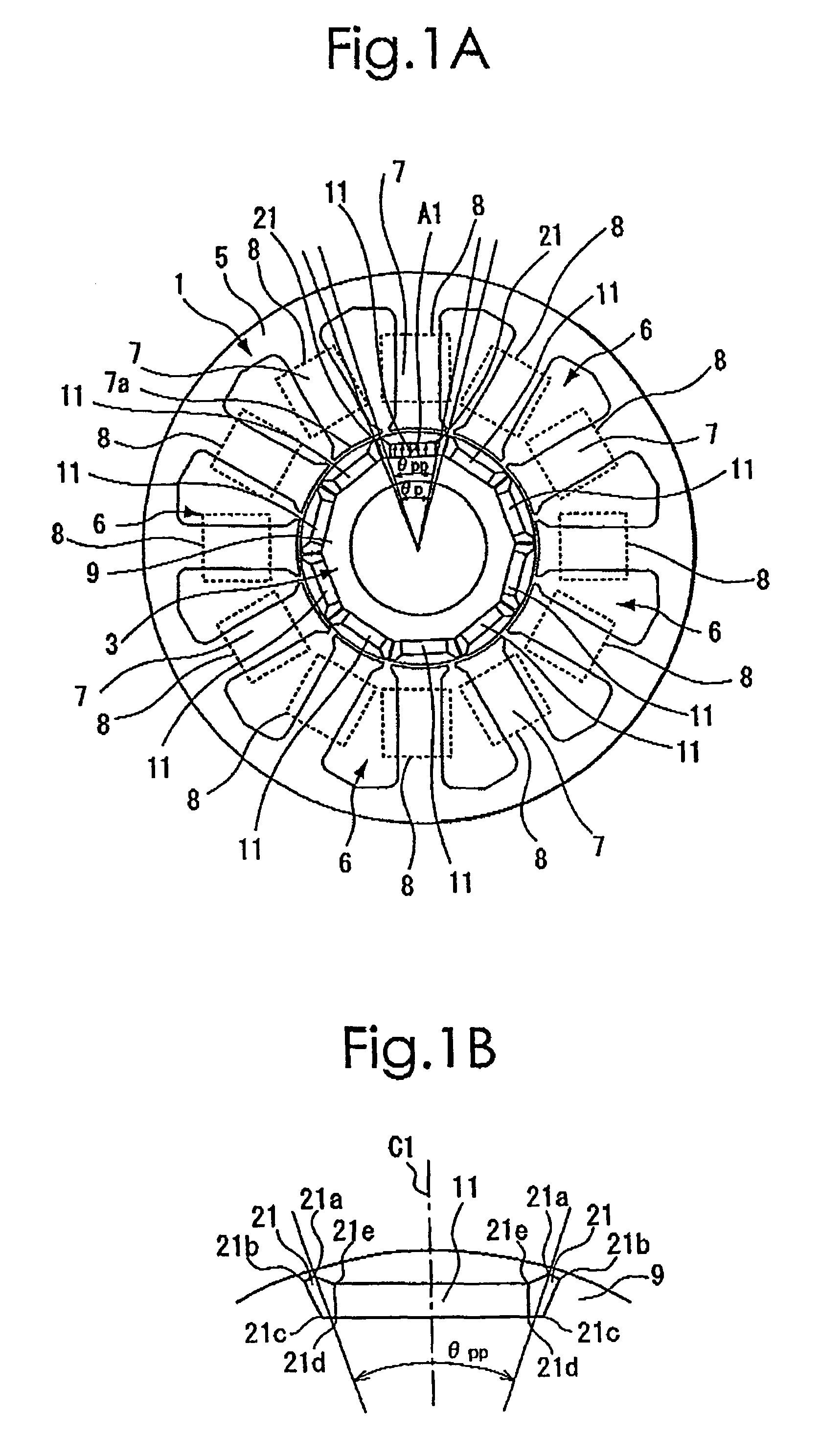
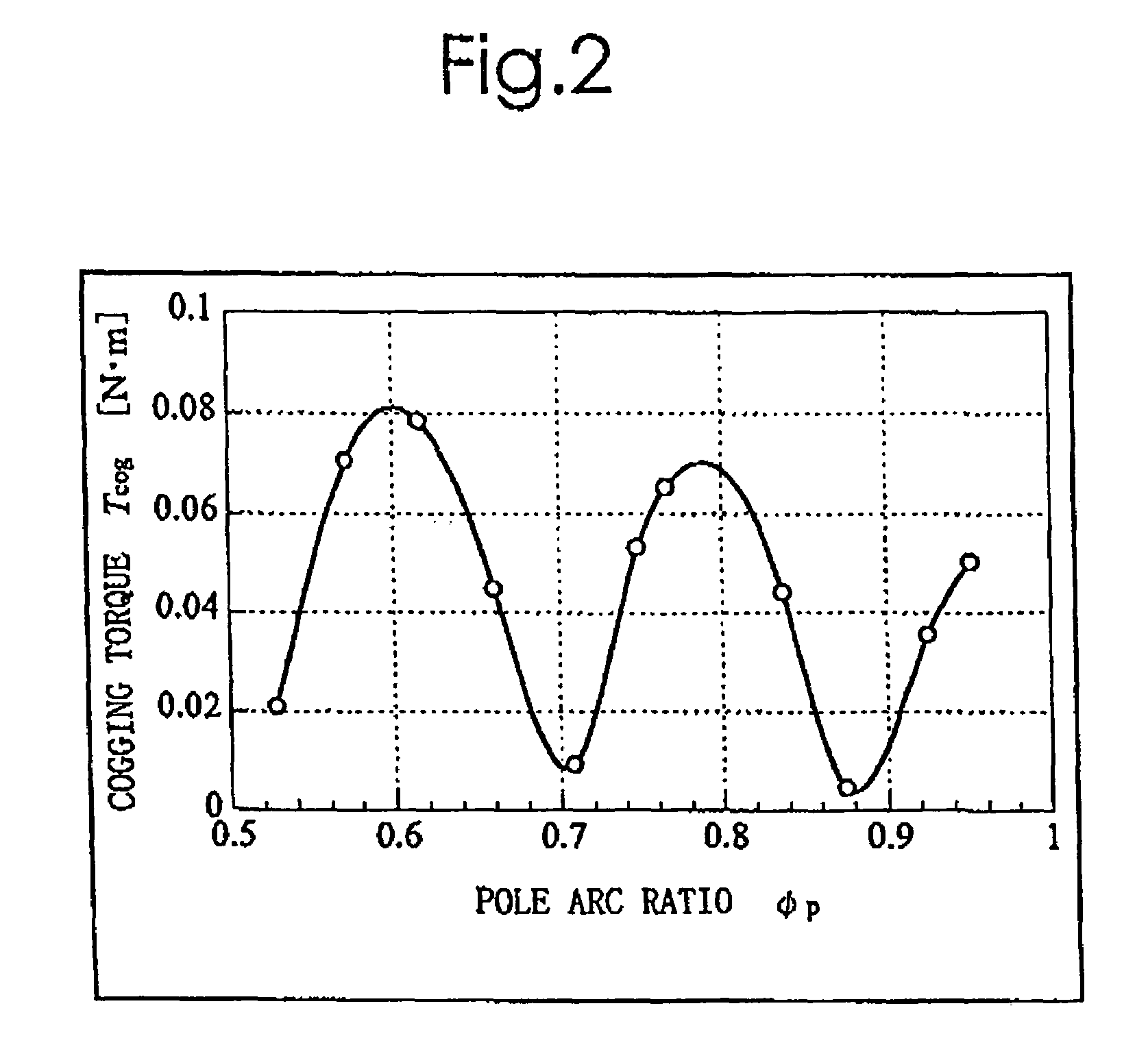
[0036]The best mode for carrying out the present invention will be described with reference to the appended drawings. FIG. 1(A) is a schematic diagram showing a stator 1 and a rotor 3 of an interior permanent magnetic rotary motor used for explaining the present invention. FIG. 1(B) is a partial enlarged view of FIG. 1(A). As shown in both of the drawings, the stator 1 includes a cylindrical yoke 5 and 12 magnetic pole sections 7 that protrude toward the center of the stator from the inner periphery of the yoke 5. Each of the 12 magnetic pole sections 7 has a magnetic pole surface 7a at a leading end thereof. With this arrangement, the stator 1 has N slots 6 (being 12, herein) arranged between respective adjacent pairs of the magnetic pole sections 7 which are spaced at equal intervals in a peripheral direction thereof. On each of the magnetic pole sections 7, a winding section 8 constituted from an exciting winding of two phases wound in a concentrated manner is formed. For facilit...
PUM
 Login to View More
 Abstract
Description
Claims
Application Information
 Login to View More