

Polymerisation process
a polymerisation process and polymerisation technology, applied in the direction of separation processes, chemical/physical/physico-chemical processes, separation processes, etc., can solve the problems of inability to achieve high molecular weight, inability to control the subsequent stage of the process, and inability to pump slurry
- Summary
- Abstract
- Description
- Claims
- Application Information
AI Technical Summary
Benefits of technology
Problems solved by technology
Method used
Image

Examples
example
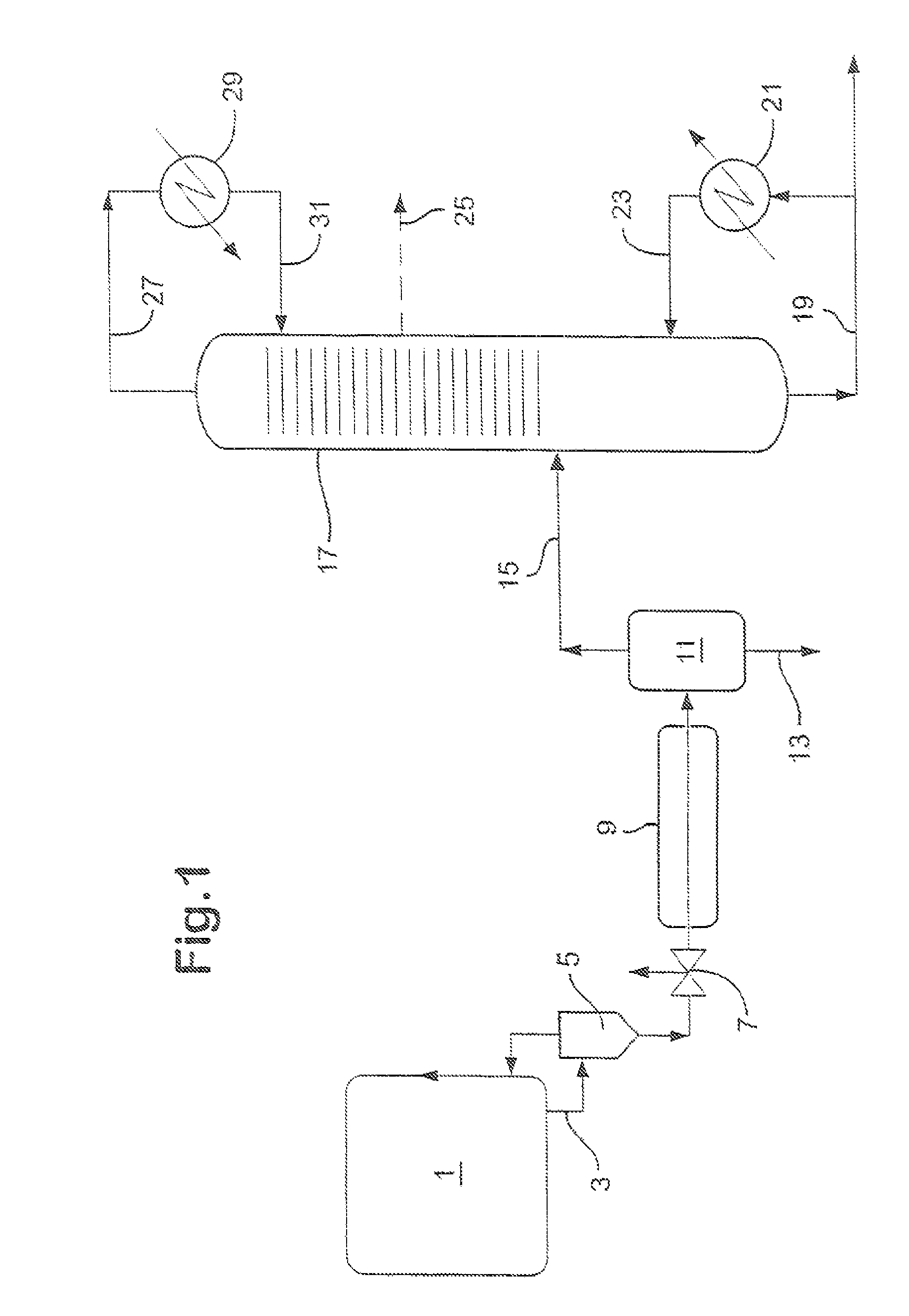
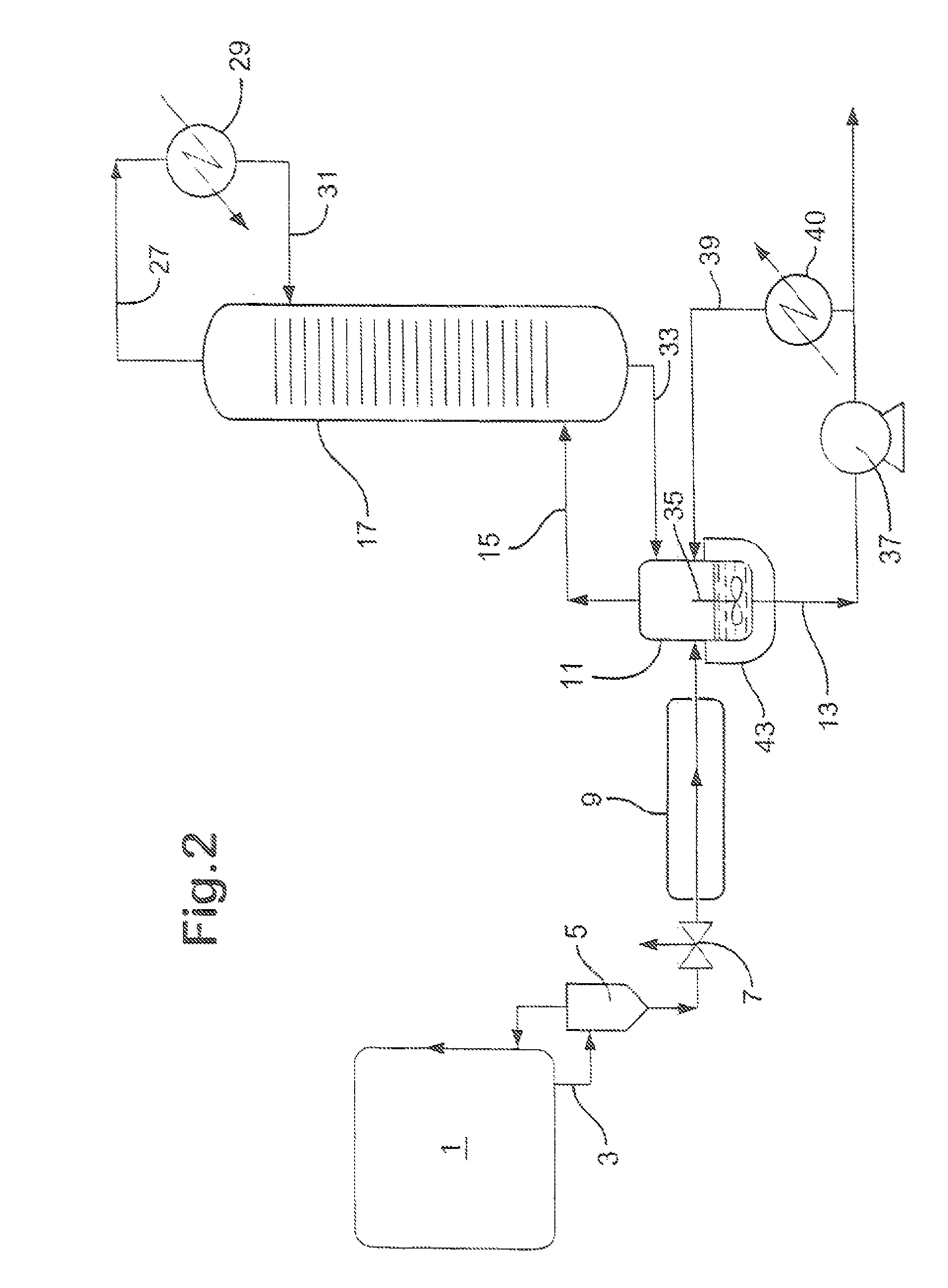
[0072]In one specific example of the invention in which a fractionator is employed between two reactors in a bimodal dual-reactor system such as described in FIG. 2, the fractionator is fed with a stream comprising isobutane, ethylene, hydrogen, hexene-1 and polyethylene issuing from a first polymerisation reactor. This stream is first concentrated in a hydrocyclone, after which it is passed through a slurry heater before entering the base of the fractionator.
[0073]In this particular example, a flow rate of 10090 kg / h of polyethylene and 9685 kg / h hydrocarbon enters the base of the fractionator. The hydrocarbon in this case comprises mainly isobutane but also contains about 3.22 kg / h of hydrogen, 116 kg / h ethylene, about 10 kg / h of solid polymer which contains some active catalyst, and minor amounts of other components.
[0074]As the stream enters the base of the fractionator, the hydrocarbon portion is about 75% vapour. Upon entering the base, the residual liquid and almost all of th...
PUM
| Property | Measurement | Unit |
|---|---|---|
| particle size | aaaaa | aaaaa |
| particle size | aaaaa | aaaaa |
| particle size | aaaaa | aaaaa |
Abstract
Description
Claims
Application Information
 Login to View More