

Show-through reduction method and system
a technology applied in the field of document scanning and printing methods and systems, can solve the problems of inconvenient method, inability to remove severe show-through that is relatively dark, and inability to insert such a backing for book scanning, etc., and achieve the effect of reducing show-through
- Summary
- Abstract
- Description
- Claims
- Application Information
AI Technical Summary
Benefits of technology
Problems solved by technology
Method used
Image

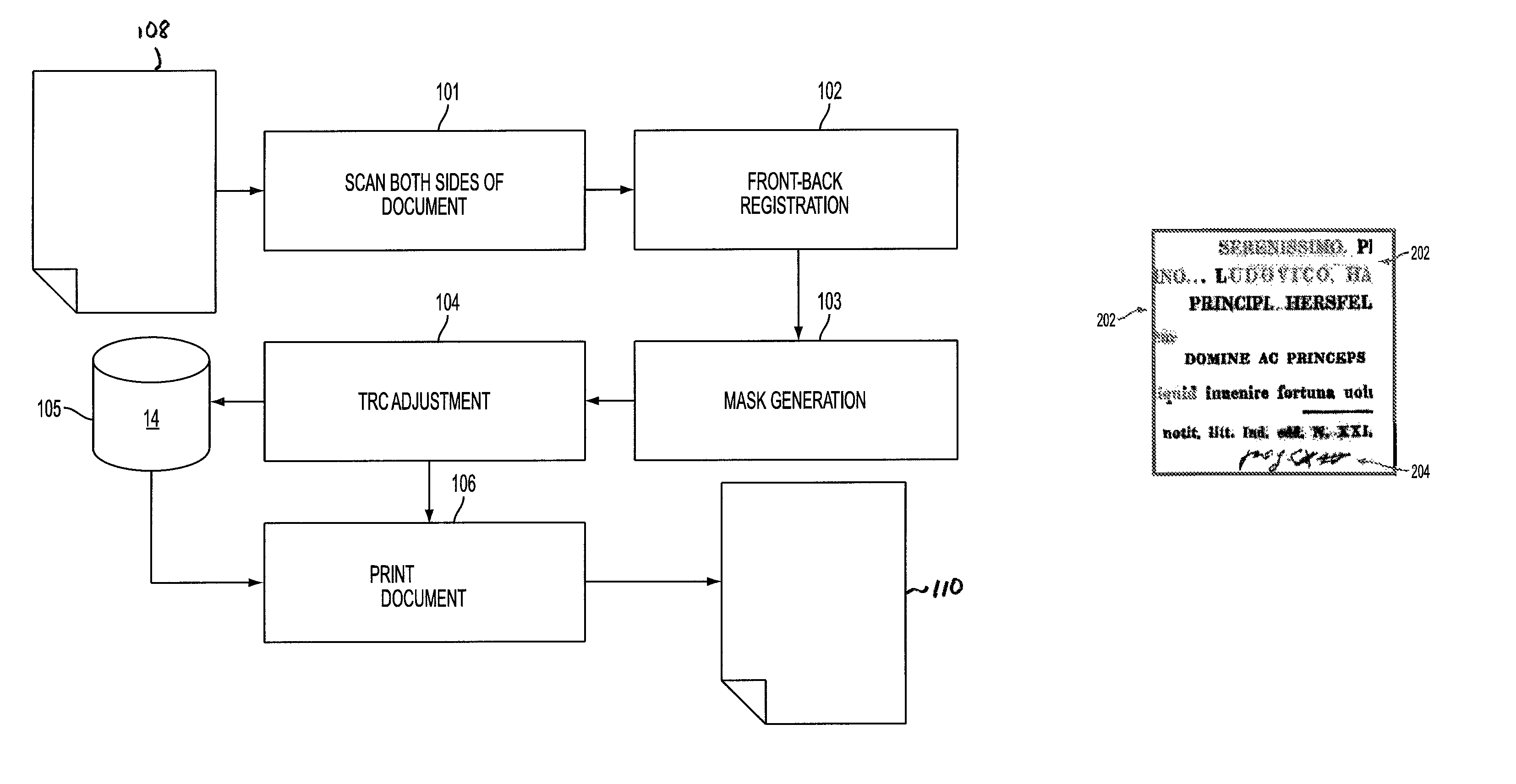
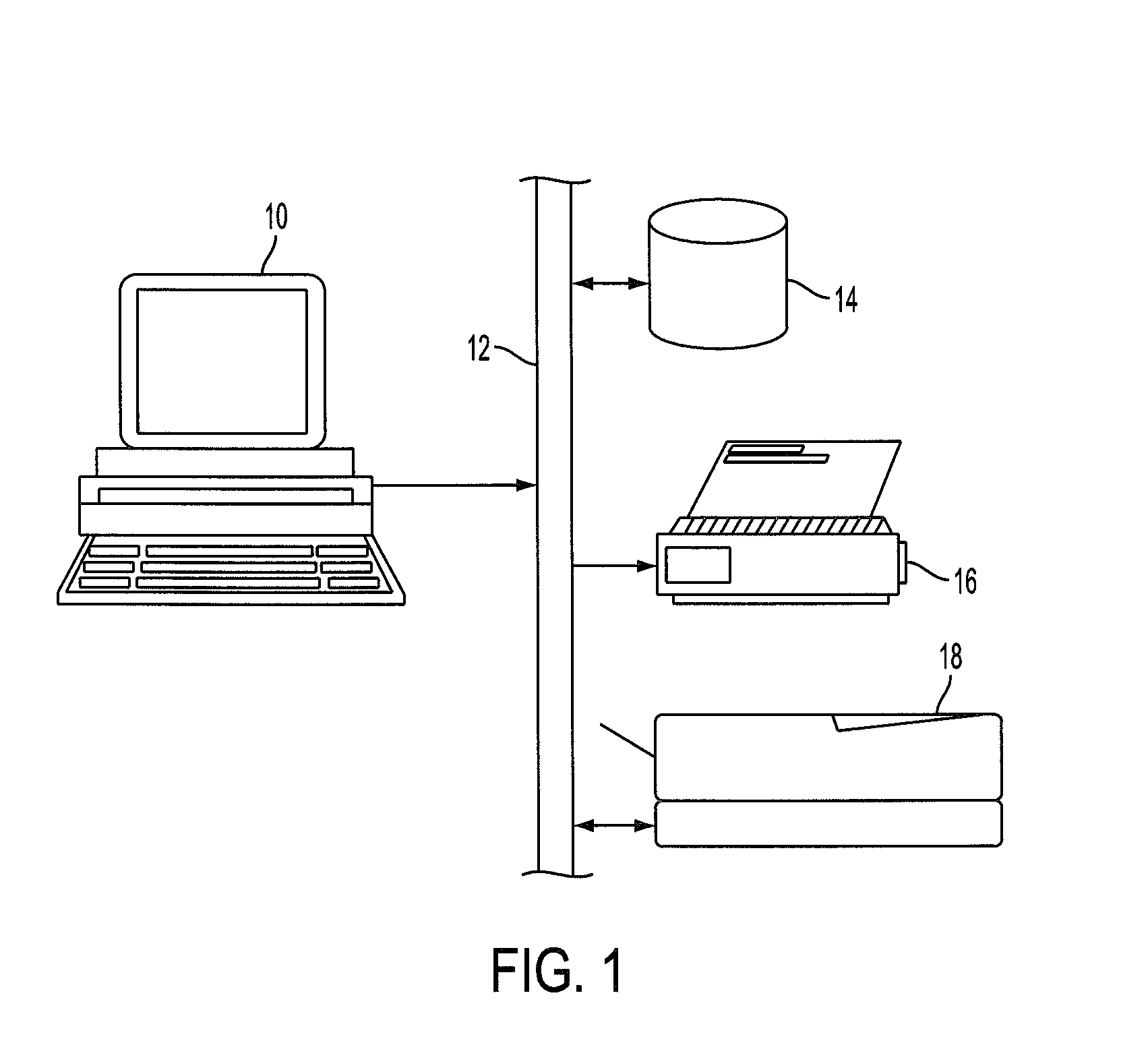
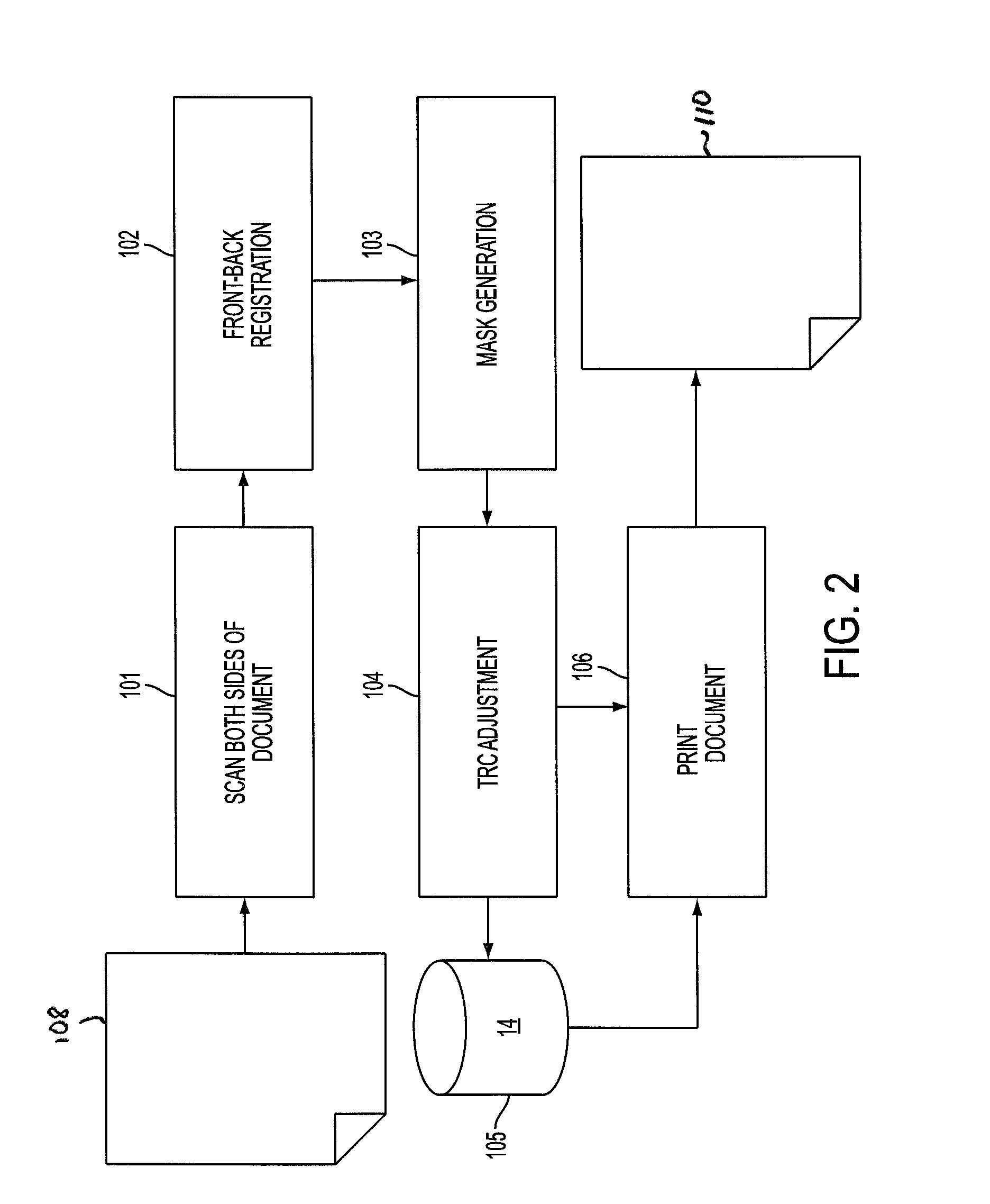
Examples
Embodiment Construction
[0017]As used herein, the term “data” refers generally to physical signals that indicate or include information. We are primarily concerned with providing a description of “duplex” documents, i.e., original documents with images on both sides thereof. The terms “image” and “page,” as used herein, refer to any image containing any, or all, of one or more halftone images, continuous tone images, line art or other graphics images, and / or any compilation of text, that is capable of being displayed on a display device or output on an image bearing substrate. For example, an image may be a combination of graphics and text that is stored in an image input device. The image may be a series of pixel values denoting the color, intensity, and / or any other known or later developed image property of the particular pixels that make up the image. Although most book scanning primarily involves black and white text, the exemplary embodiments are applicable to color images causing the undesired show-...
PUM
 Login to View More
 Abstract
Description
Claims
Application Information
 Login to View More