
Combination light diffuser and acoustical treatment and listening room including such fixtures
a technology of acoustical treatment and diffuser, which is applied in the direction of fixed installation, lighting and heating equipment, lighting support devices, etc., can solve the problems of severe degradation of speech intelligibility, poor design of speech rooms, and inability to achieve optimal design using the appropriate combination of each constituent, etc., to achieve the effect of maximizing sound absorption, reducing light streaking, and increasing absorption
- Summary
- Abstract
- Description
- Claims
- Application Information
AI Technical Summary
Benefits of technology
Problems solved by technology
Method used
Image

Examples
Embodiment Construction
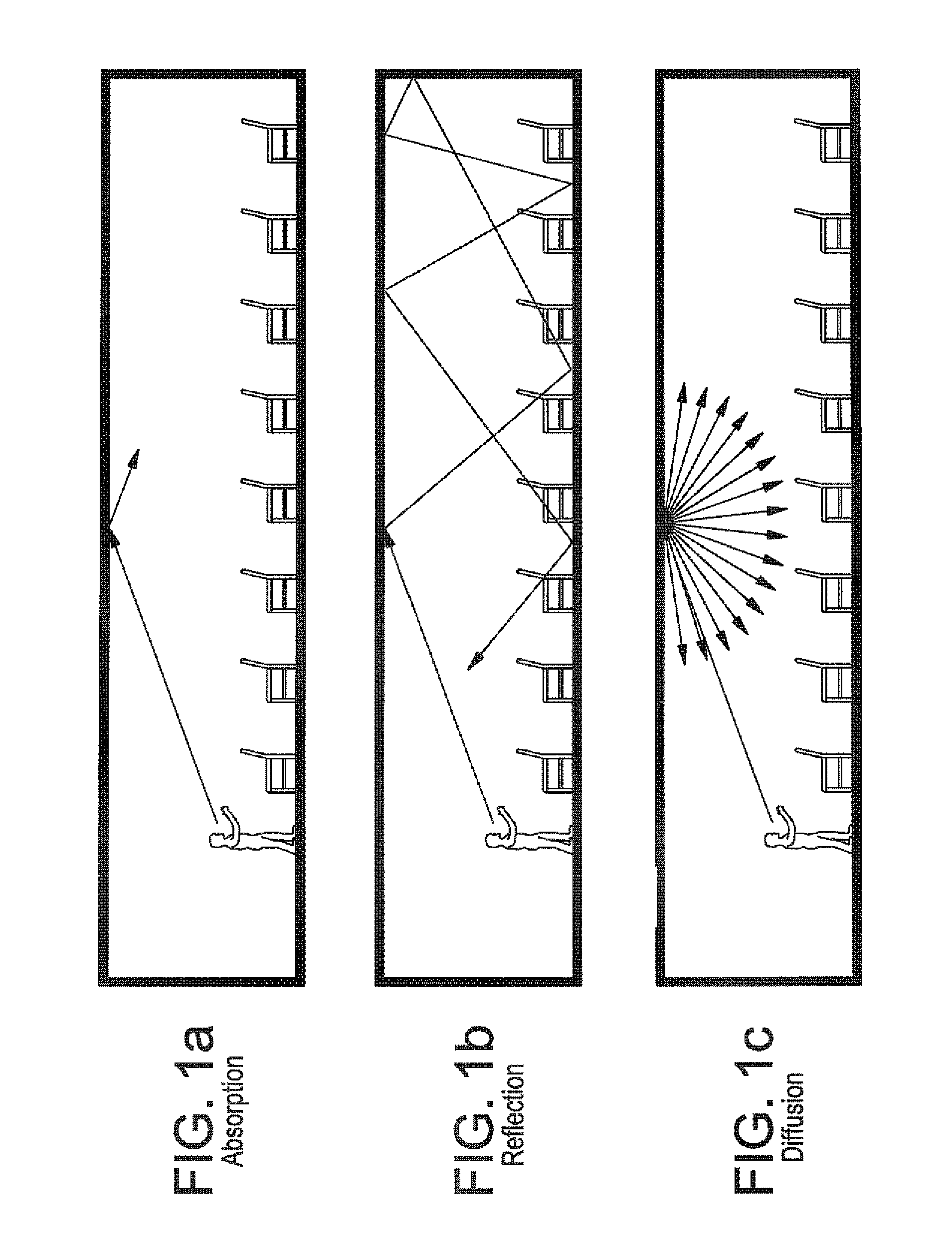
[0064]As explained above with reference to FIGS. 1a-c, there are distinct differences between absorption, reflection and diffusion. Absorptive ceiling treatments are designed to receive the incident sound waves and reflect only an extremely small percentage of the inbound waves. Reflective ceiling surfaces are designed to reflect as high a percentage of the inbound sound waves as is possible. By contrast, diffused sound resulting from diffusers incorporated into ceiling treatments shape the sound by reflecting it off an irregular surface so that it is scattered substantially uniformly. Applicant has found that an appropriate combination of diffused and absorbed sound is the perfect combination to manage the speech and other sounds that reach an individual's ear to optimize intelligibility.
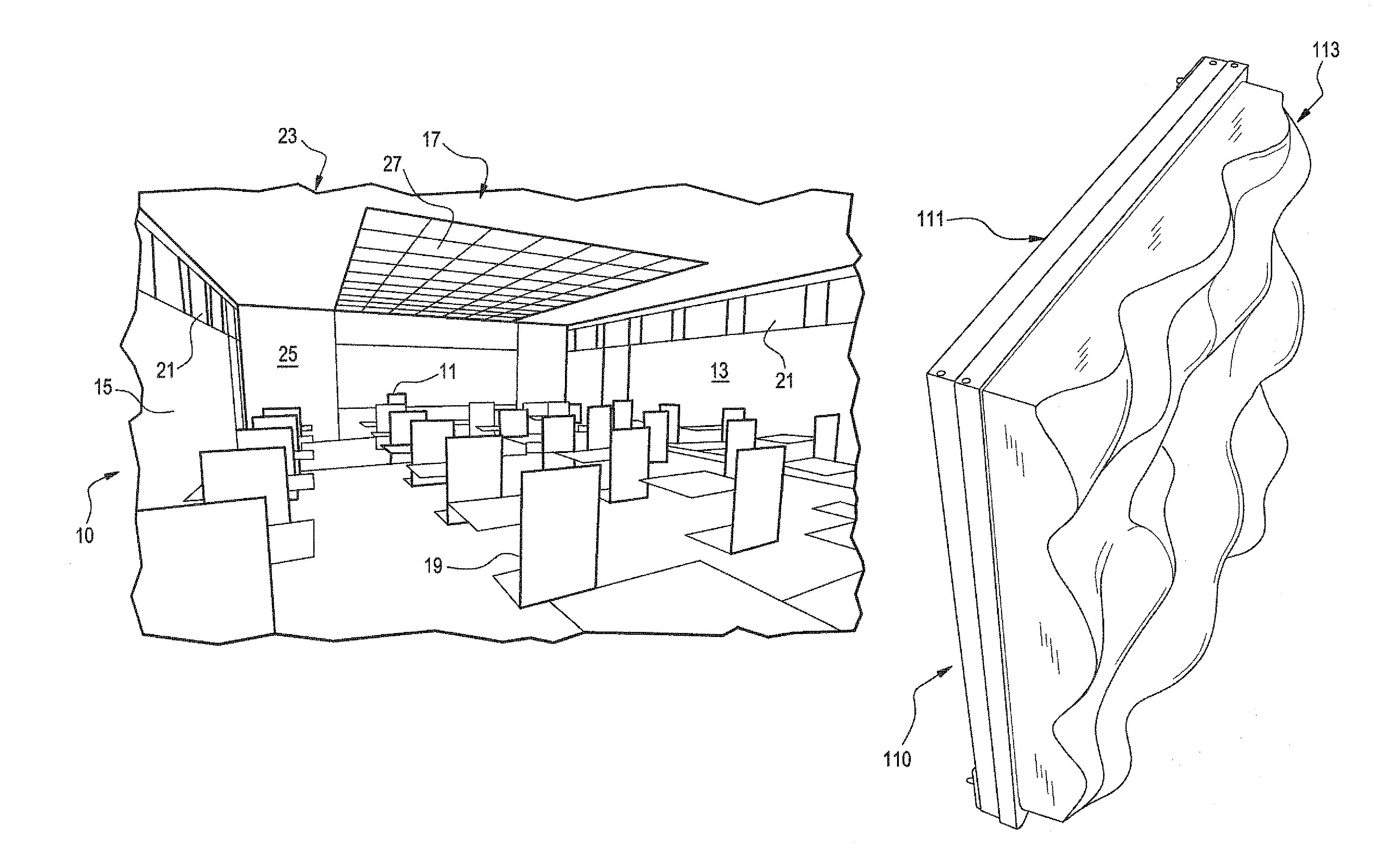
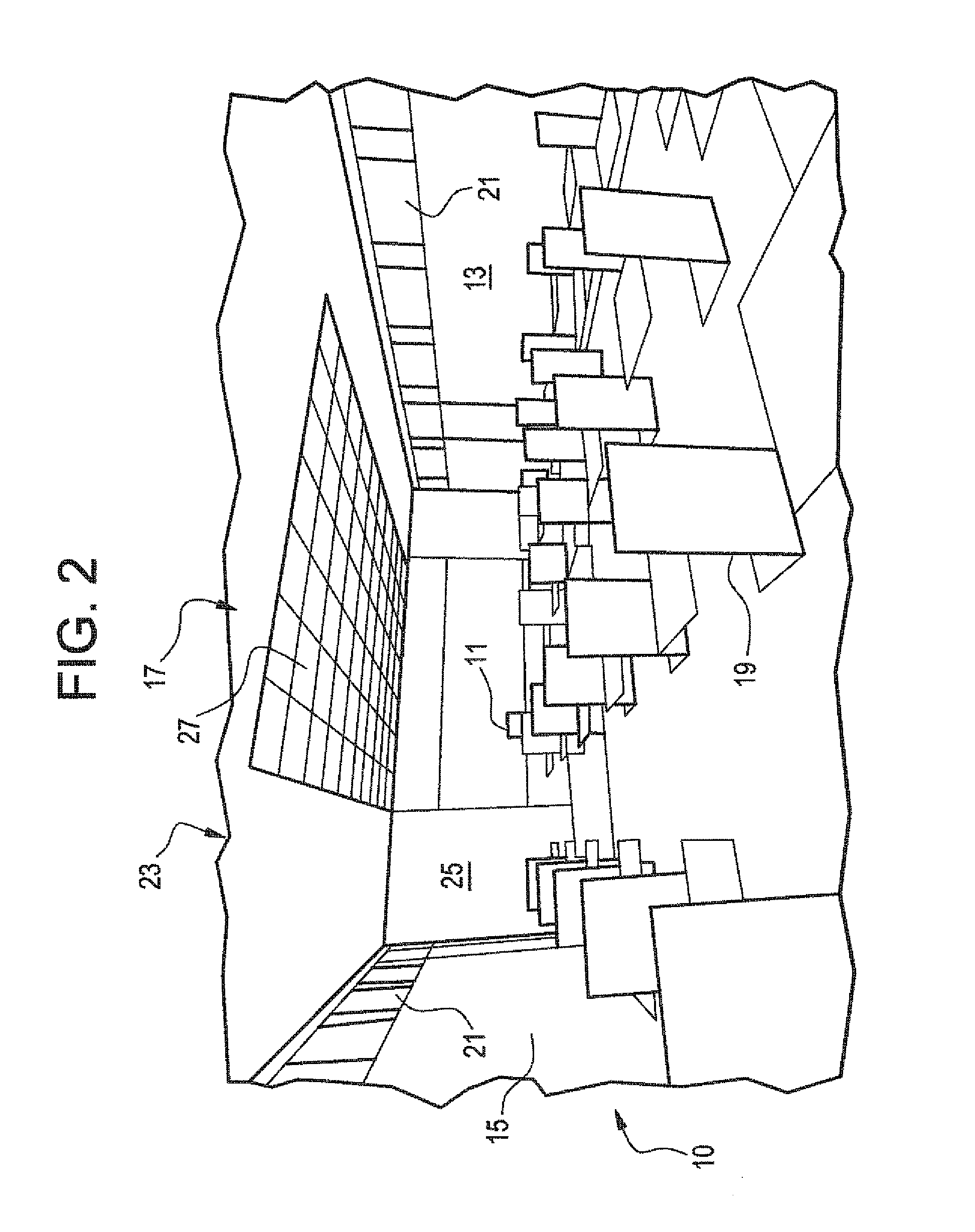
[0065]FIG. 2 shows an example of a conference room provided with acoustical treatments in accordance with the teachings of the present invention to enhance the ability of attendees to a speech or o...
PUM
 Login to View More
 Abstract
Description
Claims
Application Information
 Login to View More