
Method for removing drugs from waste water using neutralized bauxite residue
a technology of bauxite residue and waste water, which is applied in the direction of silicates, other chemical processes, separation processes, etc., can solve the problems of increasing the increase of the contamination so as to improve the life and function of the bed, increase the contaminant removal rate of the system, and improve the effect of the removal rate of contaminants
- Summary
- Abstract
- Description
- Claims
- Application Information
AI Technical Summary
Benefits of technology
Problems solved by technology
Method used
Image

Examples
examples
[0087]Table 1, Table 2, Table 3, and FIG. 4 depict the main metal oxides in alkaline clay are iron, aluminum, silica, calcium, and titanium. Also of note is the high carbonate value, which may distinguish alkaline clay from bauxite residue that has not been weathered. Table 1 shows the components of a sample of Jamaican alkaline clay according to dried solids, slurry, and pore water. FIG. 4 shows the elemental makeup of a sample of alkaline clay that was installed in the full scale ENS disinfection cell in the Examples Section. Table 3 shows the particular oxides that comprise various samples of alkaline clay from two locations.
[0088]
TABLE 1Constituents of initial Jamaican alkaline clay and pore water.Dried solids concentrationaSlurry concentrationbComponent(mg / kg solid)(g / L pore water)Slurryb (M)Pore Waterc (M)% in SolidChloride4700.310.0090.012~0Sulfate4300.290.0030.004~0Carbonate4,000d 3.1d0.550.1278Al113,000 762.80.09897Na54,000 361.560.9358Si26,000 180.631.4E−03100Fe237,000...
example preparation
of Alkaline Clay Bed
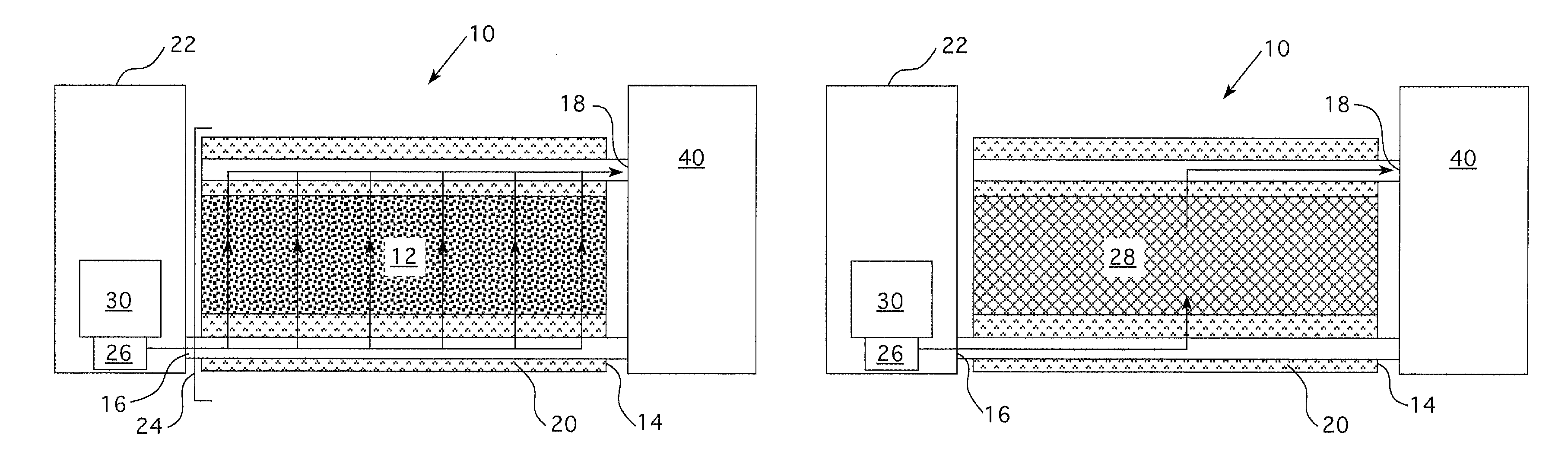
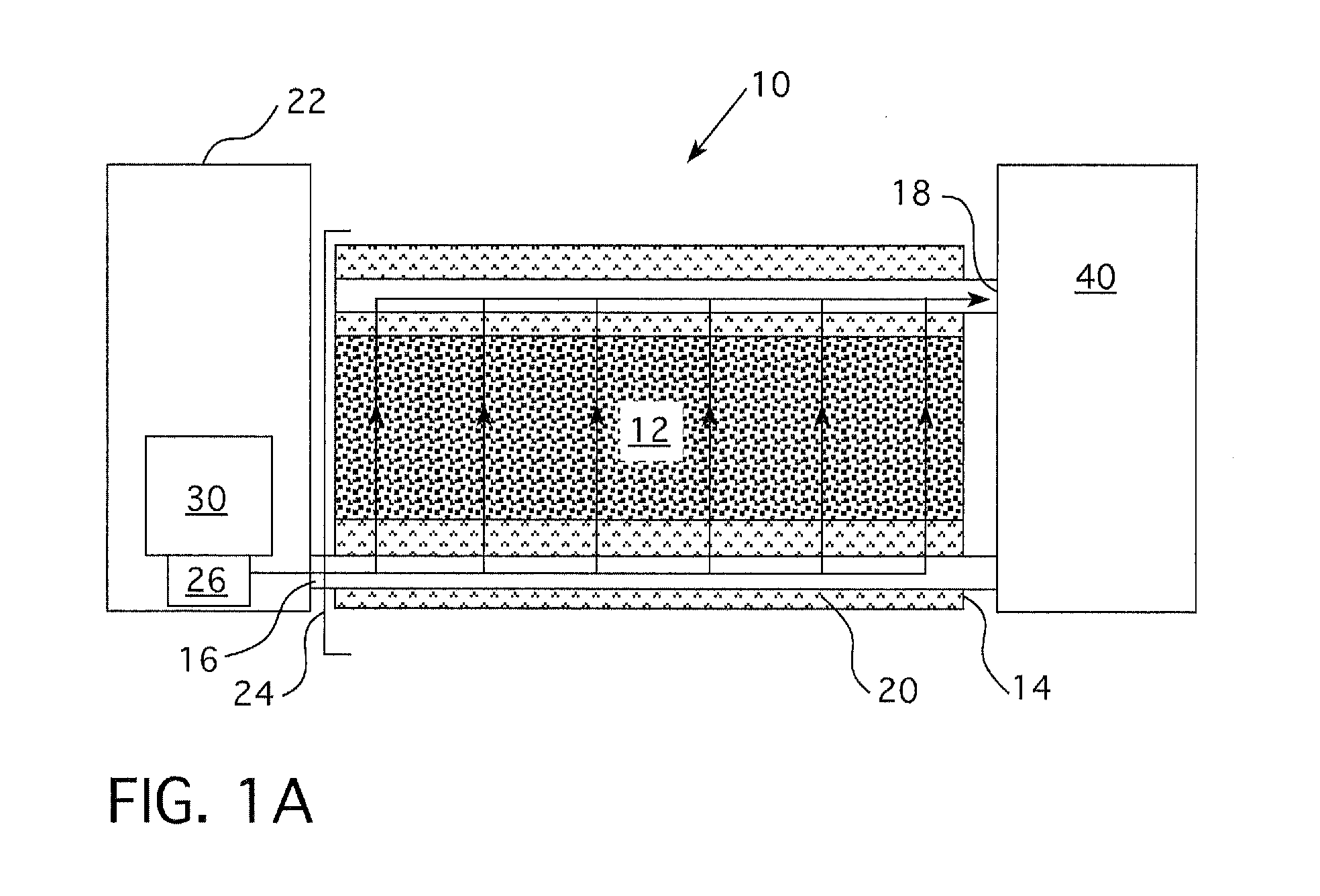
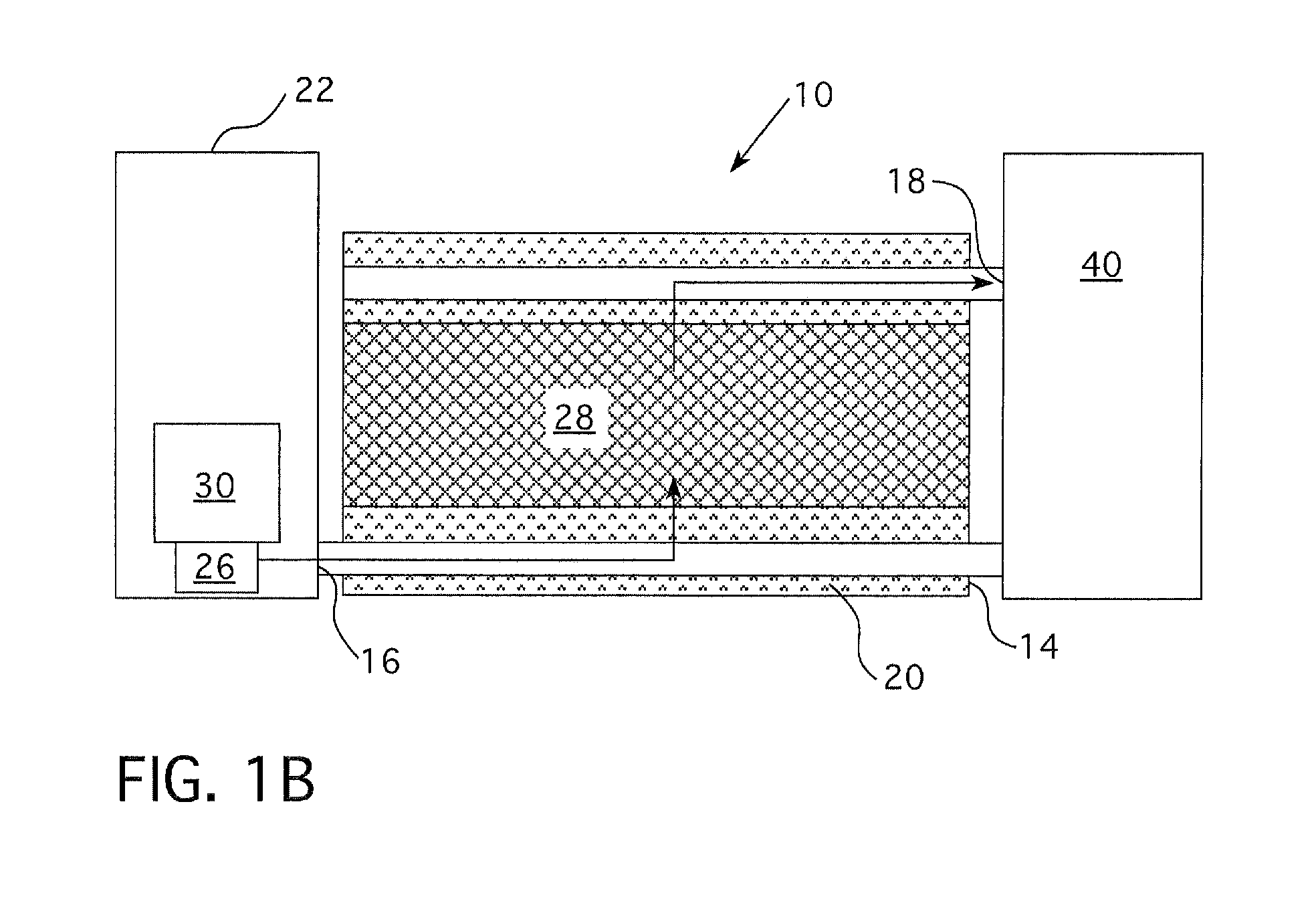
[0098]In this section, an example experimental detailing the preparation of the MMOB is provided. In order to prepare the MMOB, raw alkaline clay was filtered for particle size. The alkaline clay was dried to remove residual moisture, screened to exclude certain particle sizes, and was placed in a containment cell with larger diameter particles on the bottom and smaller diameter particles on the top. The screening meshed the particles to two sizes: greater than 0.5 inches and less than 0.5 inches. Chunks of alkaline clay which exceeded a 2 inch diameter were broken up or discarded. Particle size generally ranged from about 0.005 inch to about 2 inch diameter. The majority of particles in the system have an average diameter of less than about 0.2 inch.
[0099]The MMOB was constructed into a pit, with its walls and bottom covered with a barrier to enclose and retain the alkaline clay and wastewater stream therein. Two layers of alkaline clay were deposited into the b...
PUM
 Login to View More
 Abstract
Description
Claims
Application Information
 Login to View More