
Ray-sensitive resin composition, cured film and forming method thereof and color filter
A resin composition and sensitive technology, applied in the direction of optical filters, optics, optomechanical equipment, etc., can solve the problems of insufficient curing reaction, inability to form fine patterns, poor storage stability, etc., to meet short-term Long-term low-temperature roasting, satisfying storage stability, and excellent dimensional stability
Patent Information
- Authority / Receiving Office
- CN · China
- Patent Type
- Applications(China)
- Current Assignee / Owner
- Publication Date
- 2012-02-08
- Estimated Expiration
- Not applicable · inactive patent
Smart Images
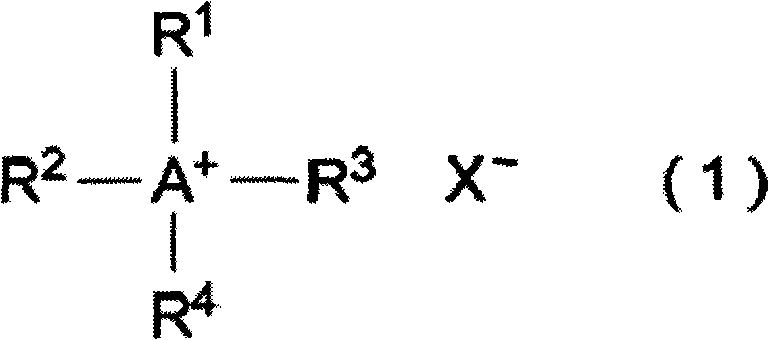
Figure 1 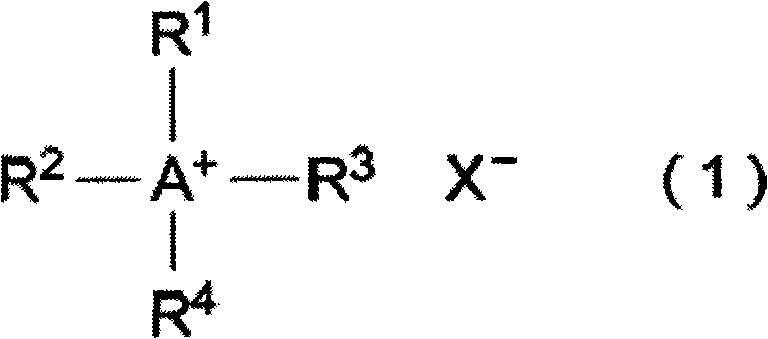
Figure 2 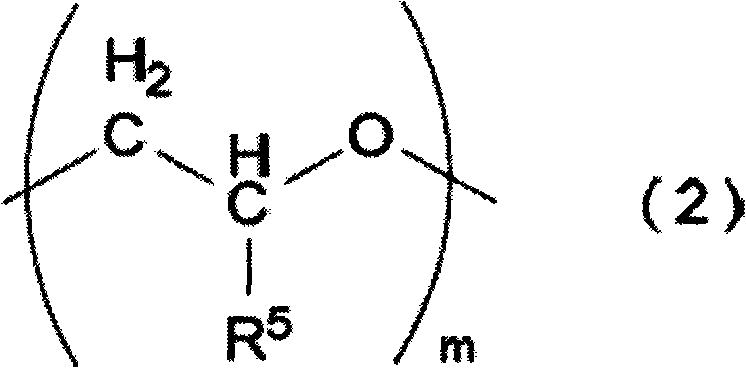
Figure 3
Abstract
Description
technical field
[0001] The present invention relates to a radiation-sensitive resin composition, a cured film, a method for forming the cured film, and a color filter. Background technique
[0002] In recent years, liquid crystal display elements have been widely used in liquid crystal televisions, mobile phones, etc., and liquid crystal display elements are required to have larger screens, higher brightness, and thinner shapes. Therefore, radiation-sensitive resin compositions used as cured film materials such as interlayer insulating films, protective films, and spacers of display elements require high sensitivity and high resolution in terms of shortening process time and cost reduction. change. In addition, the obtained cured film is required to achieve further high flatness, adhesiveness, high transmittance, etc. (refer to JP-A-2009-36858).
[0003] On the other hand, flexible displays such as electronic paper are gaining popularity. Plastic substrates such as polyet...
Examples
Embodiment
[0238] Hereinafter, the present invention will be described in detail based on examples, but the examples do not limit the present invention.
[0239]
Synthetic example 1
[0241]In a flask equipped with a condenser tube and a stirrer, 7 parts by mass of 2,2'-azobis(2,4-dimethylvaleronitrile) and 200 parts by mass of diethylene glycol ethyl methyl ether were added. Then add 16 parts by mass of methacrylic acid as (A1) compound, 20 parts by mass of glycidyl methacrylate as (A2) compound, and tricyclo[5.2.1.02,6]decane as (A3) compound- 16 parts by mass of 8-yl methacrylate, 38 parts by mass of methyl methacrylate and 10 parts by mass of styrene, after nitrogen replacement, slowly stir while raising the temperature of the solution to 70°C, at this temperature Polymerization was carried out by protecting for 4 hours to obtain a solution (solid content = 34.4% by mass, Mw = 8,000, Mw / Mn = 2.3) containing the copolymer (A-1). Also, the solid content refers to the ratio of the copolymer mass to the total mass of the copolymer solution.
Synthetic example 2
[0243] In a flask equipped with a condenser tube and a stirrer, 8 parts by mass of 2,2'-azobis(2,4-dimethylvaleronitrile) and 220 parts by mass of diethylene glycol ethyl methyl ether were added. Then add 20 mass parts of methacrylic acid as (A1) compound, 20 mass parts of glycidyl methacrylate as (A2) compound, and 30 mass parts of n-lauryl methacrylate as (A3) compound and benzene 30 parts by mass of ethylene, after nitrogen replacement, slowly stirred, while raising the temperature of the solution to 70° C., kept at this temperature for 5 hours to carry out polymerization, thereby obtaining a solution (solid matter) containing the copolymer (A-2) Concentration = 31.9% by mass, Mw = 8,000, Mw / Mn = 2.3).