

Benzamide derivatives
Patent Information
- Authority / Receiving Office
- US · United States
- Current Assignee / Owner
- Publication Date
- 2012-06-07
Smart Images
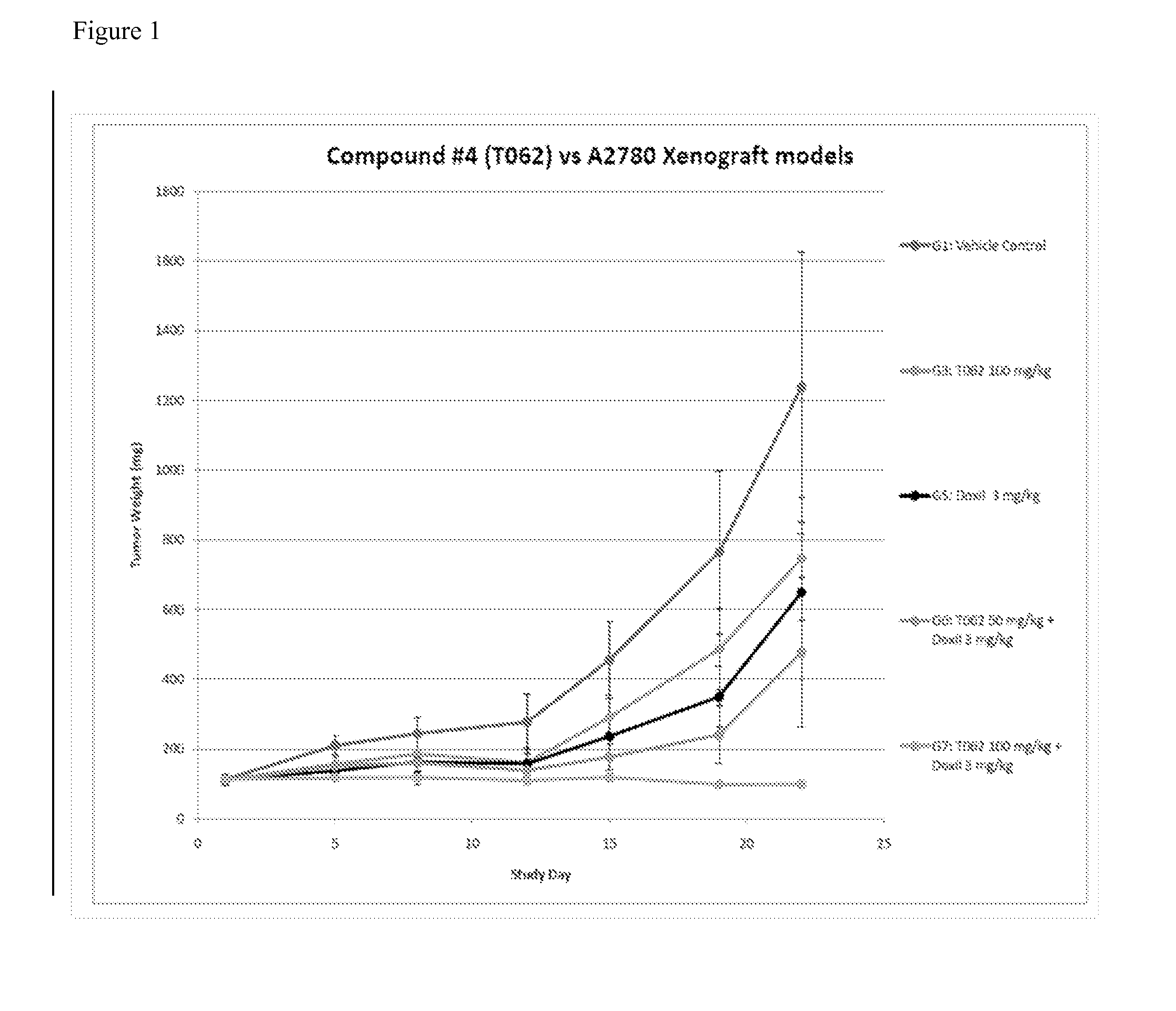
Figure 1 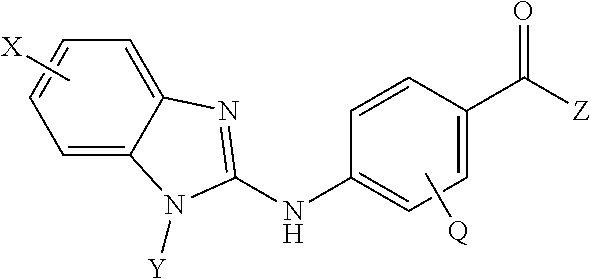
Figure 2 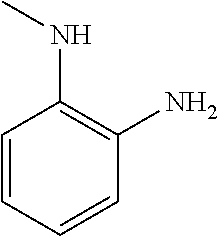
Figure 3
Abstract
Description
BACKGROUND OF THE INVENTION
[0001] Cancer is the second leading cause of death in the United States and despite new breakthroughs that have led to decreased mortality, many cancers remain refractory to treatment. Additionally, typical treatments such as chemotherapy, radiotherapy and surgery cause a broad spectrum of undesirable side effects. In addition, many cancers often develop resistance to current chemotherapies over time. Clearly the field is in significant need of novel compounds and methods of slowing the expansion of cancer cells and that are useful in the treatment of cancer.BRIEF SUMMARY OF THE INVENTION
[0002] The present invention provides among other things a compound that is effective in the treatment of cancer.
[0003] It is an object of the invention to provide a pharmaceutical composition that slows the expansion of cancer cells.
[0004] It is an object of the invention to treat various forms of cancer.
[0005] The above and other objects may be achieved using devices involvin...
Examples
example 1
Synthesis of N-(2-aminophenyl)-4-(1-isopropyl-1H-benzo[d]imidazol-2-ylamino)benzamide. (Compound ID#1)
[0090]Isopropyl amine (3 mL) is added to a solution of 1-fluoro-2-nitrobenzene (500 mg, 3.55 mmol) in ethanol. The reaction may be stirred at room temperature overnight and concentrated. The residue may be purified, for example by Biotage column chromatography to give N-isopropyl-2-nitroaniline (590 mg).
[0091]Ammonium formate (960 mg, 15.0 mmol) is added to a solution of N-isopropyl-2-nitroaniline (550 mg, 3.03 mmol) in methanol. This may be followed by a catalytic amount of palladium on carbon (5%). The mixture may be refluxed overnight, cooled to room temperature and filtered. The filtrate may be concentrated by any applicable and the residue may be purified, for example by Biotage column chromatography to give N1-isopropylbenzene-1,2-diamine (398 mg)
[0092]N-(3-Dimethylaminopropyl)-N′-ethylcarbodiimide(EDC, 206 mg, 1.34 mmol) is added to a solution of N1-isopropylbenzene-1,2-diami...
example 2
Synthesis of N-hydroxy-4-(1-(2-methoxyethyl)-1H-benzo[d]imidazol-2-ylamino)benzamide (Compound ID #4)
[0096]2-methoxyethaneamine (3 mL) is added to a solution of 1-fluoro-2-nitrobenzene (400 mg, 2.84 mmol) in ethanol. The reaction may be stirred at room temperature for an appropriate time period (such as overnight) and concentrated. The residue may be purified by any appropriate method including Biotage column chromatography to give N-(2-methoxyethyl)-2-nitroaniline (477 mg).
[0097]Ammonium formate (727 mg, 11.3 mmol) followed by a catalytic amount of palladium on carbon (5%) is added to a solution of N-(2-methoxyethyl)-2-nitroaniline (426 mg, 2.17 mmol) in methanol. The mixture may be refluxed for an appropriate time period (such as overnight), cooled to an appropriate temperature (such as room temperature) and filtered. The filtrate may be concentrated and the residue may purified by Biotage column chromatography to give N1-(2-methoxyethyl)benzene-1,2-diamine (319 mg)
[0098]N-(3-Dime...
example 3
Synthesis of 4-(5-bromo-1-isopropyl-1H-benzo[d]imidazol-2-ylamino)-N-hydroxybenzamide (Compound ID #6)
[0100]Isopropylamine (3 mL) is added to a solution of 4-bromo-1-fluoro-2-nitrobenzene (700 mg, 3.18 mmol) in ethanol. The reaction may be stirred for an appropriate time at an appropriate temperature, such as room temperature for overnight and concentrated. The residue may be purified by any appropriate method such as Biotage column chromatography to give 4-bromo-N-isopropyl-2-nitroaniline (770 mg).
[0101]Tin(II) chloride (1.69 g, 8.90 mmol) is added to a solution of 4-bromo-N-isopropyl-2-nitroaniline (770 mg, 2.97 mmol) in ethanol. The mixture may be heated to reflux for an appropriate time (such as 4 hr) and cooled. 4 N sodium hydroxide is added to the solution which then may be filtered. The filtrate is extracted with ethyl acetate. The combined organic layer may be washed with brine and concentrated. The residue may be purified by any appropriate method including Biotage column c...