
Polymerizable compound, polymerizable composition, polymer, and optically anisotropic body
a technology of polymerizable compound and composition, applied in the direction of polarising elements, instruments, optical elements, etc., can solve the problems of low solubility of solvent generally used in industrial processes, and inability to achieve accurate 14 or 12 retardation over the entire wavelength band. achieve the effect of uniform conversion of polarized light, convenient and fast production, and convenient us
Patent Information
- Authority / Receiving Office
- US · United States
- Patent Type
- Patents(United States)
- Current Assignee / Owner
- Publication Date
- 2015-12-08
Smart Images
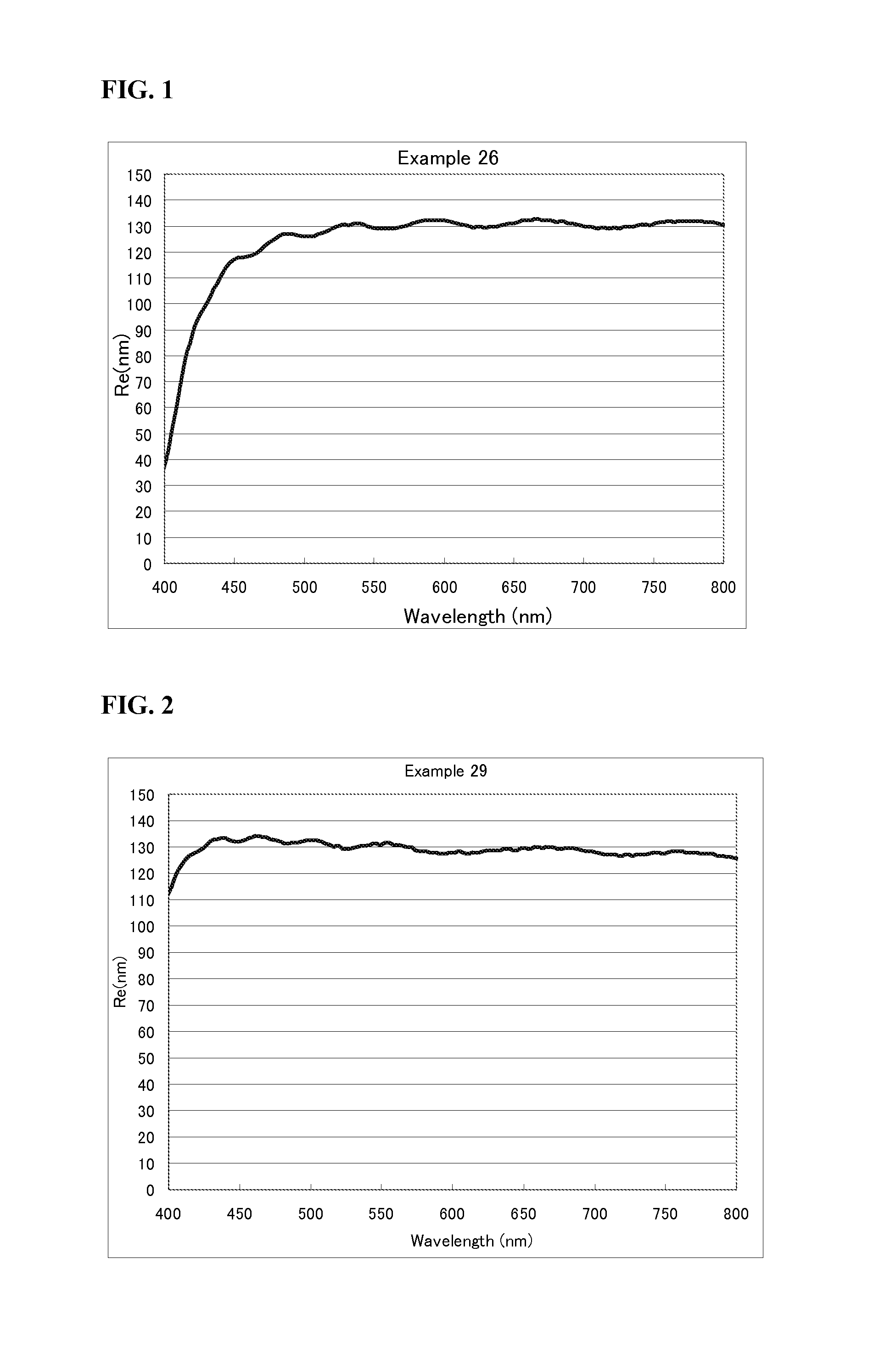
Figure 1 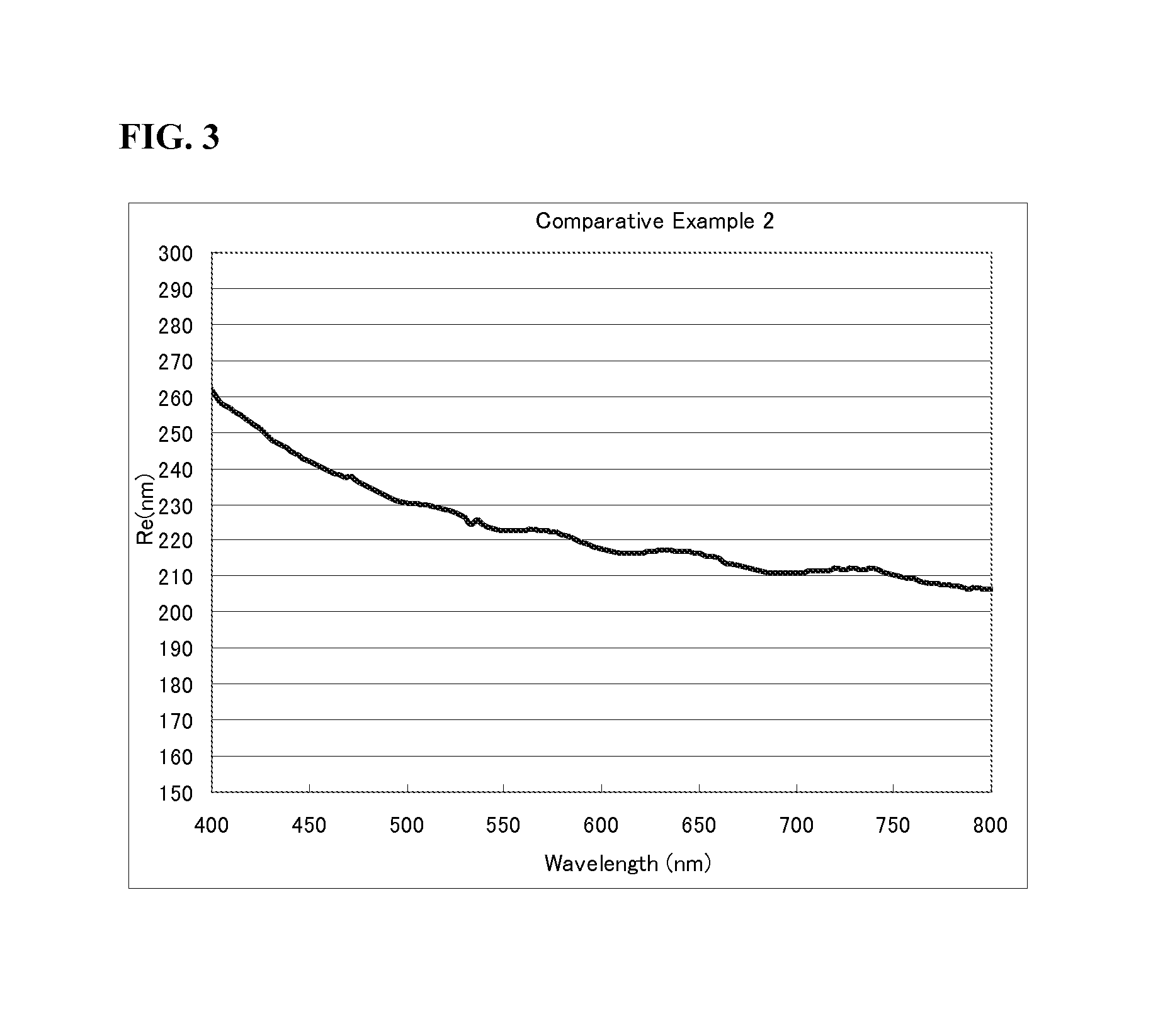
Figure 2 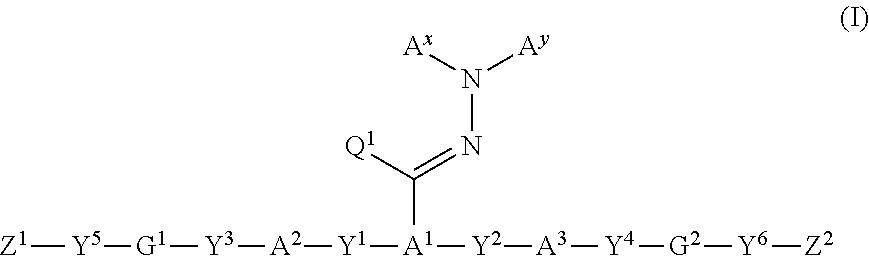
Figure 3
Abstract
Description
TECHNICAL FIELD
[0001] The invention relates to a polymerizable compound, a polymerizable composition, and a polymer that may produce an optical film that achieves uniform conversion of polarized light over a wide wavelength band, and also relates to an optically anisotropic article.
[0002] A flat panel display (FPD) that utilizes an optical film (e.g., polarizer and retardation film) can achieve high-resolution display, and has been widely used as a display device (e.g., TV) that achieves high performance.
[0003] Examples of the retardation film include a quarter-wave plate that converts linearly polarized light into circularly polarized light, and a half-wave plate that converts the plane of vibration of linearly polarized light by 90°. Such a retardation film can achieve accurate conversion of specific monochromatic light so that ¼λ or ½λ retardation occurs.
[0004] However, a known retardation film has a problem in that polarized light that passes through the retardation film is converte...
Examples
example 1
Synthesis of Compound 1
[0248]
Step 1: Synthesis of Intermediate A
[0249]
[0250]A four-necked reactor equipped with a thermometer was charged with 20 g (144.8 mmol) of 2,5-dihydroxybenzaldehyde, 105.8 g (362.0 mmol) of 4-(6-acryloylhex-1-yloxy)benzoic acid (manufactured by DKSH Japan K.K.), 5.3 g (43.4 mmol) of 4-(dimethylamino)pyridine, and 200 ml of N-methylpyrrolidone under a nitrogen stream to prepare a homogeneous solution. After the addition of 83.3 g (434.4 mmol) of 1-ethyl-3-(3-dimethylaminopropyl)carbodiimide hydrochloride (WSC) to the solution, the mixture was stirred at 25° C. for 12 hours. After completion of the reaction, the reaction mixture was added to 1.5 l of water, and extracted with 500 ml of ethyl acetate. After drying the ethyl acetate layer over anhydrous sodium sulfate, sodium sulfate was filtered off. Ethyl acetate was evaporated from the filtrate under reduced pressure using a rotary evaporator to obtain a light yellow solid. The light yellow solid was purified...
example 2
Synthesis of Compound 2
[0257]
Step 1: Synthesis of Intermediate B
[0258]
[0259]A four-necked reactor equipped with a thermometer was charged with 4.9 g (97.9 mmol) of hydrazine monohydrate and 20 ml of ethanol under a nitrogen stream to prepare a homogeneous solution. The solution was heated to 50° C. After the addition of 3.0 g (19.54 mmol) of 2-chlorobenzoxazole dissolved in ethanol, the mixture was stirred at 50° C. for 1 hour. After completion of the reaction, the reaction mixture was added to 500 ml of 10% sodium bicarbonate water, and extracted with 200 ml of chloroform. The chloroform layer was washed with 500 ml of 10% sodium bicarbonate water, and dried over anhydrous sodium sulfate, and sodium sulfate was filtered off. Chloroform was evaporated from the filtrate under reduced pressure using a rotary evaporator to obtain 1.8 g of an intermediate B as a white solid. The intermediate B was used directly for the subsequent reaction without purification.
Step 2: Synthesis of Compou...
example 3
Synthesis of Compound 3
[0264]
[0265]A four-necked reactor equipped with a thermometer was charged with 2.00 g (2.91 mmol) of the intermediate A synthesized by the step 1 in the section “Synthesis of compound 1”, 850 mg (4.37 mmol) of 1-naphthylhydrazine hydrochloride, 30 ml of THF, and 10 ml of ethanol under a nitrogen stream to prepare a homogeneous solution. The solution was heated to 50° C., and reacted at 50° C. for 1 hour with stirring. After completion of the reaction, the solvent was evaporated from the reaction mixture under reduced pressure using a rotary evaporator to obtain a reddish brown solid. The reddish brown solid was purified by silica gel column chromatography (n-hexane:ethyl acetate=85:15 (volume ratio)) to obtain 1.04 g of a compound 3 as an orange solid (yield: 43.0%).
[0266]The structure of the target product was identified by 1H-NMR and mass spectroscopy.
[0267]1H-NMR (400 MHz, CDCl3, TMS, δ ppm): 8.35 (s, 1H), 8.20 (d, 2H, J=7.0 Hz), 8.18 (d, 2H, J=7.0 Hz), 7.9...