
Nickel-chromium-phosphorous brazing alloys
a technology of nickel chromium phosphorous and brazing alloys, which is applied in the direction of manufacturing tools, welding apparatus, other domestic objects, etc., can solve the problems of brittle intermetallics in the brazed joints, disintegration of the brazed products, and hydrocarbon build-up on the interior of the furnace, so as to reduce the melting point and reduce the concentration of metalloids , the effect of reducing the melting poin
Patent Information
- Authority / Receiving Office
- US · United States
- Patent Type
- Patents(United States)
- Current Assignee / Owner
- Publication Date
- 2018-05-15
Smart Images
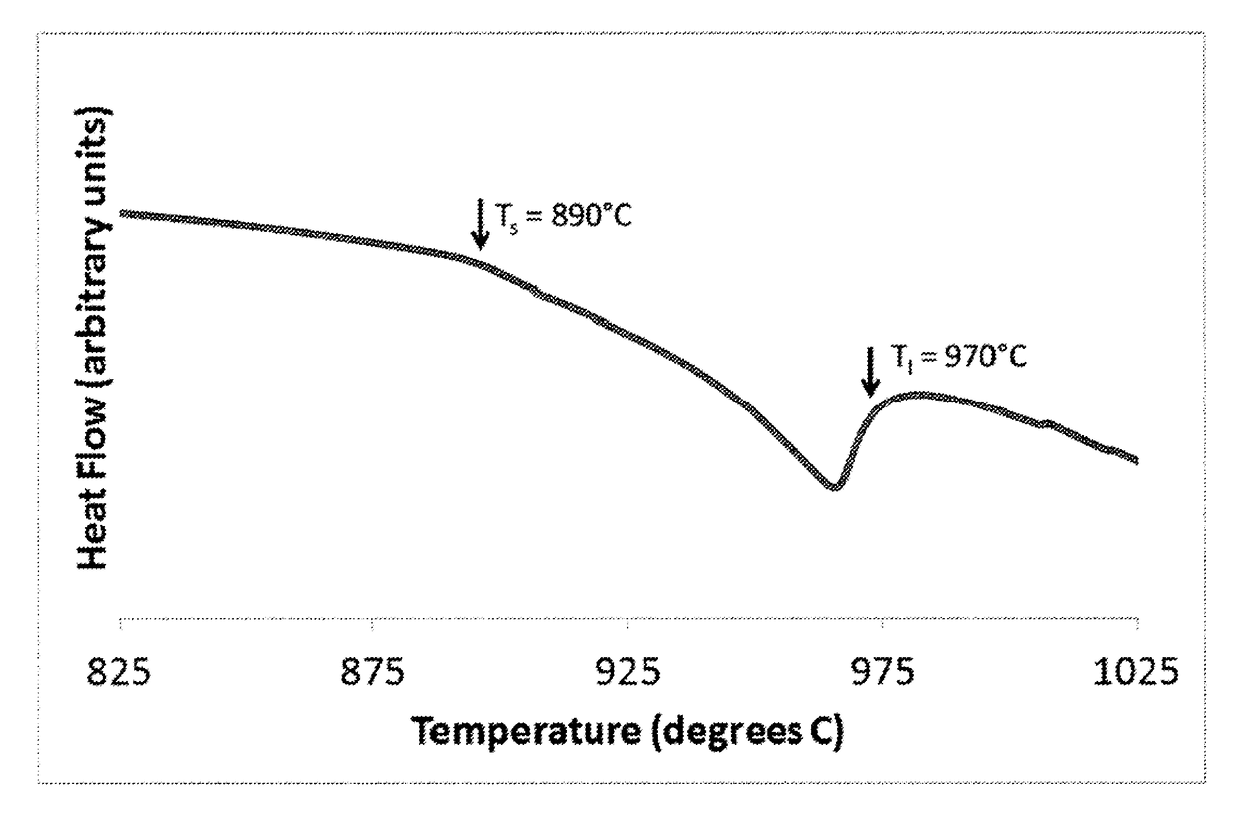
Figure 1 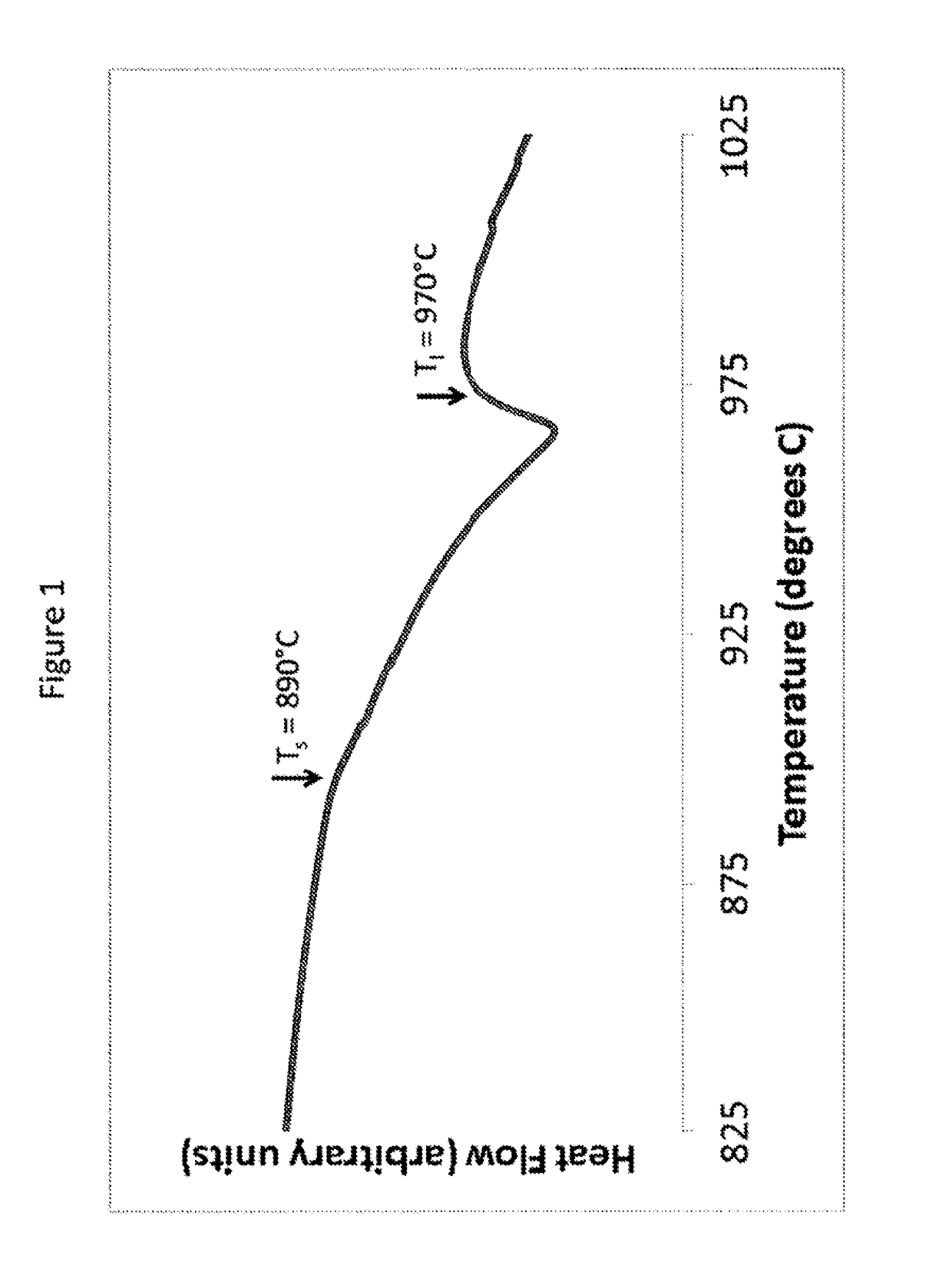
Figure 2 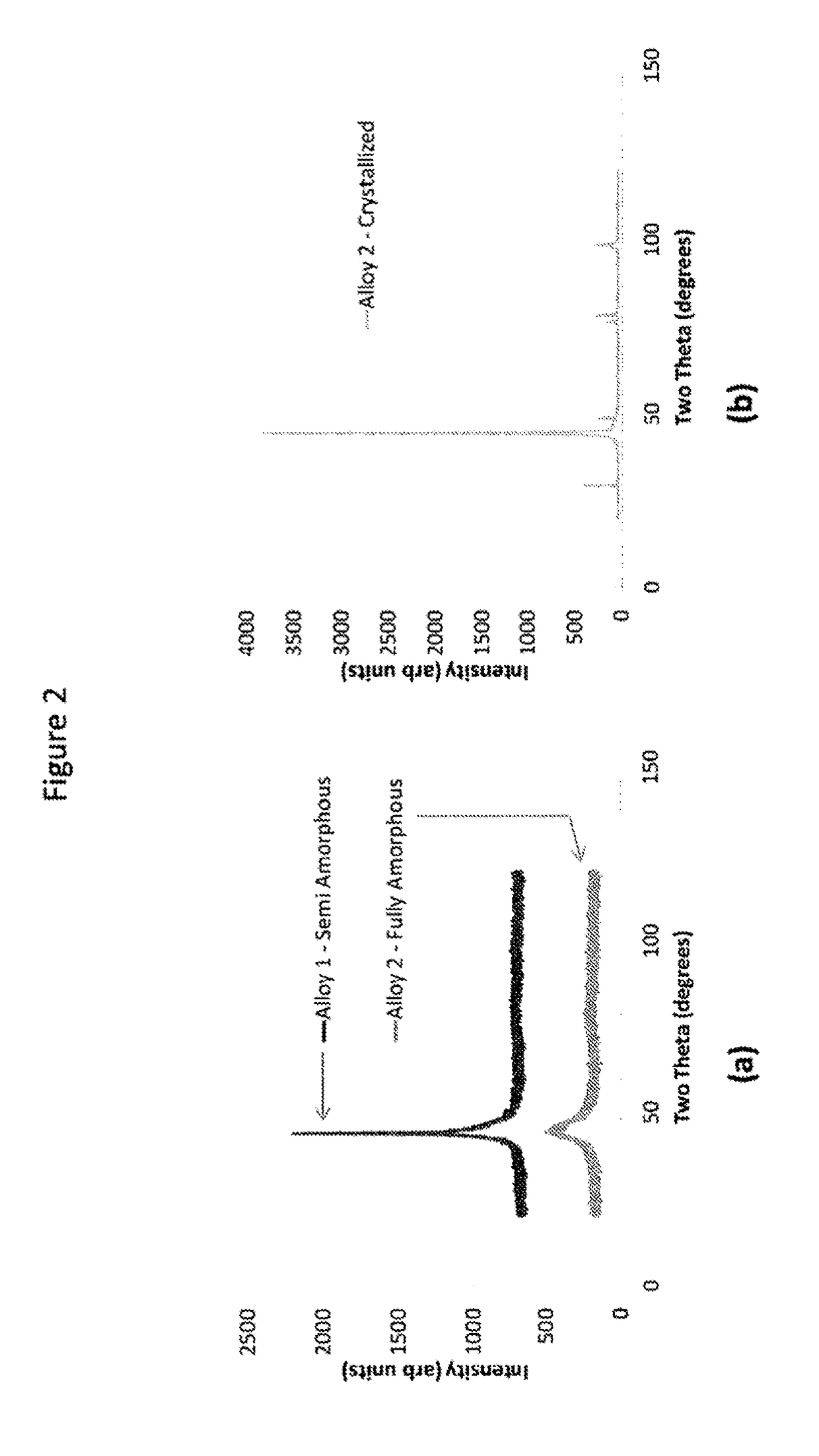
Figure 3
Abstract
Description
BACKGROUND OF THE INVENTION
[0001] 1. Field of the Invention
[0002] The invention relates to brazing filler metals having nickel-chromium-based alloys containing transition metals such as iron and molybdenum and certain metalloids. The alloys include one or more of nickel, chromium, iron, molybdenum, boron, phosphorus, and silicon, and are particularly useful for brazing metals at lower temperatures than prior art while increasing corrosion resistance.
[0003] 2. Description of the Prior Art
[0004] Atomized brazing powders disclosed in the prior art, with high chromium concentration and with phosphorus as the major melting temperature depressant, require a binder to keep the powder in place as practiced conventionally. This binder has to be “burned off” during the brazing cycle, which creates hydrocarbon build-up on the interior of the furnace. This mix of binder and powder typically outgases during the brazing cycle, making it more likely to trap gas pockets in the brazed object.
[0005] Prior...
Examples
example i
[0032]A differential thermal analysis (DTA) on an amorphous alloy ribbon having a composition of Ni60Cr25B2P10Si3 (numbers in atomic percent) was made by a conventional Differential Thermal Analyzer to determine the alloy's solidus (Ts) and liquidus (Tl) temperatures. They were found to be Ts=890° C. and Tl=970° C., and were used to determine the optimal brazing temperature. A DTA scan for Alloy 2 is shown in FIG. 1. An X-ray diffraction (XRD) scan reveals that the ribbon is fully amorphous (Alloy 2 in FIG. 2a) or semi-amorphous (Alloy 1 in FIG. 2a) in the as-cast state. For comparison, Alloy 2 was heat treated above the crystallization temperature and the XRD scan is included in FIG. 2b. A brazing foil having the composition of Ni60Cr25B2P10Si3 was placed between two 300 series stainless steel sheets with dimensions of 2.5 cm×10.0 cm×0.09 cm and 1.9 cm×8.9 cm×0.09 cm as shown in FIG. 3 and was brazed at a brazing temperature of 1000° C. with a holding time of 15-20 minutes after be...
example 2
[0033]The brazements of Example 1 were cleared with soap and water and solvent degreased with a final rinse in acetone. These cleaned brazements were weighed on an analytical balance to the nearest 0.0001 g, and overall measurements of length, width, and thickness of each brazement were made using a caliper with resolution of 0.01 mm. The reagent for corrosion testing was prepared based on the concentration in Table II.
[0034]
TABLE IITest solution reagent and concentrationTest SolutionConcentration (ppm)Solution pHCl−1008.0 ± 0.2NO3−20SO32−600SO42−600CH3COO1800
[0035]Three brazements of Example 1 were corrosion tested following Method B of JASO (Japan Automotive Standards Organization) M611-92E Standard for internal corrosion test method for automotive muffler, and three brazements were left unexposed as control specimens. Method B is a cyclic test and one cycle consists of 5 and 24 hour immersions in an oven at 80° C., followed by a cool down to room temperature and reagent change. A...