
Character input device based on eye tracking and P300 electrical potential of the brain electricity
A technology of eye tracking and character input, which is applied in the input/output process of data processing, the input/output of user/computer interaction, psychological devices, etc. And other issues
- Summary
- Abstract
- Description
- Claims
- Application Information
AI Technical Summary
Problems solved by technology
Method used
Image

Examples
Embodiment Construction
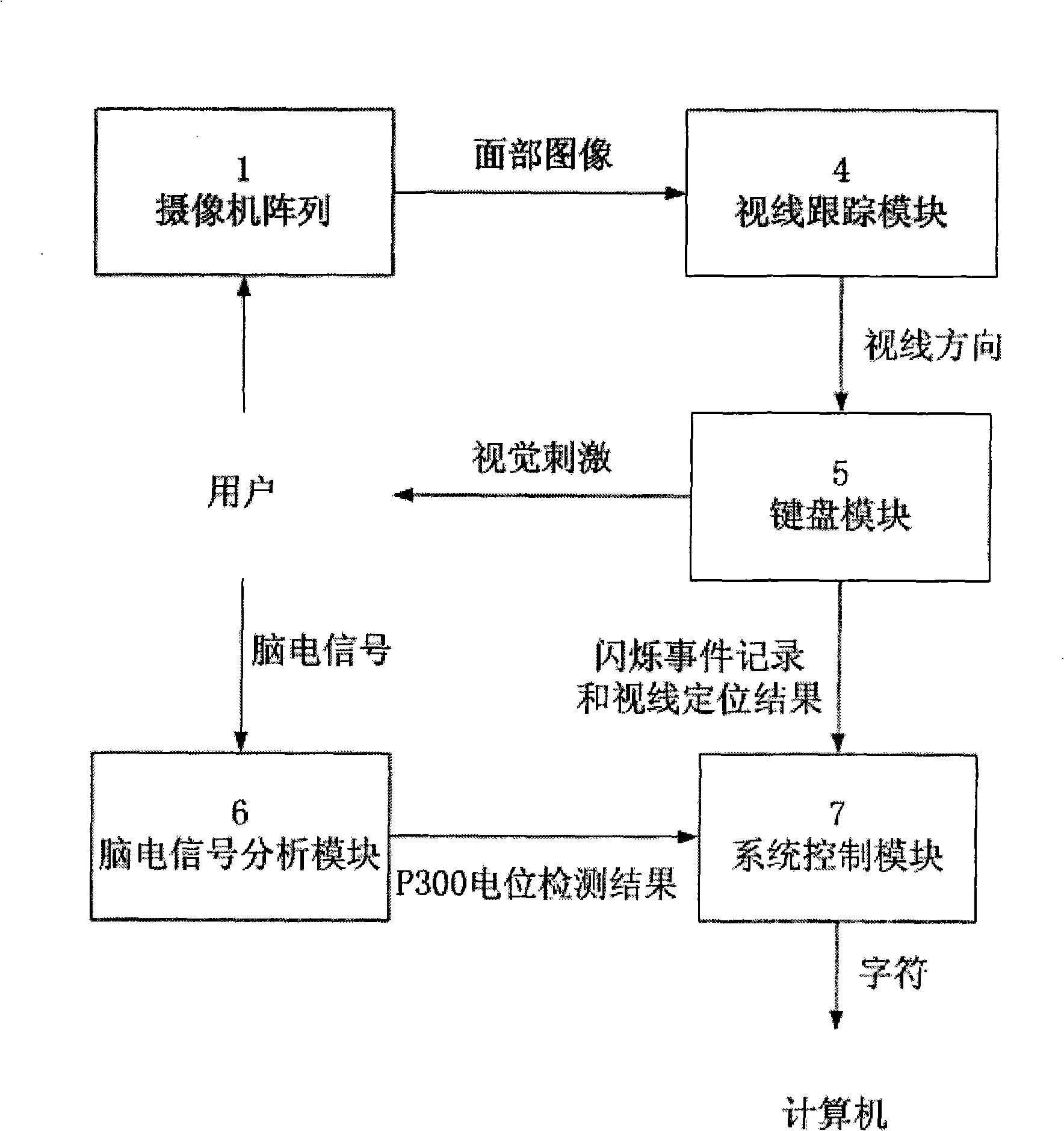
[0029] The present invention is a character input device based on line-of-sight tracking and P300 electroencephalogram, comprising: a camera array 1, a line-of-sight tracking module 4, a keyboard module 5, an electroencephalogram signal analysis module 6, and a system control module 7. figure 2 It is the data flow diagram among the various modules of the device.
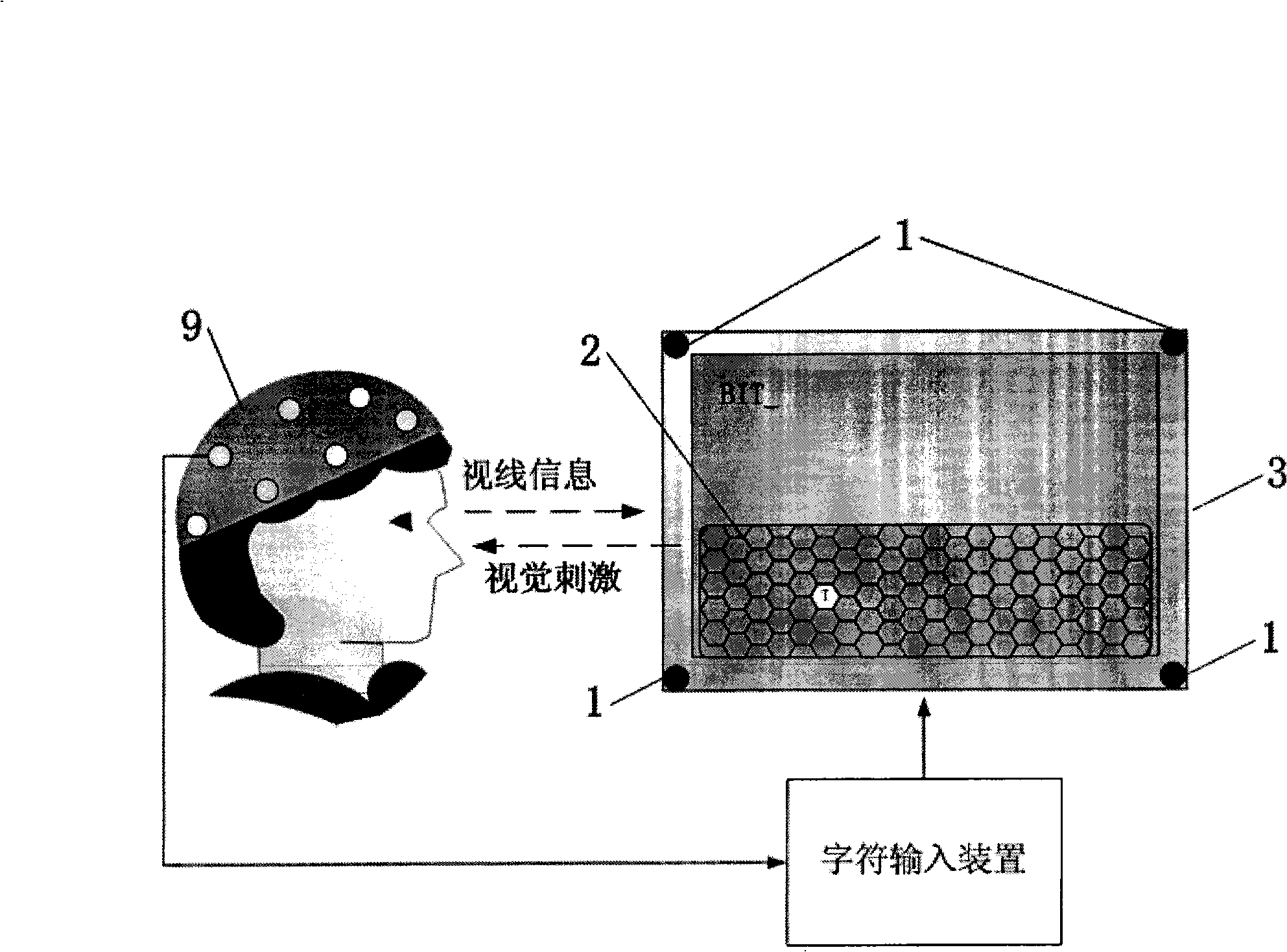
[0030] In the present invention, the camera array 1 is composed of 2-8 cameras, and the cameras are distributed on the keyboard frame and face the user to acquire their facial images synchronously.
[0031] The gaze tracking module 4 segments the iris part from the user's eye image acquired by each camera, fits its shape into an ellipse, and calculates the degree of pupil deviation relative to the eye corner from the ellipse parameters. Then, the image information acquired by multiple cameras is fused to calculate the user's line of sight direction with a certain accuracy, and inform the keyboard module 5 .
[0032...
PUM
 Login to View More
 Abstract
Description
Claims
Application Information
 Login to View More