
Neural-network self-correcting control method of permanent magnet synchronous motor speed loop
A permanent magnet synchronous motor, self-tuning control technology, applied in the direction of motor generator control, biological neural network model, electronic commutation motor control, etc., can solve the problem of lack of online mechanism
- Summary
- Abstract
- Description
- Claims
- Application Information
AI Technical Summary
Problems solved by technology
Method used
Image

Examples
Embodiment Construction
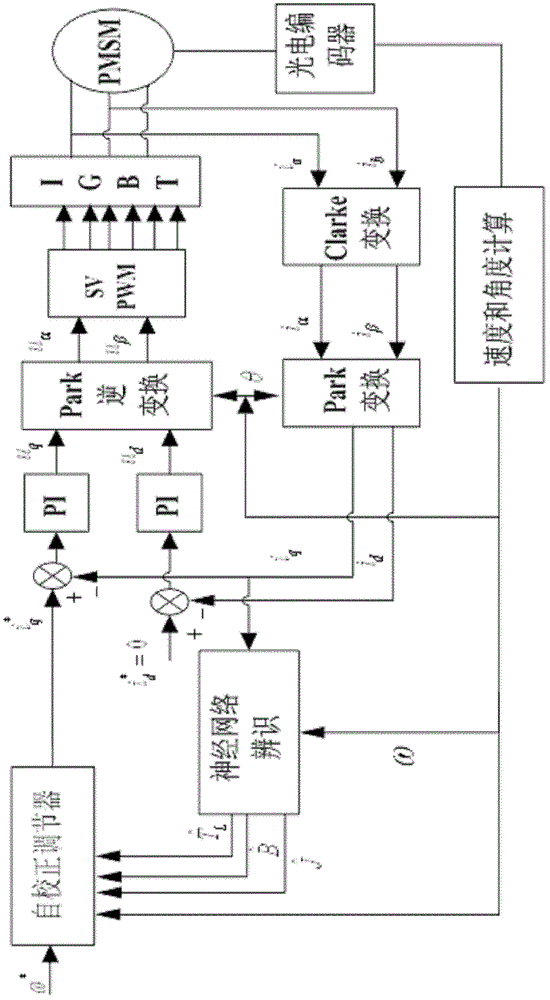
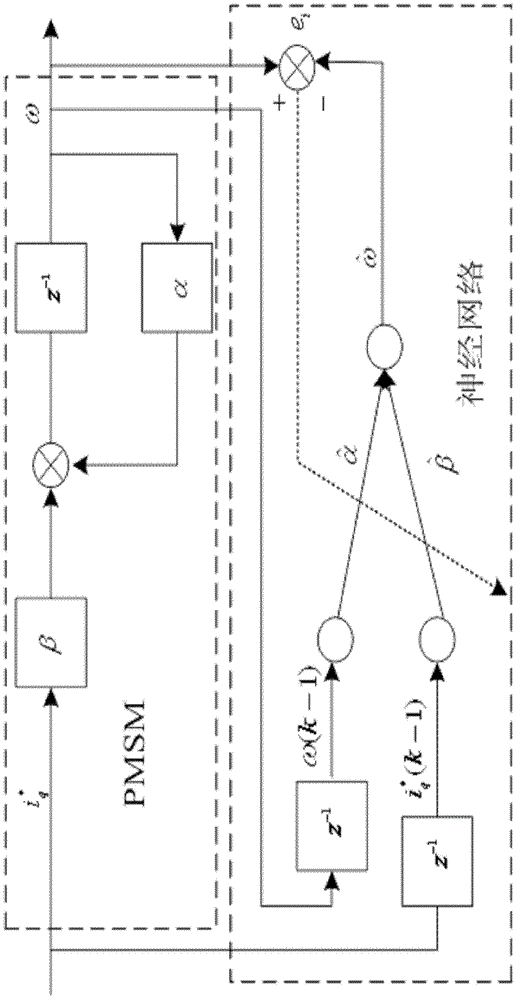
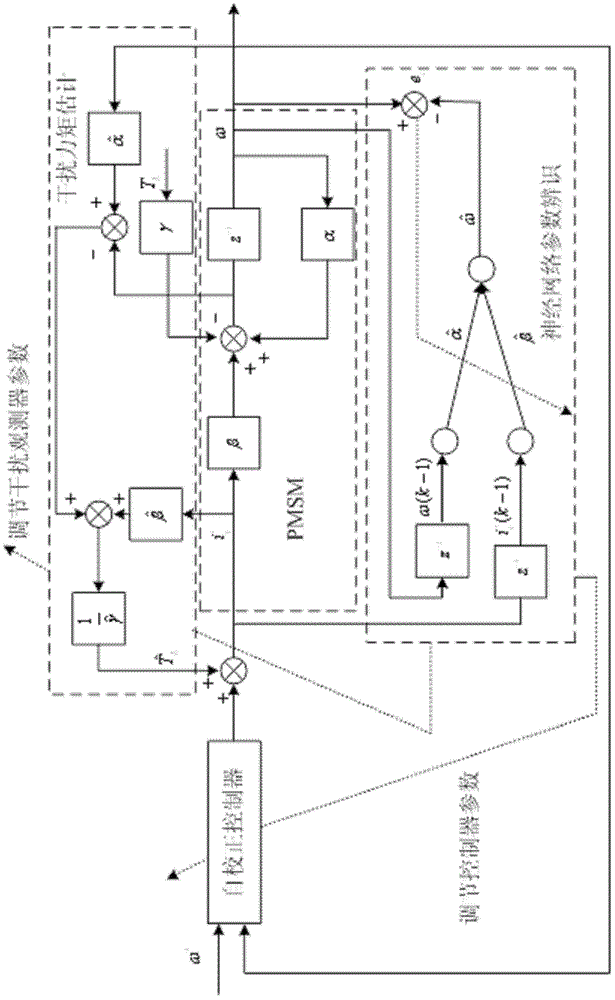
[0040] The neural network self-calibration control method of the speed loop of the permanent magnet synchronous motor of the present invention regards the current loop and the motor as the generalized controlled objects. Considering the high real-time performance of the current loop, in the design process, the current loop can be equivalent to a gain of 1 The proportion of the link (ie ). The discretization model of the system is established as: ω ( k ) = αω ( k - 1 ) + β i q * ( k - 1 ) + γ T L ( k - 1 ) , in, α = ...
PUM
 Login to View More
 Abstract
Description
Claims
Application Information
 Login to View More