Snowplow and snowplow roller brush lifting control device and method

A lift control and snow sweeper technology, which is applied in the use of feedback control, snow surface cleaning, cleaning methods, etc., can solve the problems of the unstable height of the roller brush from the ground, the inability to achieve the cleaning effect, and the frostbite of the driver's body. Good snow sweeping effect, solving the trouble of mechanical devices, reducing labor intensity

CN104111660BActive Publication Date: 2017-09-29CHINA INTERNATIONAL MARINE CONTAINERS (GROUP) CO LTD +1
9 Cites 2 Cited by

Patent Information

Authority / Receiving Office
CN · China
Patent Type
Patents(China)
Current Assignee / Owner
Publication Date
2017-09-29

Smart Images

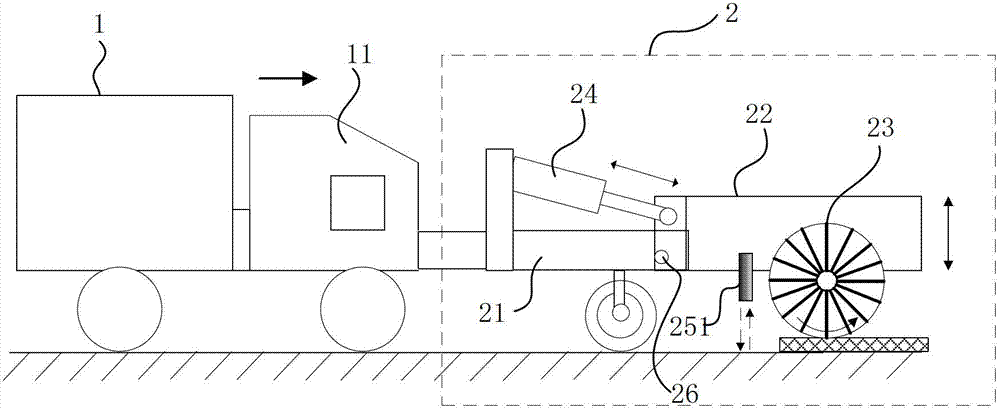
  • Figure 1
    Figure 1
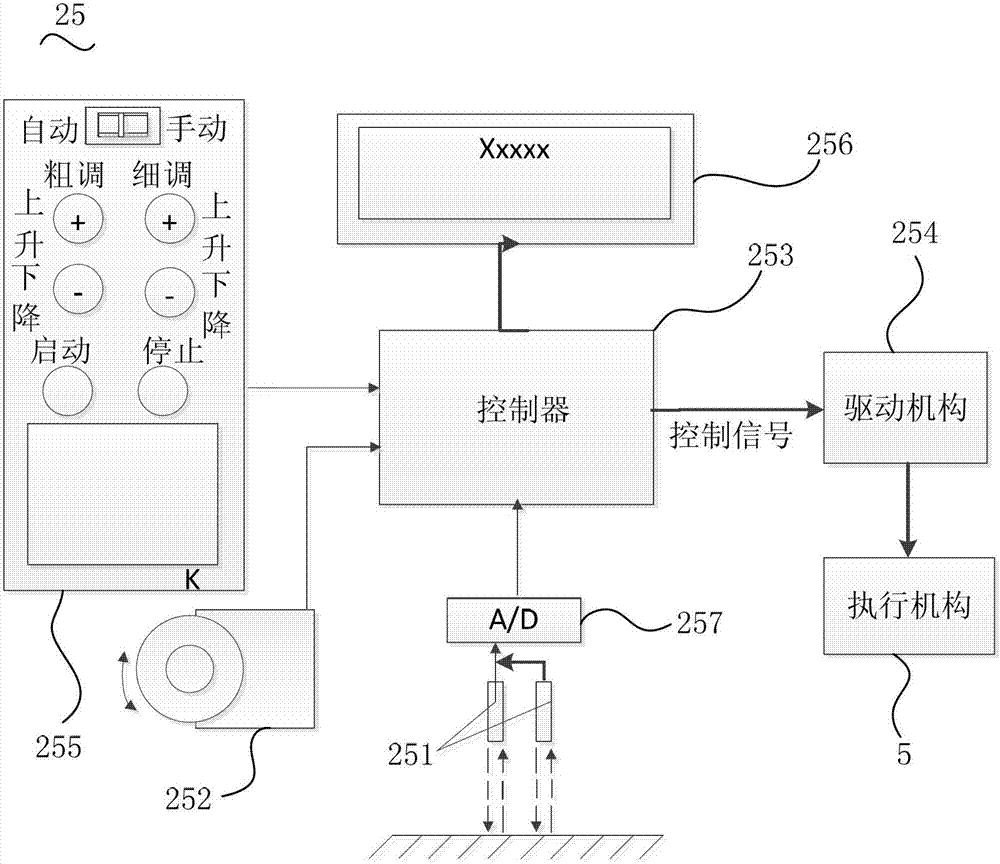
  • Figure 2
    Figure 2
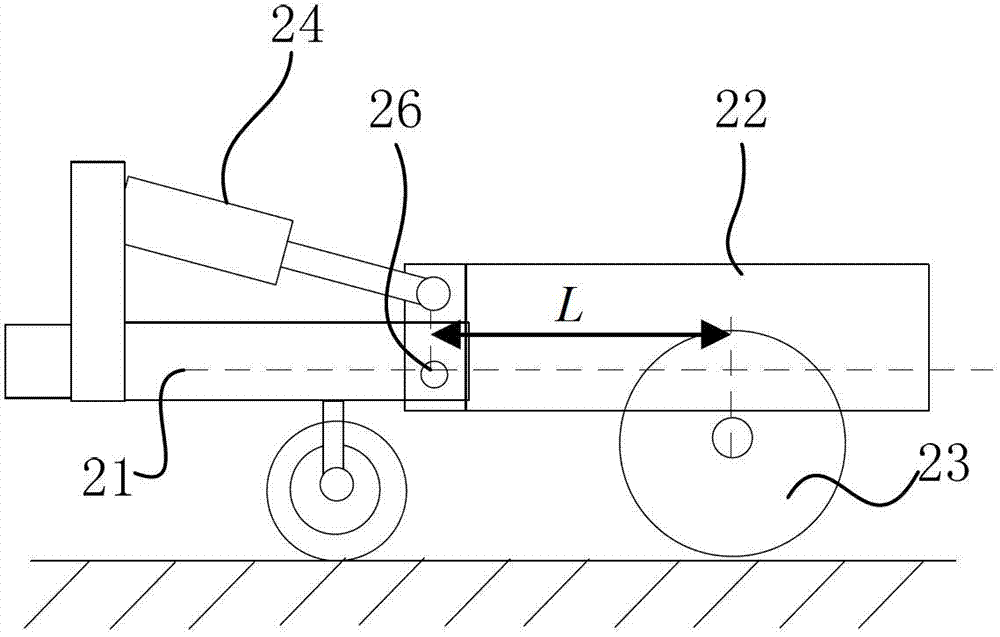
  • Figure 3
    Figure 3
Patent Text Reader

Abstract

A snowplow and a rolling brush lifting control device and method for the snowplow. The snowplow includes a car body and a snow plowing device arranged at the front end of the car body. The snow plowing device includes a main frame and a rolling brush frame hinged on the main frame , a rolling brush, an actuator that drives the rolling brush to rotate, and a rolling brush lifting control device. The rolling brush lifting control device includes: a first sensor for detecting the rotation angle of the rolling brush frame, a second sensor for directly detecting the height of the rolling brush from the ground, and a controller. The data detected by the sensor calculates the actual height value, and compares the actual height value with the preset height setting value, runs the PID control algorithm, and controls the roller brush to rise and fall to the set height according to the calculation result. The rolling brush lifting control device and method of the snowplow vehicle can keep the height of the snowplow vehicle stable from the ground, and prevent operators from performing manual operations outside the driver's cab in cold weather, thereby improving the comfort level of workers' work.
Need to check novelty before this filing date? Find Prior Art

Description

technical field

[0001] The invention relates to a snowplow, in particular to a rolling brush lift control system and method on the snowplow. Background technique

[0002] The snow plow with a roller brush cleans the snow through the rotation of the roller brush. At present, when this type of snow sweeper cleans the snow on the road surface, the driver manually adjusts the height of the roller brush from the ground through a mechanical device, and then carries out the snow clearing work. However, in the actual working process, due to factors such as undulating terrain, wear of the roller brush, and deformation of the supporting wheels, the height of the roller brush from the ground is unstable, and the normal cleaning effect cannot be achieved. At this time, the driver needs to go out of the cab to visually inspect the roller. The height of the brush from the ground can be manually adjusted to raise and lower the height of the roller brush so that the roller brush has a suit...

Examples

Embodiment Construction

[0025] In order to further illustrate the principle and structure of the present invention, preferred embodiments of the present invention will now be described in detail with reference to the accompanying drawings.

[0026] The present invention firstly provides a rolling brush lifting control method of a snowplow, which includes the following steps:

[0027] Step 1: Detect the rotation angle of the roller brush rack through the first sensor and indirectly calculate the reference height of the roller brush from the ground, record the reference height from the ground as the first height, and directly detect the ground clearance of the roller brush through the second sensor height, recorded as the second height;

[0028] Step 2: subtracting the first height from the second height to obtain a deviation value,

[0029] If the deviation value is greater than the error setting value and remains for a period of time, it is determined that the sensor corresponding to one set of unre...