
A Correction Method for Magnetic Resonance Image Distortion Under Strong Inhomogeneous Magnetic Field
A magnetic resonance image and uniform magnetic field technology, applied in the direction of measuring magnetic variables, measuring devices, instruments, etc., can solve the problems of loss of detailed signals, residual artifacts in reconstructed images, etc., and achieve the effect of avoiding acquisition time
- Summary
- Abstract
- Description
- Claims
- Application Information
AI Technical Summary
Problems solved by technology
Method used
Image

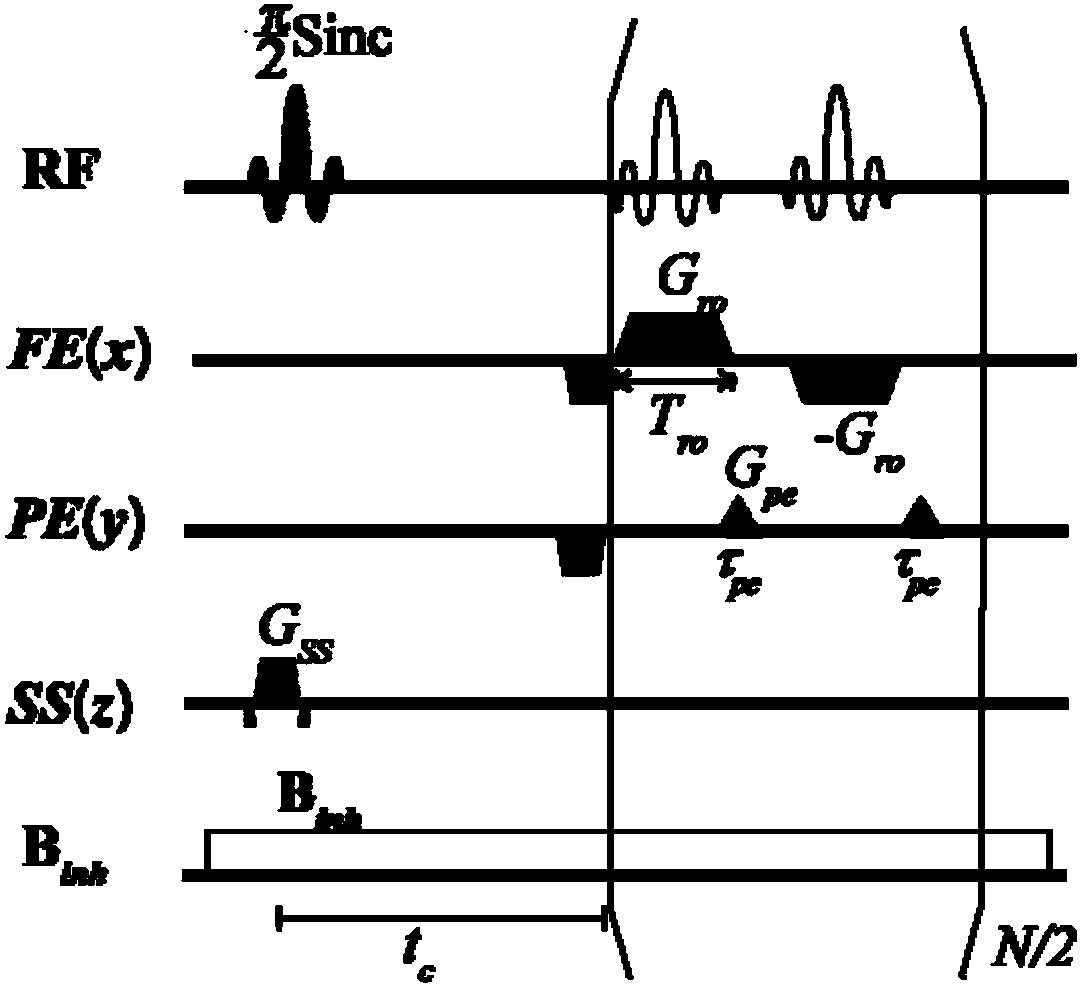
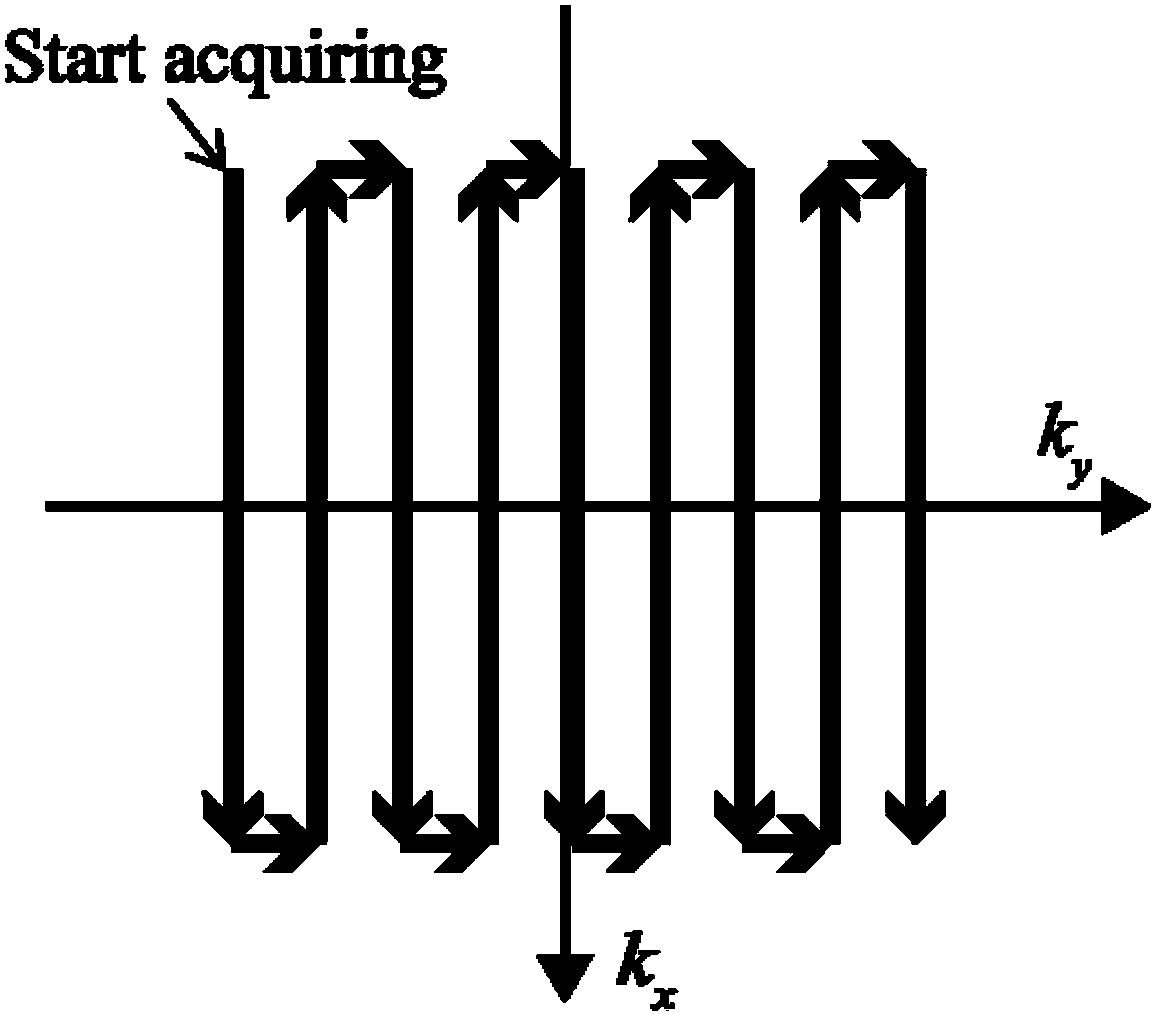
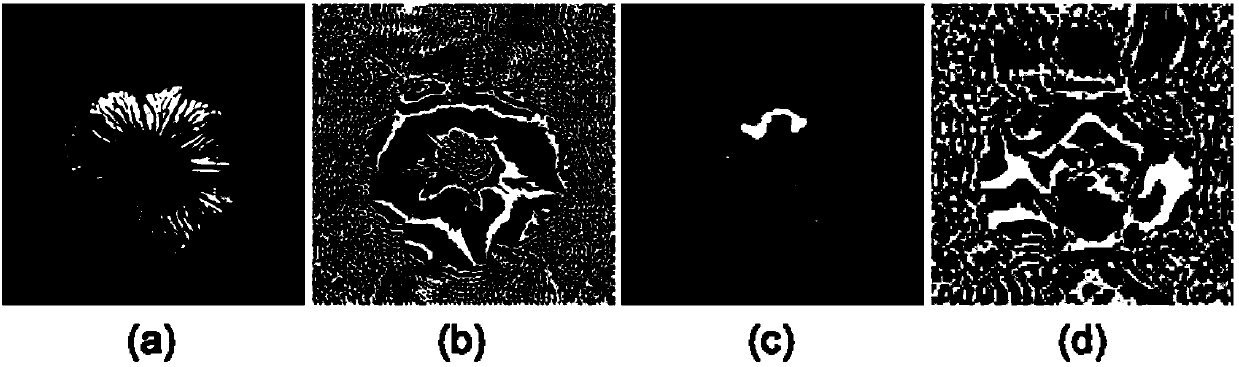
Examples
Embodiment Construction
[0037] The present invention comprises the following steps:
[0038] 1) Calculate the evolution time of the inhomogeneous field: t(k x ,k y ) means that the k-space sampling position is (k x ,k y ) inhomogeneous field evolution time, expressed as
[0039]
[0040] where t c is the time difference between applying the RF pulse and before data sampling, t in the EPI sequence c The value is small and can be ignored. k x ,k y is an orthogonal discrete coordinate variable of the k-space Cartesian system. The two orthogonal coordinate directions of the k-space are respectively called the row coordinate axis direction (k x direction) and column axis direction (k y direction). Correspondingly, x and y are two orthogonal discrete coordinate variables in the image space, and the two orthogonal directions in the image space are also called the phase encoding direction (y coordinate axis direction) and the frequency encoding direction (x coordinate axis direction) . n(k y...
PUM
 Login to View More
 Abstract
Description
Claims
Application Information
 Login to View More