
A kind of breeding method of blast-resistant pepper seedlings
A technology of blast resistance and pepper, which is applied in the agricultural field, can solve the problems that pepper seedlings cannot obtain blast resistance, have not obtained blast resistance, and the survival rate of grafting is not high, so as to increase comparability, increase survival rate, and improve benefits Effect
- Summary
- Abstract
- Description
- Claims
- Application Information
AI Technical Summary
Problems solved by technology
Method used
Image

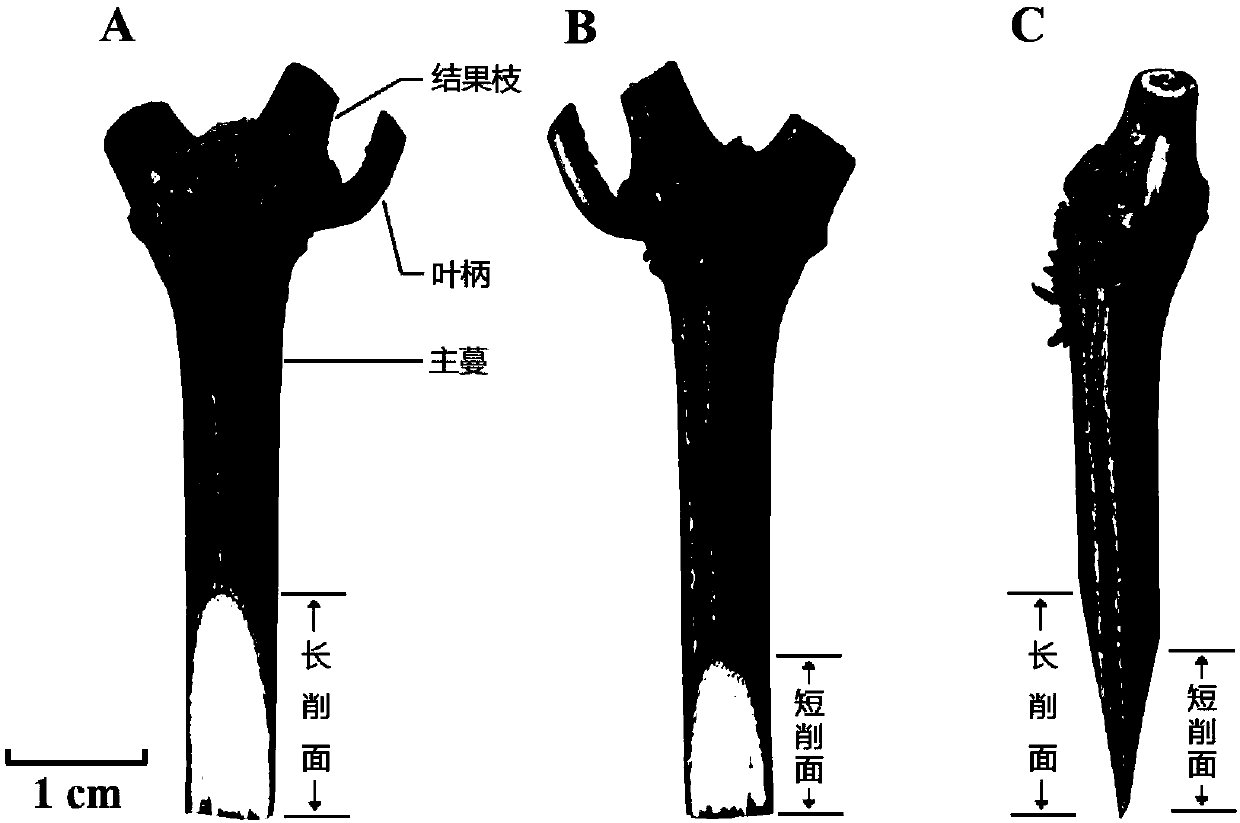

Examples
Embodiment 1
[0025] Embodiment 1: breeding method of the present invention
[0026] The 5-year-old Reyin No. 1 with normal growth and no influence of diseases and insect pests was selected as the scion mother tree; 25 days before cutting the scion, a growth-promoting fertilizer was applied once; a systemic fungicide was sprayed once a week before cutting the scion.
[0027] In February 2012, 2-year-old pepper seedlings with a cork length of 50 cm, normal growth and no influence of diseases and insect pests were selected as rootstocks, and liquid biological fertilizer was applied once 30 days before grafting; Inhale fungicide 1 time, and fill the bottom with water.
[0028] On April 10, 2012 (daily average temperature 25.6 ℃) at 7:30 in the morning, choose 2-year-old, strong, main vines without mechanical damage from the scion mother tree; choose a diameter between 0.5-1.0cm part, cut into 7cm scion, Each scion has 1 node and 1 leaf bud; cut off the leaves, keep the axillary buds and petio...
Embodiment 2
[0032] Embodiment 2: Cleaving mode grafting method
[0033] The 5-year-old Reyin No. 1 with normal growth and no influence of diseases and insect pests was selected as the scion mother tree; 25 days before cutting the scion, a growth-promoting fertilizer was applied once; a systemic fungicide was sprayed once a week before cutting the scion.
[0034] In February 2012, 2-year-old seedlings of betel leaves with a suberized length of the main vine of 50 cm, normal growth and no influence of diseases and insect pests were selected as rootstocks, and liquid biofertilizer was applied once 30 days before grafting; Inhale fungicide 1 time, and fill the bottom with water.
[0035] On April 10, 2012 (daily average temperature 25.6 ℃) at 7:30 in the morning, choose 2-year-old, strong, and non-mechanically damaged main vines from the scion mother tree; choose a part with a diameter of 0.5-1.0cm, cut into a long 7cm scion, Each scion has 1 node and 1 leaf bud; the blade is cut off, and th...
Embodiment 3
[0039] Embodiment 3: Comparison test of grafting survival rate and blast resistance
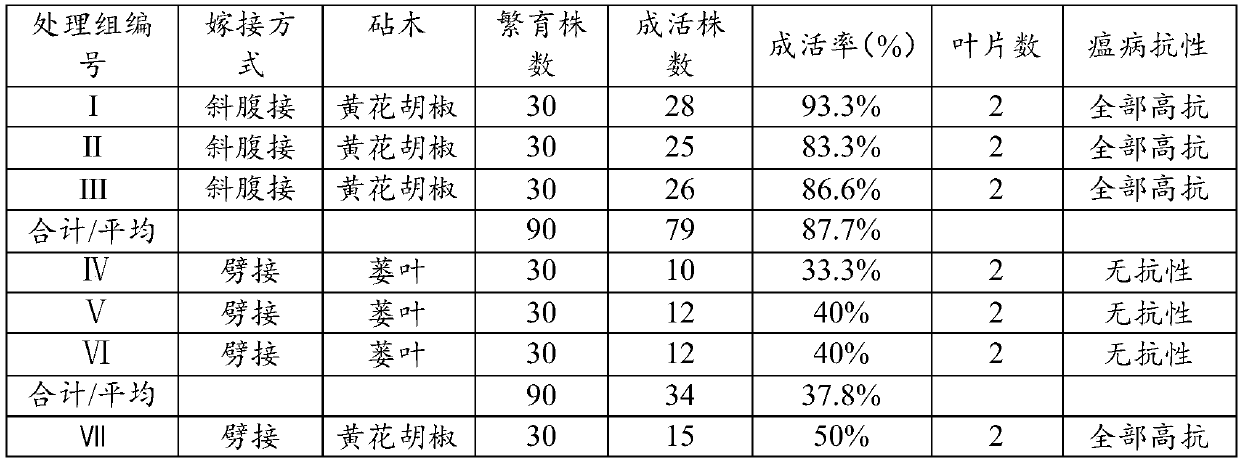
[0040] Carry out grafting to pepper according to the method of embodiment 1 and embodiment 2 respectively, each method carries out three groups at the same time, every group of 30 plants, carries out the statistics of survival rate and blast resistance to the finally obtained pepper seedlings under the same test environment For comparison, the results are shown in the table below:
[0041] Comparison of the effects of different grafting methods after 3 months of grafting
[0042]
[0043]
[0044] As can be seen from the results in Table 1, with the yellow pepper as rootstock, adopting the seedling breeding method of the present invention, the pepper seedling survival rate can reach more than 85% on average, which is far higher than the conventional split grafting method, and The obtained grafted seedlings are highly resistant to pepper blast.
PUM
 Login to View More
 Abstract
Description
Claims
Application Information
 Login to View More