

A Saliency Detection Method Based on Level Set Superpixels and Bayesian Framework
A Bayesian framework and detection method technology, applied in the field of image processing, can solve problems such as too large image segmentation, affecting accuracy, and too small segmentation
- Summary
- Abstract
- Description
- Claims
- Application Information
AI Technical Summary
Problems solved by technology
Method used
Image

Examples
Embodiment Construction
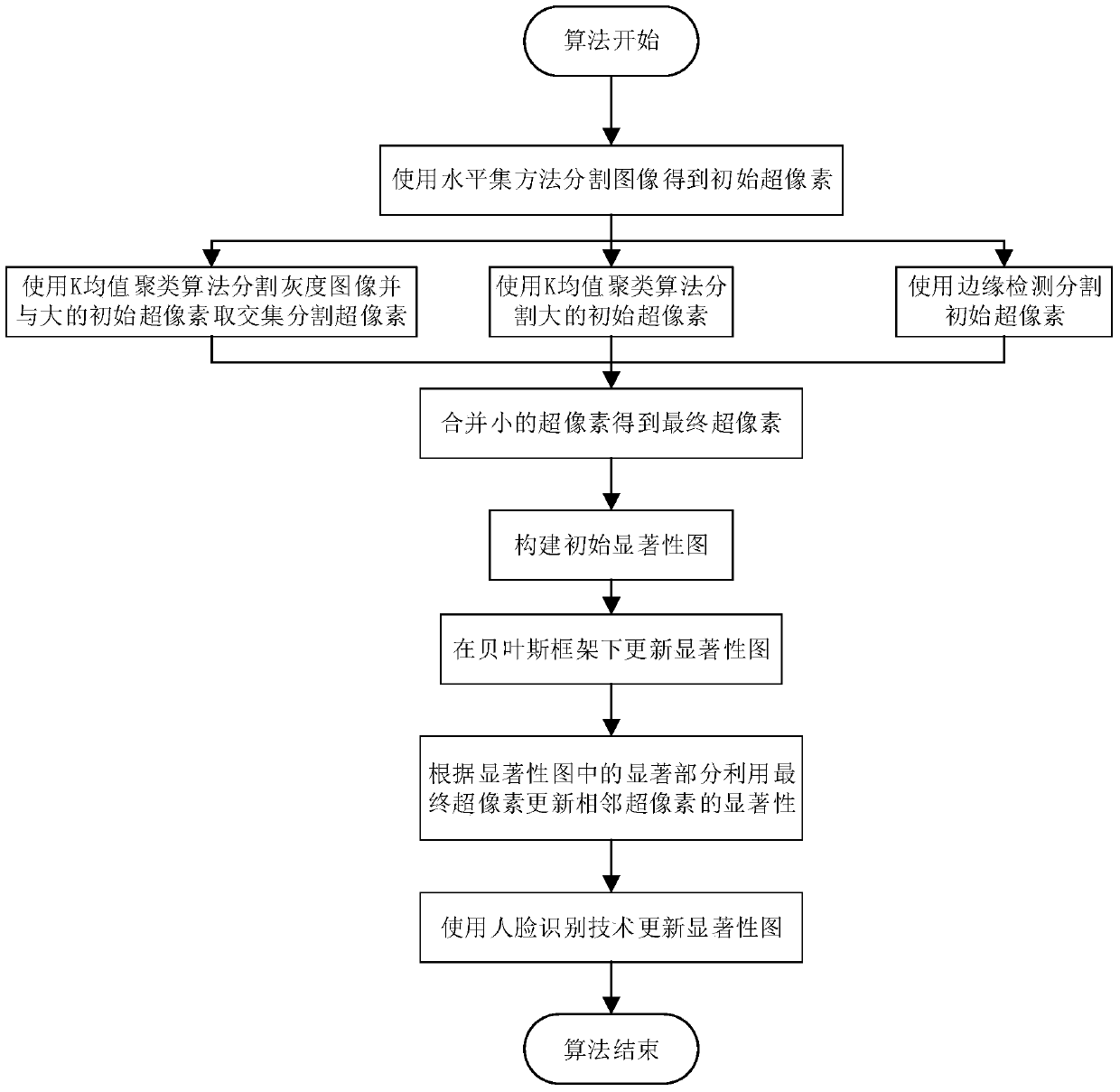
[0043] Embodiments of the present invention will be described in detail below in conjunction with the accompanying drawings. This embodiment is implemented on the premise of the technical solution of the present invention, and detailed implementation and specific operation process are provided, but the protection scope of the present invention is not limited to the following embodiments.
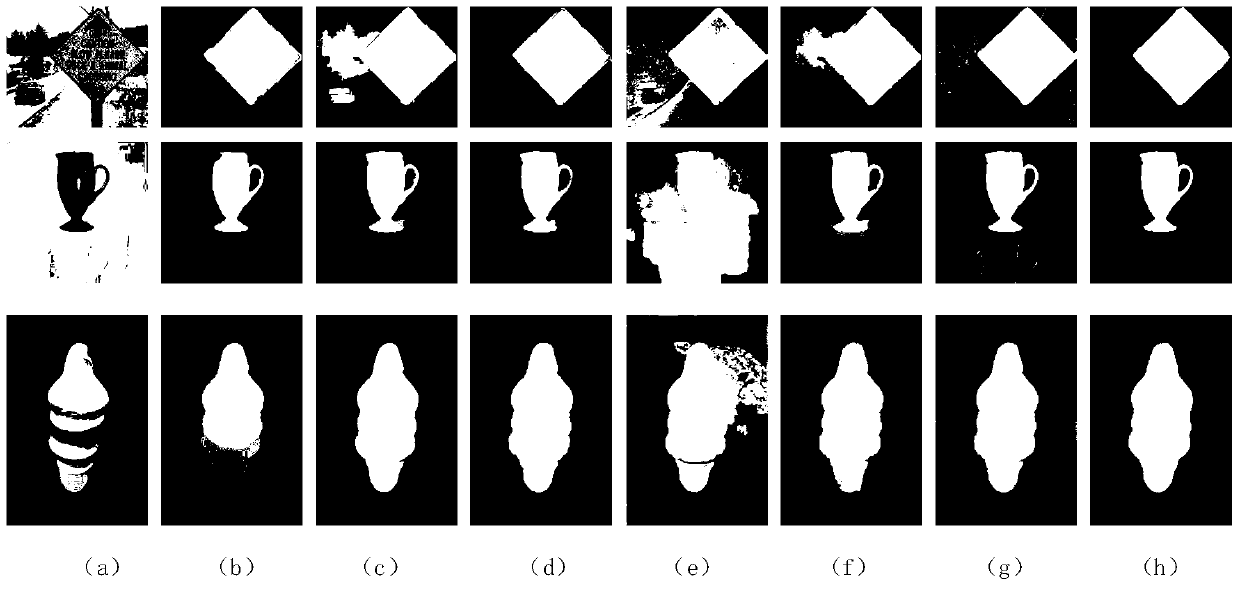
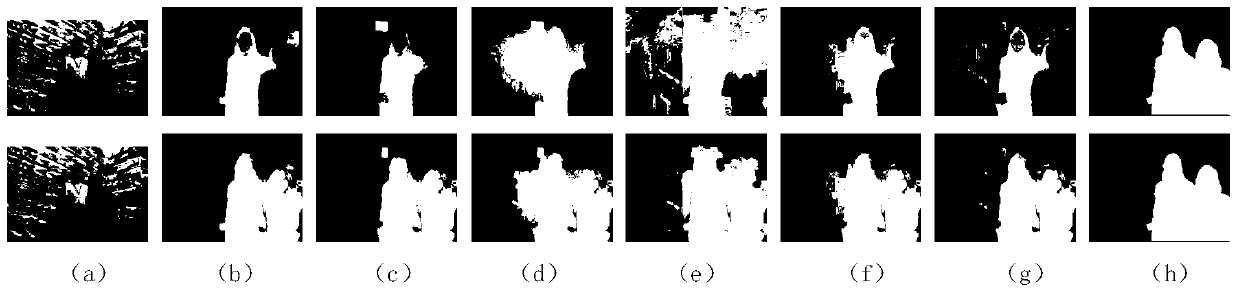
[0044] The proposed algorithm is tested on four standard databases: Pascal-S database, which contains 850 pictures, some of which have complex backgrounds, and the complexity of the database is relatively high. ECSSD database, which contains 1000 pictures with different sizes and multiple targets. The MSRA database contains pixel-level real-value annotations, and the complexity of the picture is high. DUT-OMRON database, which contains 5168 pictures, contains pixel-level ground-truth annotations, the picture background is complex, and the target size is different, which is very challenging....
PUM
 Login to View More
 Abstract
Description
Claims
Application Information
 Login to View More