
Water removal device for oil storage tank
A technology for oil storage tanks and oil tanks, which is applied in the direction of tank cars, immiscible liquid separation, railway car body parts, etc., and can solve problems such as high oil content in drainage, environmental pollution, and potential safety hazards
- Summary
- Abstract
- Description
- Claims
- Application Information
AI Technical Summary
Problems solved by technology
Method used
Image

Examples
Embodiment Construction
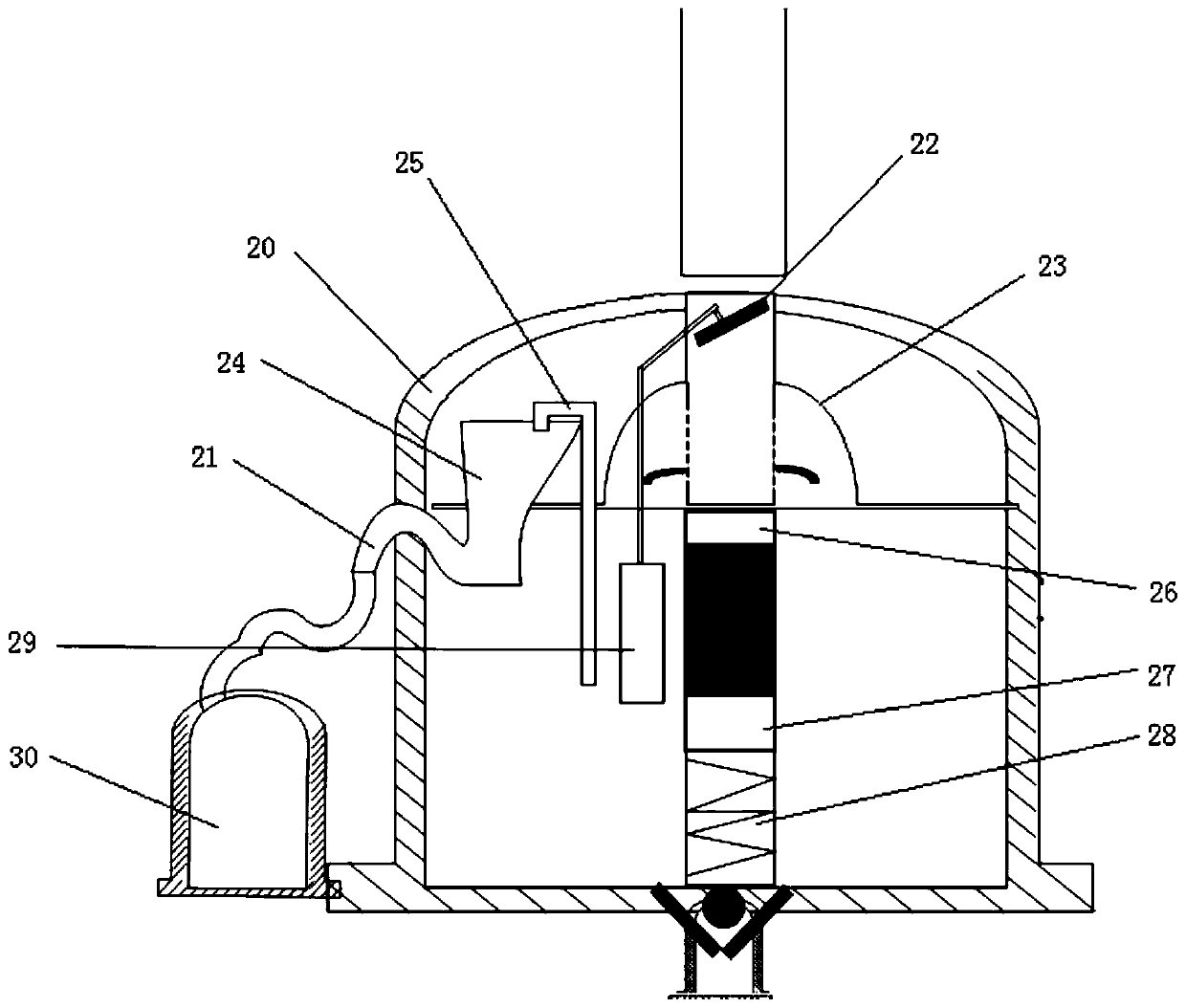
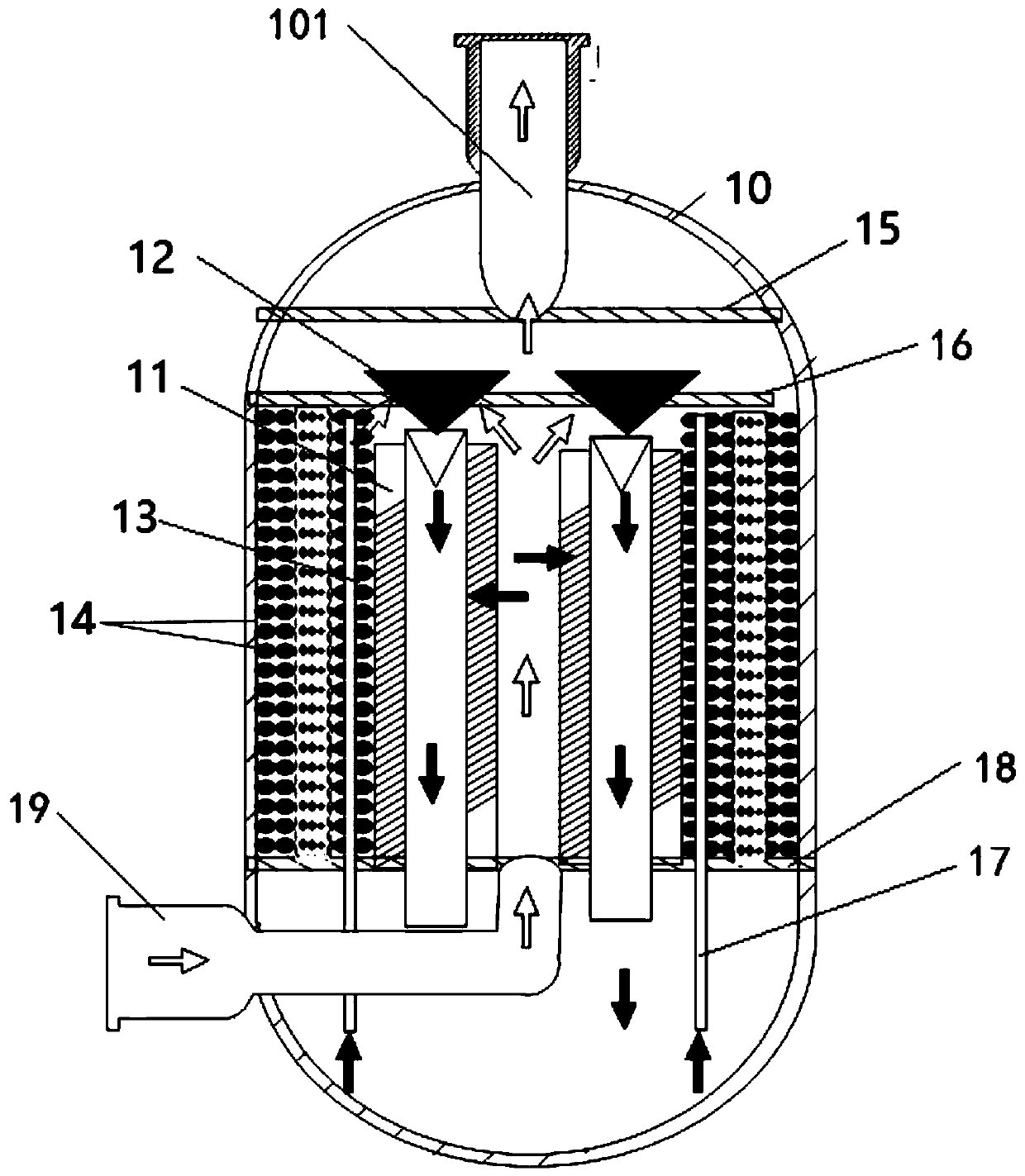
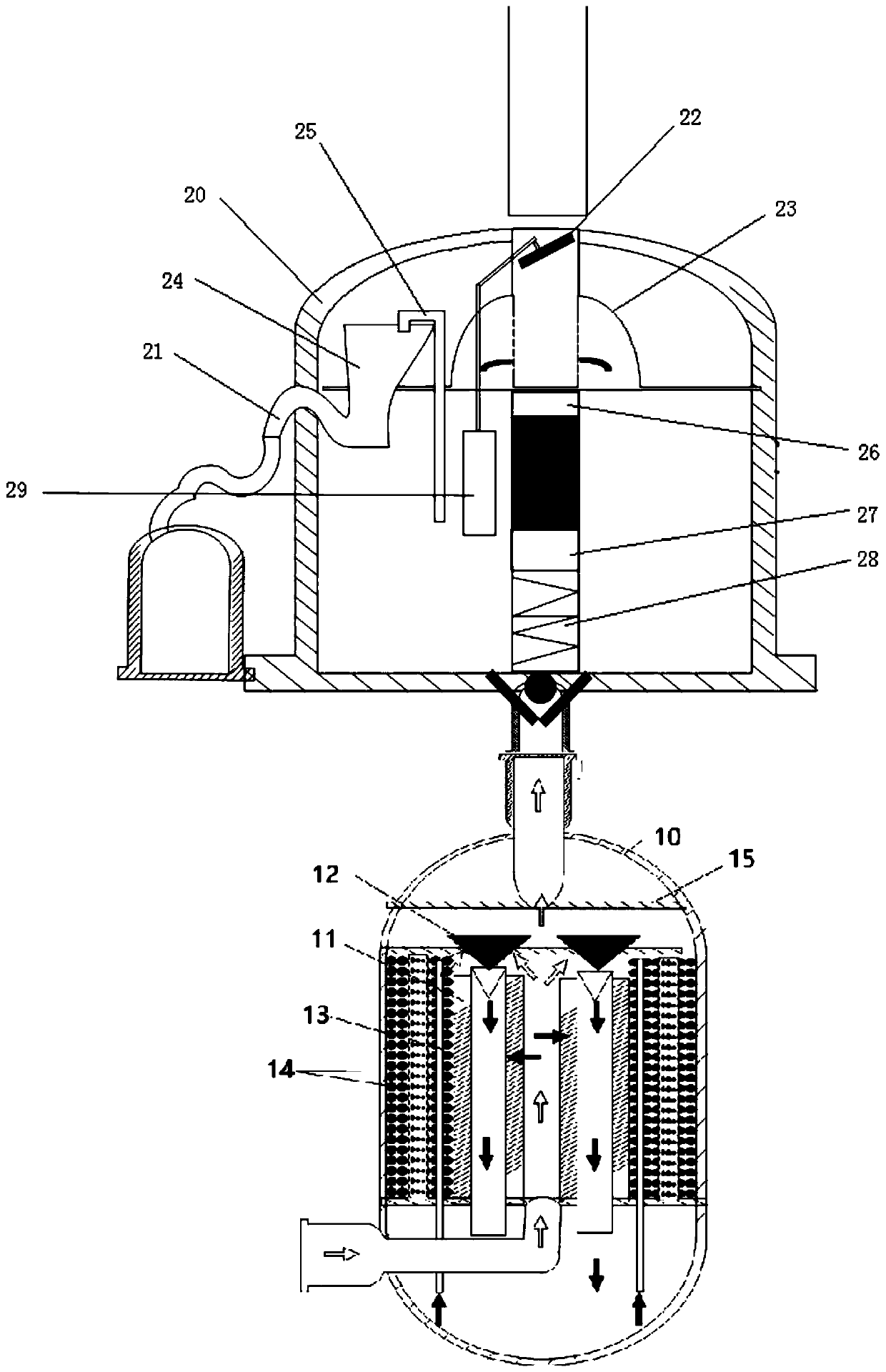
[0039] Such as Figure 1-3 As shown, an embodiment of the present invention provides a water removal device for an oil storage tank, including:
[0040] The oil tank filter separator 10 is provided with a crude oil inlet pipe 19 at the bottom of the tank body, and is used for oil-water separation of the water-containing oil that enters the tank body of the oil tank filter separator 10 through the crude oil inlet pipe 19;
[0041] The float device 20 , the inlet of the float device 20 is connected to the liquid outlet at the top of the filter separator 10 , and the oil liquid entering the float device 20 is discharged through the siphon device 30 .
[0042] Preferably, the tank body of the oil tank filter separator 10 is provided with an upper partition 16 and a lower partition 18, and a separation space is formed between the upper partition 16, the lower partition 18 and the inner wall of the tank, and the A collection space is formed between the bottom of the lower baffle 18...
PUM
 Login to View More
 Abstract
Description
Claims
Application Information
 Login to View More