
Photosensitive material supply method and 3D printer system based on dlp principle
A 3D printer and photosensitive material technology, applied in the field of 3D printing, can solve the problems of high liquid level and affect the printing accuracy, and achieve the effect of improving the accuracy
- Summary
- Abstract
- Description
- Claims
- Application Information
AI Technical Summary
Problems solved by technology
Method used
Image

Examples
Embodiment Construction
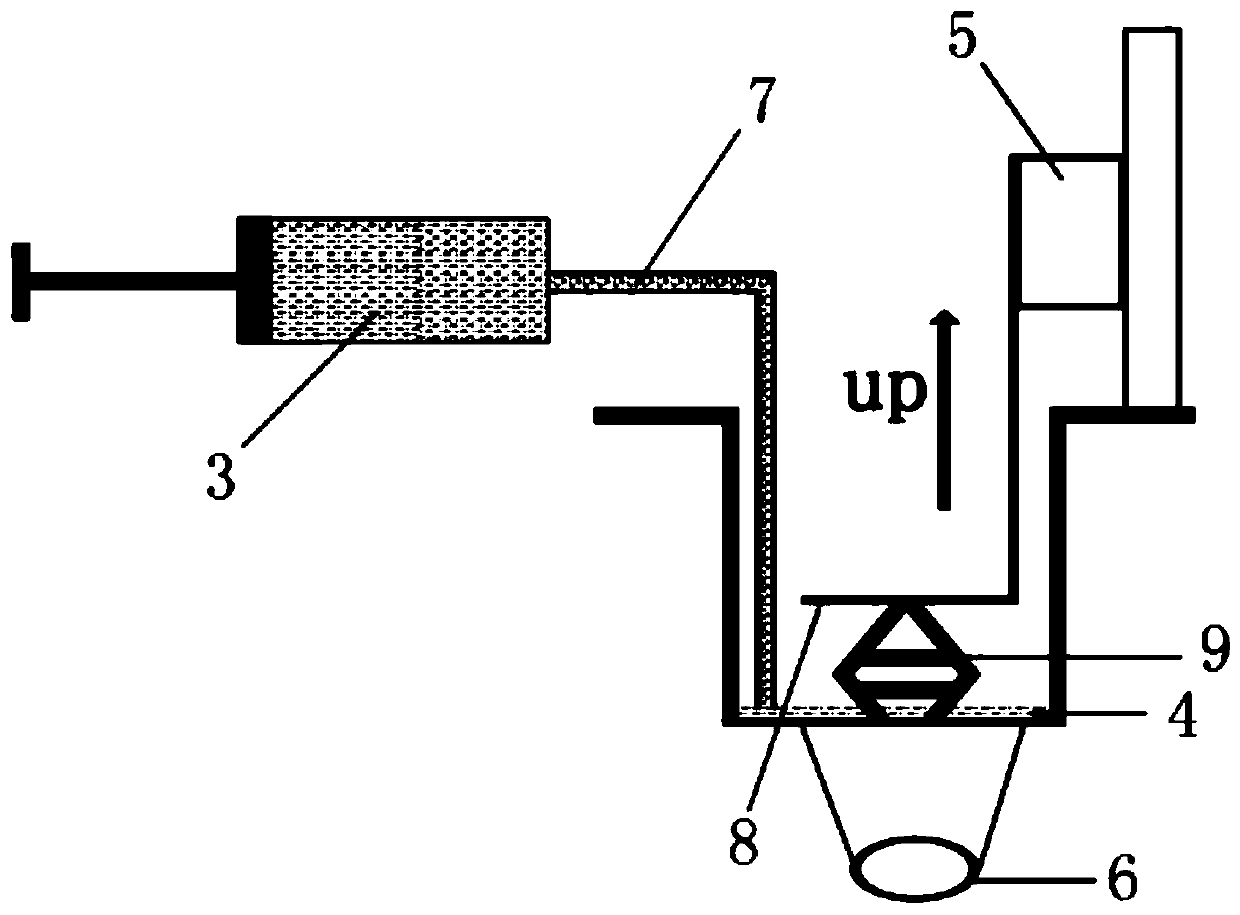
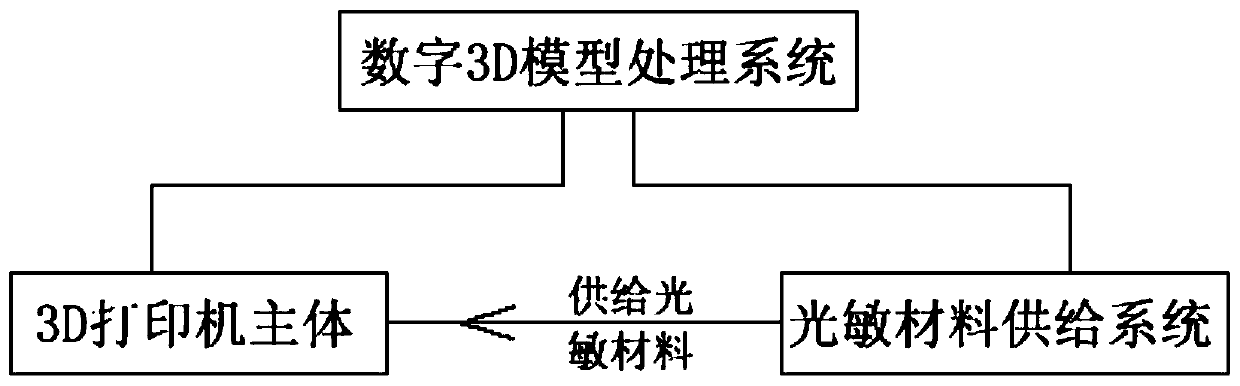
[0028] The present invention will be further described below in conjunction with the accompanying drawings and specific embodiments. Wherein, the photosensitive material supply method described in the present invention is used to control the supply amount of the photosensitive material on a 3D printer based on the DLP principle. .
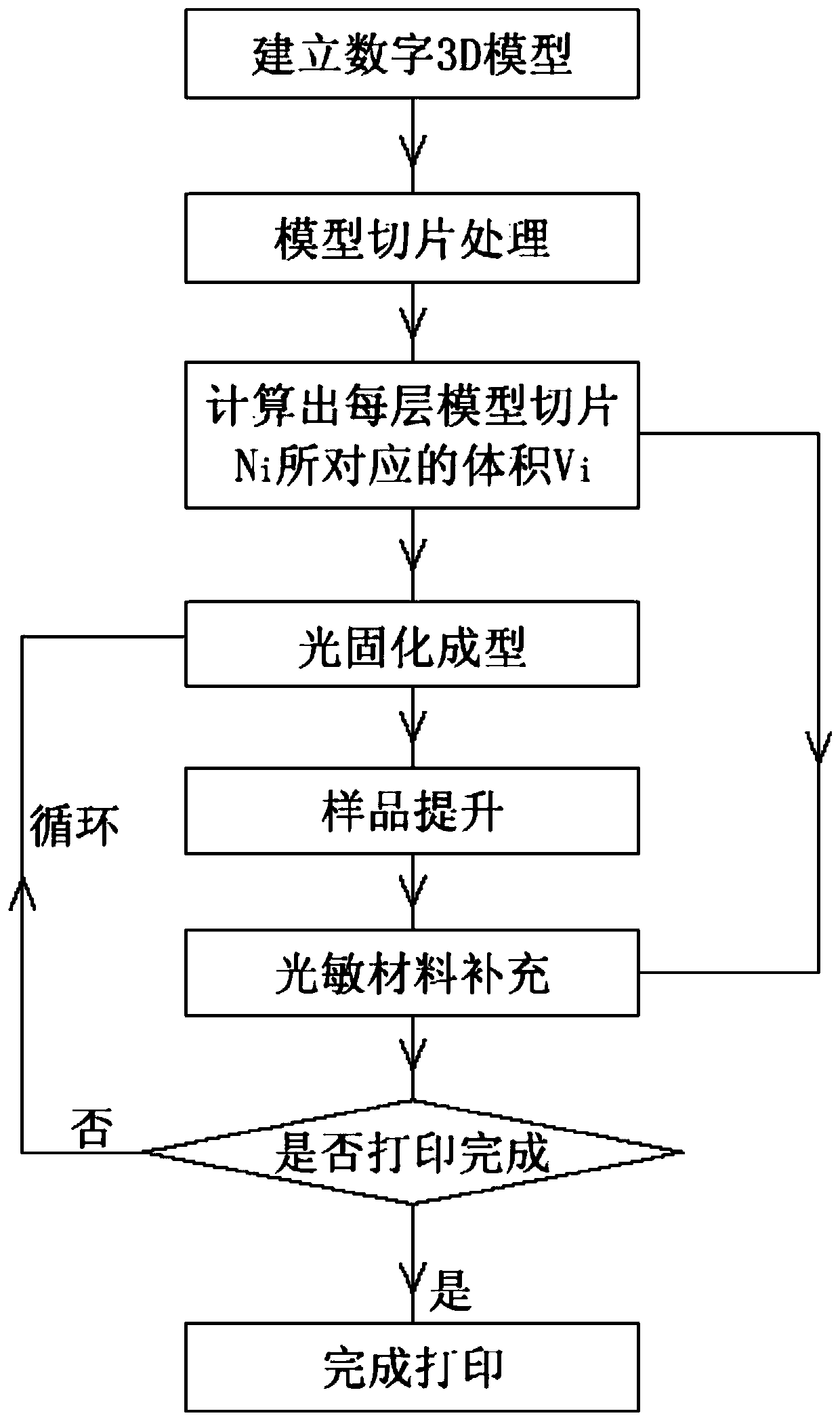
[0029] Such as Figures 1 to 5 Shown in, the photosensitive material supply method of the present invention, comprises the following steps:
[0030] A. Establish a digital 3D model of the sample to be printed;
[0031] B. Slicing the digital 3D model to obtain multi-layer model slices N i , and the single-layer model slice N i The thickness of is h, where i represents the corresponding model slice N when counting from the bottom to the top of the digital 3D model i the level at which
[0032] C. Calculate the model slice N of each layer i The corresponding volume V i ;
[0033] D. From the bottom to the top of the digital 3D model, slice N...
PUM
 Login to View More
 Abstract
Description
Claims
Application Information
 Login to View More