
Application of osteocalcin to regulation of exosomes of endothelial progenitor cells
A technology of endothelial progenitor cells and osteocalcin, which is applied in the field of biomedicine to achieve the effect of increasing the diameter and promoting proliferation
- Summary
- Abstract
- Description
- Claims
- Application Information
AI Technical Summary
Problems solved by technology
Method used
Image

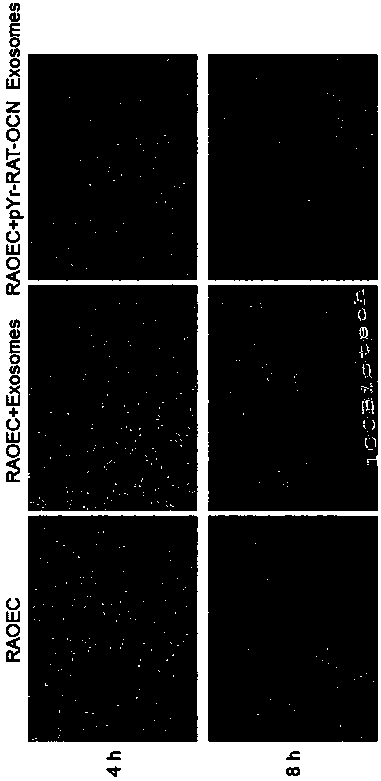
Examples
Embodiment 1
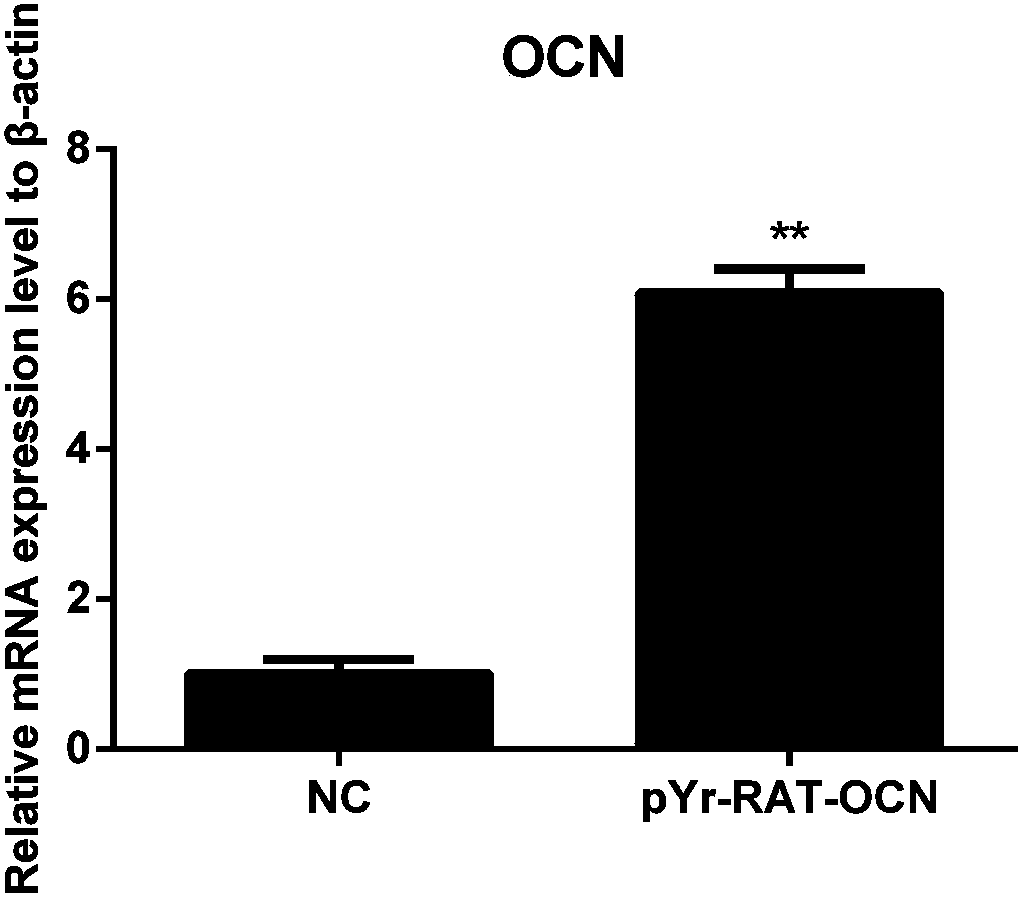
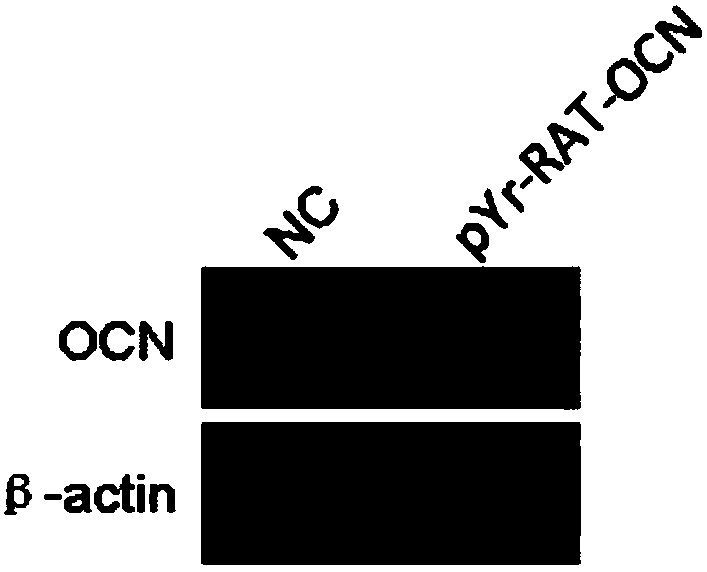
[0036] Example 1. Construction of osteocalcin (OCN) overexpressing cells
[0037] Experimental material: Osteocalcin (OCN), its amino acid sequence and its coding sequence can be referred to / selected from the prior art (such as mouse osteocalcin RAT-OCN: GenBank: AAA41761; GenBank: AAA53280; etc.), OCN coding Gene synthesis can be commissioned by commercial companies. Both pYr eukaryotic expression vector and endothelial progenitor cells (EPC) can be purchased through commercial companies.
[0038] Restricted medium: FBS was filtered through a 0.22μm filter in advance and centrifuged at 100000g for 12h to remove exosomes in FBS. Then 10% of the FBS was added to EBM-2 medium (containing EGM-2MVSingleQuots). Use FBS for exosomes.
[0039] (1) Construction of OCN overexpression vector
[0040] Using genetic engineering techniques, the OCN encoding gene was introduced into the pYr eukaryotic expression vector to construct the OCN overexpression vector pYr-RAT-OCN.
[0041] The main step...
Embodiment 2
[0057] Example 2: The effect of osteocalcin (OCN) on the secretion of exosomes
[0058] (1) Culture of transfected EPC cells and extraction of exosomes
[0059] 1. Cultivation of transfected cells
[0060] Experimental grouping (2 groups):
[0061] Group A: EPC cells transfected with OCN overexpression vector (pYr-RAT-OCN group)
[0062] Group B: EPC cells transfected with empty plasmid (control group, NC group)
[0063] The above-mentioned cells in the logarithmic growth phase cultured in a conventional medium were replaced with the same volume of restricted medium at the same cell concentration, and after 24 hours of culture, the exosomes were extracted.
[0064] 2. Extraction of exosomes (2 groups)
[0065] The exosomes in the cell culture were extracted using the exosomes extraction kit. The main steps include: the cell culture is centrifuged at 2000g for 30 minutes to remove the cells / cell debris. Take the supernatant, filter with a 1μm filter membrane, and take the filtrate. The f...
Embodiment 3
[0076] Example 3. Research on the mechanism of osteocalcin (OCN) regulating endothelial progenitor cell function through exosomes
PUM
 Login to View More
 Abstract
Description
Claims
Application Information
 Login to View More