
Bovine theileriosis detection kit
A detection kit and disease detection technology, which is applied in the field of bovine theileriasis detection kits, can solve the problems of expensive, time-consuming and labor-intensive detection, and achieve the effects of simple operation, wide application range, and improved sensitivity
- Summary
- Abstract
- Description
- Claims
- Application Information
AI Technical Summary
Problems solved by technology
Method used
Image

Examples
Embodiment 1
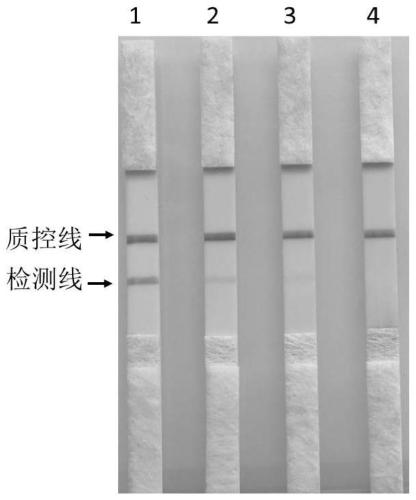
[0023] Embodiment 1: the screening of optimal reaction temperature and reaction time
[0024] 1. Genomic DNA Extraction of Theileria annuli
[0025] Take 200 μL of bovine anticoagulant blood positive for Theileria annuli that was stored at -20°C, and use the QIAamp DNAMini Kit (Qiagen, Germany) to extract blood DNA. The specific operation method refers to the instruction manual.
[0026] 2. Primer Design
[0027] According to the 18S rRNA gene sequences of Theileria annulus, Theileria sinensis, Theileria orientalis, Babesia bovis, Babesia double buds, Babesia ovale, Babesia major, and Babesia orientalis published by GenBank, after comparative analysis , the cross-amplification primers used to amplify three kinds of Theileria were designed in the mutated segment, and the amplified length was about 170bp.
[0028] Replacement primer Bovis-T-5a: 5'-AGAAAATTAGAGTGCTCA-3' (SEQ ID No.1)
[0029] Replacement primer Bovis-T-4s: 5'-CAACTGTTCCTATTAACCAT-3' (SEQ ID No.2)
[0030] Cro...
Embodiment 2
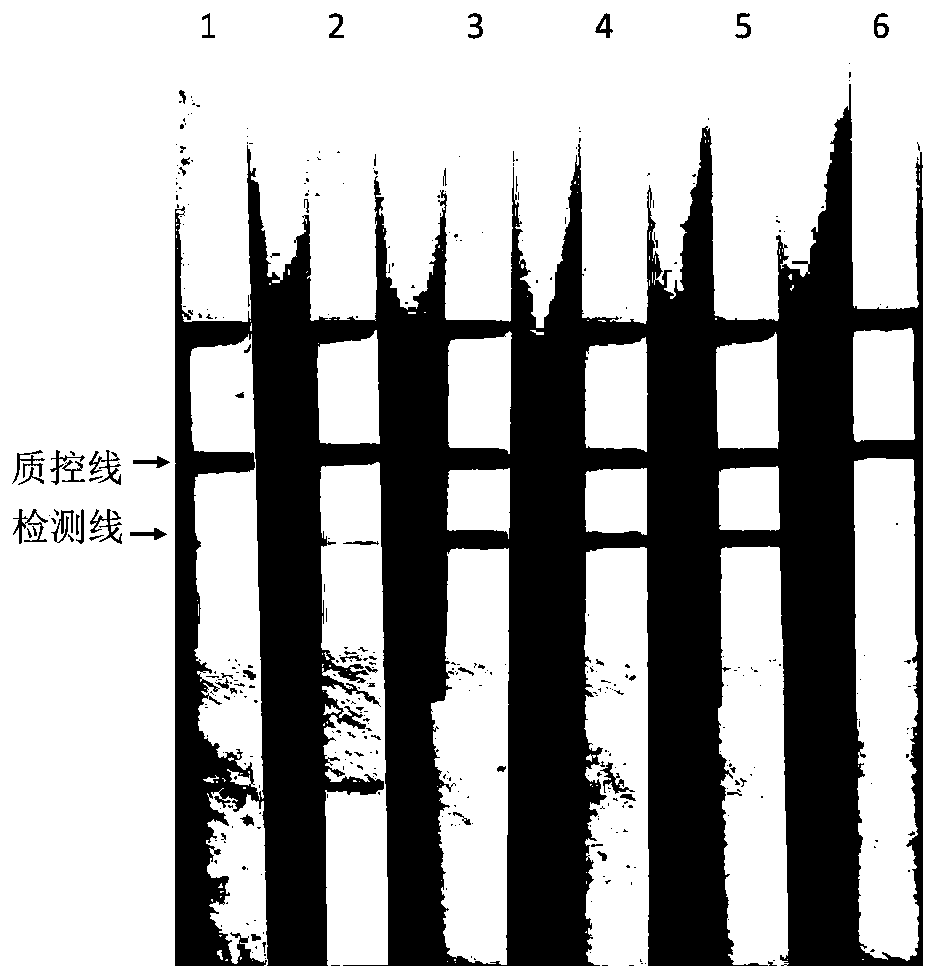
[0045] Example 2: Specific detection of cross primer amplification
[0046] 1. Genomic DNA Extraction of Piroplasma bovis
[0047] Take Babesia bovis, Babesia double bud, Babesia major, Babesia ovale, Babesia orientalis, Theileria annulus, Theileria sinensis, Theileria orientalis, and Piroplasma-negative cattle that were stored at -20°C. Each 200 μL of anticoagulated blood was extracted with QIAamp DNA Mini-kit (Qiagen, Germany), and the specific operation steps were carried out according to the instructions.
[0048] 2. Isothermal amplification
[0049] Amplification system:
[0050]
[0051]
[0052] Place the reaction tube at 55°C for 50 minutes, and inactivate at 80°C for 2 minutes
[0053] 3. Amplification product detection
[0054] Take 10 μL of the above reaction product, drop it on the absorbent pad of the chromatography test strip, insert it into a 1.5ml centrifuge tube filled with 100 μL of chromatography buffer, let it stand for 3-5 minutes, and read the e...
Embodiment 3
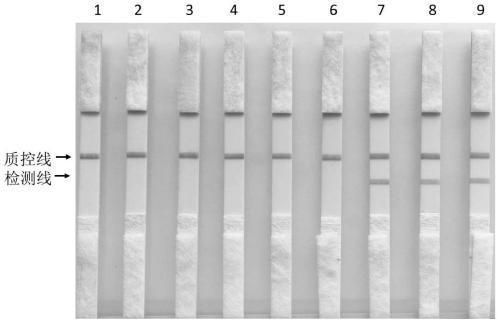
[0060] Embodiment 3: sensitivity test
[0061] 1. Preparation of 18S rRNA recombinant plasmid standard products of Theileria annulus, Theileria sinensis and Theileria orientalis
[0062] The 18S rRNA recombinant plasmids of Theileria annulus, Theileria sinensis, and Theileria orientalis stored at -20°C were used to measure the plasmid concentration with a NanoDrop2000 (Thermo Scientific, America) ultramicro spectrophotometer, and convert it into copies / μL. Use this as a plasmid standard and dilute to 1.0×10 5 -1.0×10 0 copies / μL for sensitivity testing.
[0063] 2. Isothermal amplification
[0064] Amplification system
[0065]
[0066] The above-mentioned reaction tubes were reacted at 55°C for 50 minutes and inactivated at 80°C for 2 minutes.
[0067] 4. Analysis of amplification products
[0068] Take 10 μL of the above reaction product, add it dropwise to the absorbent pad of the chromatography test strip, insert it into a 1.5mL centrifuge tube filled with 100 μL ...
PUM
 Login to View More
 Abstract
Description
Claims
Application Information
 Login to View More