
Multi-biomimetic fog water collecting structure and preparation method thereof
A fog water and biological technology, applied in water supply devices, drinking water devices, buildings, etc., can solve the problems of low fog water collection efficiency, difficulty in large-scale preparation, complex preparation process, etc., to reduce the probability of water droplet re-evaporation and low cost , The effect of simple structure preparation process
- Summary
- Abstract
- Description
- Claims
- Application Information
AI Technical Summary
Problems solved by technology
Method used
Image

Examples
Embodiment 1
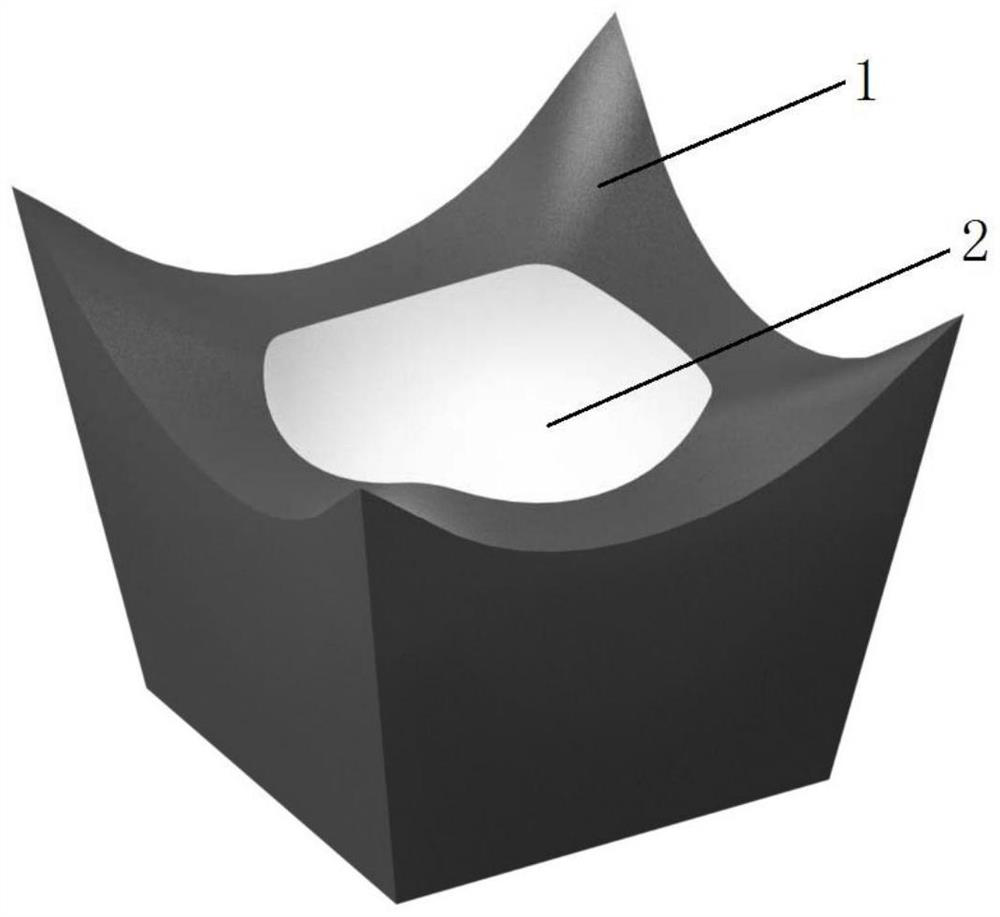
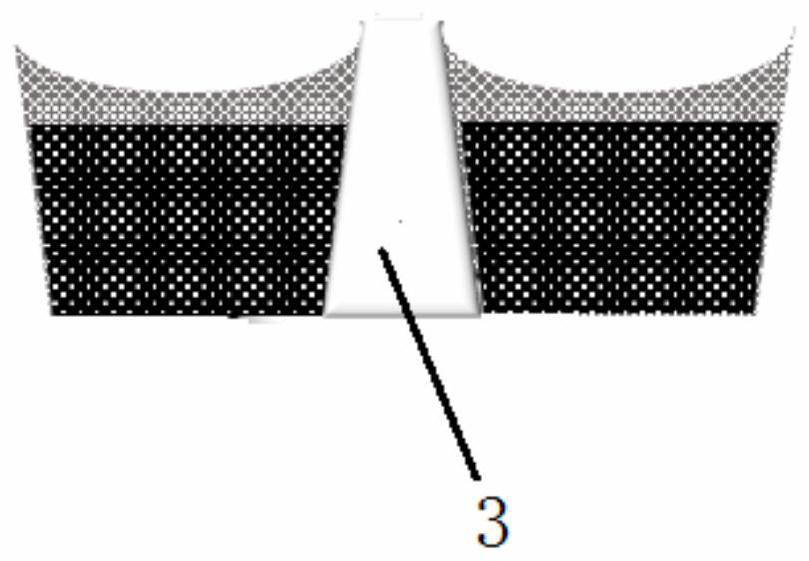
[0032] This embodiment provides a multi-bio-bionic mist collection structure, the upper surface of the mist collection structure is distributed with a plurality of mist collection units, such as figure 1 As shown, the edge of the upper surface of the mist collection unit is a tip structure (1) imitating cactus thorns and the middle is a special concave structure (2) imitating the trichomes around the stomata of Tillandsia leaf, so that the upper surface of the mist collection unit is super The wetting gradient structure between the hydrophilic microstructure bumps (that is, the tip structure part) and the hydrophobic region (the middle concave structure part, the surface of the concave structure part is hydrophobic, and the surface of the other parts of the mist collection unit is hydrophilic); such as figure 2 As shown, the edge is the water storage unit (3) of the tip structure of the imitation cactus thorn between the adjacent mist water collecting units; Figure 7 As show...
Embodiment 2
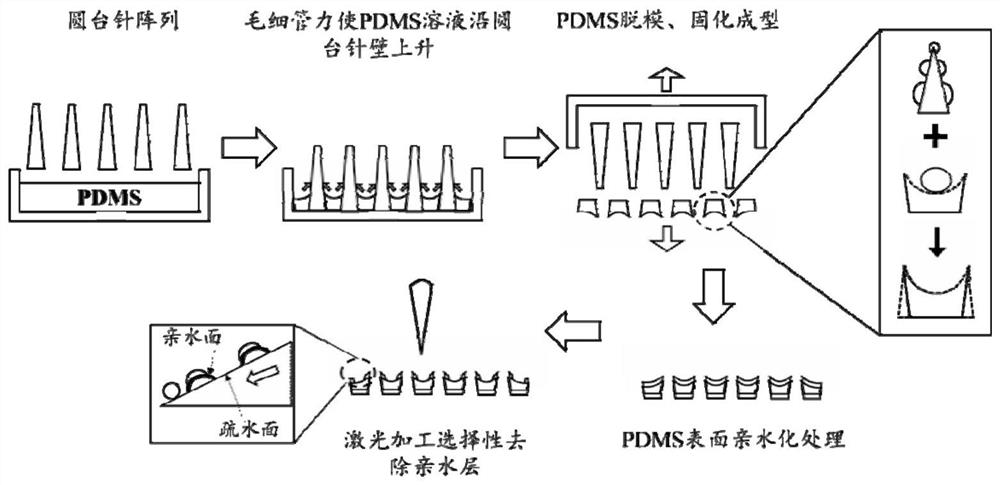
[0034] This embodiment provides a method for preparing the bionic mist collection structure described in Embodiment 1, comprising the following steps:
[0035] (1) Use polydimethylsiloxane (PDMS) as the base material to prepare PDMS solution: mix the prepolymer and curing agent at a weight ratio of 10:1, pour it into a beaker, and fully stir it with a glass rod to form PDMS solution, after stirring evenly, put the beaker into a vacuum desiccator for degassing;
[0036] (2) Preparation of imitation cactus thorns and imitation Tillandsia leaf structures: insert uniform circular needle arrays into pre-cured PDMS solution, the interaction between fluid and solid surface, surface tension of liquid-air interface and gravity will make As the PDMS solution rises, the upper surface of the PDMS solution rises on the surface of the needle wall along the entire circumference in the form of a catenary curve. Under the action of the capillary force, the upper surface of the solution produce...
PUM
 Login to View More
 Abstract
Description
Claims
Application Information
 Login to View More