
Metal nanometer photocatalyst compound material and preparation method thereof
A metal nano and photocatalyst technology, applied in the field of composite materials, can solve the problems of instability, weakened visible light catalytic ability, and unstable visible light reaction, and achieve the effect of improving conversion efficiency and decomposing nitrogen oxides.
- Summary
- Abstract
- Description
- Claims
- Application Information
AI Technical Summary
Problems solved by technology
Method used
Image

Examples
Embodiment Construction
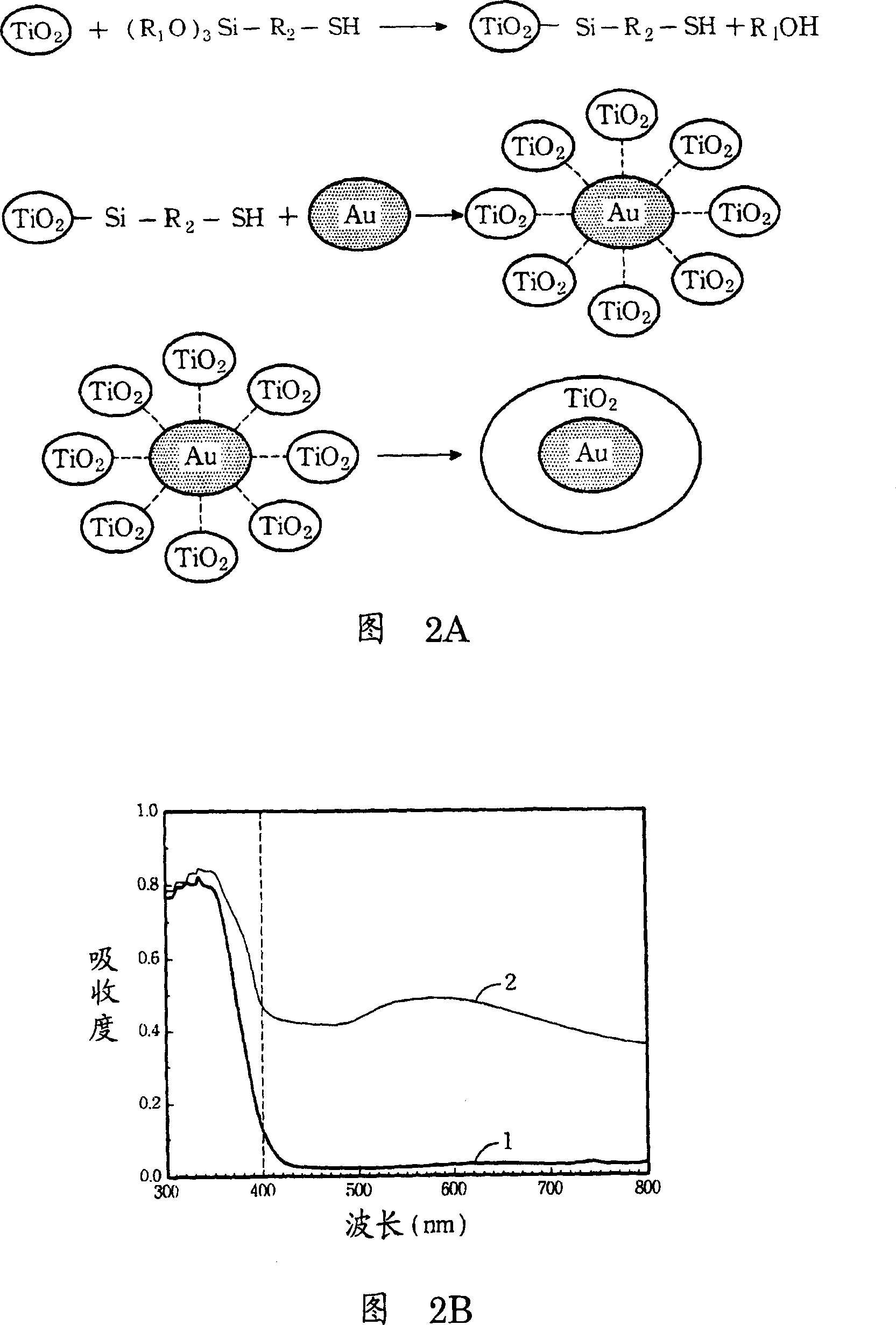
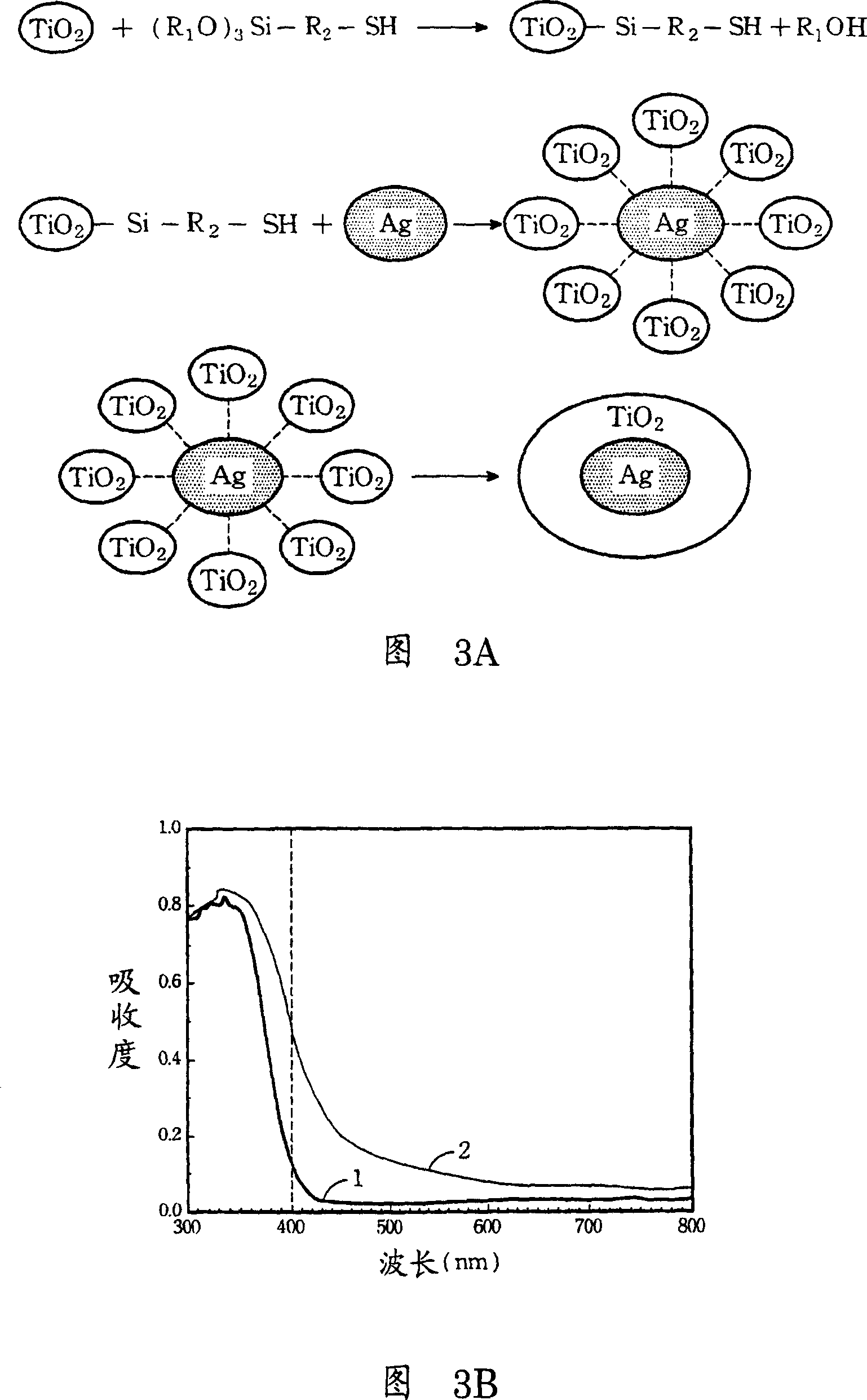
[0026] The present invention discloses a core shell metal nano-photocatalyst composite material, hoping to use the surface electro-optic resonance effect of metal nanoparticles to provide photocatalysts with the ability to utilize sunlight other than ultraviolet light bands. In order to make the description of the present invention more detailed and complete, two preferred embodiments are given to illustrate the present invention. Please refer to the following descriptions and cooperate with the following diagrams.
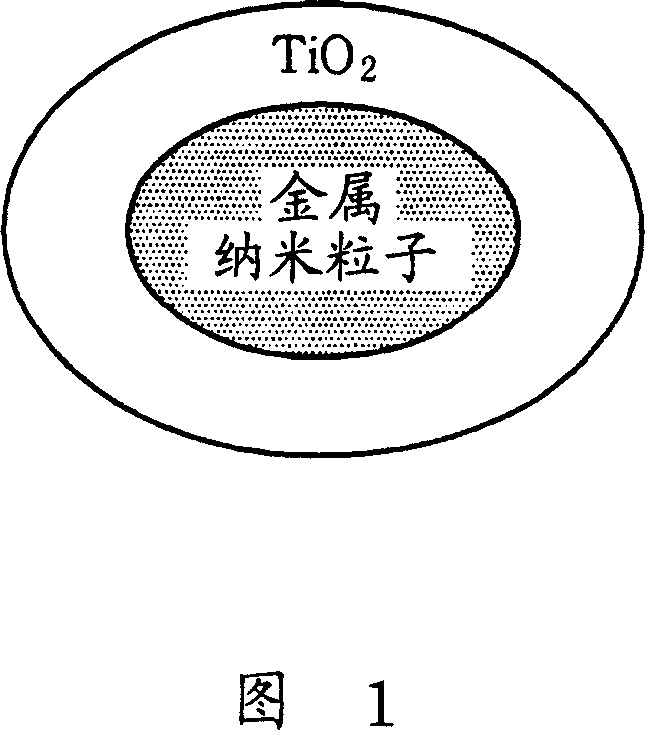
[0027] The core shell metal nanophotocatalyst composite material disclosed by the present invention refers to a metal particle with a nanometer particle size as the core, and titanium dioxide particles with a nanometer particle size grow outside the nucleus to form a shell layer. of composite materials. Please refer to FIG. 1 . FIG. 1 is a schematic structural diagram of a core shell metal nanophotocatalyst composite material disclosed in the present invention. ...
PUM
| Property | Measurement | Unit |
|---|---|---|
| particle diameter | aaaaa | aaaaa |
Abstract
Description
Claims
Application Information
 Login to View More