
Nonaqueous electrolyte secondary batteries
a technology of nonaqueous electrolyte and secondary batteries, which is applied in the direction of electrochemical generators, cell components, transportation and packaging, etc., can solve the problems of insufficient enhancement of output characteristics, and achieve the enhancement of diffusibility of lithium ions and output characteristics
- Summary
- Abstract
- Description
- Claims
- Application Information
AI Technical Summary
Benefits of technology
Problems solved by technology
Method used
Image

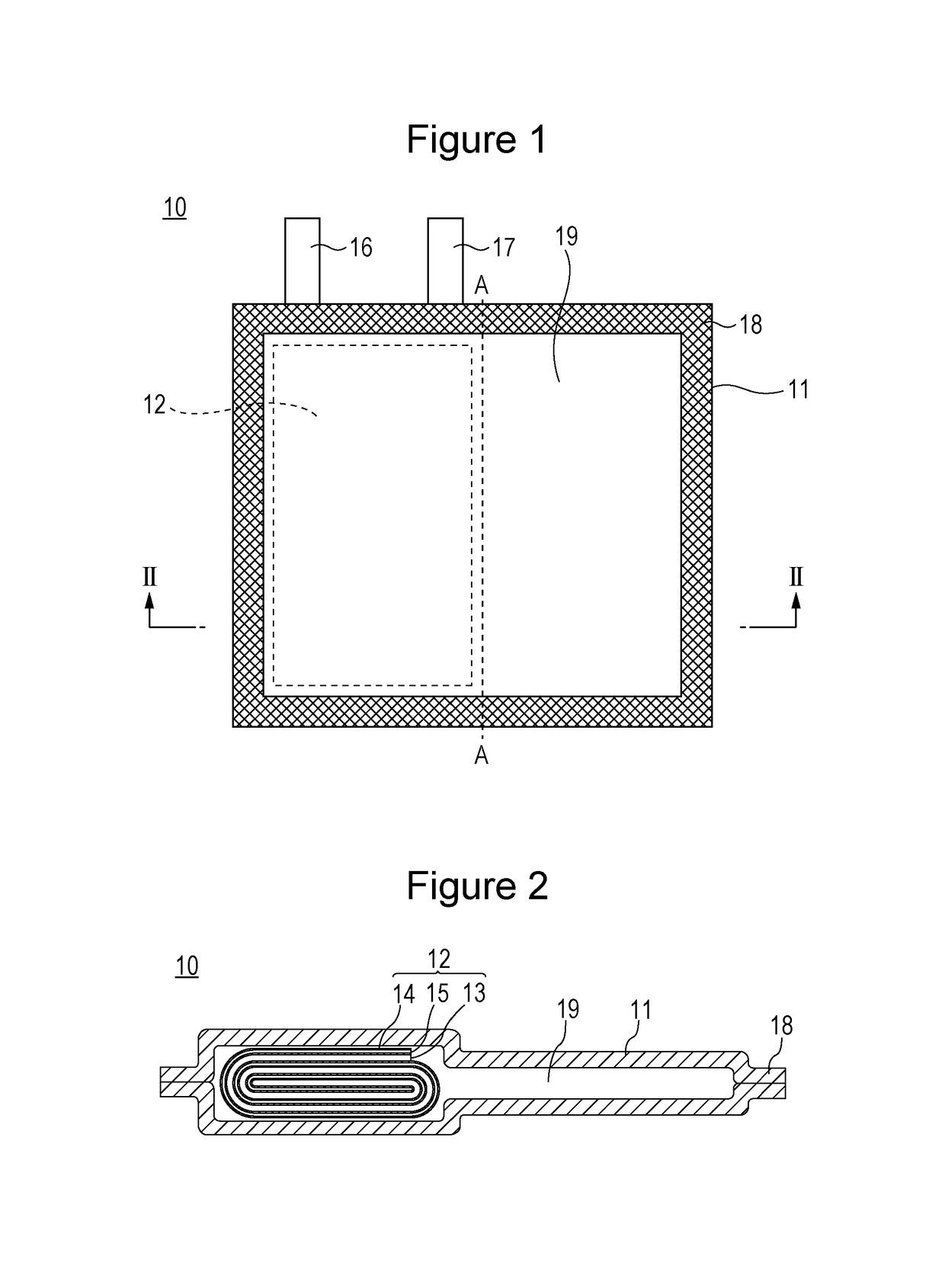
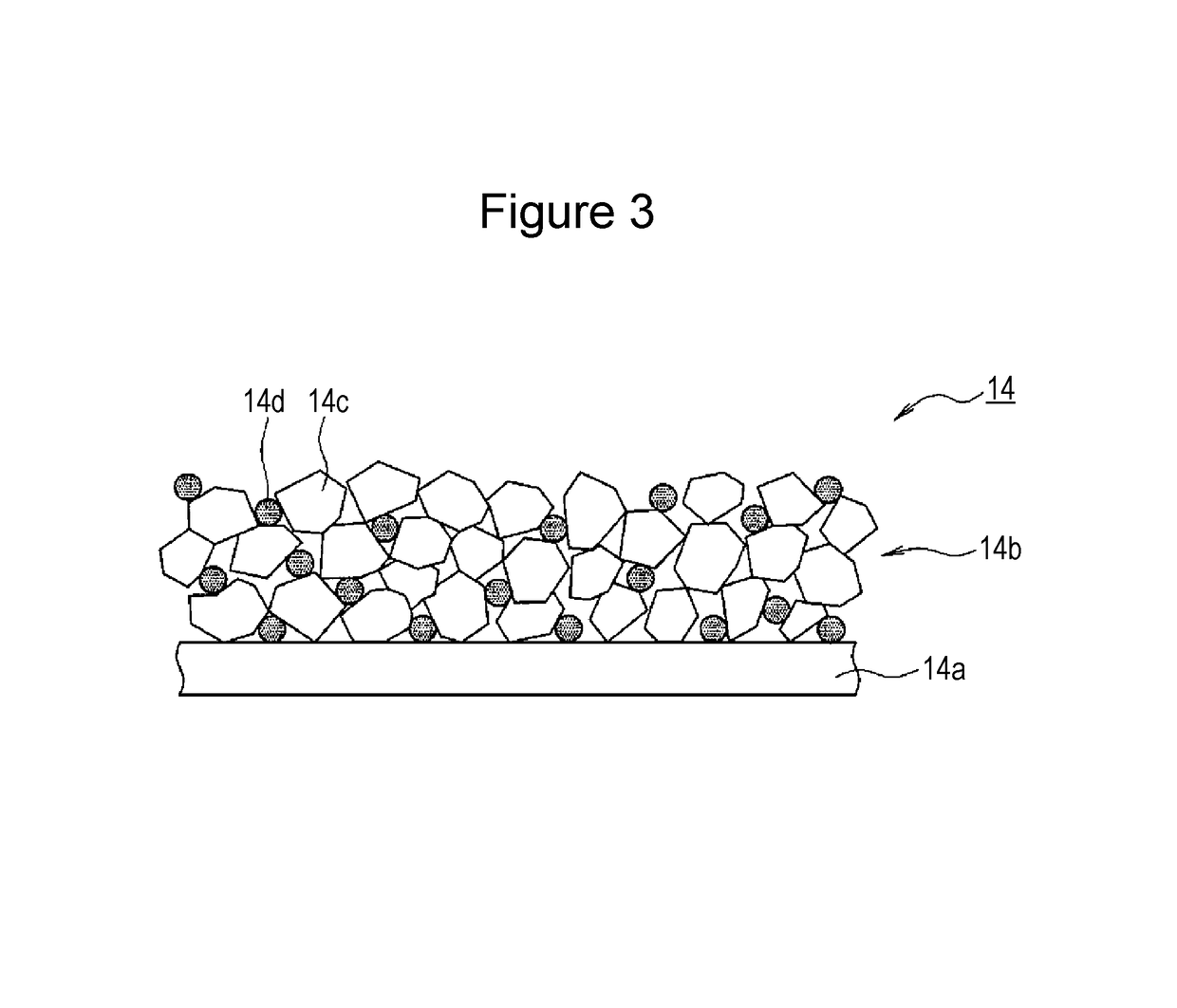
Examples
examples
[0050]Hereinbelow, EXAMPLES of the present invention will be described specifically in greater detail based on EXPERIMENTAL EXAMPLES. However, the scope of the invention is not limited to those EXAMPLES below and appropriate modifications are possible without departing from the spirit of the invention.
first experimental examples
Experimental Example 1
[Fabrication of Negative Electrode]
[0051]A mixture was prepared by mixing 100 parts by mass of a graphite powder as a negative electrode active material, 1 part by mass of carboxymethyl cellulose (CMC) as a thickener, 1 part by mass of styrene butadiene rubber (SBR) as a binder, and tungsten oxide (WO3) as a negative electrode additive in 0.05 mol % in terms of tungsten atoms in tungsten oxide relative to the carbon atoms in the graphite powder. Further, an appropriate amount of water was added. Thus, a negative electrode mixture slurry was prepared.
[0052]Next, the negative electrode mixture slurry was applied to both sides of a 10 μm thick copper foil as a negative electrode current collector, and the coating was dried. The coated foil was cut into a prescribed electrode size and was rolled with a roller. Thereafter, a negative electrode current collector tab was attached to the negative electrode current collector. In this manner, a negative electrode was fab...
experimental example 2
[0058]A nonaqueous electrolyte secondary battery was fabricated in the same manner as in EXPERIMENTAL EXAMPLE 1, except that the tungsten oxide used in the preparation of the negative electrode mixture slurry in EXPERIMENTAL EXAMPLE 1 was not added.
[0059]The battery thus fabricated will be written as the battery Z1 hereinbelow.
PUM
| Property | Measurement | Unit |
|---|---|---|
| thick | aaaaa | aaaaa |
| thick | aaaaa | aaaaa |
| voltage | aaaaa | aaaaa |
Abstract
Description
Claims
Application Information
 Login to View More