
Synchronized pulses identify and locate targets rapidly
a technology of target identification and target location, applied in the direction of generating/distributing signals, instruments, using reradiation, etc., can solve the problems of repetitive feedback taking substantial time and computational resources, and requires sophisticated algorithms to encode, so as to reduce the dimensionality of image frames
- Summary
- Abstract
- Description
- Claims
- Application Information
AI Technical Summary
Benefits of technology
Problems solved by technology
Method used
Image

Examples
Embodiment Construction
[0047]Theory of Synchronization Based on Brain Mechanisms
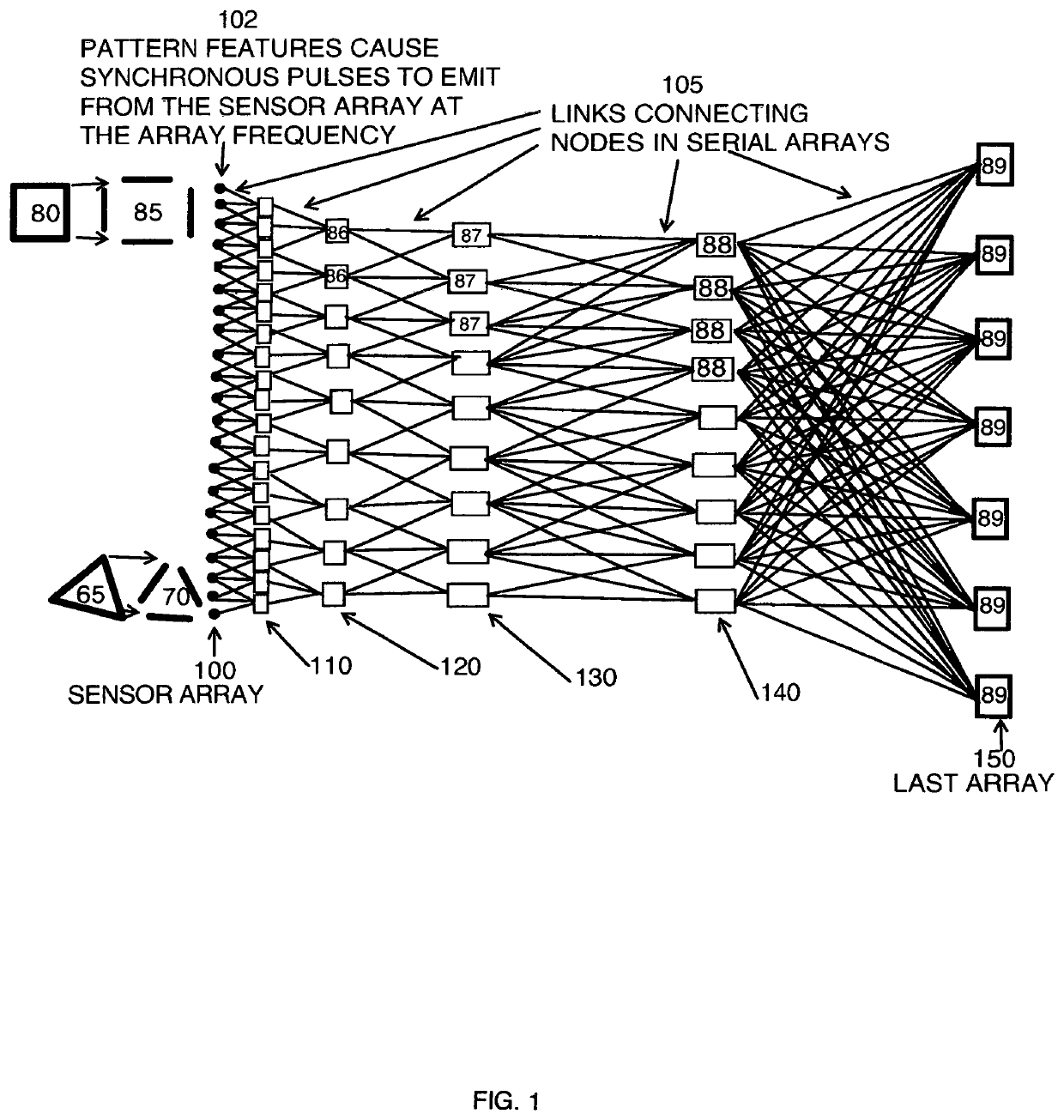
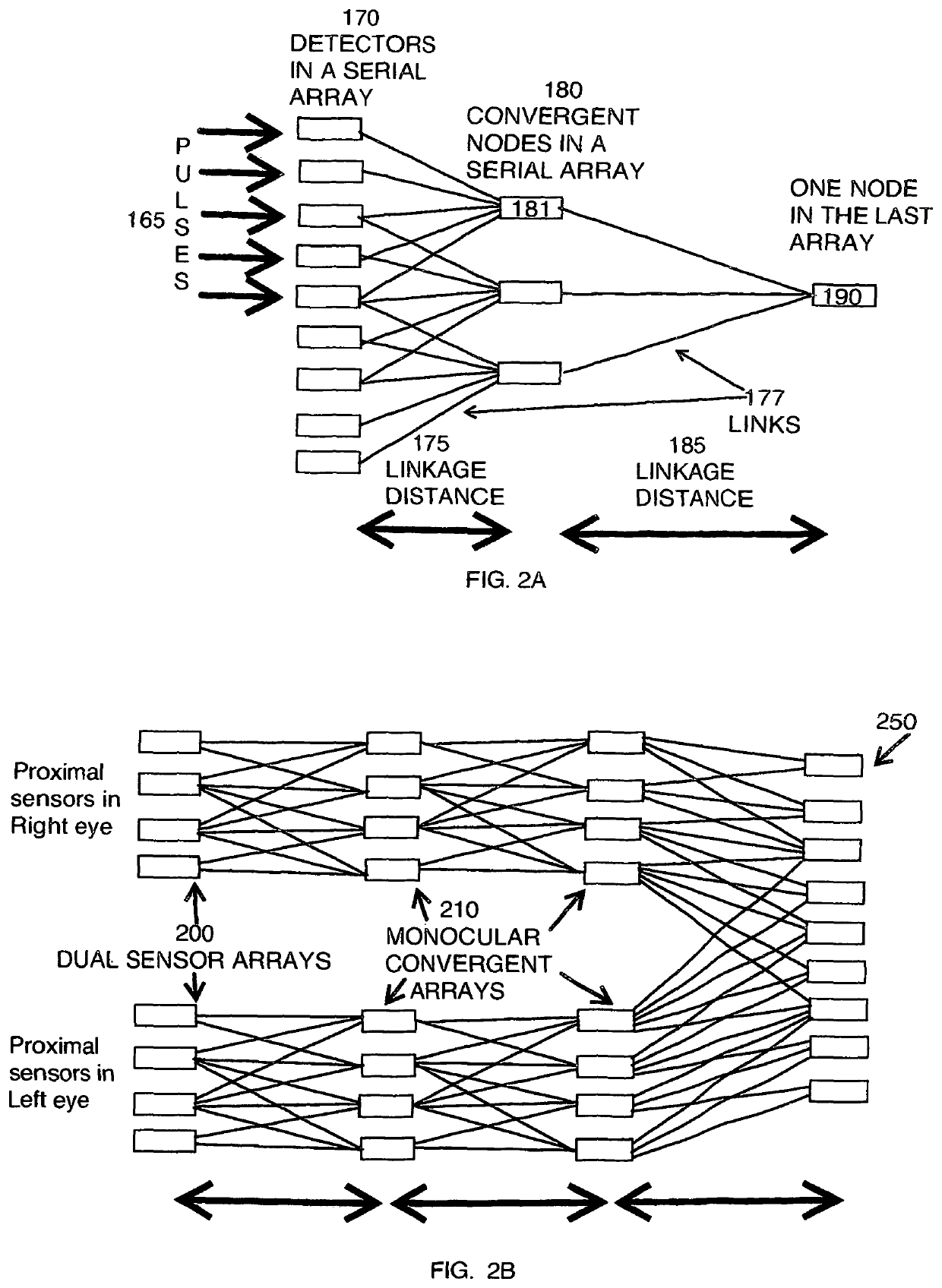
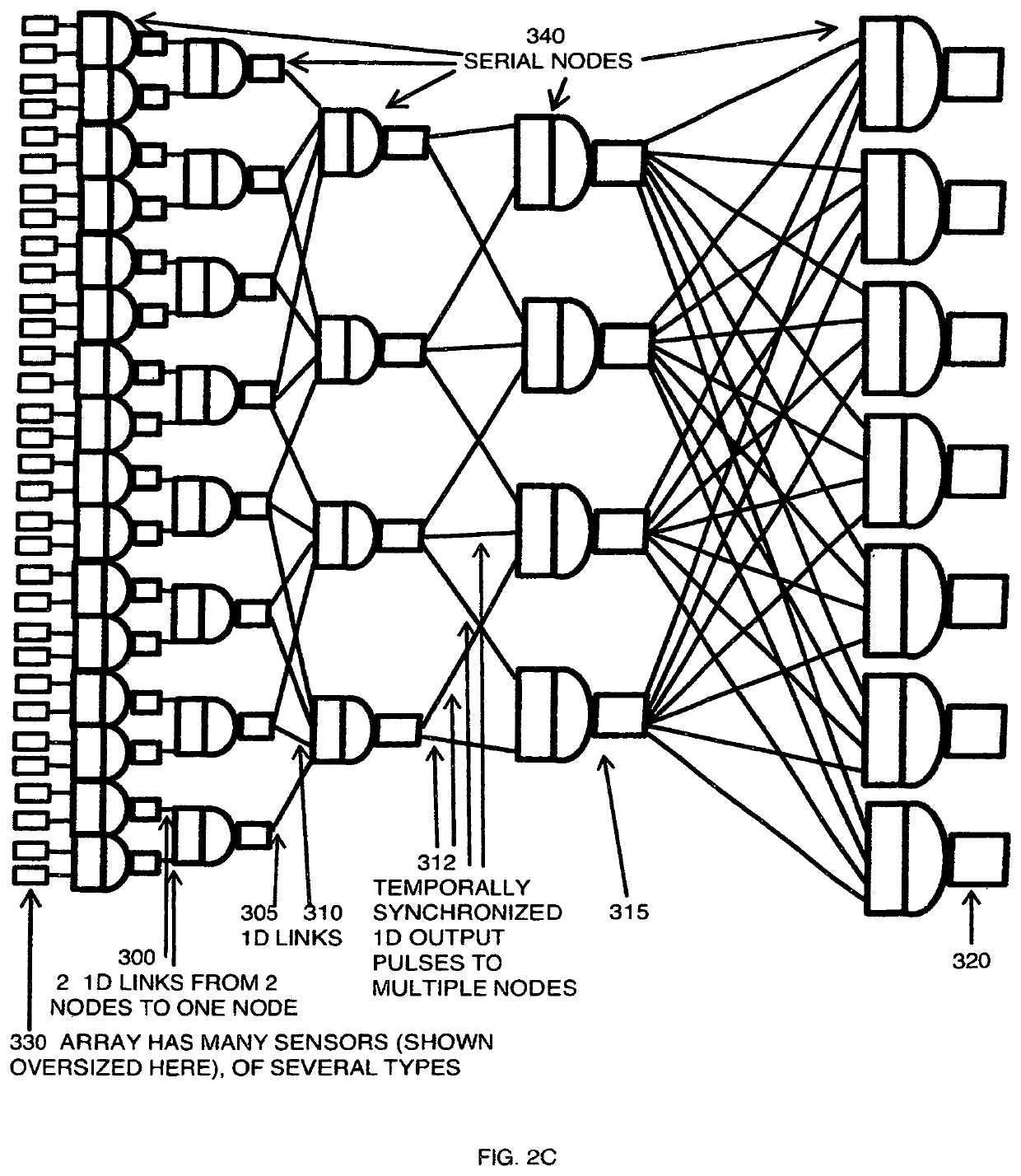
[0048]Embodiments of the present invention are now described in more detail; in concert with the figures, they enable those skilled in the art to execute the invention. The descriptions of convergent circuits that follow, take advantage of the synchronous timing characteristics of emitted pulses, caused by the repetitive cycling of an initial 2D x-y surface consisting of repeated sensors, pixels or other types or forms of sensory or edge detection. Gated pulses stimulated by stimulus feature edges and emitted by edge detector sensors, are controlled by the orthogonal shifting of said surface, or of a shifting screen over a non-shifting 2D surface, or of a fixed transmittal rate (in Hz) of a CCD array or CMOS chip, or any other sensor assembly, or of a frame rate or exposure time in a camera, at an amplitude sufficient to elicit edge responses from individual sensors or pixels in an array. Any edge-stimulated patterns of pulses...
PUM
 Login to View More
 Abstract
Description
Claims
Application Information
 Login to View More