Traditional power tools are often too large or awkwardly shaped to allow the tool to be conveniently moved from one
work site to another.
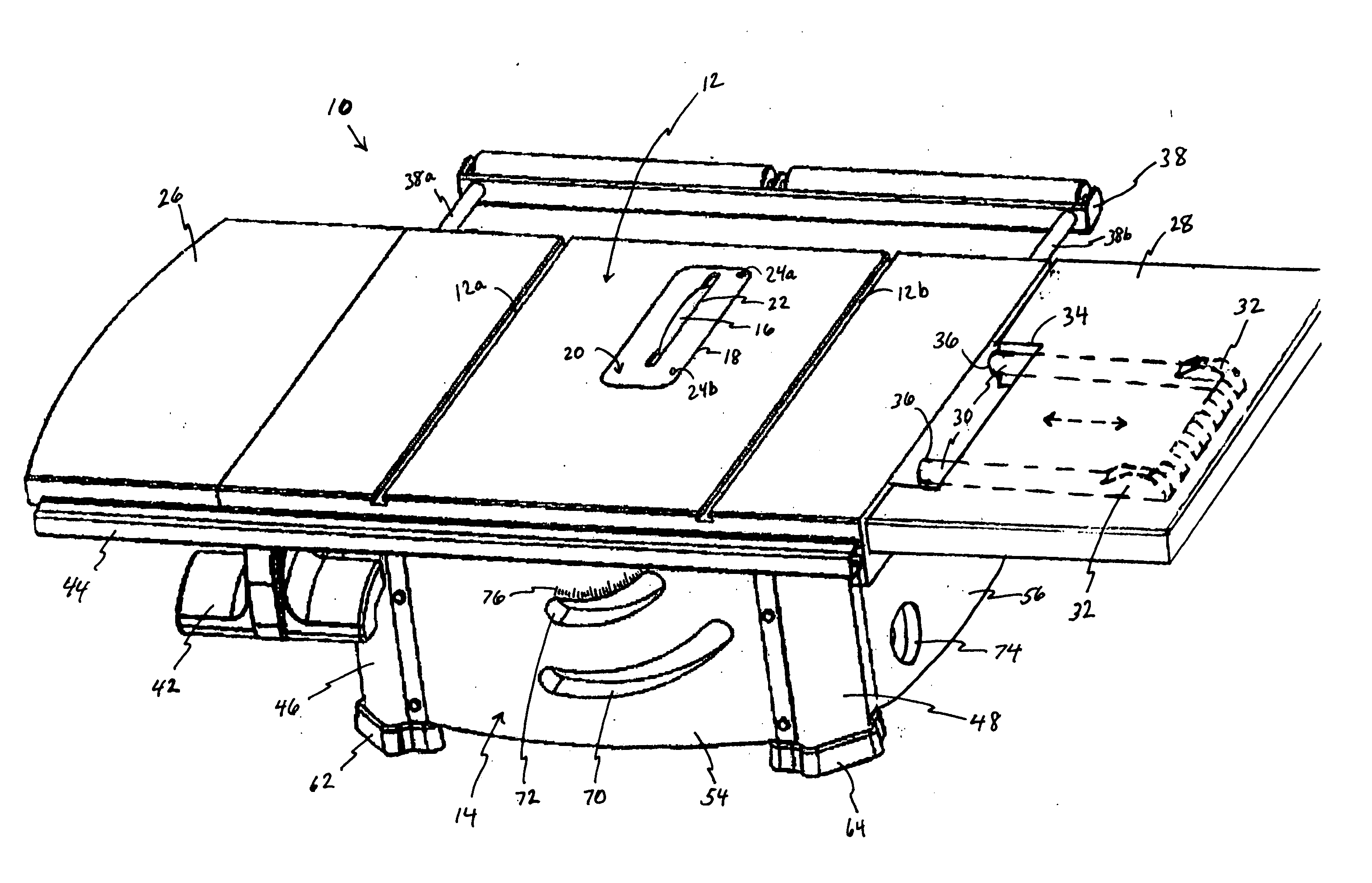
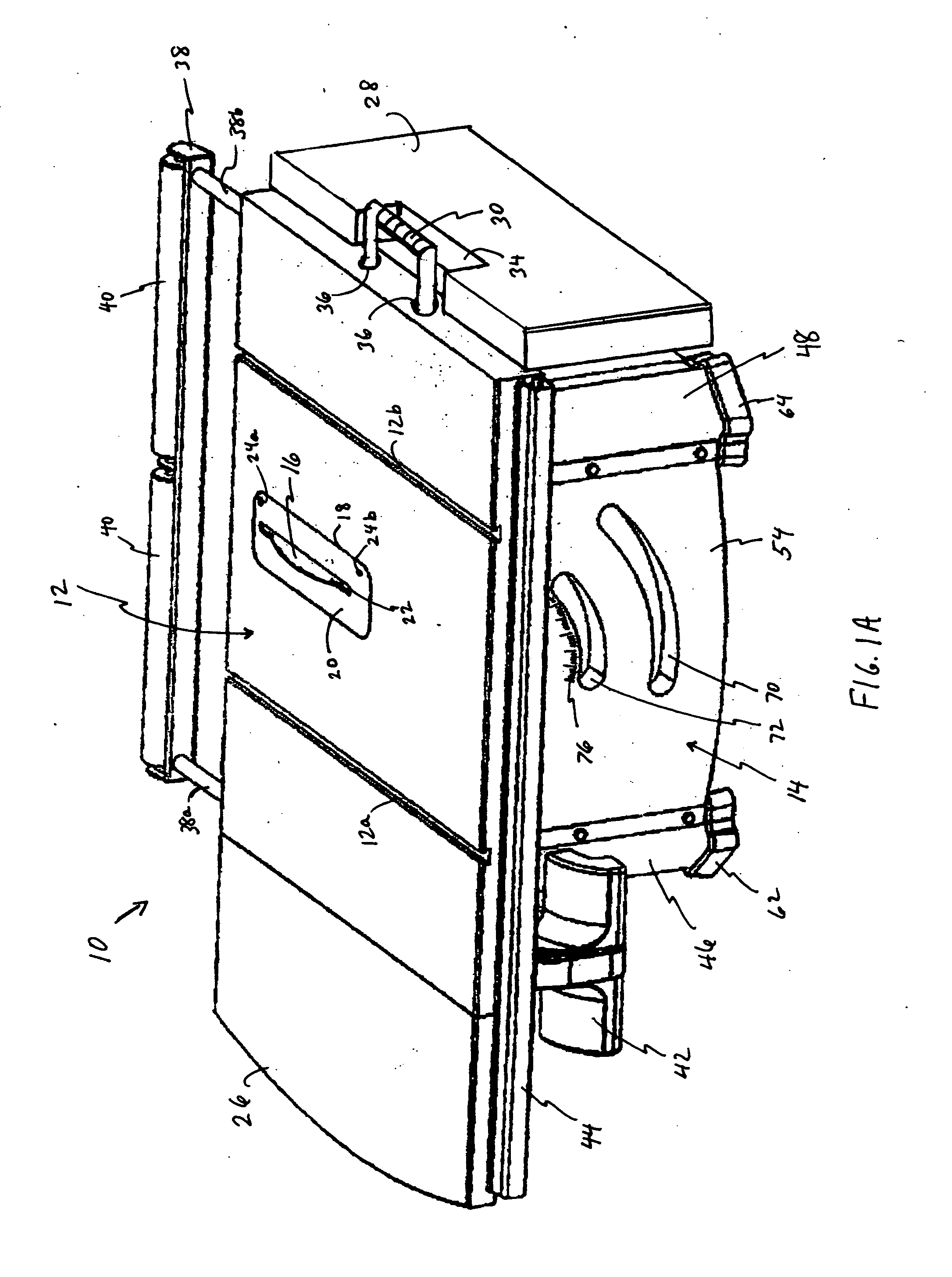
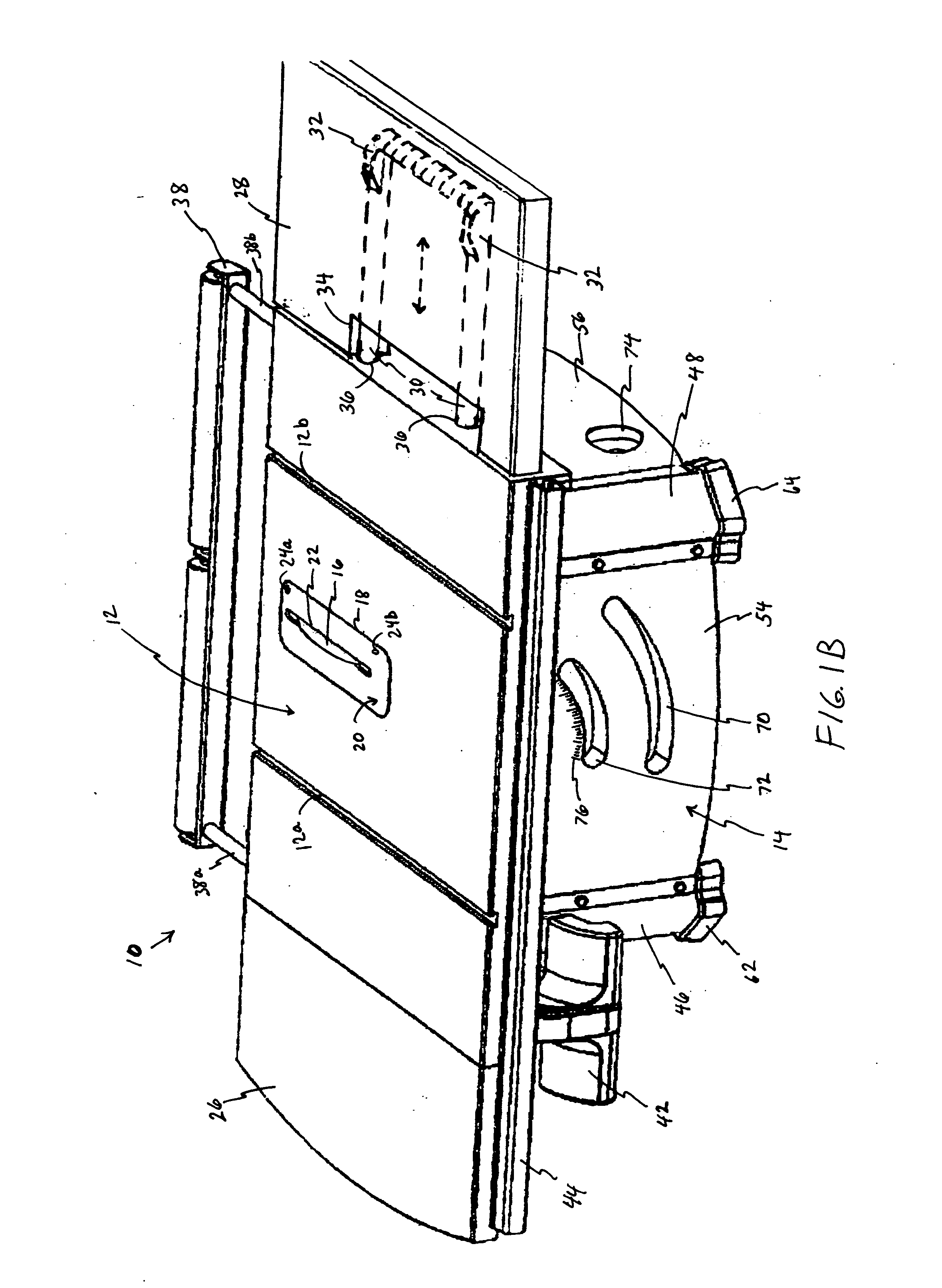
Although bench top table saw configurations are somewhat compact, they tend to sacrifice several desirable features in order to maintain their compact size.
For example, bench top table saws lack sufficient table extensions and workpiece supports to enable the bench top table saw to more easily accommodate larger workpieces.
These tools also do not accommodate the operator's need to work with varying sizes of workpieces.
For instance, some tools may provide additional workpiece supports for handling longer workpieces, but they do not allow the operator to reconfigure the tool to work with wider workpieces, and vice versa.
In addition, bench top table saws are often difficult to grasp and carry from one site to another.
Another shortcoming associated with table saws today is their inability to provide operators with easy and accurate mechanisms that detect and adjust the height and angle of the saw blade.
Table saws may also lack bases that provide the operator with useful features and which simplify the manufacture of, and the inventory of components necessary to manufacture, such tools.
In addition to these shortcomings, the table saws of today require use of accessories, such as fences and miter gauges, which do not help the operator as much as they could in positioning and / or feeding the workpiece into the blade.
More particularly, the fences and miter gauges currently available do not assist the operator in routine activities which are done with the table saw.
The table saws of today also lack features which increase the flexibility and portability of the table saws.
For example, the table saws generally are of the bench top type or stationary freestanding type, but do not provide for the conversion of one type of table saw to the other as circumstances require.
That is, bench top table saws generally cannot be converted to be used as a stationary freestanding table saw if a bench top is unavailable at the
work site and vice versa.
Likewise, the electrical cords attached to table saws have been found to be problematic, as the relatively
short length often necessitates the use of extension cords to extend the cord to the nearest outlet at a work site, while this same cord is generally long enough to interfere with the shifting of the table saw from one location to another, either due to the inability to coil the cord around the saw or the possibility that the operator may trip over or step on the cord during transit, increasing the likelihood of injury to the operator and damage to the saw.
Additionally, other accessories which increase the convenience of or ease of use of the table saw at the work site have been found lacking.



 Login to View More