
Therapeutic and/or preventive agent for dyschezia
a dyschezia and therapeutic agent technology, applied in the field of dyschezia therapeutic and/or preventive agent, can solve the problems of affecting the quality of life of patients, so as to improve the quality of life, improve the frequency of gmc and the amount of a single defecation, and improve the effect of qol
- Summary
- Abstract
- Description
- Claims
- Application Information
AI Technical Summary
Benefits of technology
Problems solved by technology
Method used
Image

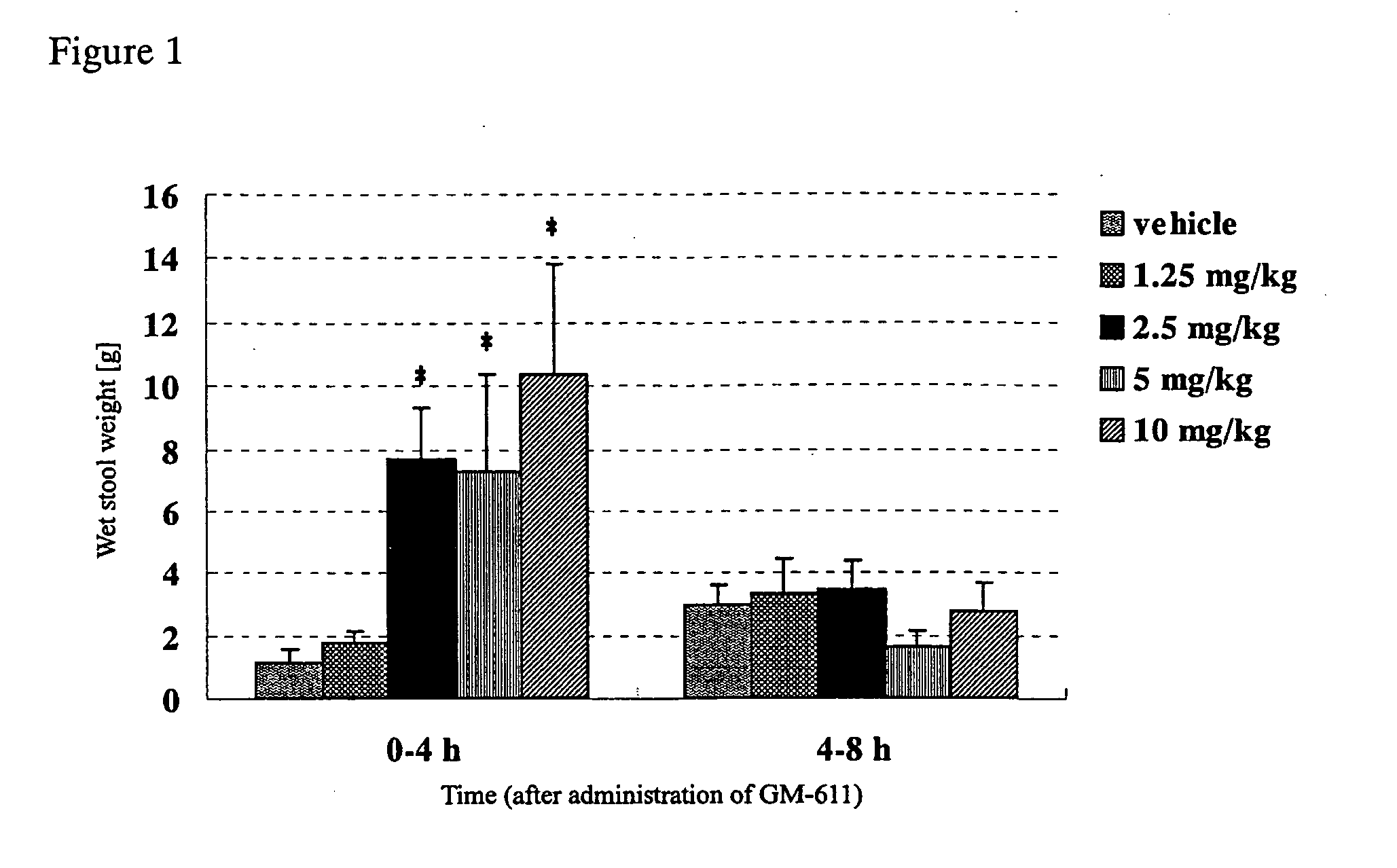
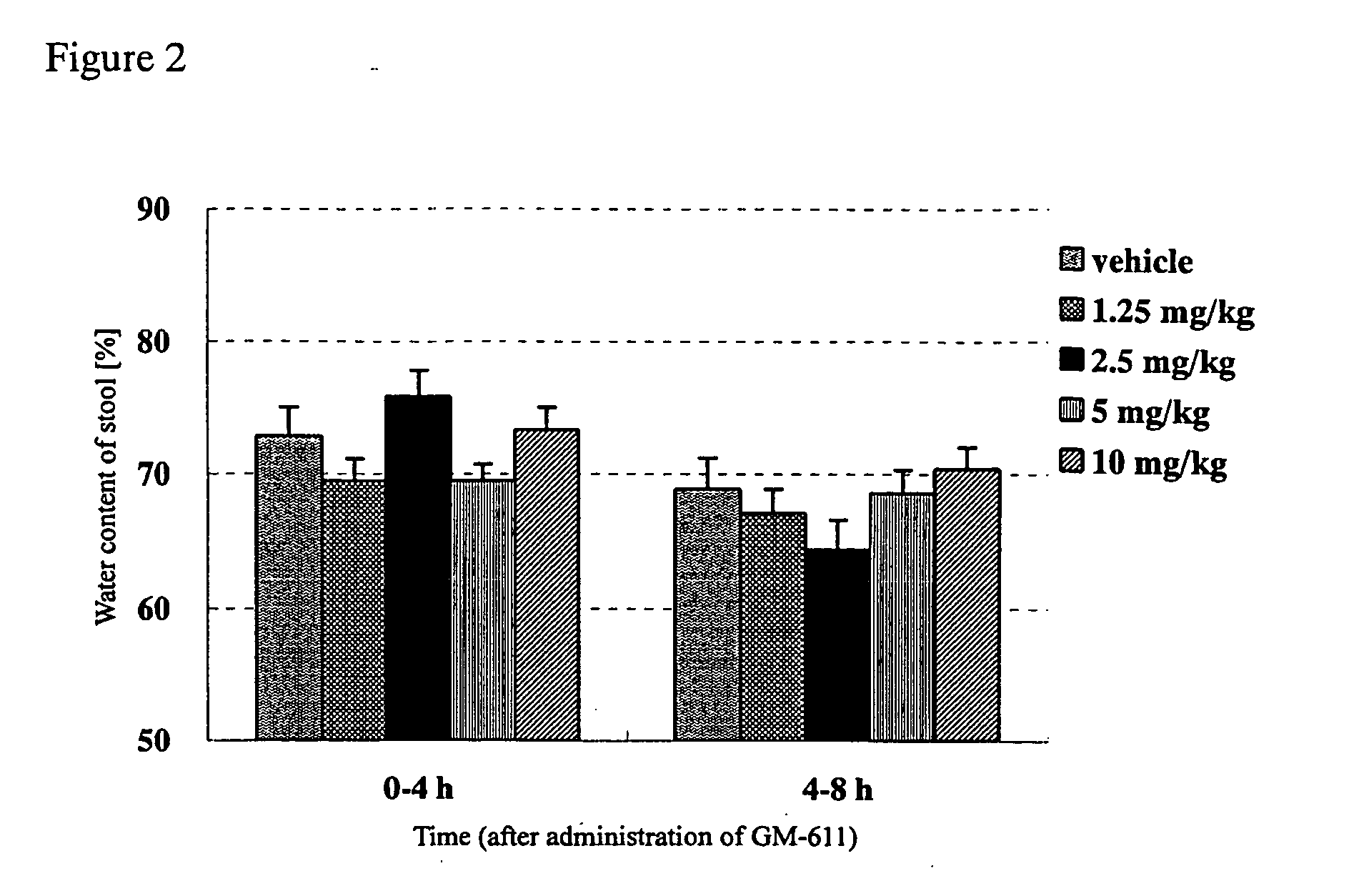
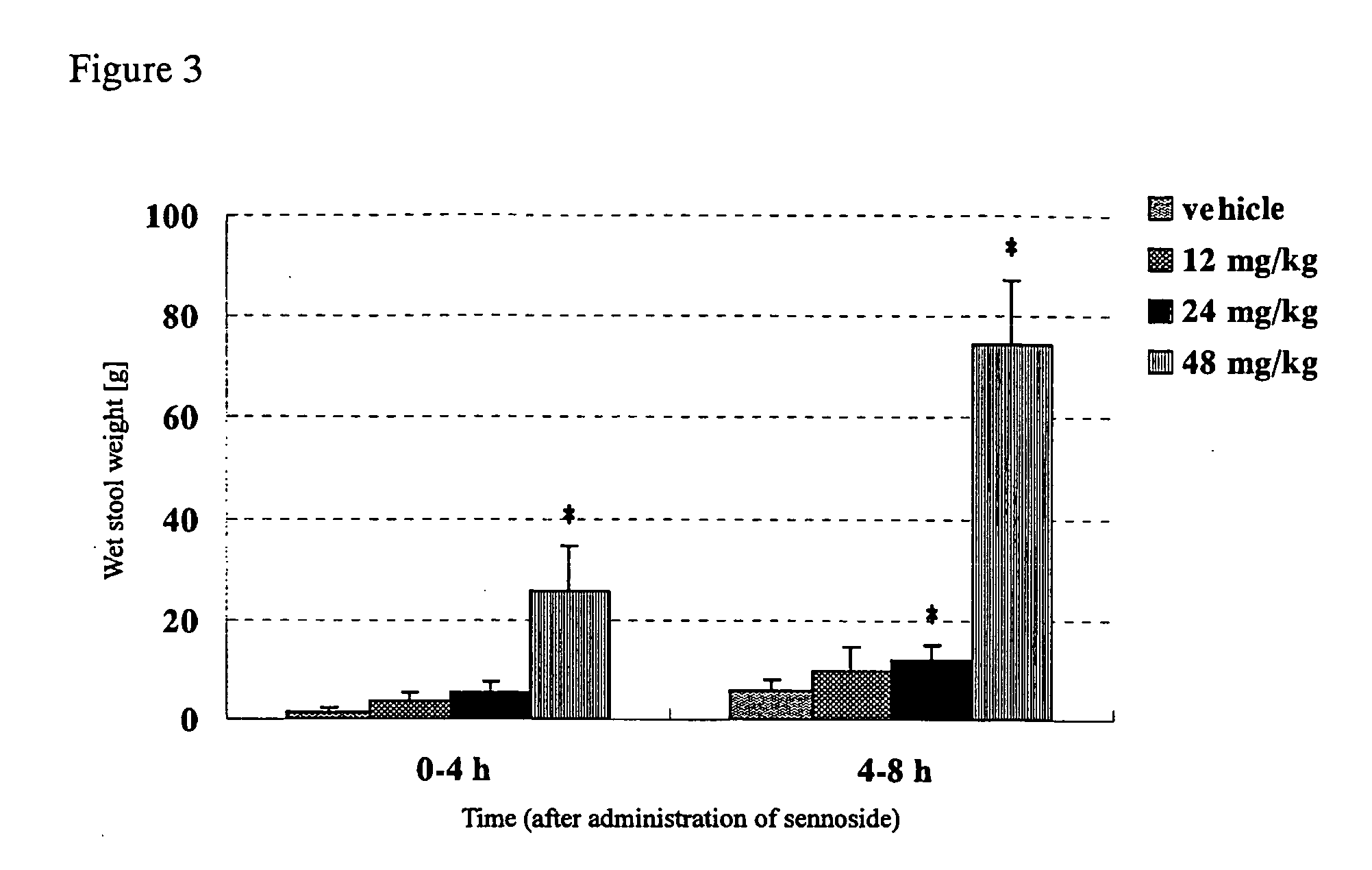
Examples
example 1
Acceleratory Effects of GM-611 on Defecation in Normal Rabbits
[0032] To study the difference of effects between GM-611 and a laxative, sennoside (sennoside solution (trade name), Taisho Pharm. Ind., Ltd.) was used as a laxative to compare with acceleratory effects of GM-611 on defecation. More specifically, normal rabbits were orally administered with GM-611 or sennoside and then measured for the weight and water content of stools. Normal rabbits (Kb1:JW), in groups of 13 to 15, were orally administered with vehicle (3 w / v % gum arabic suspension), GM-611 (1.25 mg / kg, 2.5 mg / kg, 5 mg / kg, 10 mg / kg), vehicle (purified water), or sennoside (12 mg / kg, 24 mg / kg, 48 mg / kg). The stool weight was then measured every 4 hours until 8 hours after administration. Also, their stools were collected, dried in a dry oven (at 120° C. for 24 hours or longer) and then the dry stool weight was measured to calculate the water content of stools (%) according to the following formula: ((wet stool weight ...
example 2
Improving Effect of GM-611 on Morphine-Induced Defecation Dysfunction
[0034] Effects on defecation dysfunction can be studied using an animal model with morphine-induced defecation dysfunction. To study the effect of GM-611 on defecation dysfunction, rabbits were subcutaneously administered with morphine (Anpec (trade name), Dainippon Pharmaceutical Co., Ltd.) to induce defecation dysfunction and then the stool weight was measured to evaluate the acceleratory effect of GM-611 on defecation in the model. Rabbits (Kb1:JW) were subcutaneously administered with vehicle (physiological saline) or morphine (1 mg / kg) and fed for 30 minutes (feeding stimulation), followed by oral administration of vehicle (3 w / v % gum arabic suspension) or GM-611 at a dose of 1.25 mg / kg, 2.5 mg / kg, 5 mg / kg, 10 mg / kg or 20 mg / kg. The stool weight for 2.5 hours after administration was measured (11 rabbits in each group) to examine the improving effect of GM-611 on morphine-induced defecation dysfunction.
[Re...
example 3
Acceleratory Effect of GM-611 on Defecation in Normal Dogs
[0036] In addition to the studies in rabbits, the acceleratory effect of GM-611 on defecation was also studied in normal dogs. Five beagle dogs were each catheterized to insert an intragastric catheter (Chugai Pharmaceutical Co., Ltd., 8.3-9.9 kg, 2 males and 3 females). Each dog was fed with pellets (CD-5 (CLEA Japan, Inc.), about 250 g) at 9:00 a.m. and then monitored for its defecation immediately after feeding. One hour after feeding, the animals having defecation within 1 hour were intragastrically administered via the catheter with vehicle (3 w / v % gum arabic suspension) or GM-611 (0.3 mg / kg, 1 mg / kg, 3 mg / kg) and then measured for the time until the first defecation after administration.
[Results]
[0037] The results obtained are shown in FIG. 6 (*P<0.05 vs vehicle group by Dunnett's test, n=5). GM-611 dose-dependently decreased in the time until the first defecation after administration. Moreover, stool condition at t...
PUM
| Property | Measurement | Unit |
|---|---|---|
| time | aaaaa | aaaaa |
| frequency | aaaaa | aaaaa |
| drug resistance | aaaaa | aaaaa |
Abstract
Description
Claims
Application Information
 Login to View More