

Implant for intervertebral space
a technology for intervertebral space and implants, applied in the field of implants for intervertebral space, can solve the problems of contact surfaces, difficult rotation of implants in both directions,
- Summary
- Abstract
- Description
- Claims
- Application Information
AI Technical Summary
Benefits of technology
Problems solved by technology
Method used
Image

Examples
Embodiment Construction
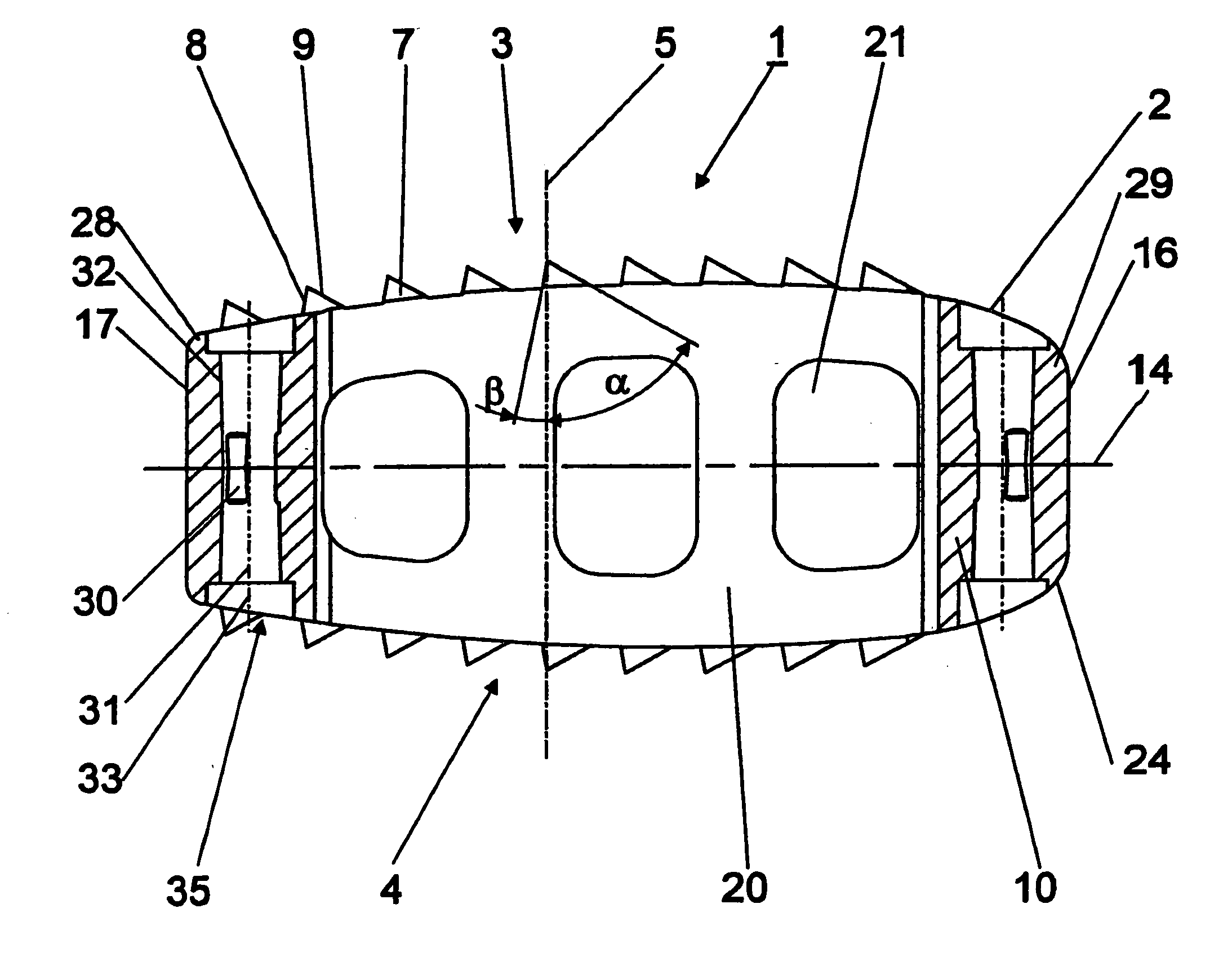
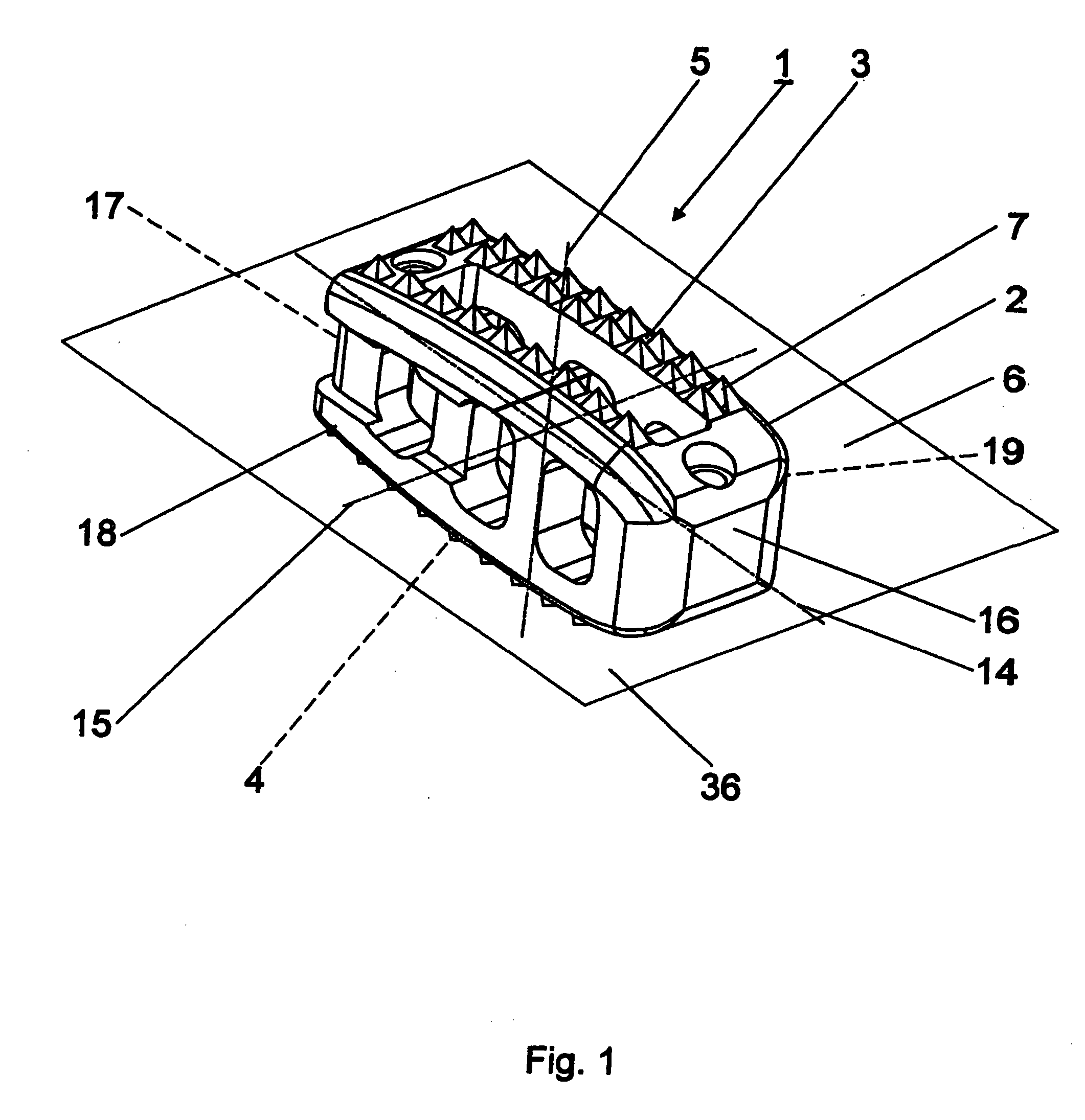
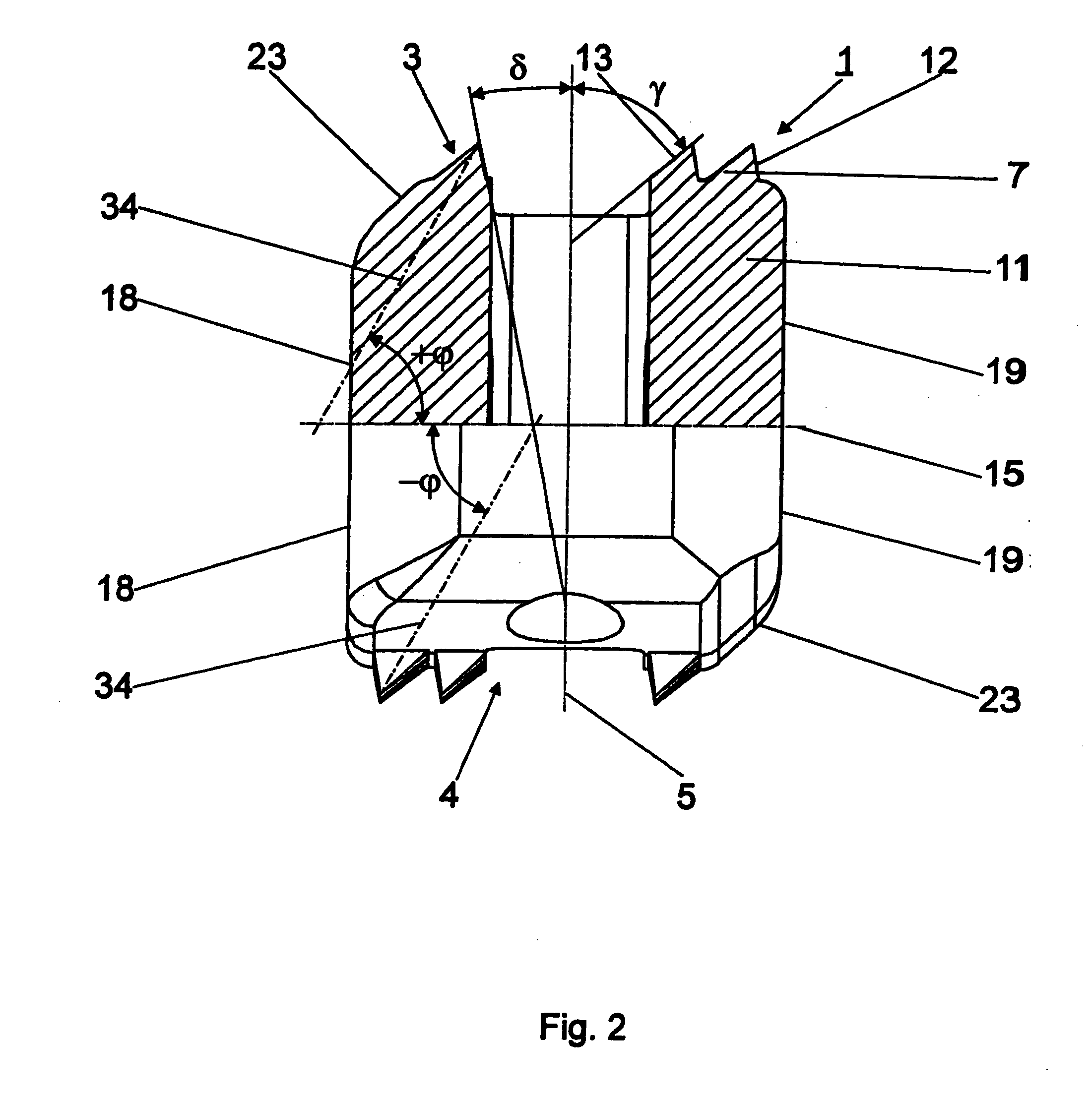
[0042] The implant 1, shown in FIGS. 1 to 3, consists of an essentially cuboid-shaped body 2 with top and bottom convex contact surfaces 3, 4 to be placed on the superior and inferior surface, respectively, of the two adjoining bodies of the vertebra and a central axis 5 intersecting the contact surfaces 3, 4. Two lateral surfaces 18, 19 are arranged at right angles to the contact surfaces 3, 4, as well as a front lateral surface 16 and a rear lateral surface 17. Longitudinal axis 14, which is perpendicular to the central axis 5, intersects both the front lateral surface 16 and the rear lateral surface 17. A transverse axis 15, which is also perpendicular to the central axis 5 of the body 2, intersects lateral surfaces 18, 19. The longitudinal axis 14, as well as the transverse axis 15, define a central plane 6 situated between the contact surfaces 3, 4; this plane being perpendicular to the central axis 15. The distance between the two lateral surfaces 18, 19 is smaller than the di...
PUM
 Login to View More
 Abstract
Description
Claims
Application Information
 Login to View More