Methods of operating p-channel non-volatile memory devices

a non-volatile memory and non-volatile technology, applied in semiconductor devices, digital storage, instruments, etc., can solve the problems of high power consumption, high power consumption, and change of status from “programmed” to “erased”, and achieve the effect of reducing potential program disturb effects and negative bias

US20060281260A1Active Publication Date: 2006-12-14MACRONIX INT CO LTD
64 Cites 123 Cited by

Patent Information

Authority / Receiving Office
US · United States
Current Assignee / Owner
Publication Date
2006-12-14

Smart Images

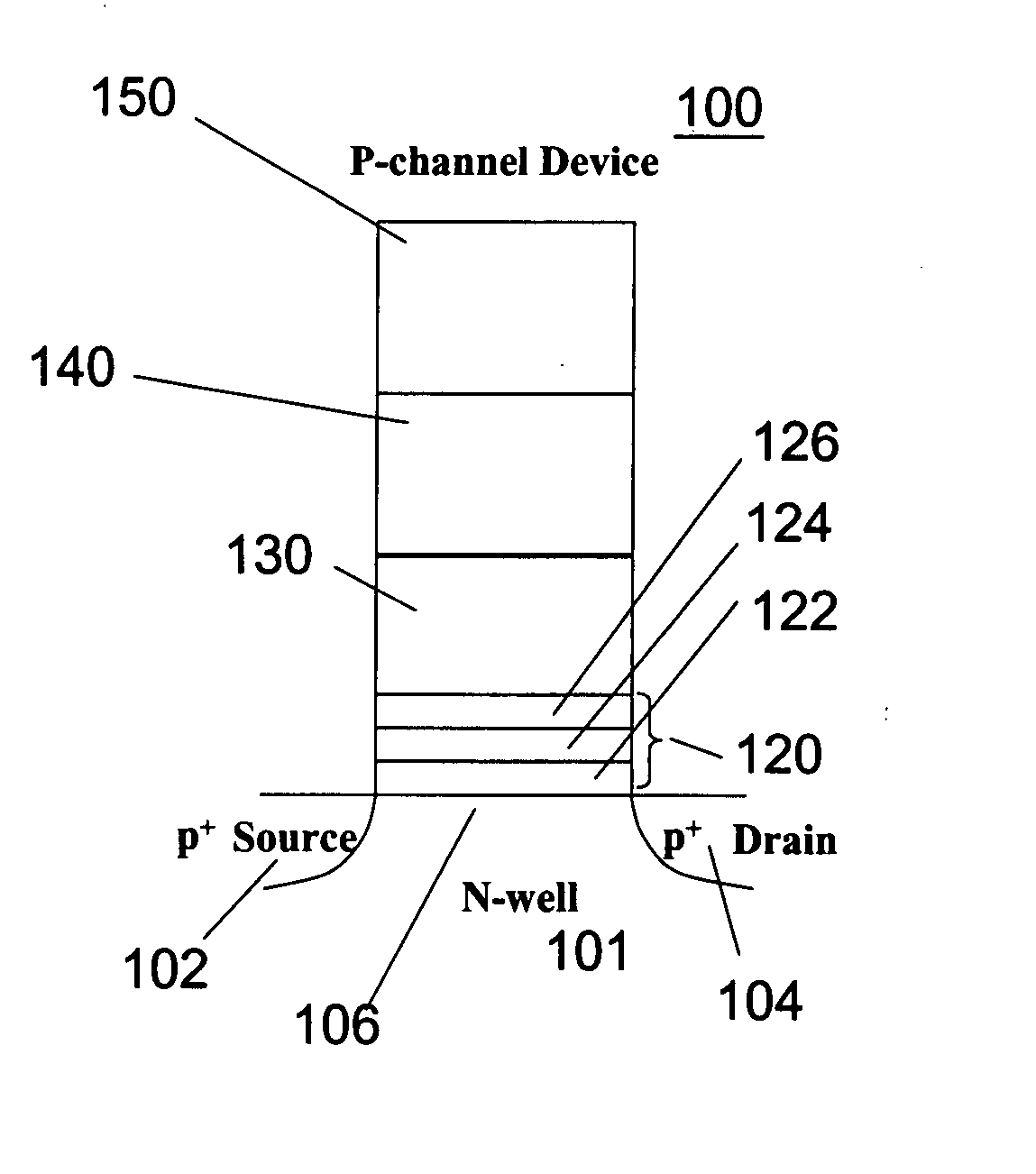
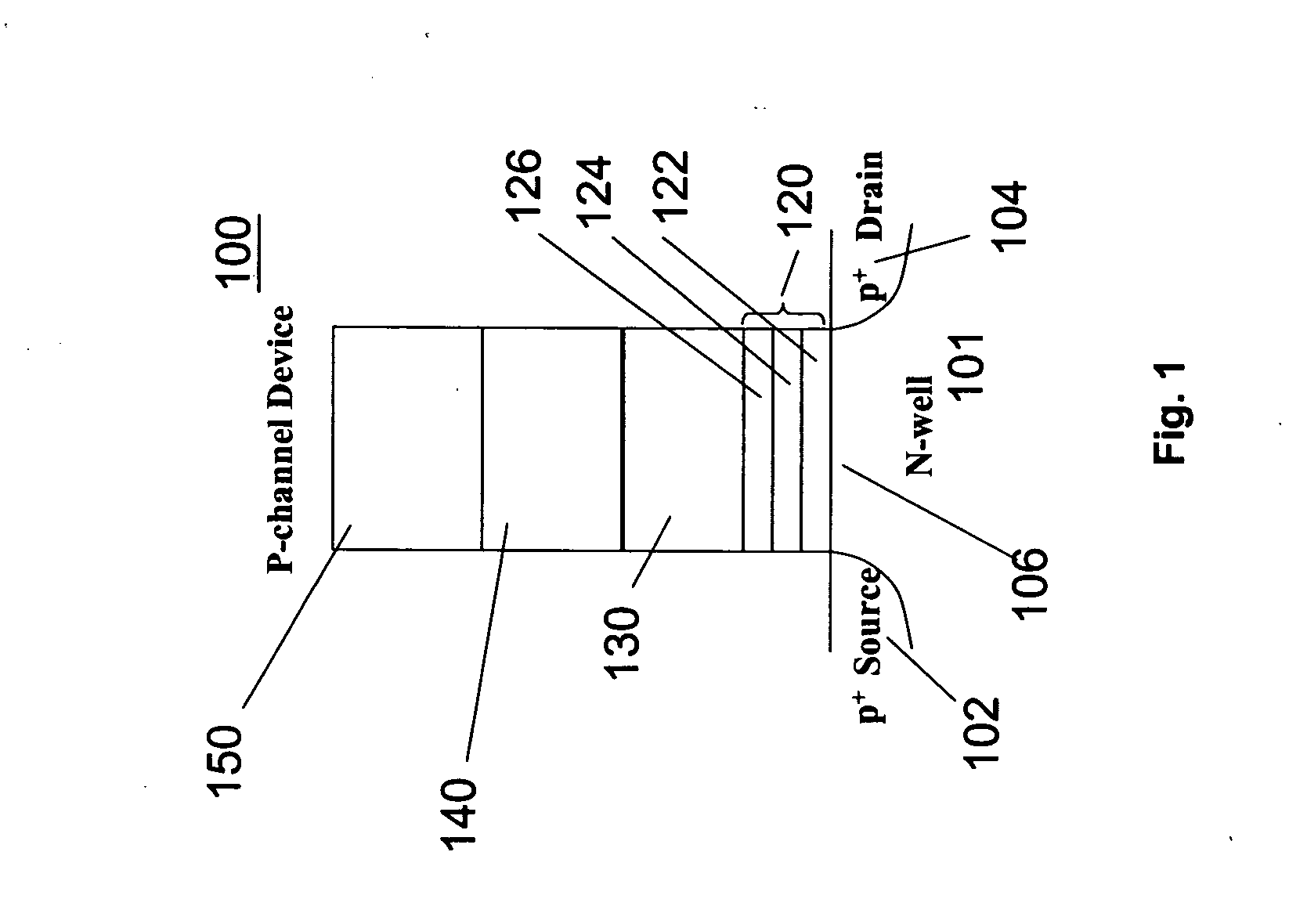
  • Figure 1
    Figure 1
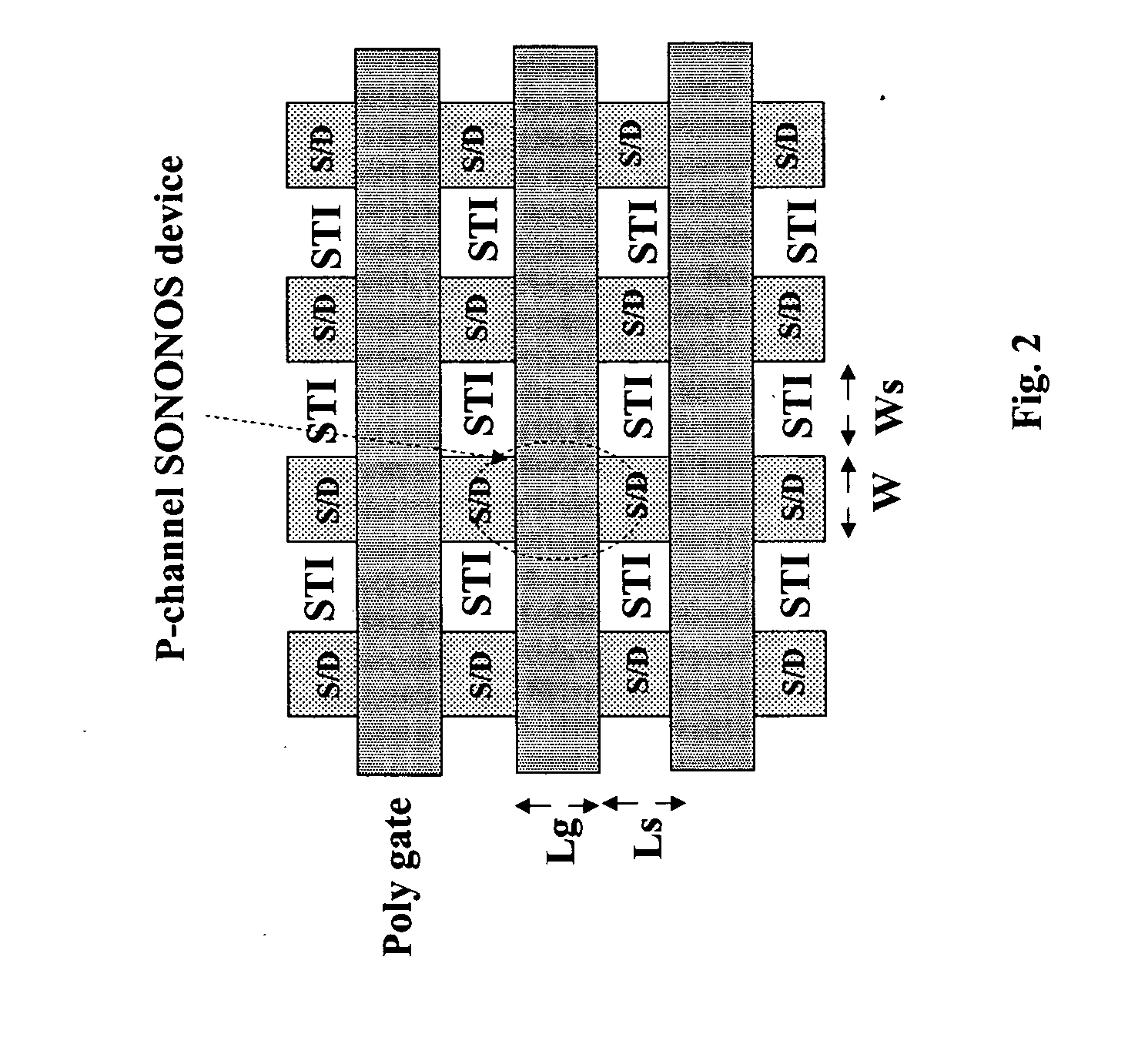
  • Figure 2
    Figure 2
  • Figure 3
    Figure 3
Patent Text Reader

Abstract

Methods of operating non-volatile memory devices are described. The memory devices comprise memory cells having an n-type semiconductor substrate and p-type source and drain regions disposed below a surface of the substrate and separated by a channel region. A tunneling dielectric layer is disposed above the channel region. A charge storage layer is disposed above the tunneling dielectric layer. An upper insulating layer is disposed above the charge storage layer, and a gate is disposed above the upper insulating multi-layer structure. A positive bias is applied to a word lines of the memory device in a selected memory cell and a negative bias is applied to a bit line in the selected cell.
Need to check novelty before this filing date? Find Prior Art

Description

CROSS REFERENCE TO RELATED APPLICATION

[0001] This application is based upon and claims priority under 35 U.S.C. § 119(e) of U.S. Provisional Patent Application No. 60 / 689,767, filed on Jun. 10, 2005, the entire contents of which is incorporated herein by reference.BACKGROUND OF THE INVENTION

[0002] Non-volatile memory (“NVM”) refers to semiconductor memory which is able to continually store information even when the supply of electricity is removed from the device containing the NVM cell. NVM includes Mask Read-Only Memory (Mask ROM), Programmable Read-Only Memory (PROM), Erasable Programmable Read-Only Memory (EPROM), Electrically Erasable Programmable Read-Only Memory (EEPROM), and Flash Memory. Non-volatile memory is extensively used in the semiconductor industry and is a class of memory developed to prevent loss of programmed data. Typically, non-volatile memory can be programmed, read and / or erased based on the device's end-use requirements, and the programmed data can be stor...

Examples

Embodiment Construction

[0041] Reference will now be made in detail to the invention and the presently preferred embodiments thereof, examples of which are illustrated in the accompanying drawings. It should be noted that the non-graph drawings are in greatly simplified form and are not to precise scale. Wherever possible, the same reference numbers will be used throughout the drawings to refer to the same or like parts. In reference to the disclosure herein, for purposes of convenience and clarity only, directional terms, such as top, bottom, left, right, up, down, above, below, beneath, rear, and front, are used with respect to the accompanying drawings. Such directional terms used in conjunction with the following description of the drawings should not be construed to limit the scope of the invention in any manner not explicitly set forth in the appended claims. Although the disclosure herein refers to certain illustrated embodiments, it is to be understood that these embodiments are presented by way of...