
Sphingosine 1-phosphate receptor gene, SPPR
a sphingosine 1-phosphate receptor and gene technology, applied in the field of sphingosine 1-phosphate receptor gene, can solve the problems of uncomplete understanding of lgl, and achieve the effect of large-scale production of sphingosine 1-phosphate receptor protein
- Summary
- Abstract
- Description
- Claims
- Application Information
AI Technical Summary
Benefits of technology
Problems solved by technology
Method used
Image

Examples
examples
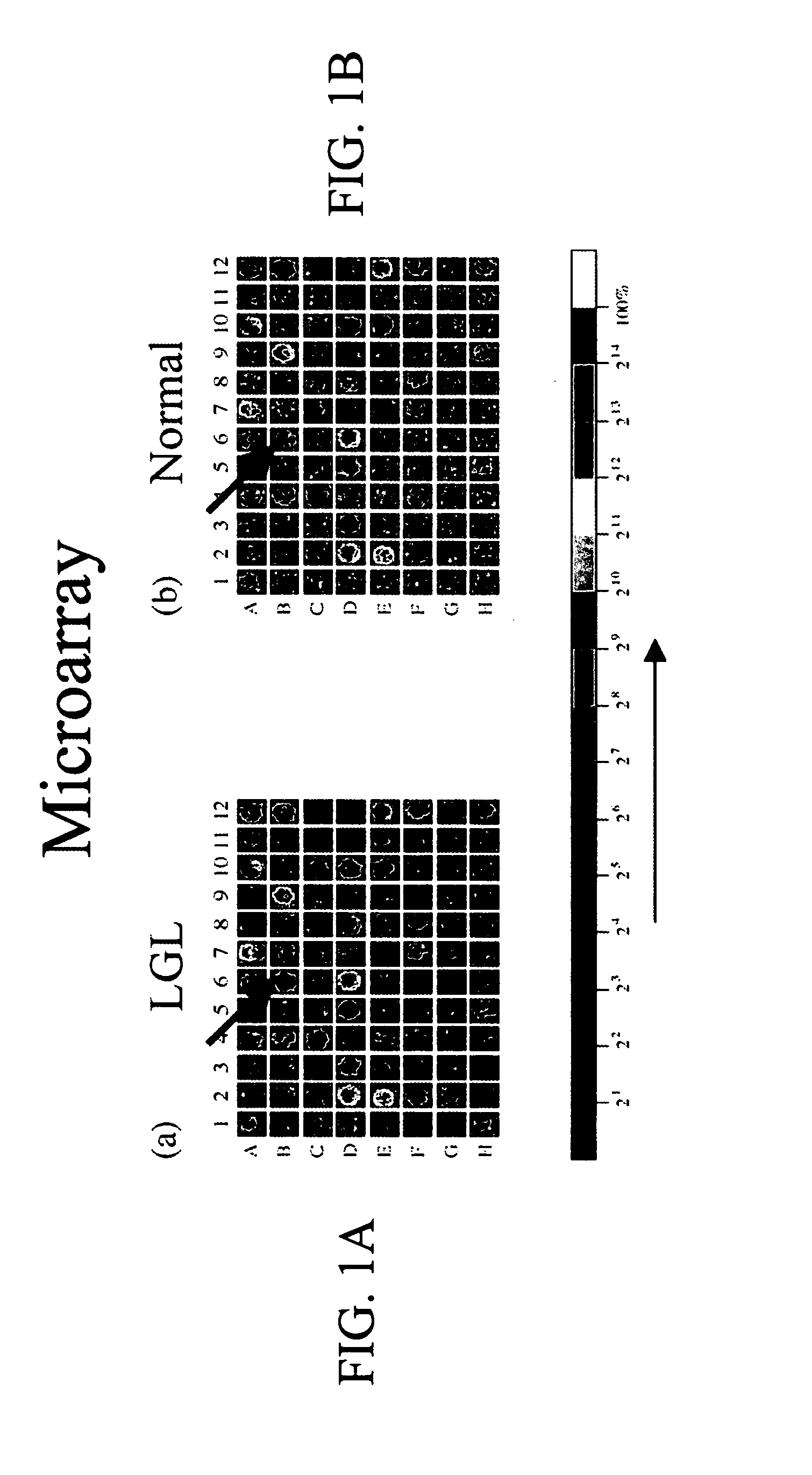
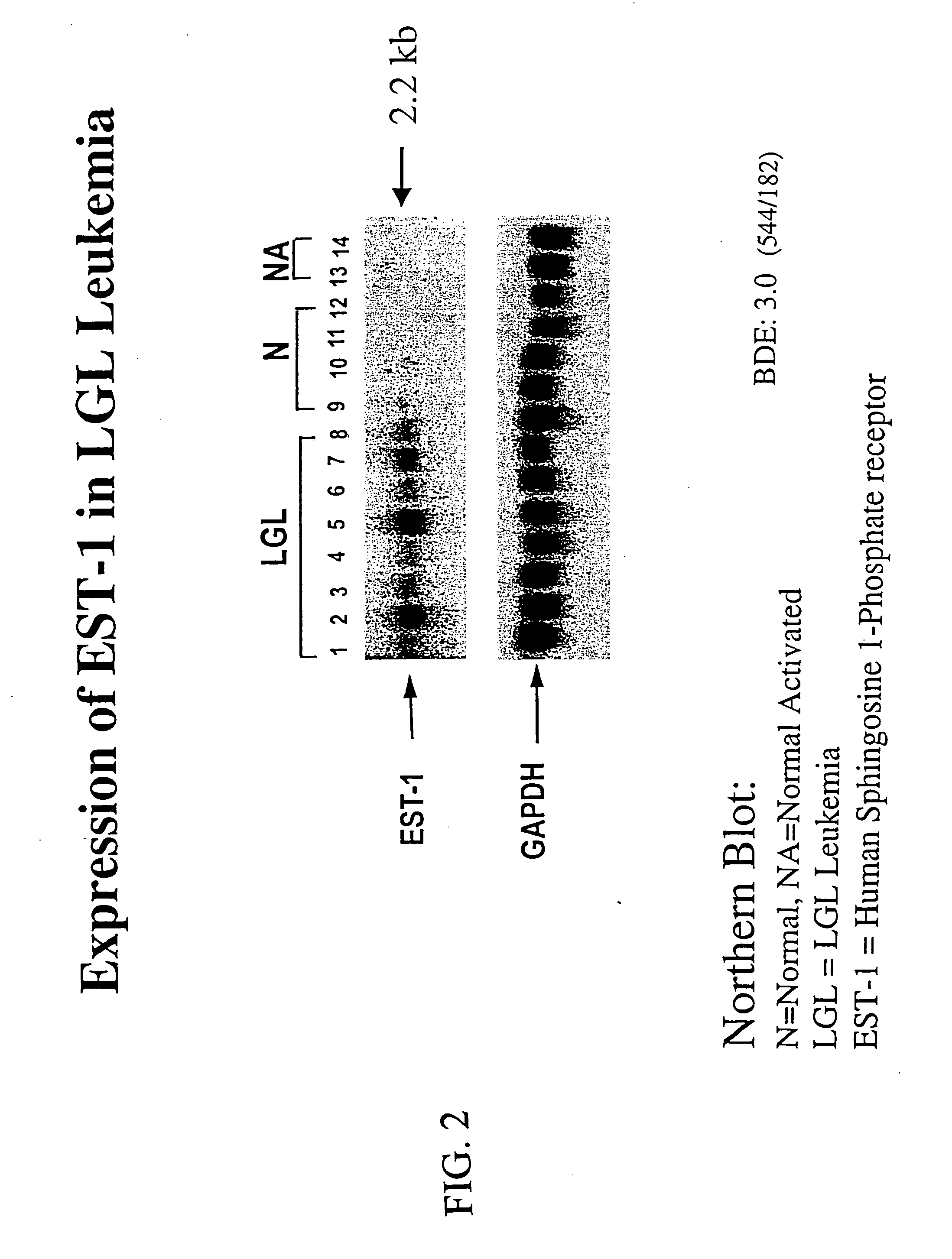
[0053] Referring now to FIG. 1, approximately 50 genes are up-regulated in LGL leukemia, with balanced differential expression of between about 7.8 and about 2.0. In addition, one EST is particularly noteworthy that is up-regulated in LGL leukemia with balanced differential expression of 3.0 (GenBank Accession number N47089). A clone containing this EST is sequenced. The total length of the EST is approximately 300 base pairs. A search using Blast shows 100% homology with another EST (GenBank Accession No. AF088014) named as homo sapiens full length insert cDNA clone YY85D04. No other information regarding this EST is found in the literature. No open reading frame is found within this sequence. Northern blot analysis confirms that a gene related to EST (GenBank ID No. N47098) is upregulated in majority of LGL leukemia patients.
[0054] Using the microarray screening method, one LGL leukemia patient is compared with one normal healthy individual. To show the same pattern in a larger s...
PUM
| Property | Measurement | Unit |
|---|---|---|
| temperature | aaaaa | aaaaa |
| temperature | aaaaa | aaaaa |
| pH | aaaaa | aaaaa |
Abstract
Description
Claims
Application Information
 Login to View More