
Exhaust gas purifying catalyst and production process thereof
a technology of exhaust gas and purifying catalyst, which is applied in the direction of physical/chemical process catalyst, metal/metal-oxide/metal-hydroxide catalyst, separation process, etc., can solve the problems of failure to meet the heat resistance required in such usage, and achieve the effect of improving the heat resistance of the surface layer and the oxygen conductivity of the surface layer
- Summary
- Abstract
- Description
- Claims
- Application Information
AI Technical Summary
Benefits of technology
Problems solved by technology
Method used
Image

Examples
example 1
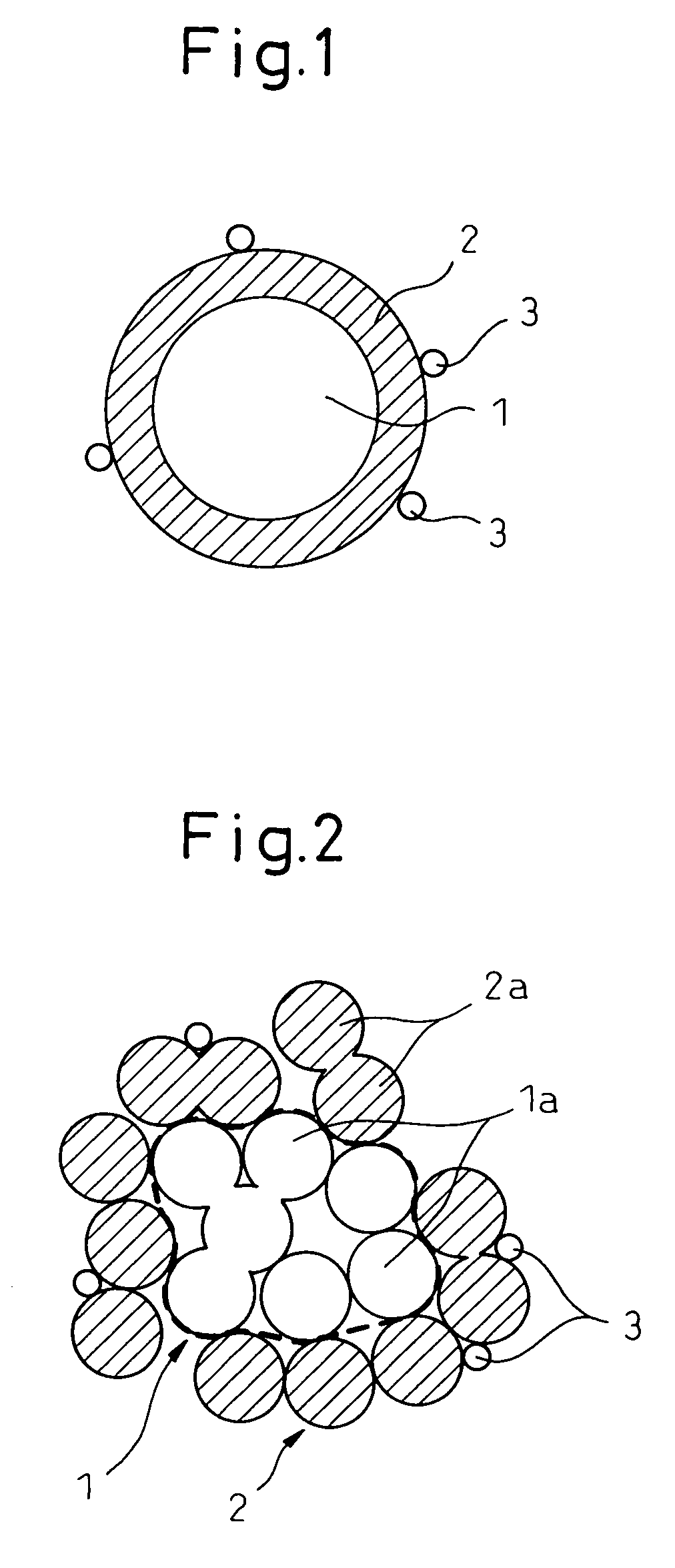
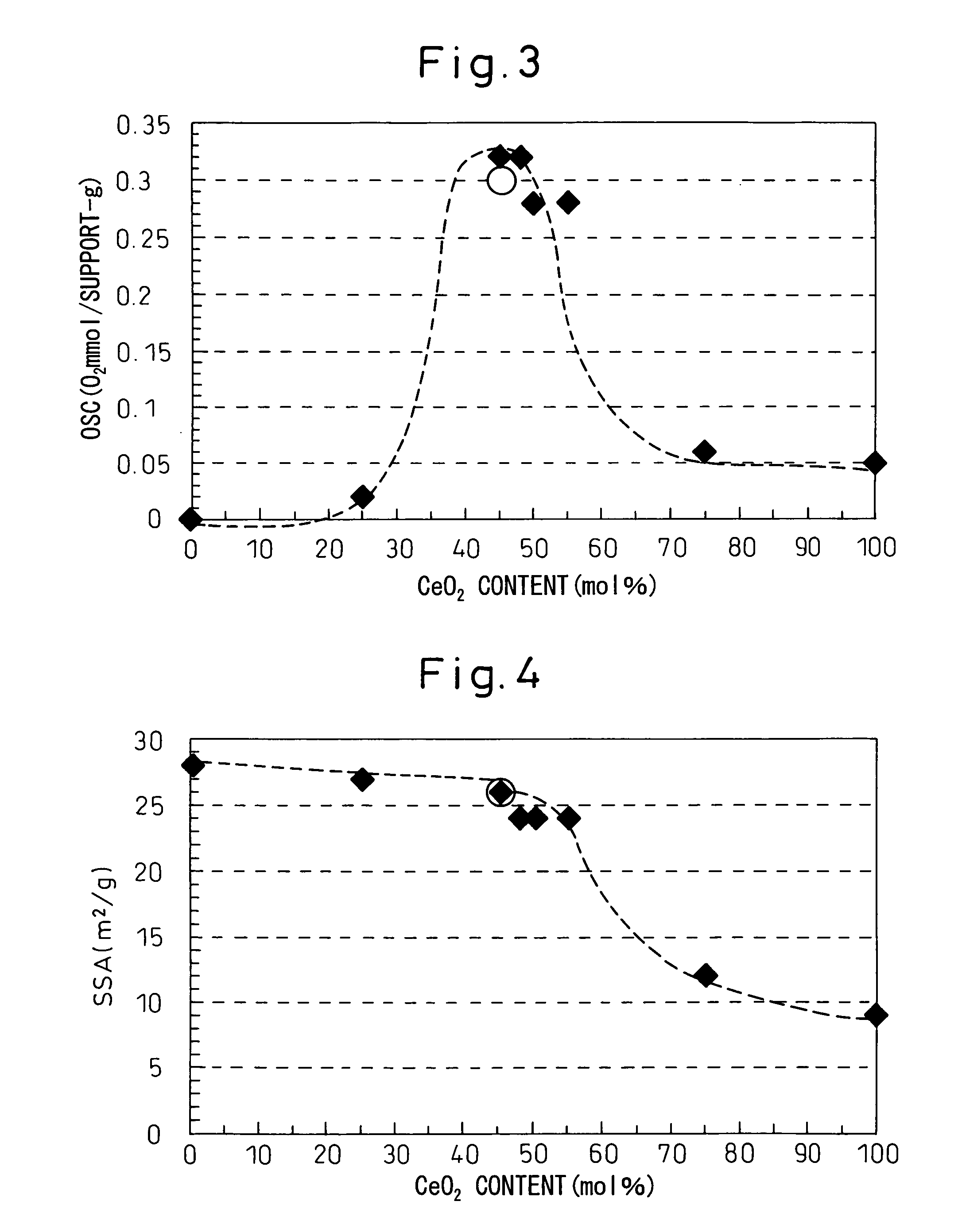
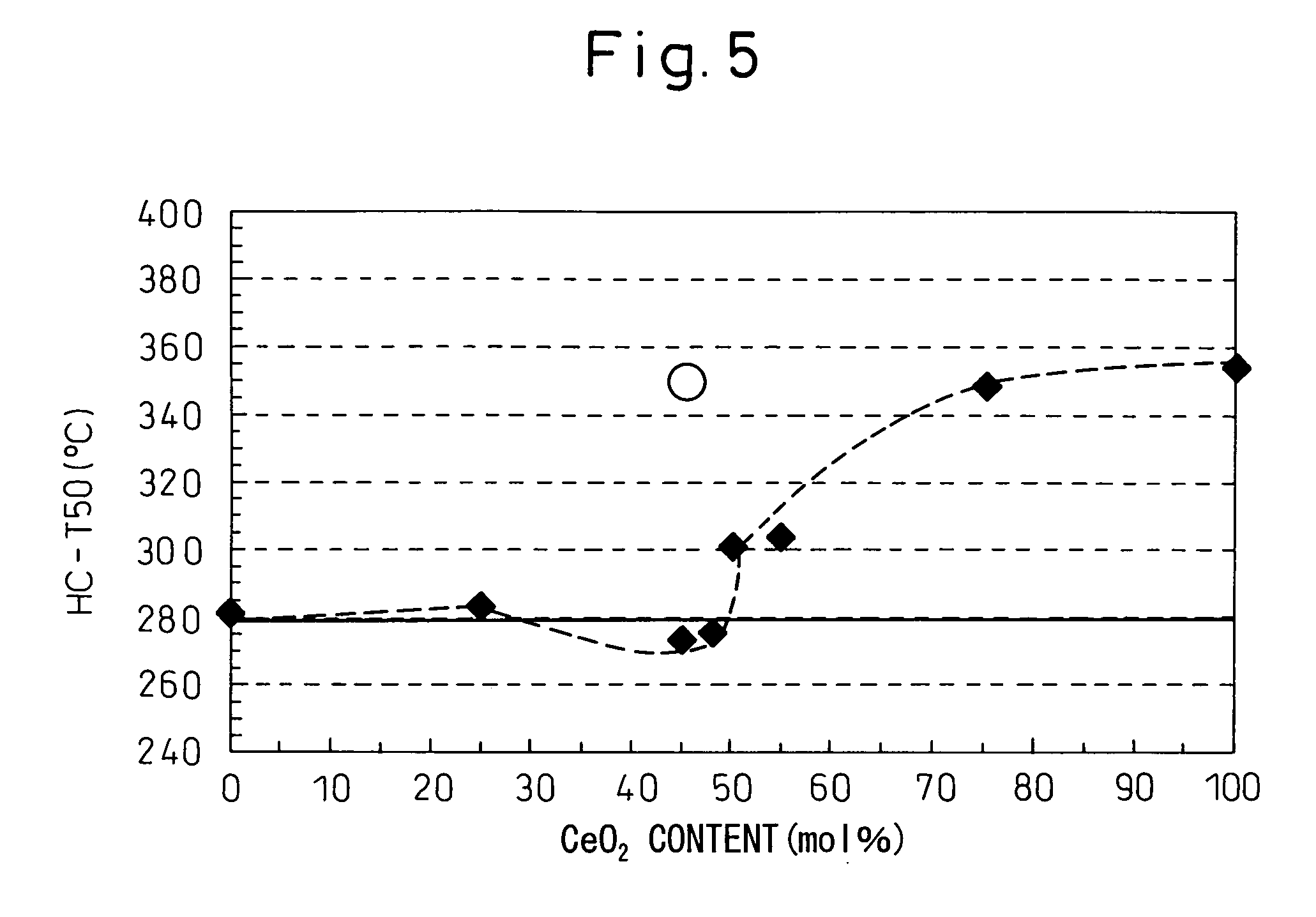
[0062] In this Example, a metal oxide particle comprising a core part relatively rich in ceria and a surface layer relatively rich in zirconia (CeO2:ZrO2:Y2O3=45:52:3 (by mol)) is obtained, and rhodium is supported thereon.
[0063] An alkali-stabilized ceria sol (isoelectric point: pH 3.5), an acid-stabilized zirconia sol (isoelectric point: pH 8.5) and an yttria sol were mixed to give the above-described molar ratio, thereby rendering the sol mixture acidic and aggregating ceria. Thereafter, an aqueous 5M ammonia (NH3) solution was added dropwise with stirring to adjust the pH to 11, thereby aggregating zirconia. The resulting solution was dried at 120° C. for 24 hours, and the dried product was fired at 700° C. for 5 hours to obtain metal oxide particles.
[0064] The thus-obtained metal oxide particles were dispersed in distilled water which was in an amount of 6-fold weight, a rhodium nitrate solution was added thereto so that rhodium is in an amount of 0.5 wt % based on the metal ...
example 2
[0065] In this Example, a catalyst was obtained in the same manner as in Example 1 except that the molar ratio of components in the metal oxide particle was changed to CeO2:ZrO2:Y2O3=48:49:3.
example 3
[0066] In this Example, a catalyst was obtained in the same manner as in Example 1 except that the molar ratio of components in the metal oxide particle was changed to CeO2:ZrO2:Y2O3=25:72:3.
PUM
| Property | Measurement | Unit |
|---|---|---|
| particle diameter | aaaaa | aaaaa |
| particle diameter | aaaaa | aaaaa |
| particle diameter | aaaaa | aaaaa |
Abstract
Description
Claims
Application Information
 Login to View More