
Sustained-release tramadol formulations with 24-hour efficacy
a tramadol and formulation technology, applied in the direction of dragees, coatings, pharmaceutical delivery mechanisms, etc., can solve the problems of low abuse potential of tramadol, inconsistent plasma drug concentration, and dependence of tramadol hcl
- Summary
- Abstract
- Description
- Claims
- Application Information
AI Technical Summary
Benefits of technology
Problems solved by technology
Method used
Image

Examples
example 1
A. Cross-Linking
[0090] High amylose starch (30.0 kg) containing about 70% wow of amylose (Cl AmyloGel 03003) is placed in a reactor. To this reactor is added water (55.0 1) containing sodium hydroxide (30.0 g) and sodium sulfate (2.40 kg). The resulting slurry is heated to a temperature of 30° C. Phosphorus oxychloride (22.5 g) is added to the reaction mixture which is reacted for one hour.
B. Chemical Modification, Hydroxyproylation
[0091] The crude reaction mixture from Part A is transferred into a hydroxypropylation reactor. The reaction mixture is heated to 40° C. over 30 minutes and the reaction is purged with nitrogen. After a full purge, propylene oxide (1.80 kg) is added. The reaction mixture is kept at 40° C. for 20 hours. The reaction mixture is neutralized with 0.1 N H2SO4 (1:2 v / v) to a pH of 5.5. The starch slurry is washed with a basket-centrifuge at a speed of 1200 rpm. The obtained starch cake is re-slurrified in 35 l of water and centrifuged a second time. The re...
example 2
A. Cross-Linking
[0094] High amylose starch (30.0 kg) containing about 70% w / w of amylose (Cl AmyloGel 03003) is placed in a reactor. To this reactor is added water (55.01) containing sodium hydroxide (30.0 g) and sodium sulfate (2.40 kg). The resulting slurry is heated to a temperature of 30° C. Sodium trimetaphosphate (45 g) is added to the reaction mixture which is reacted for one hour.
B. Chemical Modification, Hydroxyproylation
[0095] The crude reaction mixture from Part A is transferred into a hydroxypropylation reactor. The reaction mixture is heated to 40° C. over 30 minutes and the reaction is purged with nitrogen. After a full purge, propylene oxide (1.80 kg) is added. The reaction mixture is kept at 40° C. for 20 hours. The reaction mixture is neutralized with 0.1 N H2SO4 (1:2 v / v) to a pH of 5.5. The starch slurry is washed with a basket-centrifuge at a speed of 1200 rpm. The obtained starch cake is re-slurrified in 35 l of water and centrifuged a second time. The resu...
example 3
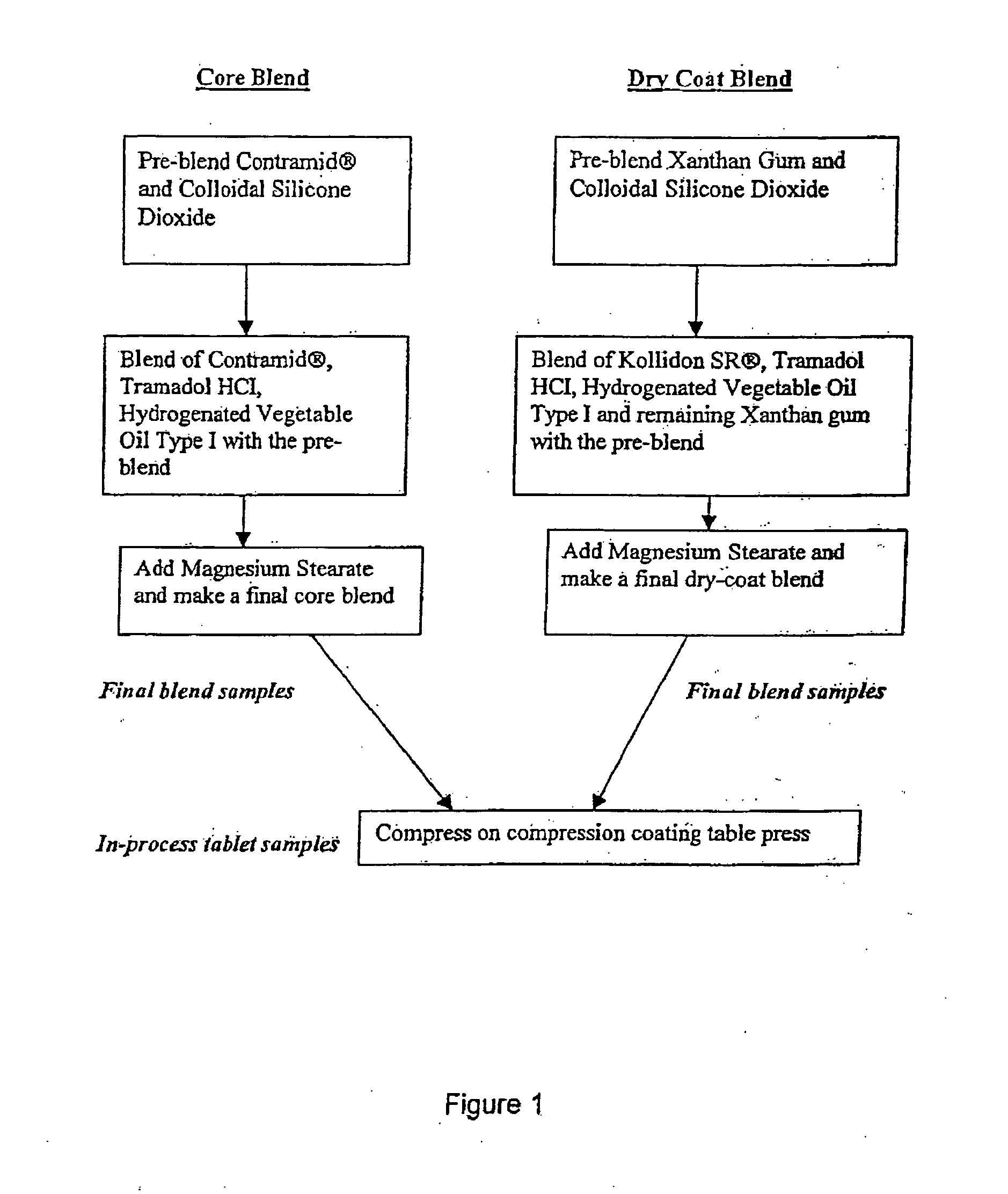
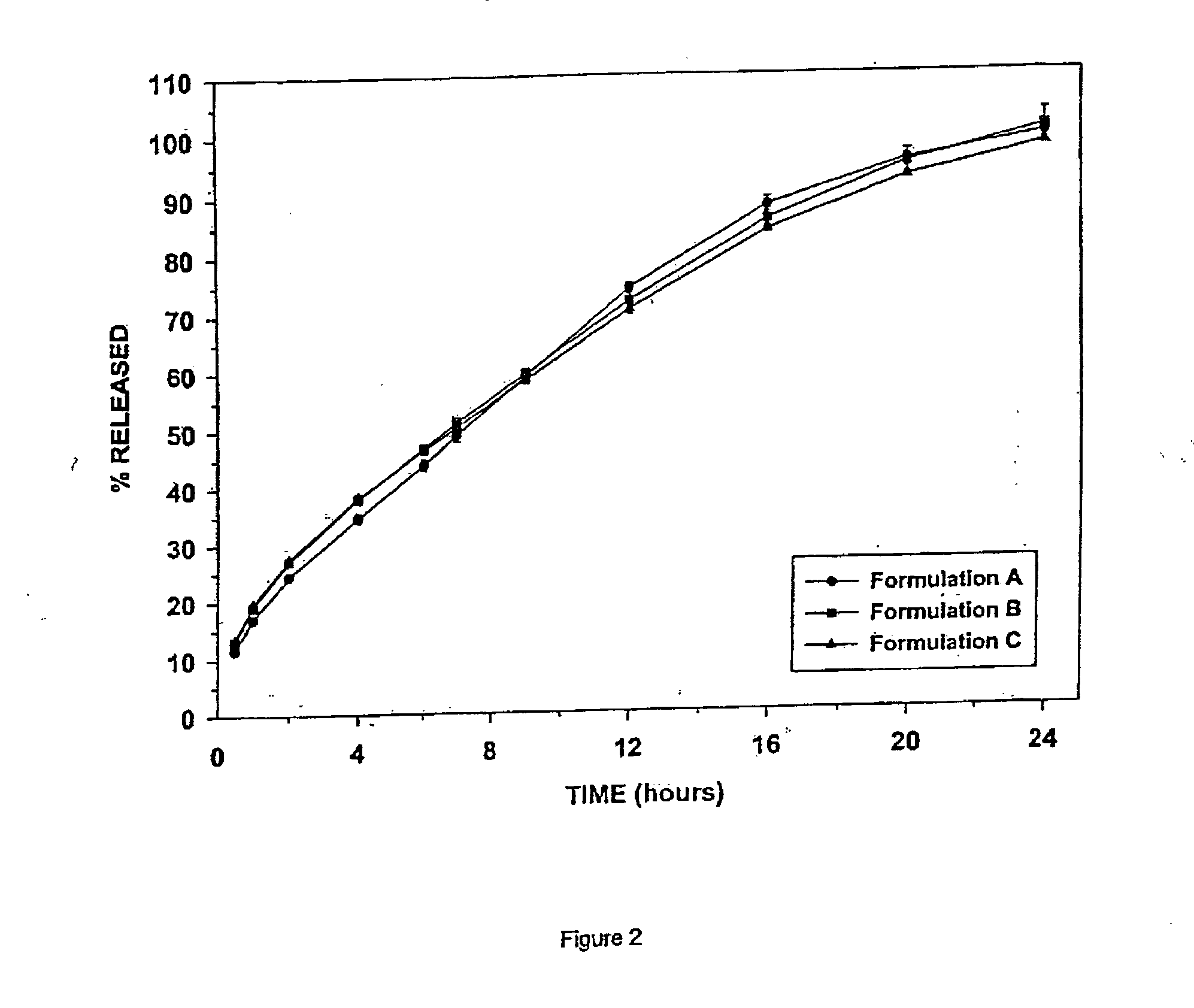
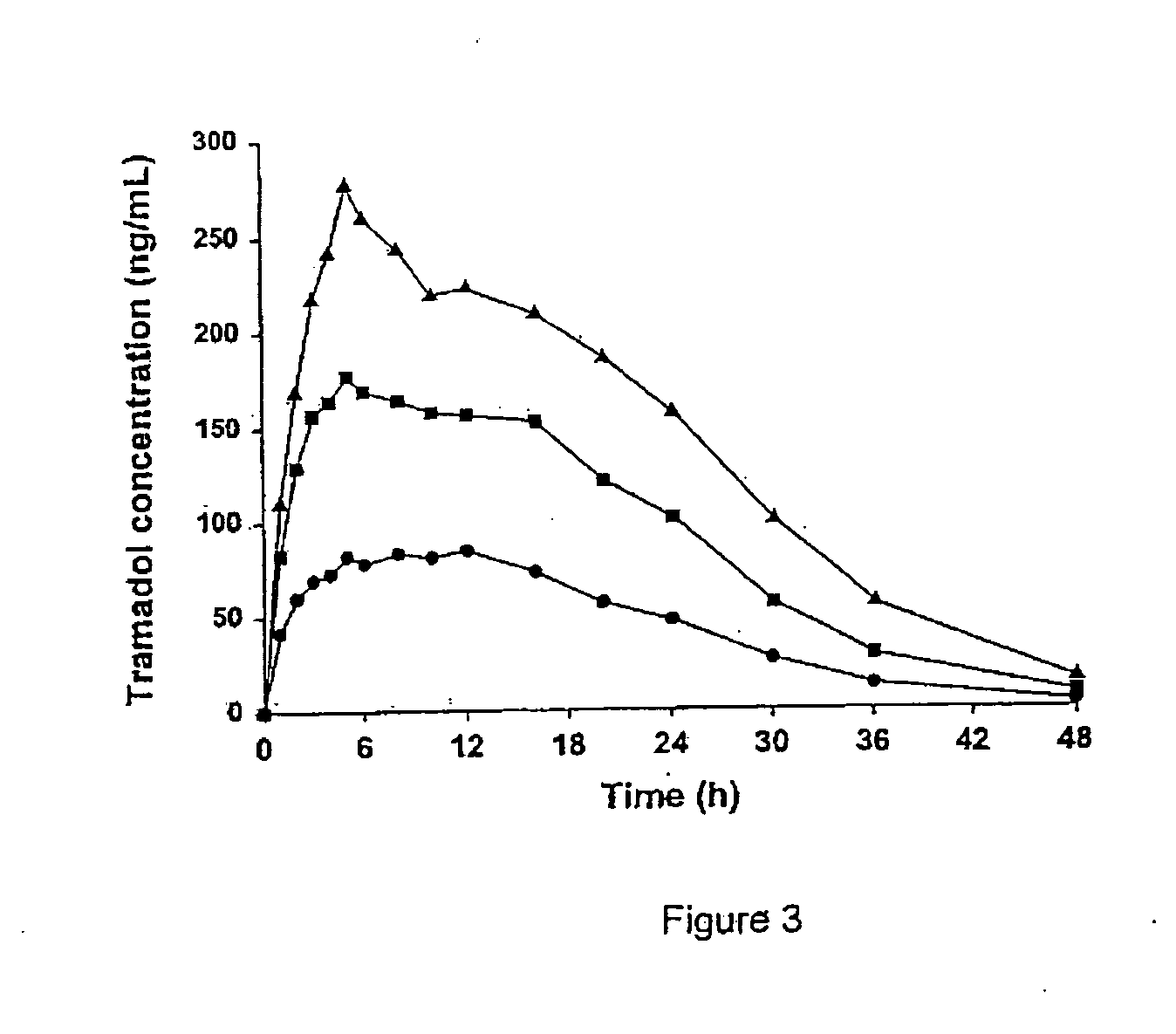
[0106] Formulations A, B, and C, as shown in Table 1, were manufactured according to the process set out above.
TABLE 1Recipes for Controlled Released Tramadol Formulations A, B and C.Formulation AFormulation BFormulation C%mg / tablet%mg / tablet%mg / tablet1) INGREDIENTCoreTramadol Hydrochloride5045509063.25151.8Contramid ®48.343.4748.386.9435.0584.1Hydrogenated Vegetable Oil0.750.6750.751.350.751.8Silica0.20.180.20.360.200.5Magnesium Stearate0.750.6750.751.350.751.8Core Total Weight100901001801002402) COATTramadol Hydrochloride21.155530.5611030.56148.5Silica0.200.520.200.720.201.0Kollidon SR ®51.42133.745.16162.5845.16219Xanthan Gum25.7266.8622.5881.322.58109.5Hydrogenated Vegetable Oil1.002.61.003.61.004.9Magnesium Stearate0.501.30.501.80.502.4Coat Total Weight100260100.003601004853) COATED TABLETTramadol Hydrochloride28.5710037.0420041.38300Contramid ®12.4243.4716.1086.9411.6084.1Hydrogenated Vegetable Oil0.943.2750.924.950.926.7Silica0.200.70.201.080.201.5Magnesium Stearate0.561.97...
PUM
| Property | Measurement | Unit |
|---|---|---|
| concentration | aaaaa | aaaaa |
| concentration | aaaaa | aaaaa |
| concentration | aaaaa | aaaaa |
Abstract
Description
Claims
Application Information
 Login to View More