[0007]The systems and methods disclosed herein, in one aspect thereof, can improve capacity and coverage in a
wireless communication system, such as, but not limited to UMTS (
Universal Mobile Telecommunications System), when a CS (Circuit Switched) over HSPA (
High Speed Packet Access) link is utilized for communication. In one embodiment, a system and method is provided that can convert and reconfigure a CS over HSPA connection to an R99 (Release 99) CS connection when degraded radio conditions are identified. In another embodiment, a system and method is provided that can maintain and utilize concurrent CS over HSPA and R99 CS connections for communication between a
NodeB and UE (
User Equipment) when degraded radio conditions are identified. Further, in yet another embodiment, a system and method is disclosed that can provide both the switching and concurrent transport mechanisms and can intelligently select between the two, such that, resources are optimally utilized.
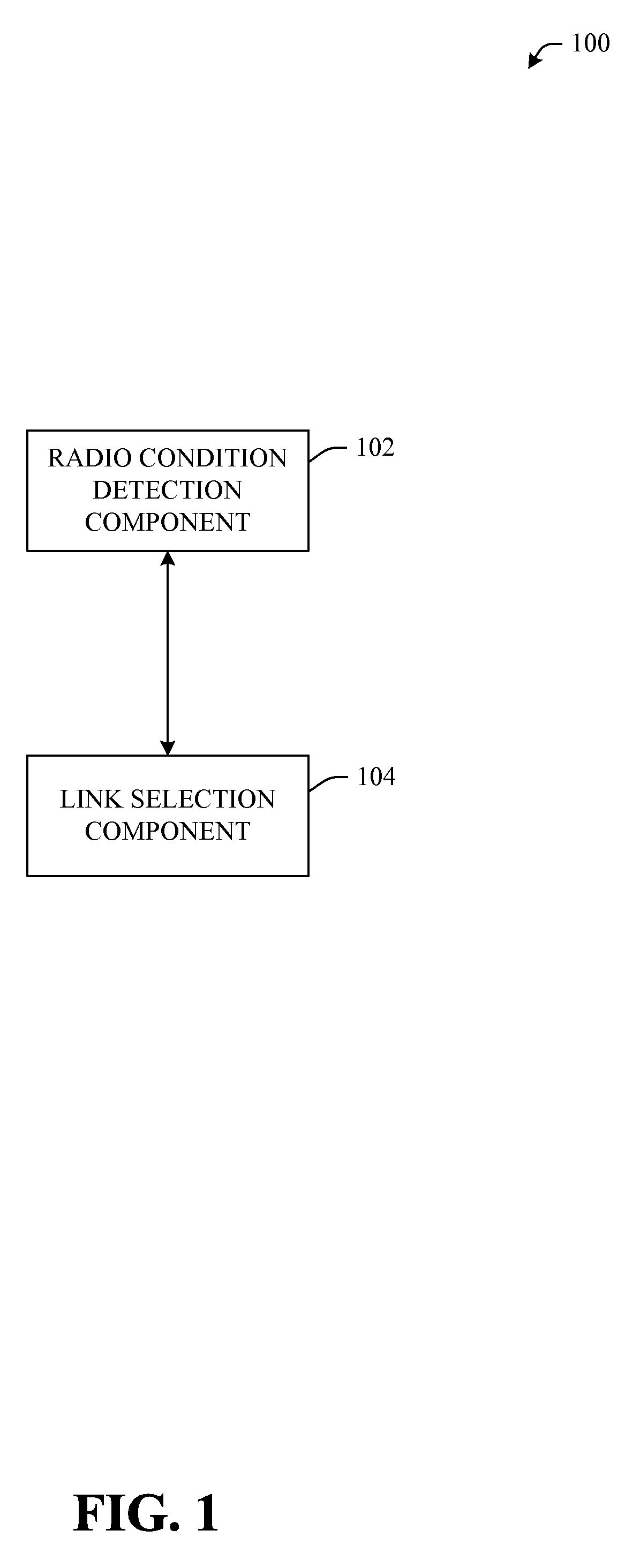
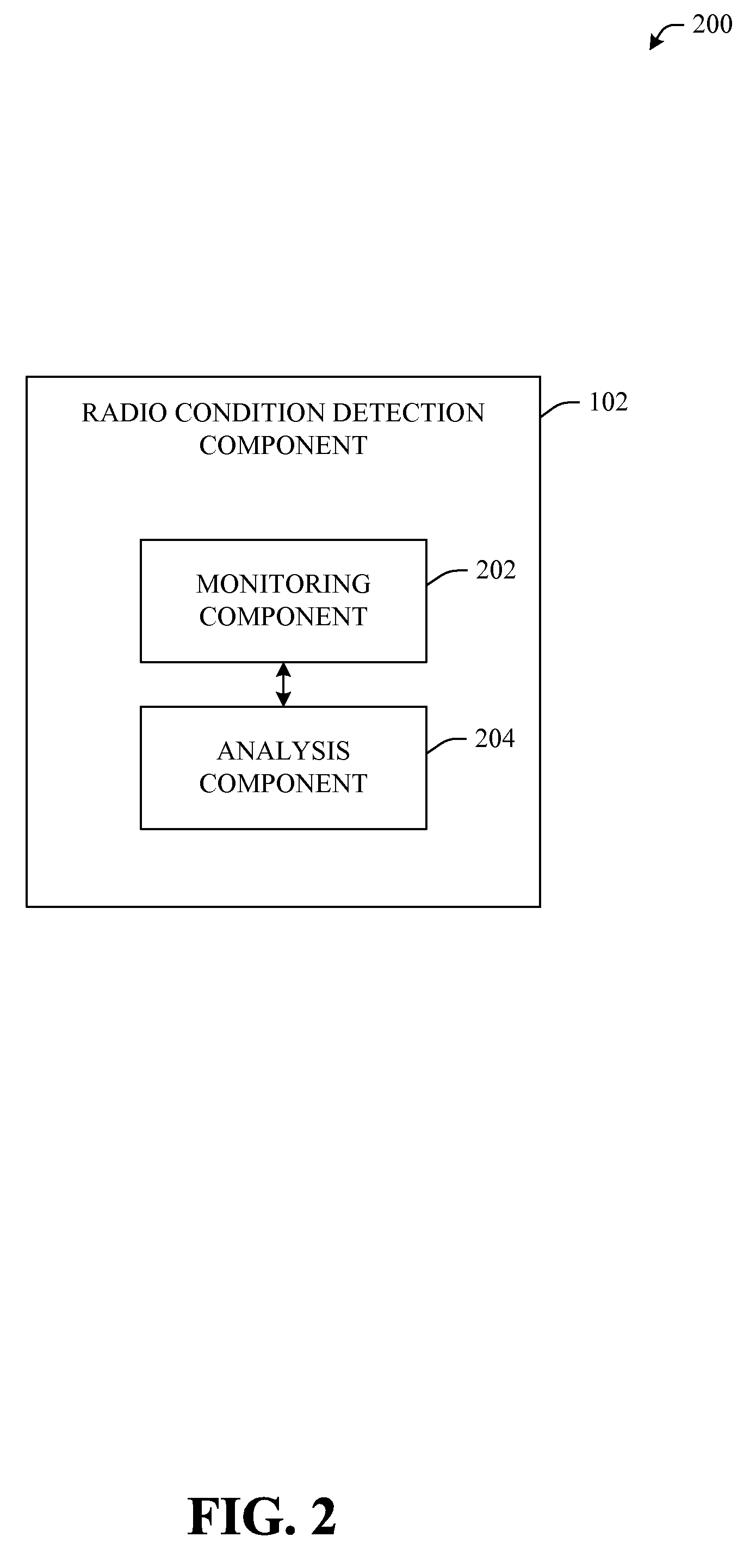
[0008]According to an aspect of the system, a radio condition detection component can be employed to determine when radio conditions associated with user data degrade below a predefined threshold. Moreover, the radio condition detection component can monitor current radio conditions, events and / or UE characteristics (e.g. speed and / or distance of the UE) and analyze the monitored information. Further, a link conversion component can be employed to reconfigure transport mechanisms between the
NodeB and UE based in part on the analysis information, such that, resources are efficiently utilized. For example, when radio conditions degrade beyond a predefined threshold, the link conversion component can convert a CS over HSPA voice call to an R99 CS voice call. Additionally or alternately, a link addition component can be employed to switch from a single CS over HSPA connection to concurrent CS over HSPA and R99 CS connections, based in part on the analysis information. Moreover, the link addition component can switch from a single CS over HSPA connection to concurrent CS over HSPA and R99 CS connections when radio conditions degrade beyond a disparate predefined threshold. The additional link increases redundancy and provides improved voice quality.
[0009]In accordance with another aspect of the system, a link selection component can be employed to determine whether a new radio bearer can be utilized, or, an additional radio bearer can be utilized, to transmit data between a NodeB and a UE. In particular, the link selection component performs the determination based on the analysis information received from the radio condition detection component that includes, but is not limited to, current radio conditions, event information, UE characteristics, etc. In one example, the link selection component can select an optimal transport mechanism to deliver user data based on an analysis of the received information, such that, resources are efficiently utilized and call quality and reliability is improved.
[0010]Yet another aspect of the disclosed
subject matter relates to a method that enables an operator /
service provider to reap gains of employing CS over HSPA, and, in addition improve the CS coverage
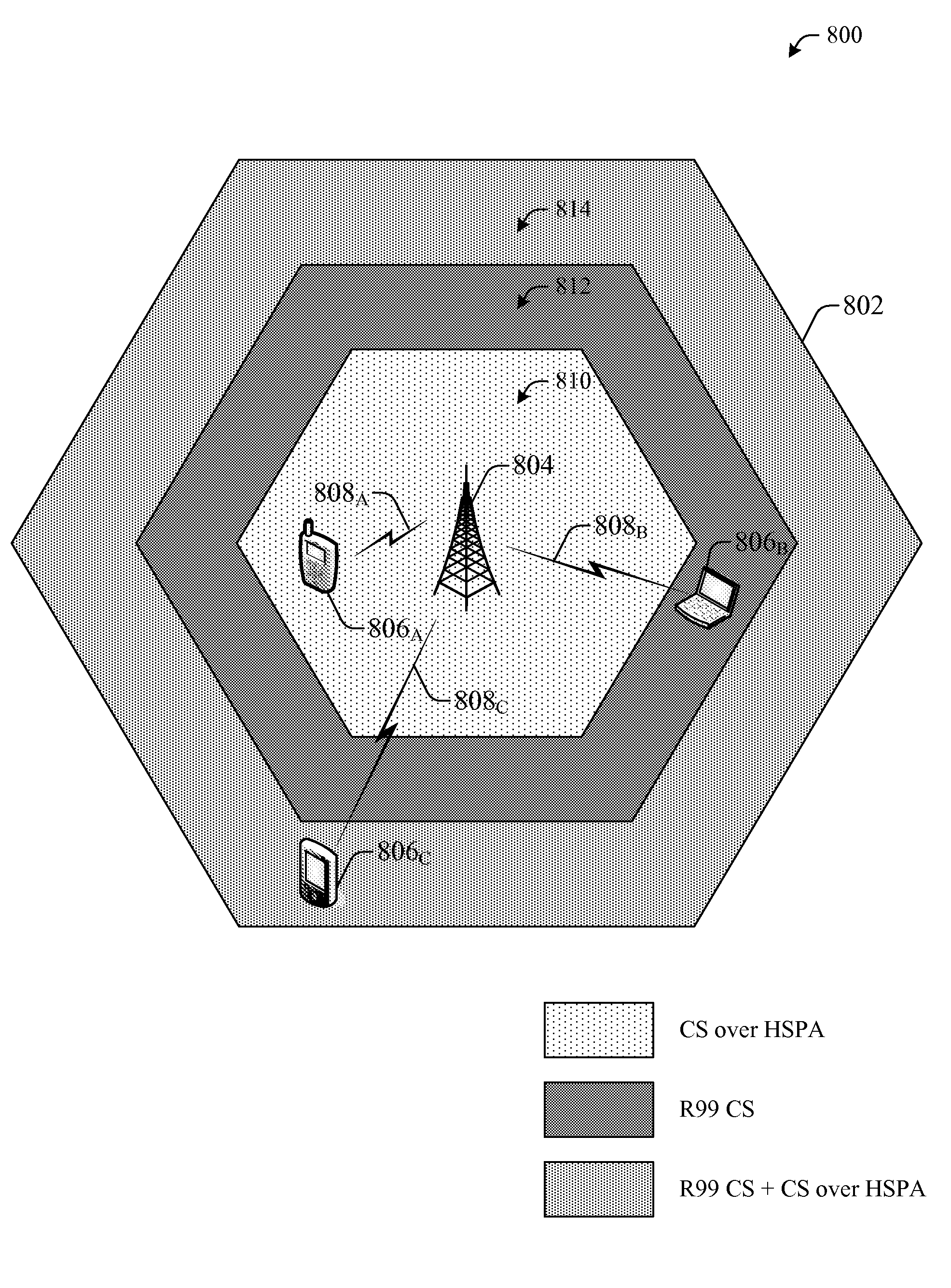
footprint of the network. The method comprises identifying and analyzing current radio conditions associated with communication between a NodeB and a UE. Further, a CS over HSPA connection can be utilized for the communication, when identified that radio conditions have not degraded below a first threshold. In one example, the first and a second threshold can be predefined by an operator, such that the first threshold is higher than the second threshold. However, when the radio conditions lie between the first and second thresholds, an R99 CS connection can be employed for the communication. Accordingly, a CS over HSPA connection can be reconfigured to an R99 CS connection to achieve a greater coverage area and improve call reliability. Furthermore, an R99 CS connection can be concurrently employed with a CS over HSPA connection for the communication when the radio conditions degrade below the second predefined threshold, such that reliability is further improved.


 Login to View More
  Login to View More