
Acoustic myography system and methods
a technology of acoustic myography and acoustic nerve impulses, applied in the field of electromechanical signal processing, can solve the problems of poor reliability and useful dynamic range of these signals, limited use of acoustic information for diagnostic or replicative purposes, and overwhelming obstacles in the use of electrical nerve impulses for electrical or mechanical device control
- Summary
- Abstract
- Description
- Claims
- Application Information
AI Technical Summary
Benefits of technology
Problems solved by technology
Method used
Image

Examples
Embodiment Construction
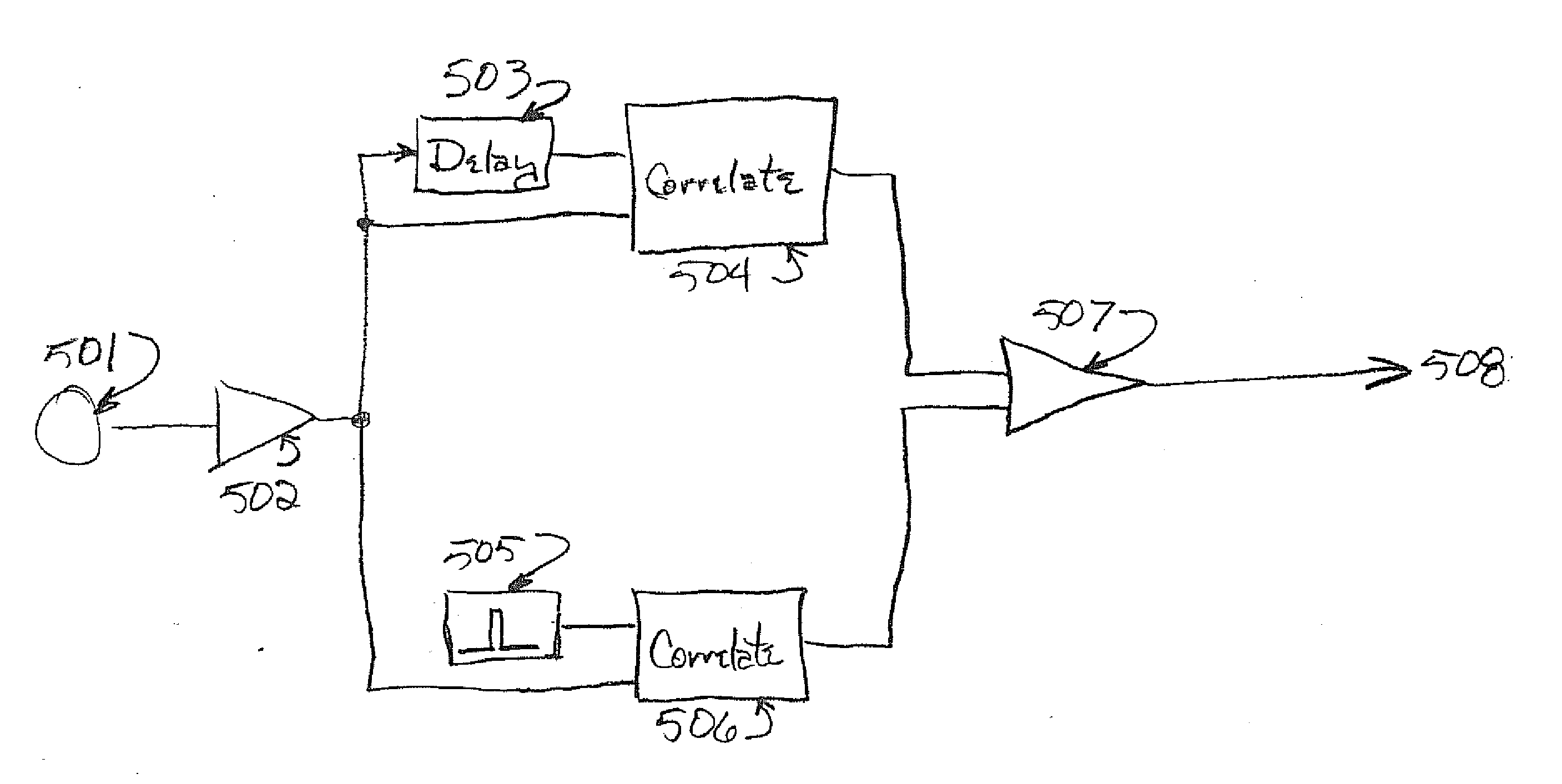
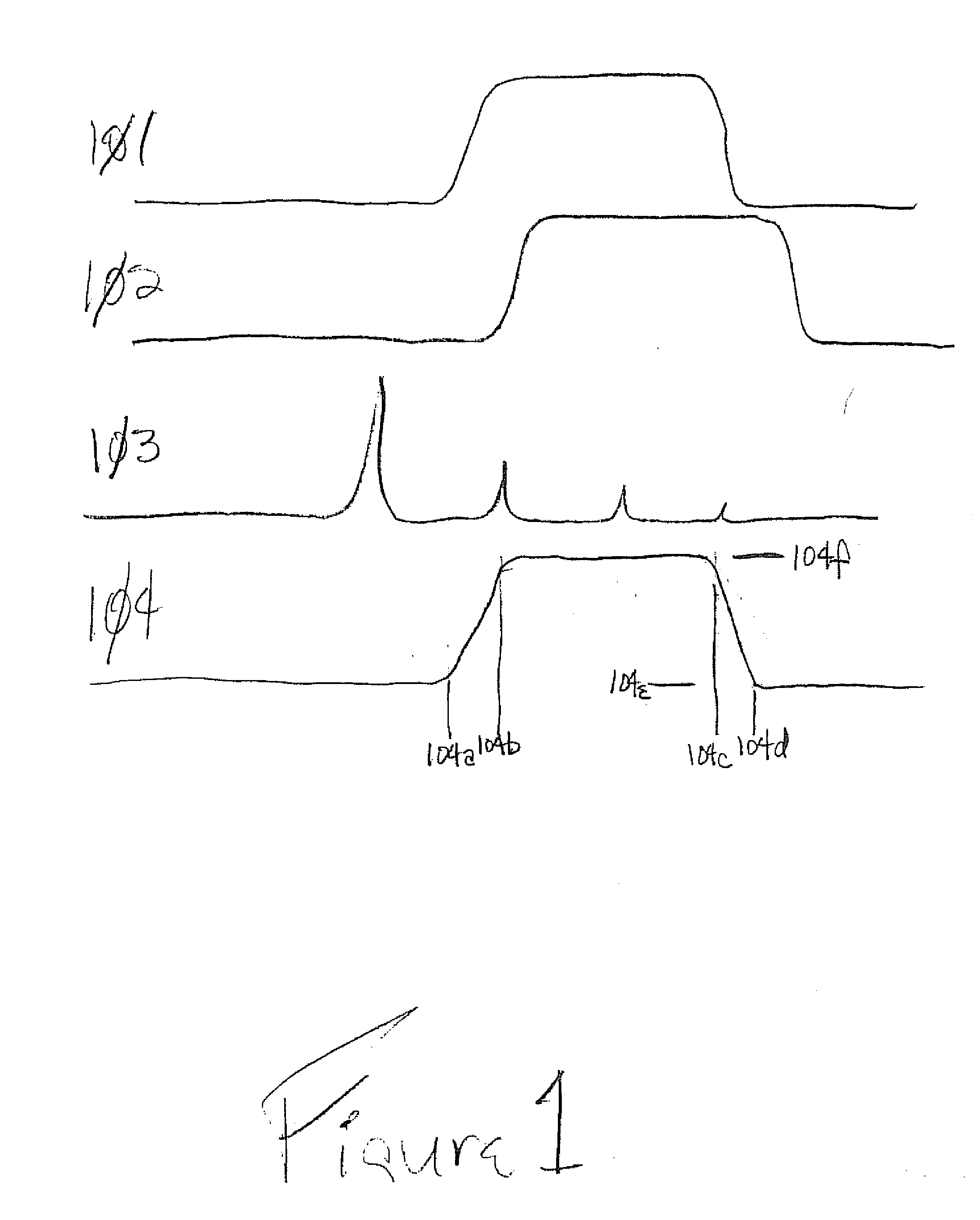
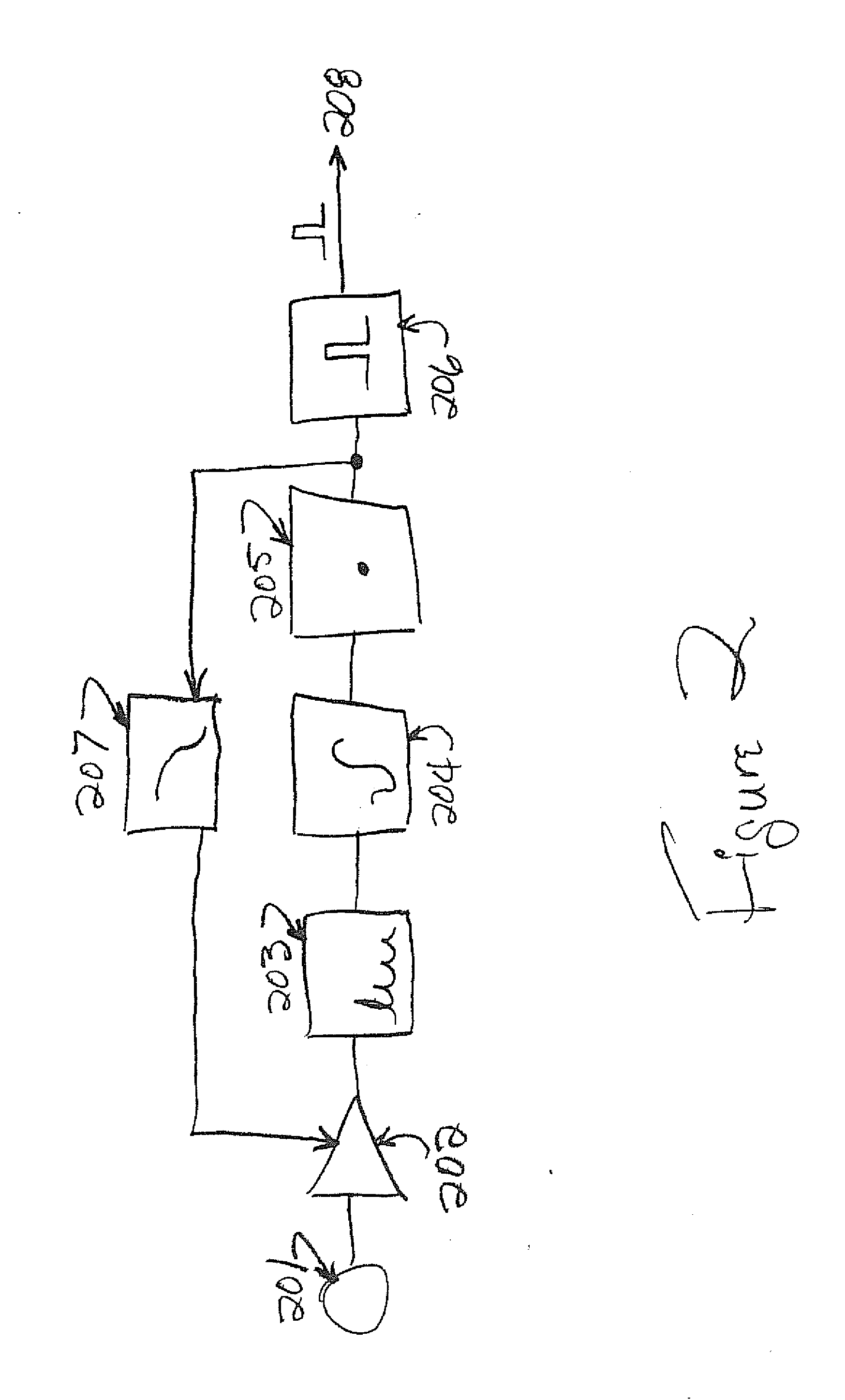
[0016]FIG. 1 is a diagram showing a single electrical motor nerve pulse, the resultant acoustic pulse, and the spectrum, pulsewidth, and amplitude of the pulses. FIG. 2 is s block diagram of an embodiment of the present invention whereby an external acoustic measurement provides an accurate representation of the original internal electrical source through filtering techniques. FIG. 3 depicts an embodiment of the invention employing a Fourier transform to surmise pulse density through average frequency. FIG. 4 shows the use of autocorrelation to extract pulse density information. FIG. 5 illustrates an alternative configuration of the embodiment of FIG. 4, showing impulse feature extraction through correlation and noise rejection through autocorrelation.
[0017]Referring now to FIG. 1, plot 101 shows the current (or voltage) waveform of a single pulse from an intermuscular motor nerve as a function of time. Note that a common characteristic of the nerve pulses is a relatively constant a...
PUM
 Login to View More
 Abstract
Description
Claims
Application Information
 Login to View More