
Customer exposure view & income statements (CEVIS)
a technology of exposure view and income statement, applied in the field of financial services, can solve the problems of limited information gathered for due diligence, and achieve the effect of reducing the disadvantages and problems associated, and eliminating the possibility of facilitating business transactions
- Summary
- Abstract
- Description
- Claims
- Application Information
AI Technical Summary
Benefits of technology
Problems solved by technology
Method used
Image

Examples
Embodiment Construction
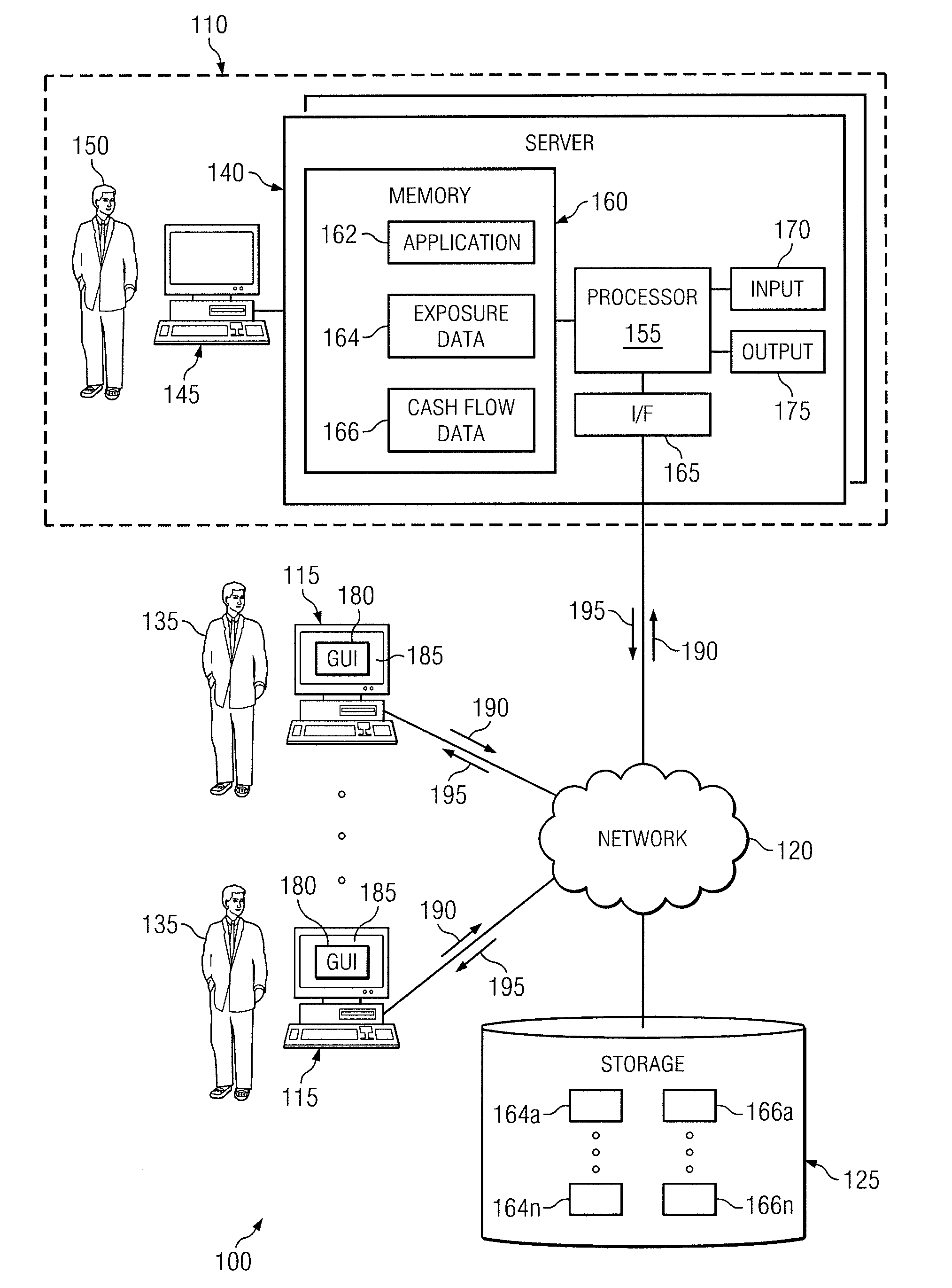
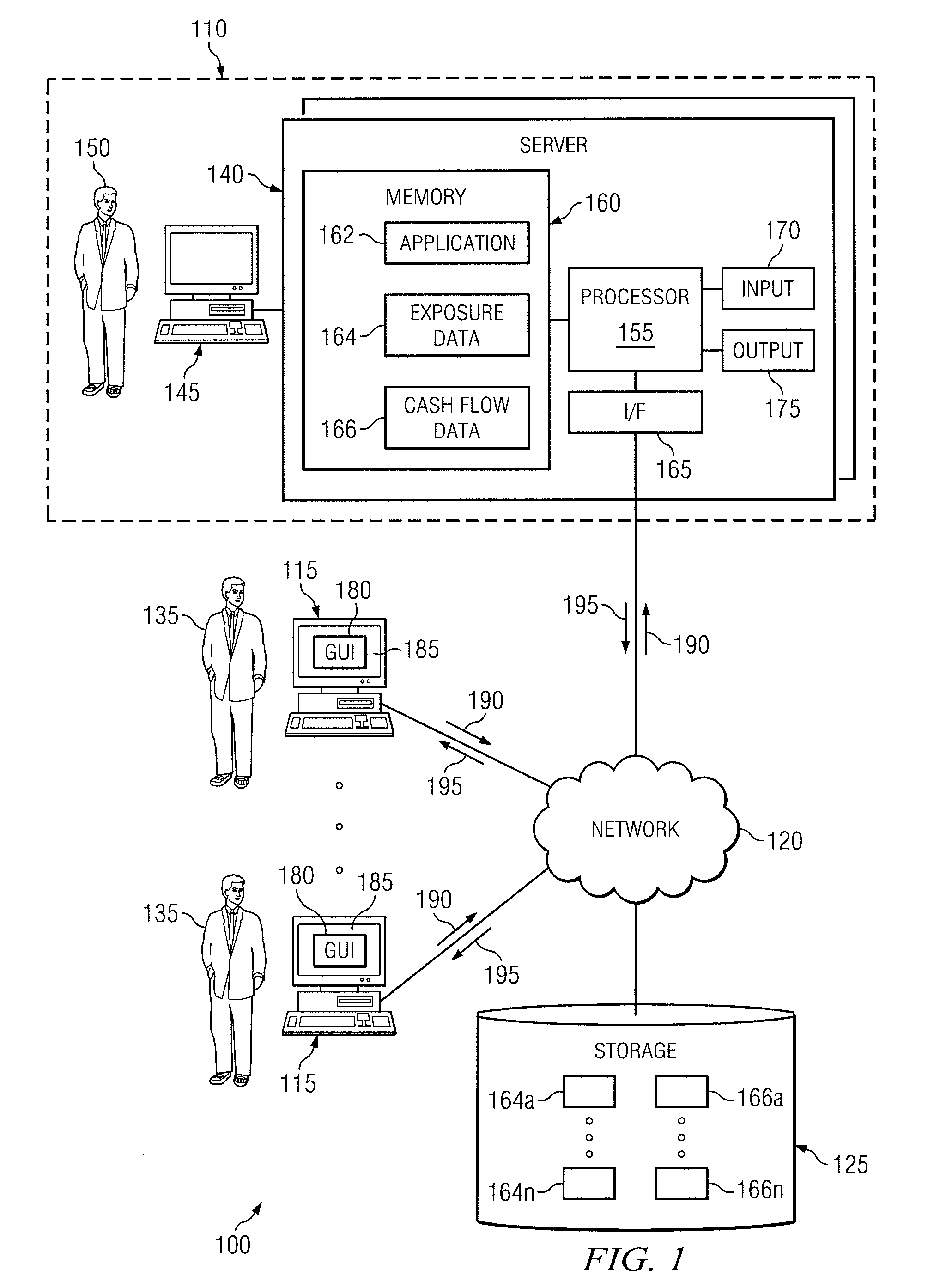
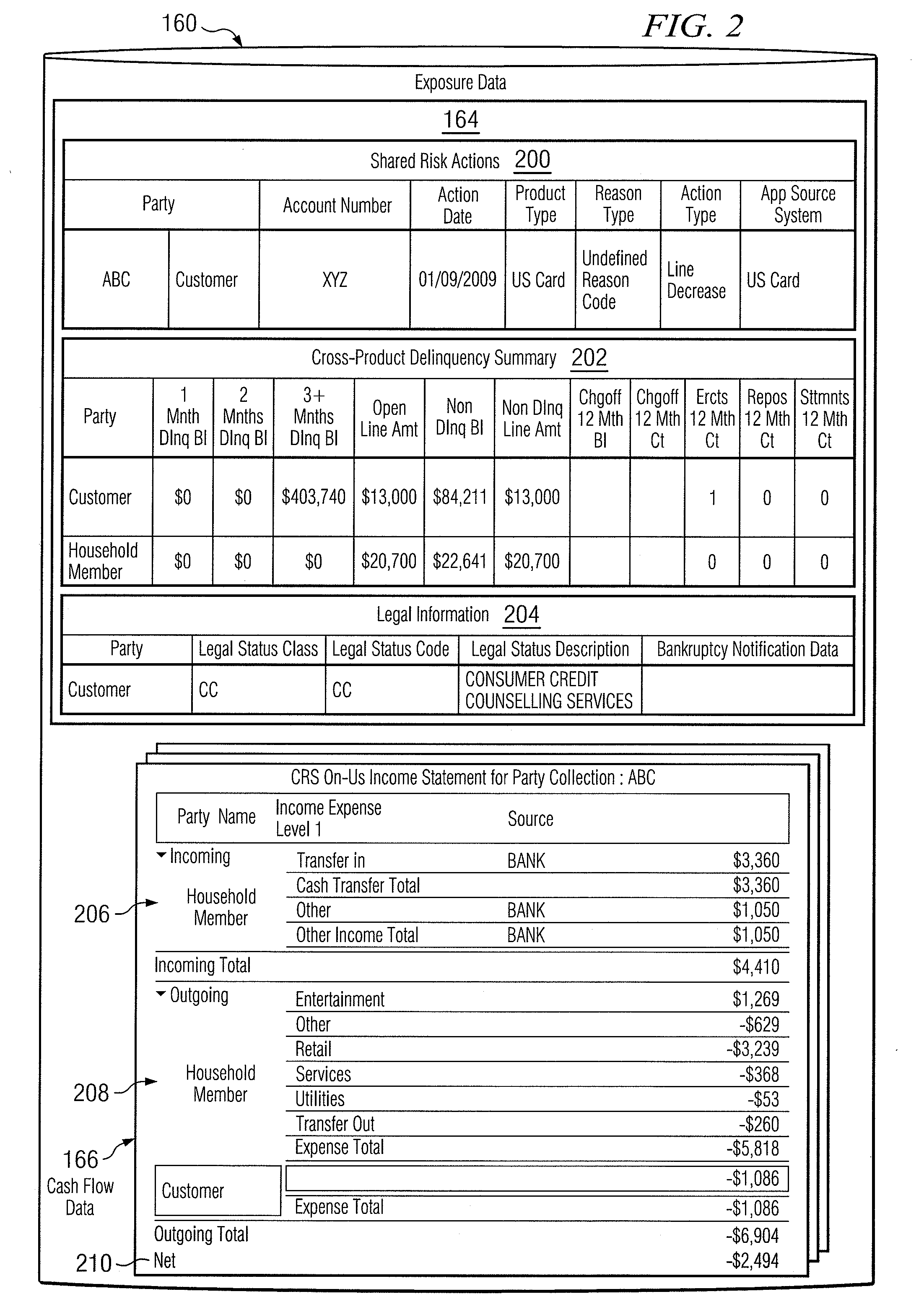
[0011]Embodiments of the present invention and its advantages are best understood by referring to FIGS. 1 through 3 of the drawings, like numerals being used for like and corresponding parts of the various drawings.
[0012]Banks and other financial institutions embarking on business transactions with customers may perform due diligence to determine the potential risks associated with the transaction. Examples of transactions include, but are not limited to, extending lines of credit (e.g., credit cards), underwriting insurance, and providing mortgages, home equity loans, or other loans. Transactions may include consumer transactions and small business transactions. Typically, the information gathered to accomplish due diligence may be limited to high-level information. The teachings of the disclosure recognize that it would be desirable to provide detailed information to allow the financial institution to better determine the potential risks associated with the proposed transaction. F...
PUM
 Login to View More
 Abstract
Description
Claims
Application Information
 Login to View More