
Method for Accurate Sequencing of DNA
a technology of dna and material, applied in the field of materials and methods for sequencing dna, can solve the problems of low number of somatic mutations per single cell, difficult quantification of somatic mutations across a cellular population, and somatic mutations, and achieve the effect of increasing analysis confiden
- Summary
- Abstract
- Description
- Claims
- Application Information
AI Technical Summary
Benefits of technology
Problems solved by technology
Method used
Image

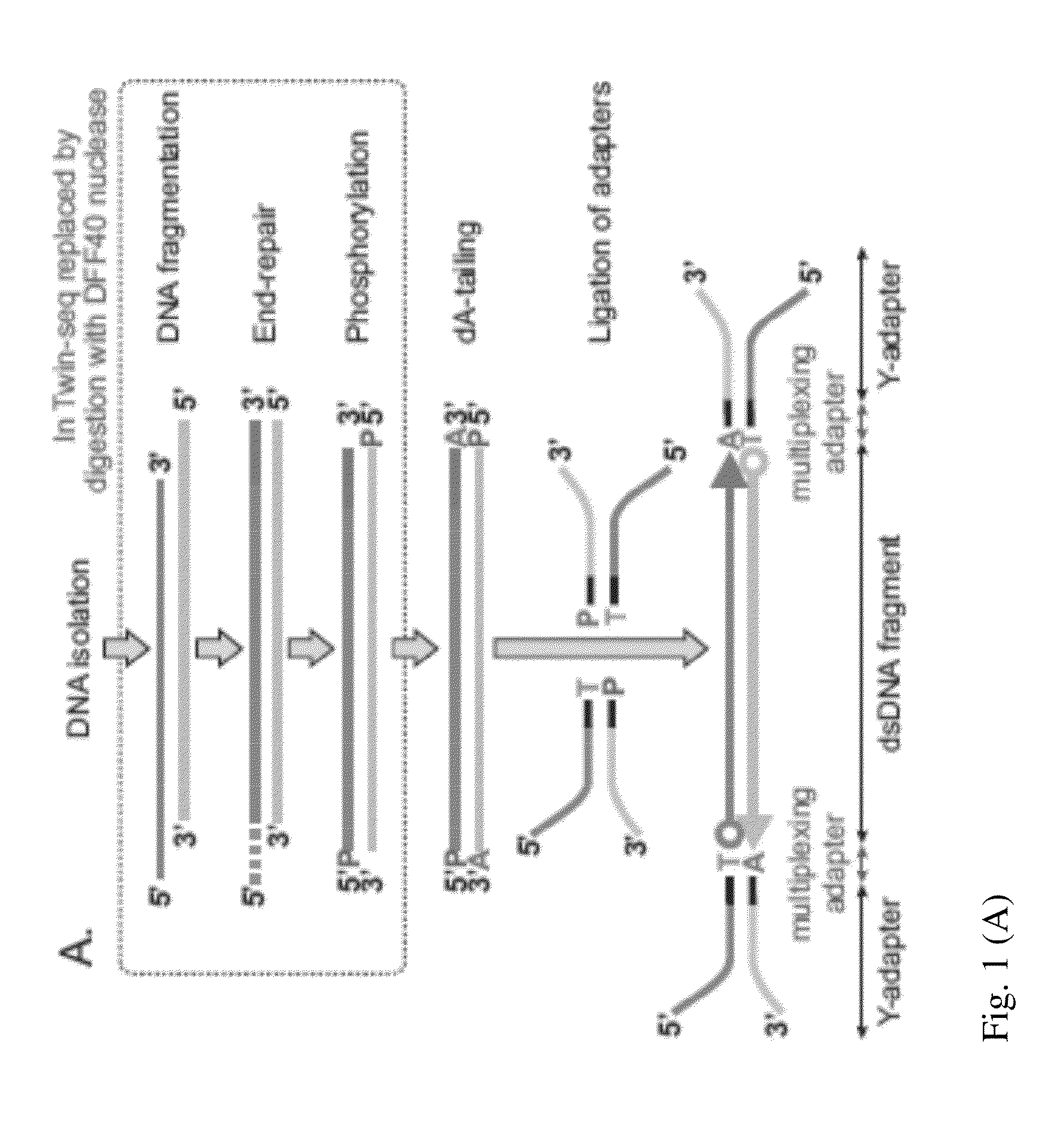
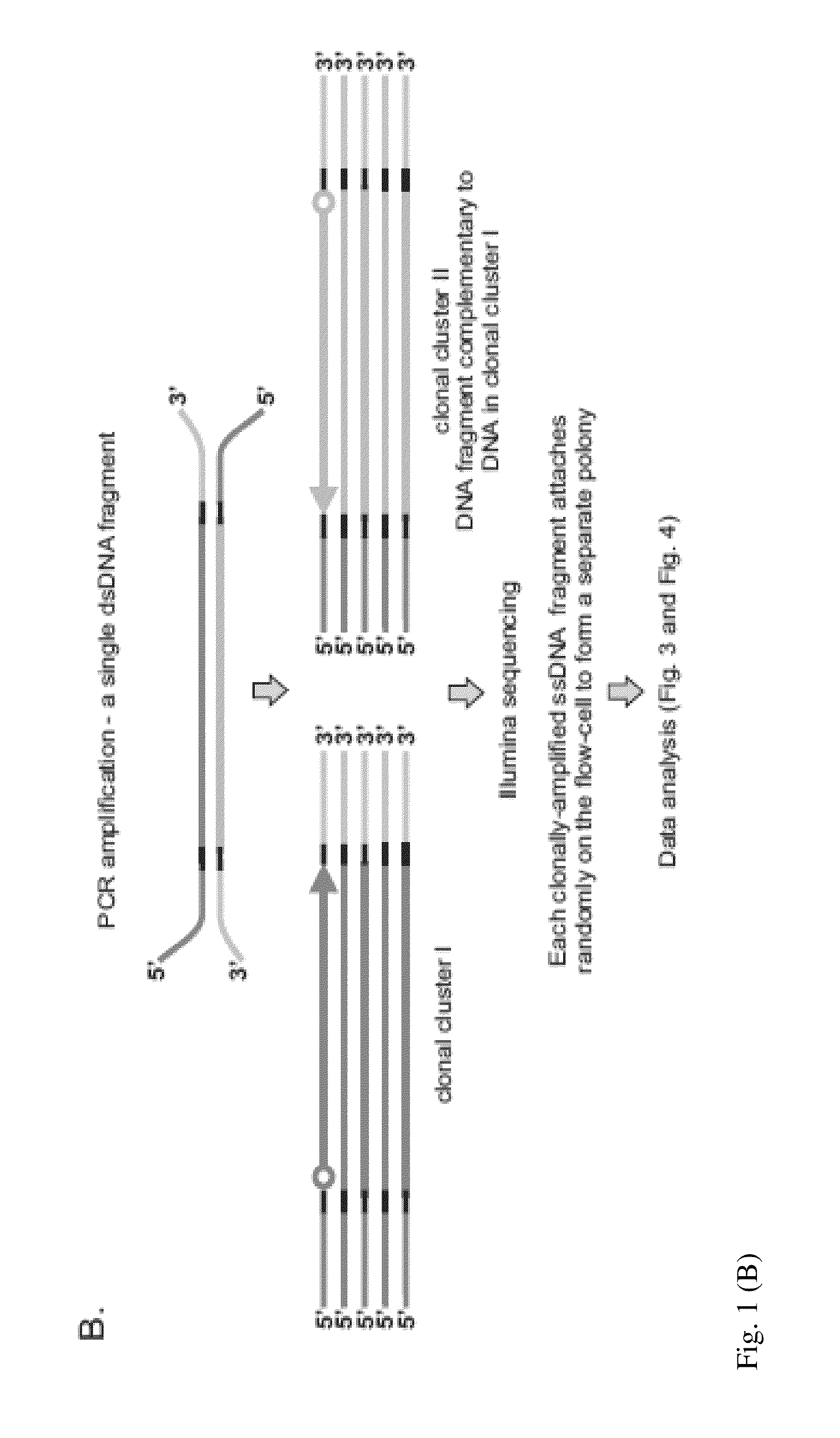
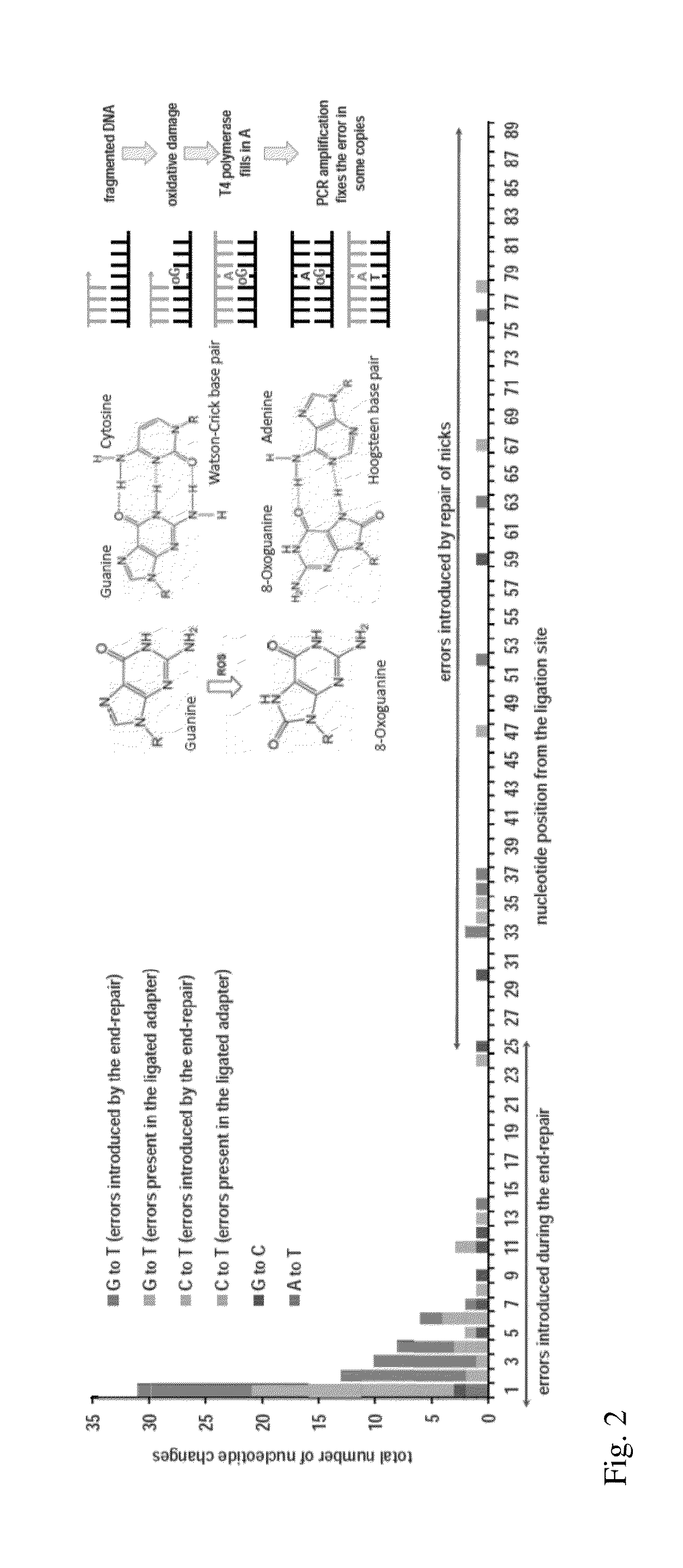
Examples
example 1
NIH Grant
[0095]There are many processes that introduce lesions into DNA. These lesions, when uncorrected, lead to somatic mutations. In the normal cellular state, the fidelity of DNA replication and repair is extremely high, thus the number of somatic mutations per cell is very low. However, over the life of an organism somatic mutations slowly accumulate, which results in modulation and alteration of all cellular functions. Learning how this happens is central to our understanding of many processes, e g immune defense [1-3], aging [4-8], and the onset and evolution of cancers [9-11]. Despite the importance of somatic mutations, our knowledge of them is derived from indirect or fragmentary measurements, causing standing controversies and problems with interpretations of the mechanisms involved in aging and cancer. The low levels of somatic mutations and their dispersive nature are the main reasons why the studies carried out so far have relied on either a phenotypic selection of mut...
example 2
HHMI Grant: Twin-Seq: A Method for Ultrahigh Accuracy in Next-Generation Sequencing and its Application to Single-Nucleotide and Somatic Mutations in Mammals
[0219]Overview:
[0220]The revolution in genetics and genomics has enabled the study of biological systems and their potential translation to medicine with an unprecedented scale over the last two decades1. The determination of whole-genome sequences for model organisms and humans as well as the exploration of sequence diversity and ancestry has transformed our understanding of living systems. Recently with the advent of massively parallel “next-generation” sequencing (NGS) technologies2-4, our ability to obtain sequence at the genome level rapidly and at lower cost has enabled individual laboratories to access information that was previously only within the purview of genome centers. Notwithstanding this remarkable progress, a critical issue plagues existing NGS technologies for which solutions have been elusive—while sequence vo...
example 3
AHA Grant
[0340]Advanced age is correlated with increased risk for all cardiovascular disease (CVD) [1-3]. A number of studies have associated this correlation with the mitochondrial dysfunctions caused by the progressive accumulation of somatic mutations and oxidative damage in the mitochondrial genome (reviewed in [4-7]). However, systematic and definitive analysis of the subject is limited to just a few cases, and the subject is still debated [8]. We have developed a novel assay and validate it in a biological context, to enable precise, quantitative studies of somatic mutations, chemical damage, and levels of heteroplasmy in mitochondrial DNA.
[0341]In one aspect we developed an unbiased sequencing assay to map precisely and accurately the spectrum of somatic mutations in mitochondrial DNA. We designed the approach so that it differentiates between somatic mutations, oxidative damage of mtDNA, and changes to DNA introduced during experimental procedures. We achieve sensitivity tha...
PUM
| Property | Measurement | Unit |
|---|---|---|
| temperatures | aaaaa | aaaaa |
| length | aaaaa | aaaaa |
| single molecule real time sequencing | aaaaa | aaaaa |
Abstract
Description
Claims
Application Information
 Login to View More