Simulation of Photovoltaic Modules

US20160078159A1Active Publication Date: 2016-03-17INTERUNIVERSITAIR MICRO ELECTRONICS CENT (IMEC VZW) +1
4 Cites 6 Cited by

Patent Information

Authority / Receiving Office
US · United States
Current Assignee / Owner
Publication Date
2016-03-17

Smart Images

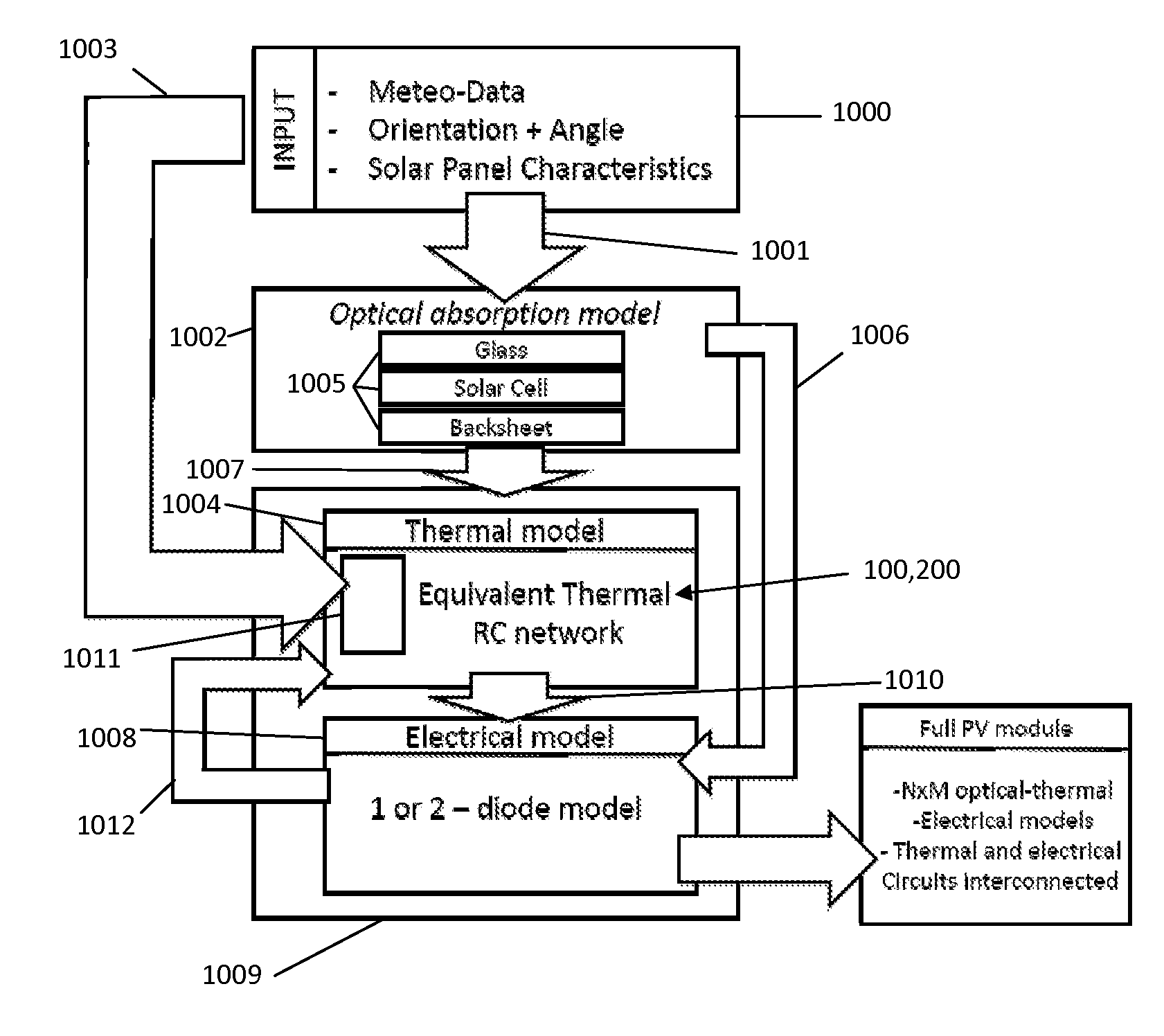
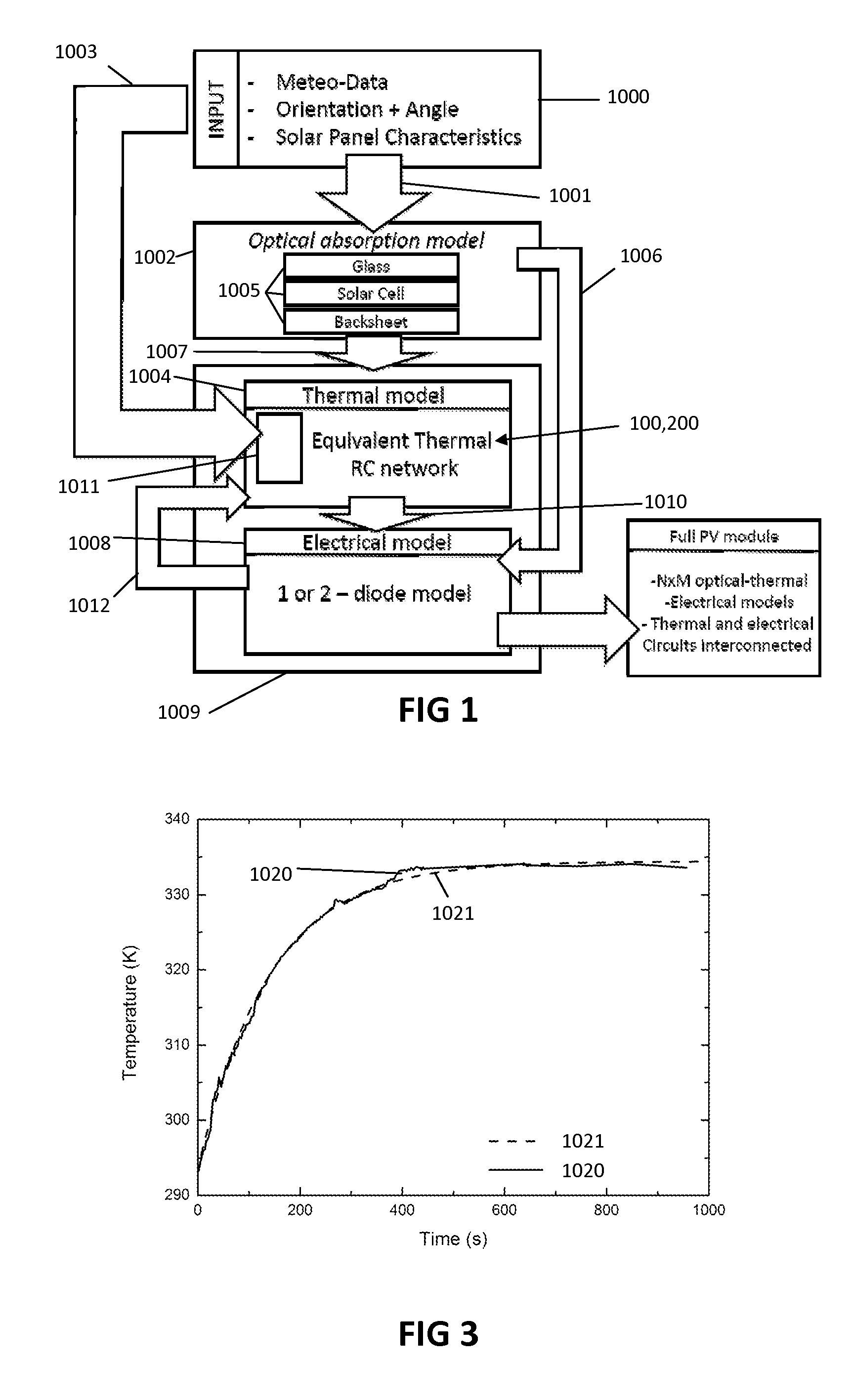
  • Figure 1
    Figure 1
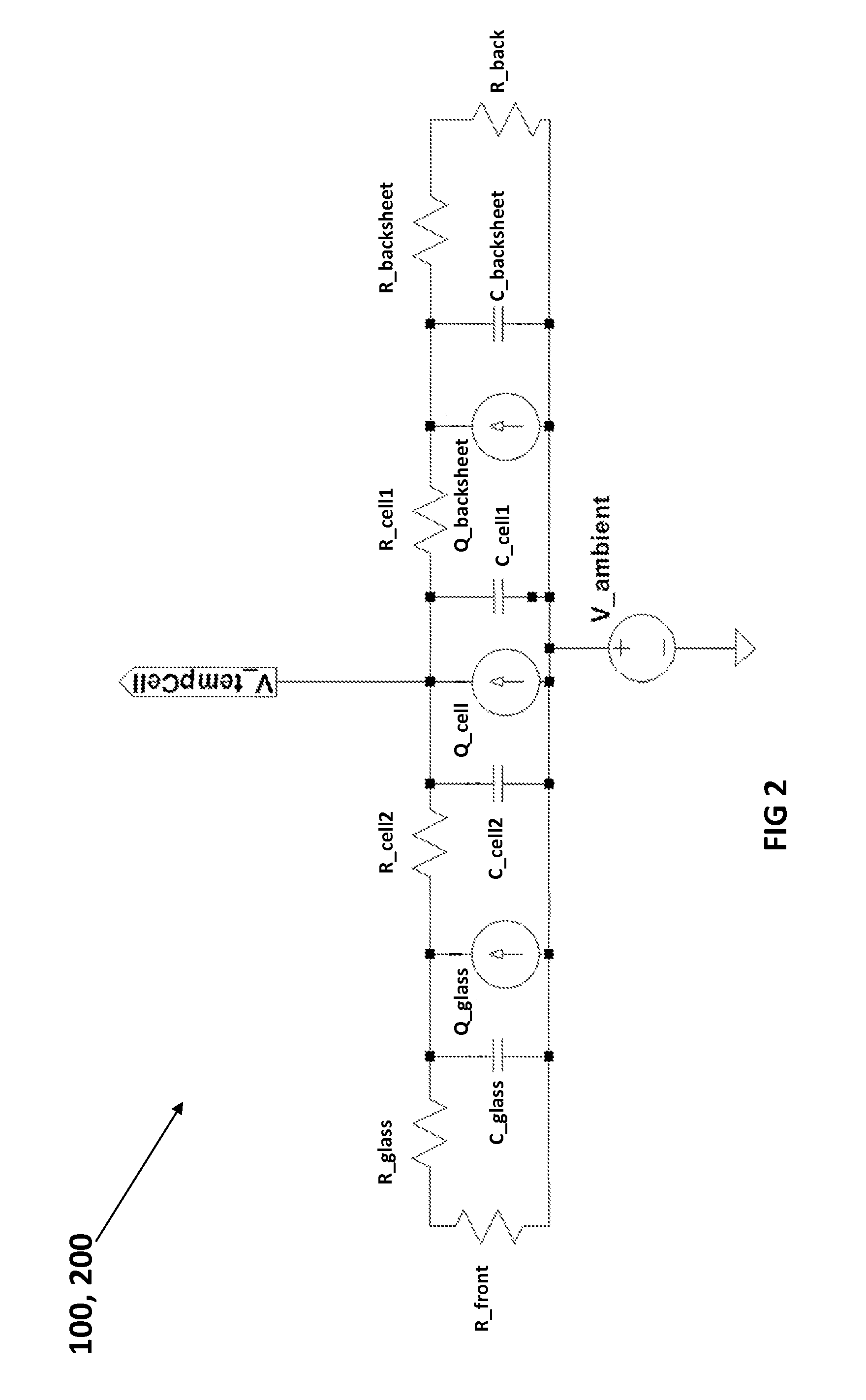
  • Figure 2
    Figure 2
  • Figure 3
    Figure 3
Patent Text Reader

Abstract

A method is provided for calculating a performance of a photovoltaic module comprising at least a first photovoltaic cell and a second photovoltaic cell. The method comprises calculating a heat flow between the first photovoltaic cell and the second photovoltaic cell using a first thermal equivalent circuit of the first photovoltaic cell and a second thermal equivalent circuit of the second photovoltaic cell, wherein at least one node of the first thermal equivalent circuit is connected to a corresponding node of the second thermal equivalent circuit by a thermal coupling resistance. The method may be used for calculating the influence of spatial and temporal variations in the operation conditions on the performance, such as the energy yield, of a photovoltaic module or a photovoltaic system.
Need to check novelty before this filing date? Find Prior Art

Description

CROSS-REFERENCE TO RELATED APPLICATIONS

[0001] The present application is a non-provisional patent application claiming priority to European Patent Application No. 14184926.5 filed Sep. 16, 2104, the contents of which are hereby incorporated by reference.FIELD OF THE DISCLOSURE

[0002] The disclosure relates to the field of photovoltaic modules. More specifically it relates to a method for modeling and simulation of photovoltaic modules, e.g. a multi-physics simulation of optical, thermal and electrical properties under non-steady-state and non-uniform operating conditionsBACKGROUND OF THE DISCLOSURE

[0003] The performance of a photovoltaic module is significantly affected by the ambient conditions it is subjected to. For example, the electrical performance and the energy conversion efficiency of a module are directly affected by the module temperature. The temperature of a photovoltaic module changes with changing ambient conditions such as ambient temperature, irradiance, wind speed and ...

Examples

Embodiment Construction

[0052]The present disclosure will be described with respect to particular embodiments and with reference to certain drawings but the invention is not limited thereto but only by the claims. The drawings described are only schematic and are non-limiting. In the drawings, the size of some of the elements may be exaggerated and not drawn on scale for illustrative purposes. The dimensions and the relative dimensions do not correspond to actual reductions to practice of the disclosure.

[0053]The terms first, second, third and the like in the description and in the claims, are used for distinguishing between similar elements and not necessarily for describing a sequence, either temporally, spatially, in ranking or in any other manner. It is to be understood that the terms so used are interchangeable under appropriate circumstances and that the embodiments of the disclosure described herein are capable of operation in other sequences than described or illustrated herein.

[0054]Moreover, the ...