Biometric recognition apparatus with reflection-shielding electrode

a biometric recognition and reflection shielding technology, applied in the field of biometric recognition apparatuses, can solve the problems of high material cost and package cost, huge noise,

US20160342824A1Active Publication Date: 2016-11-24SUPERC TOUCH CORP
6 Cites 7 Cited by

Patent Information

Authority / Receiving Office
US · United States
Current Assignee / Owner
Publication Date
2016-11-24

Smart Images

  • Figure 1
    Figure 1
  • Figure 2
    Figure 2
  • Figure 3
    Figure 3
Patent Text Reader

Abstract

A biometric recognition apparatus with reflection-shielding electrode includes a substrate, a sensing electrode layer arranged on one side of the substrate, the sensing electrode layer including a plurality of sensing electrodes and at least one suppressing electrode. The biometric recognition apparatus further includes a plurality of selection switches and conductive wires, at least a part of the selection switches and the conductive wires are electrically connected to the sensing electrodes. The biometric recognition apparatus further includes a reflection-shielding electrode layer with at least one reflection-shielding electrode and arranged on one side of the sensing electrode layer. By incorporating the reflection-shielding electrode and the suppressing electrode, the sensing sensibility and signal to noise ration can be enhanced, thus increasing the sensing distance between sensing electrode and user finger.
Need to check novelty before this filing date? Find Prior Art

Description

BACKGROUND OF THE INVENTION

[0001] 1. Field of the Invention

[0002] The present invention relates to a biometric recognition apparatus, especially to a biometric recognition apparatus with reflection-shielding electrode.

[0003] 2. Description of Prior Art

[0004] Biometric recognition technology has been widely applied to personal identification and authentication. The conventional biometric recognition technologies can be classified into fingerprint recognition, iris recognition or DNA recognition and so on. Due to safety, non-invasiveness and efficiency considerations, fingerprint recognition becomes main stream technology. The fingerprint recognition device can scan fingerprint image by optical scanning, thermal imaging, supersonic imaging or capacitive imaging. For compactness, cost, power-saving, reliability and security concerns, the capacitive fingerprint sensor becomes popular for biometric recognition technology applied to portable electronic devices.

[0005] The conventional capacitiv...

Examples

Embodiment Construction

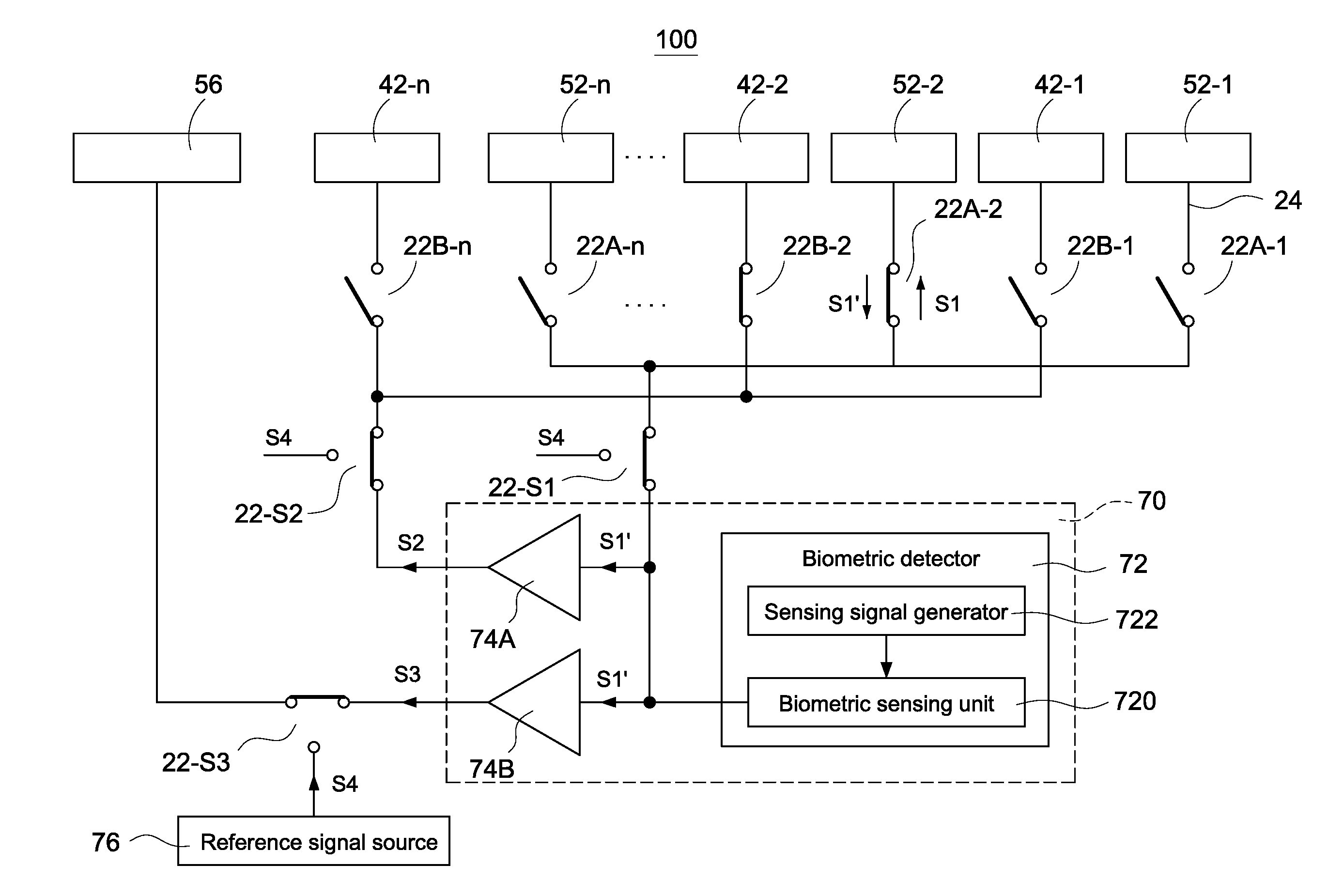
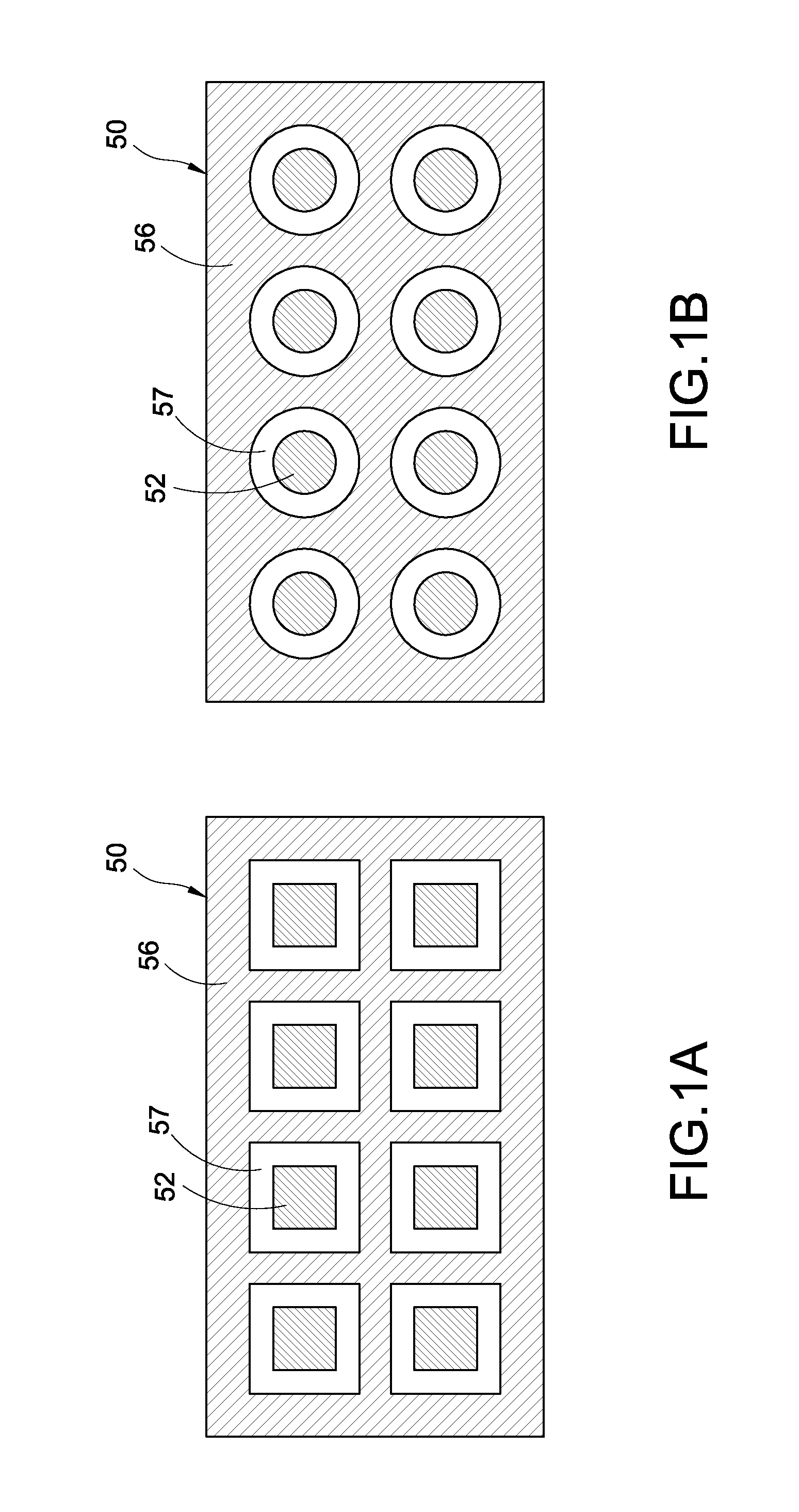
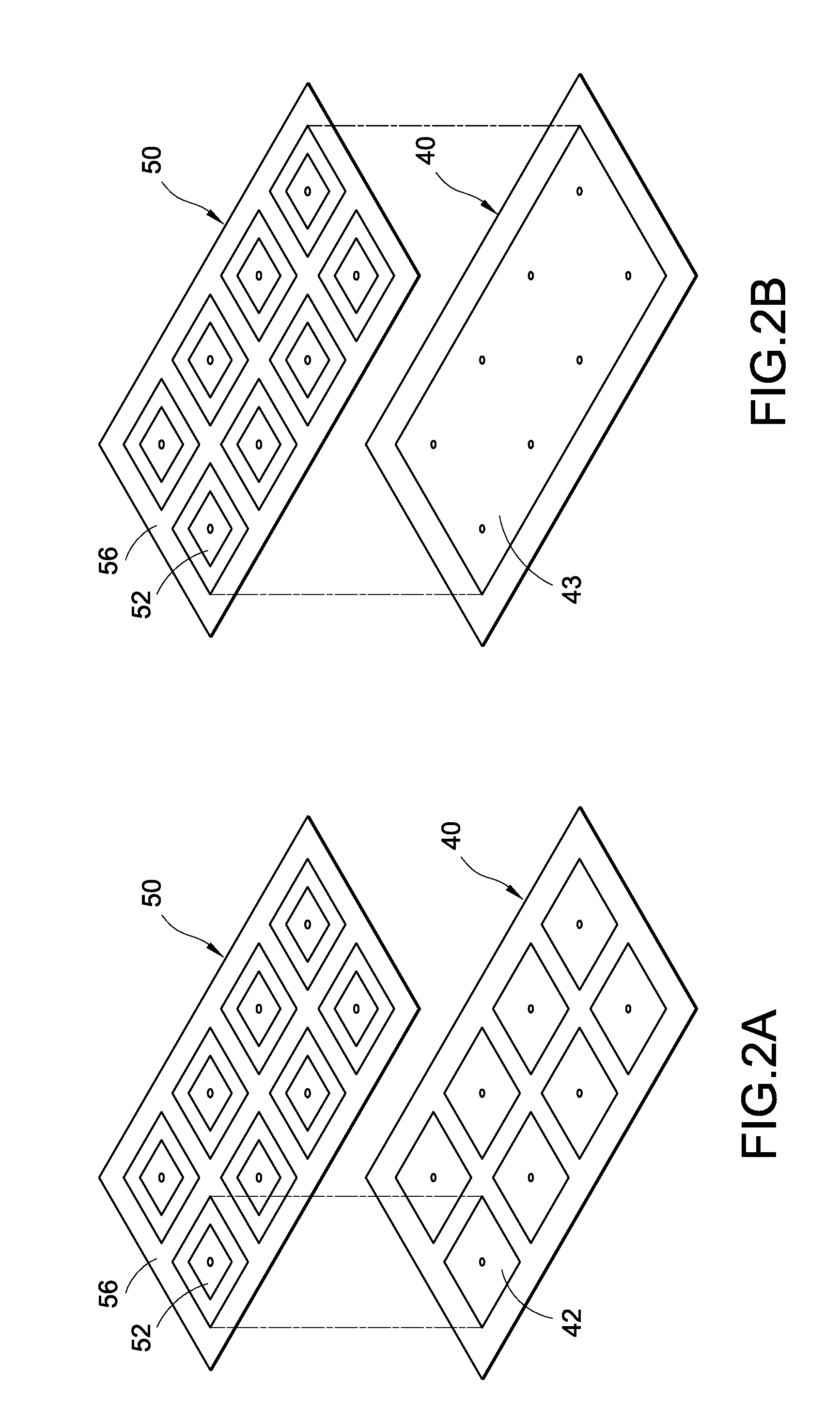
[0026]FIG. 1A is a top view showing the sensing electrode layer 50 in the biometric recognition apparatus 100 according to an embodiment of the present invention. The sensing electrode layer 50 comprises a plurality of sensing electrodes 52 and at least one suppressing electrode 56. As shown in FIG. 1A, the suppressing electrode 56 at least partially surrounds one of the sensing electrodes 52 (for example, completely surrounds one of the sensing electrodes 52) and electrically isolates with the sensing electrodes 52 to enhance sensing sensibility and signal-to-noise ratio. According to one embodiment, the sensing electrode 52 may be of rectangular shape and the suppressing electrode 56 also has rectangular-strip shaped gap 57 therebetween. According to another embodiment, the sensing electrode 52 may be of circular shape and the suppressing electrode 56 also has circular-strip shaped gap 57 therebetween. Besides, the sensing electrode 52 may be of other shapes such as triangular, sq...