
Method for diagnosing tuberculosis
a tuberculosis and tuberculosis technology, applied in the field of tuberculosis diagnosis, can solve the problems of inability to diagnose tuberculosis accurately, patient is likely to die, and it takes a very long time to obtain a diagnosis, so as to achieve simple and fast diagnosis, high accuracy and sensitivity
- Summary
- Abstract
- Description
- Claims
- Application Information
AI Technical Summary
Benefits of technology
Problems solved by technology
Method used
Image

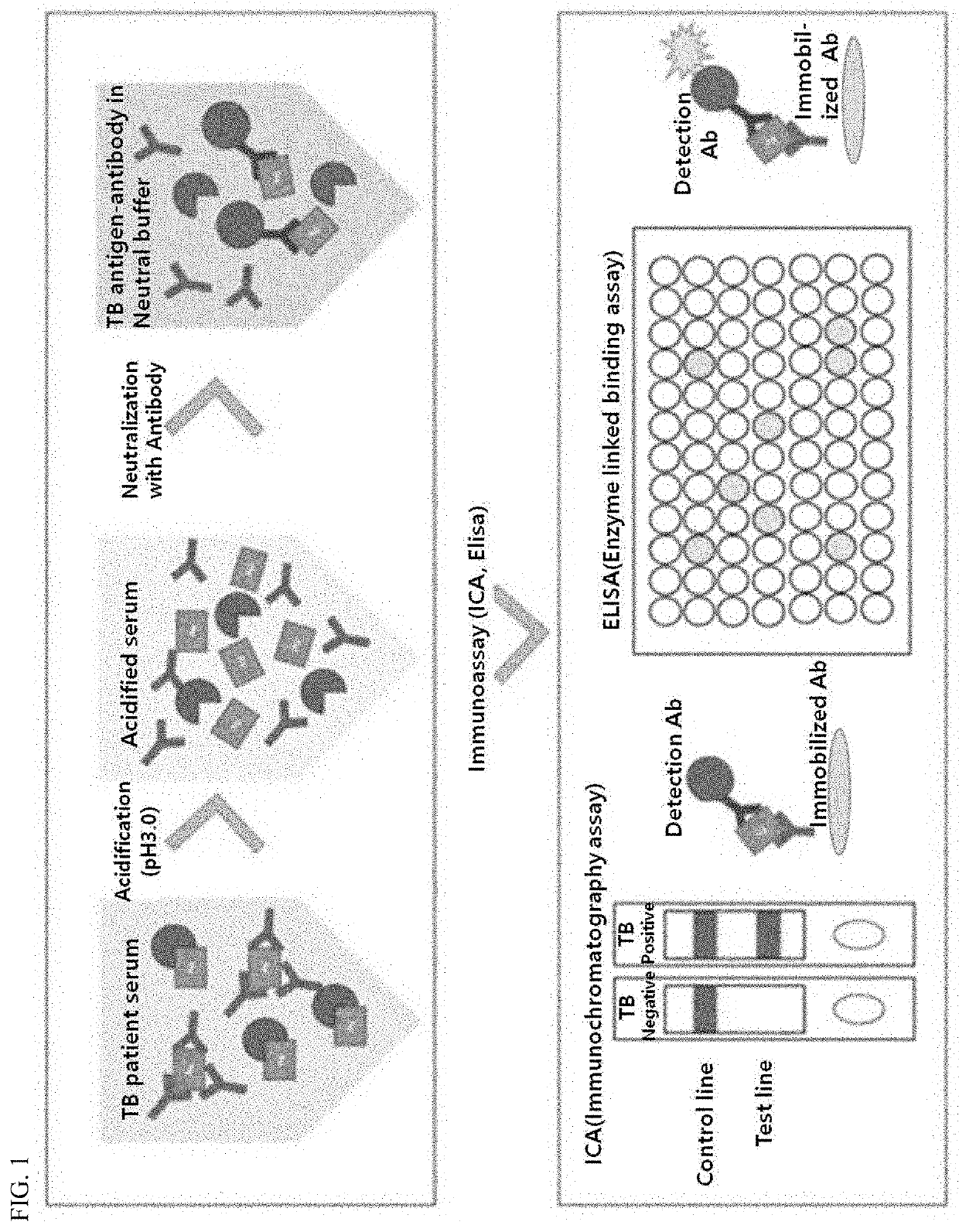
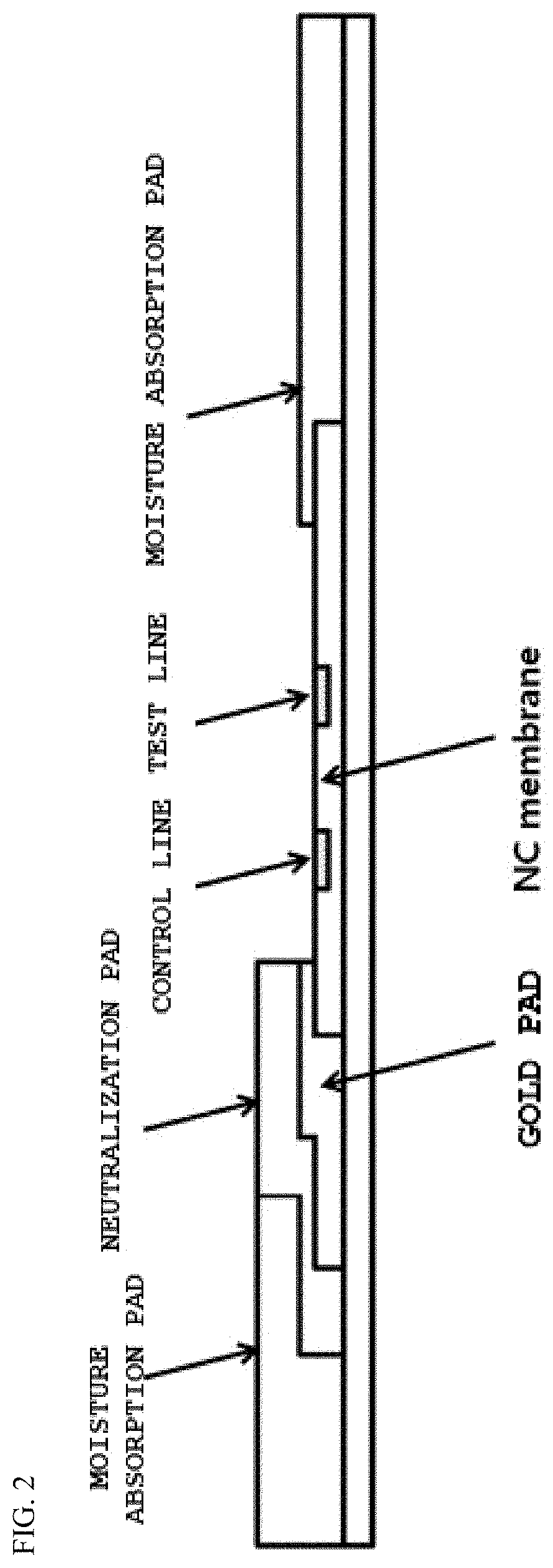
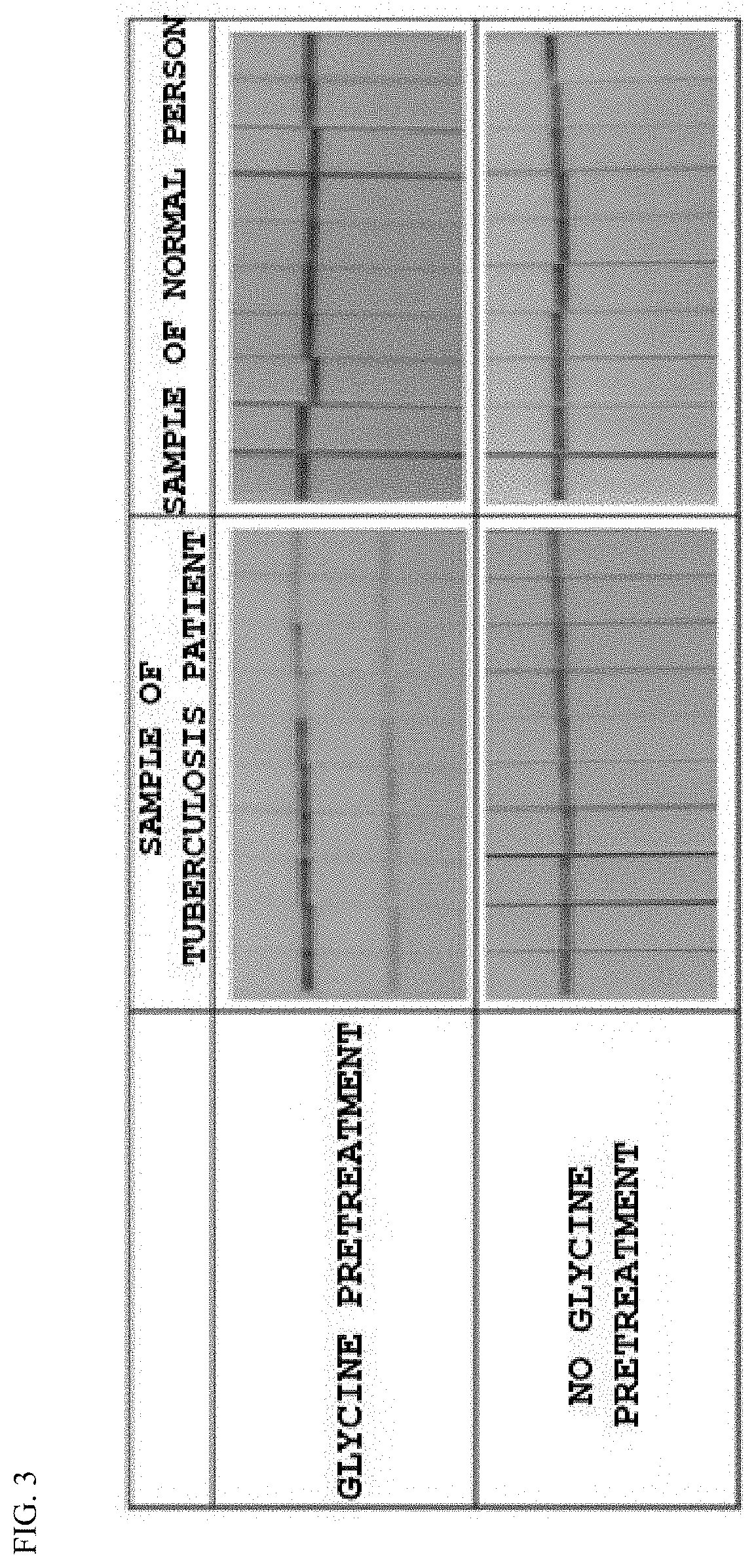
Examples
examples 2 to 34
[0062]Detection of the tuberculosis antigen was performed in the same manner as that of Example 1. The used acidic substance, neutralization reagent, and antibody, and whether the tuberculosis antigen is detected are shown in Tables 1 to 4.
[0063]Whether the tuberculosis antigen was detected was confirmed through the number of bands that appeared (appeared by binding of the tuberculosis antigens dissociated from the tuberculosis antigen complexes to the used antibodies) at the test line on each of 20 immunochromatography strips. As a result of calculation according to the following equation, detection intensity was graded “high” when the result was 60% or more, the detection intensity was graded “low” when the result was 20% or more and less than 60%, and the detection intensity was graded “not detected” when the result was less than 20%.
Detection intensity=[number of immunochromatography strips with test line at which band appeared / total number of immunochromatography strips]*100
[00...
PUM
| Property | Measurement | Unit |
|---|---|---|
| pH | aaaaa | aaaaa |
| size | aaaaa | aaaaa |
| pH | aaaaa | aaaaa |
Abstract
Description
Claims
Application Information
 Login to View More