
System and method for scheduled delivery of a software program over a cable network
- Summary
- Abstract
- Description
- Claims
- Application Information
AI Technical Summary
Benefits of technology
Problems solved by technology
Method used
Image

Examples
Embodiment Construction
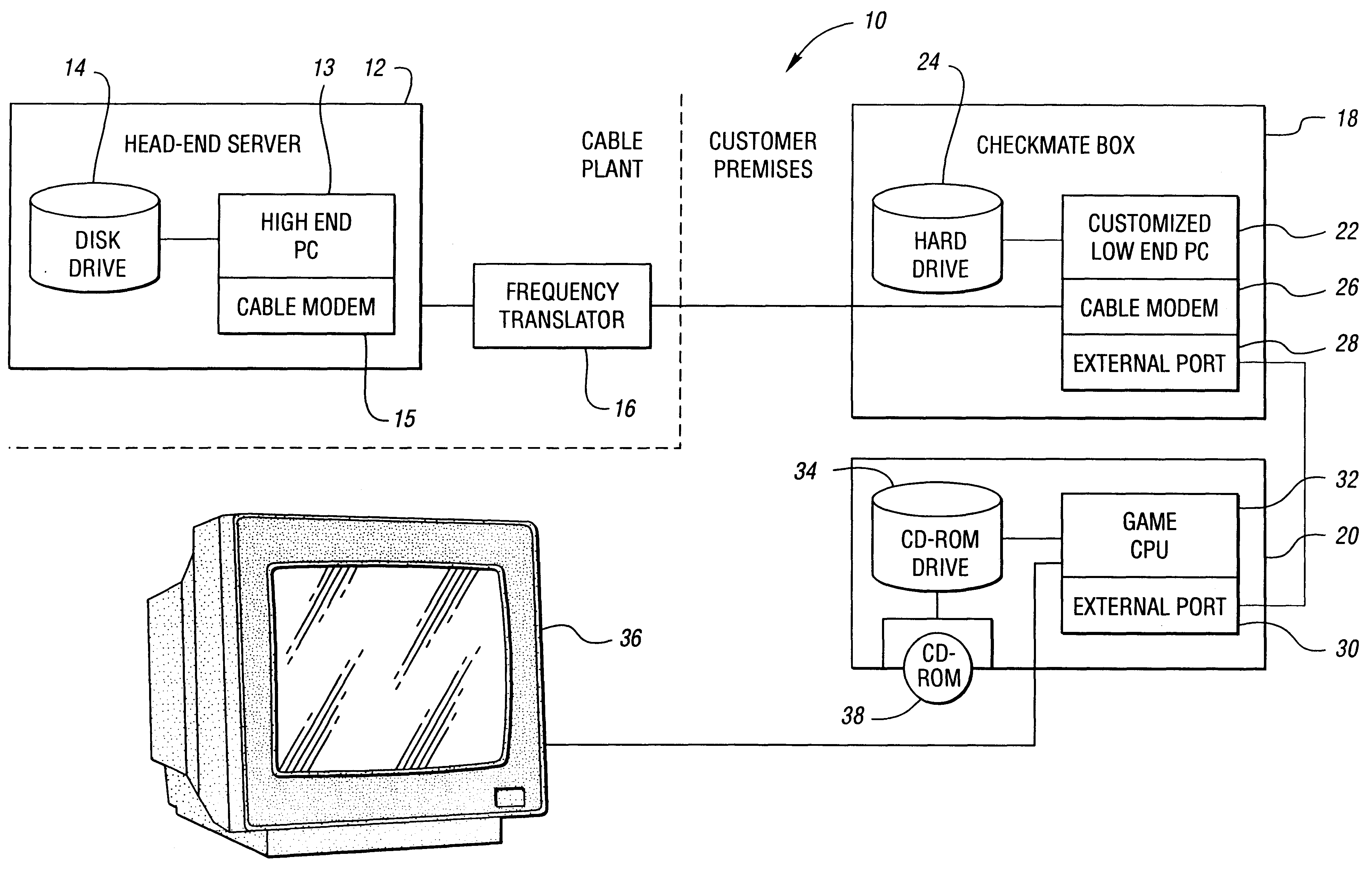
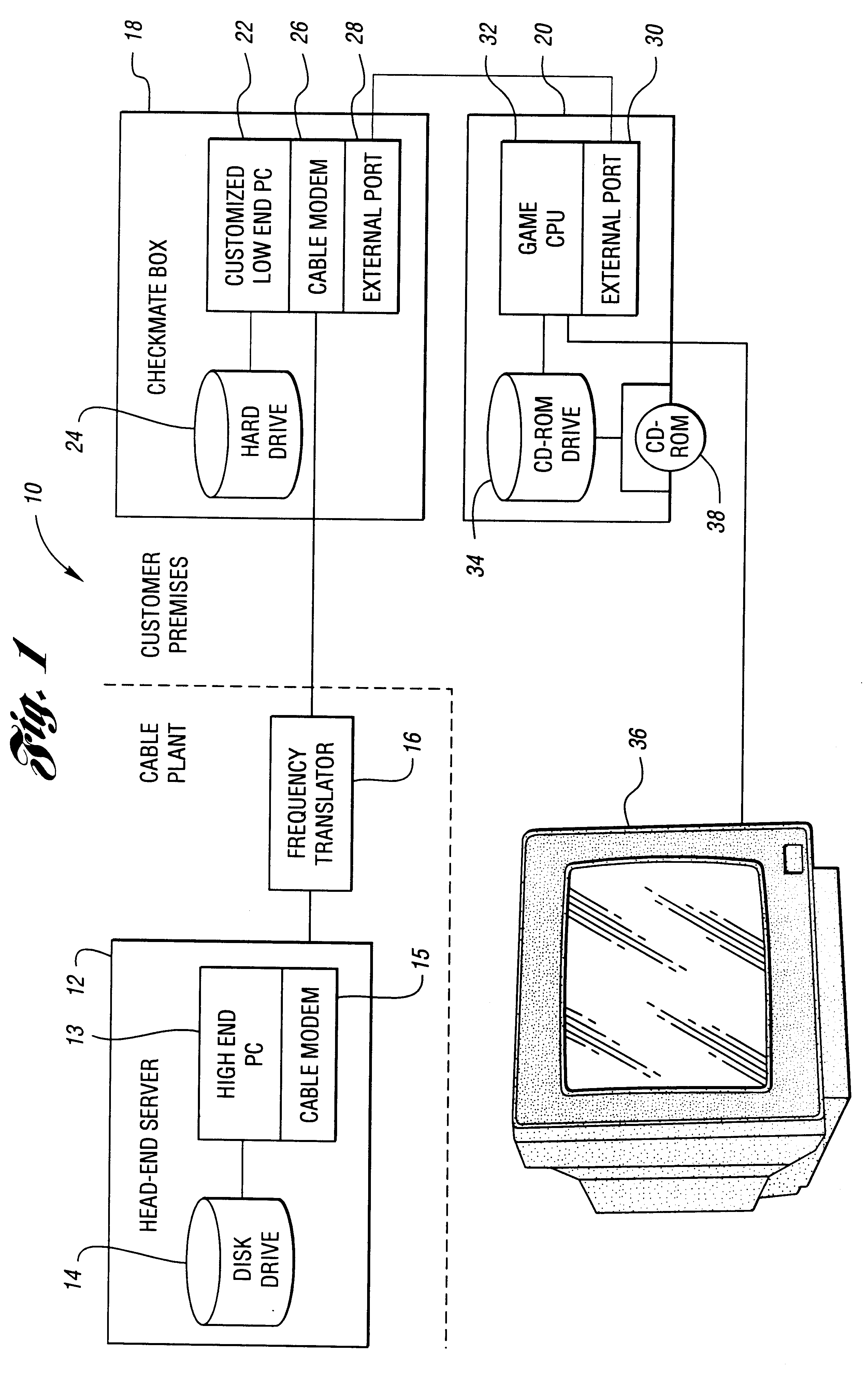
Turning now to FIG. 1, there is shown a block diagram of the system of the present invention, designated generally by reference numeral 10. The system 10 includes a head-end server 12 located at the head-end of a cable plant, Direct Broadcast Satellite (DBS) or broadband system. The head-end server 12 transmits software programs such as digitized video, video games, digital audio, or other software programs over the network. The software programs are transmitted in the form of digitally encoded data. Different programs are broadcast at predetermined scheduled times over a bandwidth of approximately 6 MHz (the offering could be expanded by using more spectrum). The head-end server 12 preferably includes a "high end", i.e., high speed processor 13, such as an Intel.RTM. Pentium.RTM. processor, a disk drive 14 and a cable modem 15.
The system 10 also includes a conventional frequency translator 16 coupled to the head-end server 12. The frequency translator 16 transfers a block of signal...
PUM
 Login to View More
 Abstract
Description
Claims
Application Information
 Login to View More